Why do dogs wag their tails?
Short answer
Dogs wag their tails primarily as a complex form of non-verbal communication. While often associated with happiness, the movement serves to broadcast emotional states, including anxiety, excitement, or aggression. By analyzing the height, speed, and direction of the wag, observers can better interpret a dog’s intentions and overall level of arousal.
On this page
Why do dogs wag their tails?
Tail wagging is an involuntary and learned social signal that dogs use to express their internal state to humans and other canines. Unlike a simple mood indicator, the tail acts as a barometer for a dog’s level of arousal. When a dog feels stimulated by its environment, the nervous system triggers rhythmic muscle contractions that result in the characteristic side-to-side motion.
Communication through the tail is deeply rooted in canine evolutionary history. Because dogs are social pack animals, they rely on visual cues to maintain group cohesion and avoid conflict. A wagging tail can serve as a "social lubricant," signaling that the dog is approachable and non-threatening. However, the meaning is highly context-dependent, requiring observers to look at the dog's entire body language to accurately decipher the message being sent.
How to interpret tail position and speed
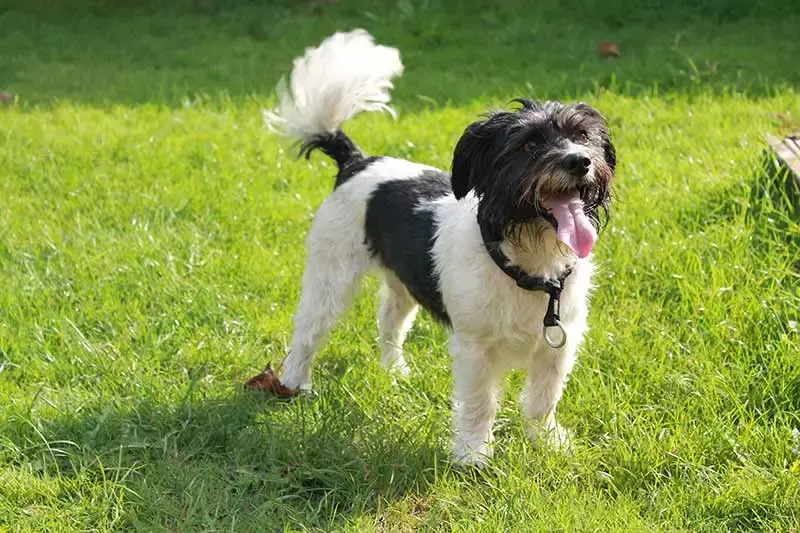
To understand what a dog is feeling, you must look beyond the mere fact that the tail is moving. The position of the tail relative to the spine provides the most significant clue regarding the dog’s confidence or fear. A neutral, mid-level wag typically indicates a relaxed and friendly dog, while a high, stiff wag often suggests high arousal or potential dominance.
Speed also plays a crucial role in decoding the signal. A broad, loose wag that involves the hips usually indicates a happy, friendly dog. Conversely, a very fast, vibrating wag—often held high—can be a sign of extreme tension or a precursor to aggressive behavior. Consider these common indicators when observing a dog:
- High and stiff: The dog is alert, potentially aggressive, or highly aroused.
- Mid-level and loose: The dog is relaxed, content, and friendly.
- Low and tucked: The dog is feeling fearful, submissive, or anxious.
- Slow and rhythmic: The dog is uncertain or cautiously assessing a situation.
What do different wagging directions mean?
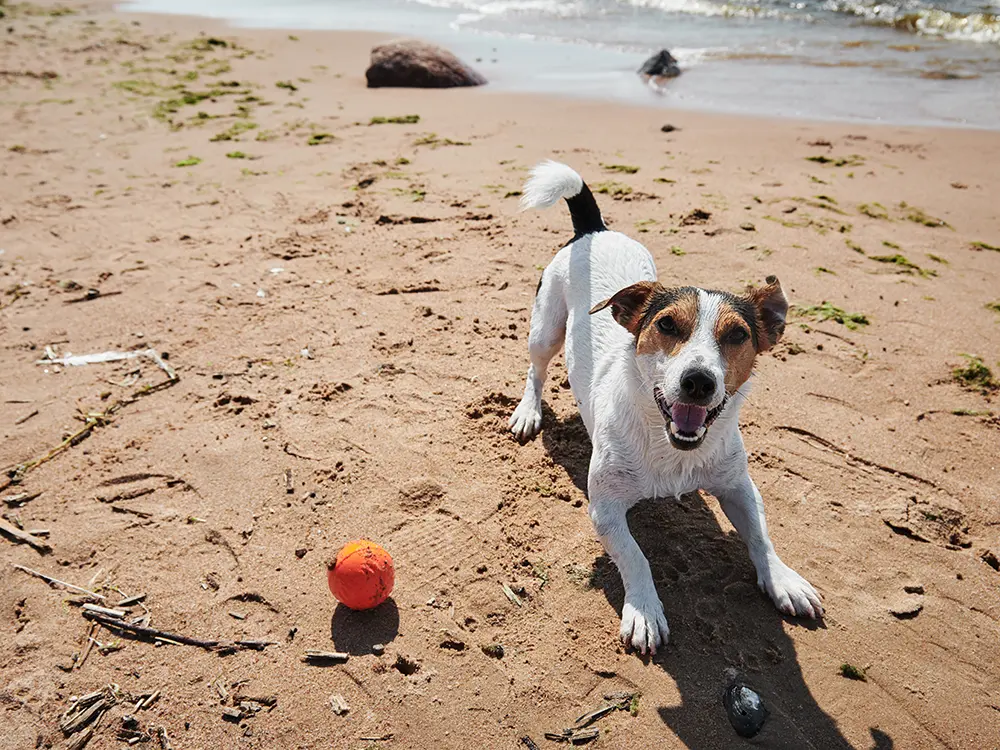
Recent research in animal behavior suggests that the direction of the wag may reveal the dog’s emotional processing. Studies have shown that dogs tend to wag their tails to the right when they experience positive stimuli, such as seeing their owner. This right-side bias is linked to the left hemisphere of the brain, which is associated with approach-oriented behaviors and positive emotions.
Conversely, a left-side bias in tail wagging is often observed when a dog encounters something that causes stress or avoidance, such as an unfamiliar or dominant dog. This movement is controlled by the right hemisphere of the brain, which processes negative or withdrawal-oriented emotions. While it can be difficult for the human eye to catch these subtle directional shifts in real-time, being aware of this phenomenon helps explain why a dog might appear "happy" but still act defensively or cautiously in certain social settings.
Common mistakes when reading dog body language
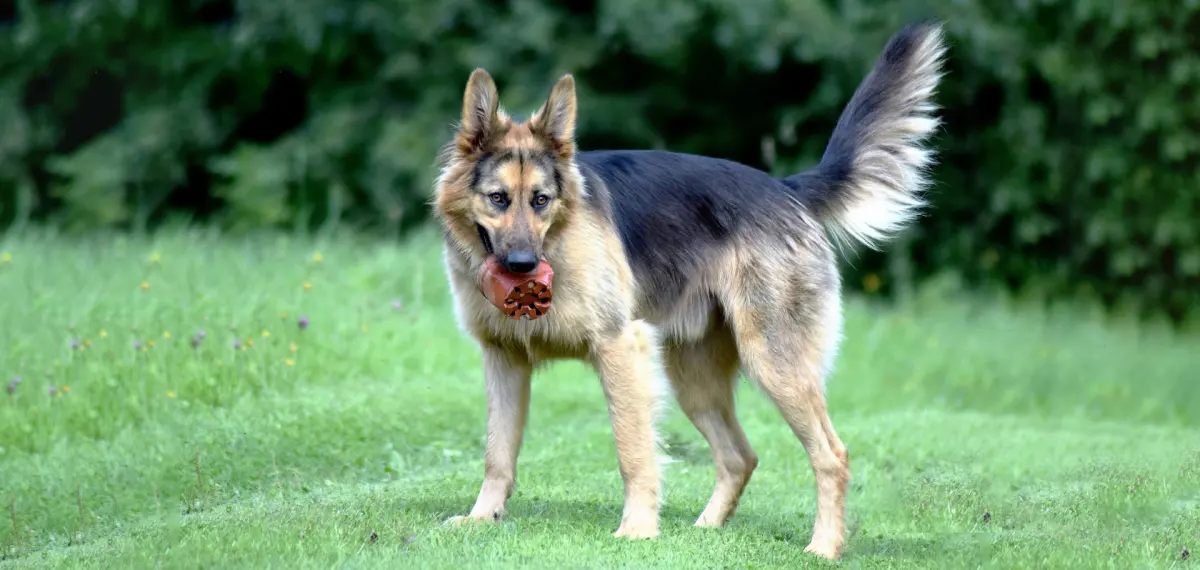
The most frequent error people make is assuming that a wagging tail always equals a friendly dog. This misconception leads to thousands of preventable dog bites annually, particularly among children who may approach a dog solely because its tail is moving. Never assume a dog is safe to pet just because it is wagging its tail; always check for other signs of stress.
When assessing a dog’s comfort level, avoid focusing exclusively on the tail. Instead, look for these additional warning signs that the dog may be uncomfortable or preparing to bite:
- Stiff, frozen body posture or rigid muscles.
- Whale eye, where the whites of the eyes are clearly visible.
- Excessive lip licking or yawning when no food is present.
- Ears pinned flat against the head or pulled back tightly.
- A closed, tense mouth rather than a relaxed, panting expression.
How to safely interact with a dog
If you are unsure about a dog's mood, the safest approach is to give the animal space and remain calm. Avoid making direct eye contact, as this can be perceived as a challenge or a threat by an anxious dog. Instead, stand sideways and allow the dog to approach you on its own terms if it chooses to do so.
If the dog approaches, keep your hands to yourself until you have assessed its overall body language. If the tail is wagging loosely and the dog’s face appears soft and relaxed, you may offer a closed fist for the dog to sniff. If the dog shows signs of stiffness or keeps its tail tucked, it is best to back away slowly and end the interaction. By respecting these boundaries, you ensure a positive experience for both yourself and the dog, preventing misunderstandings that could lead to fear or aggression.
Key facts
- A wagging tail is a complex communication tool, not merely a sign of happiness.
- Dogs typically begin wagging their tails around three to four weeks of age.
- A tail held high and stiff often signals alertness or dominance rather than friendliness.
- Low, slow wags can indicate insecurity, uncertainty, or a submissive state.
- Research suggests that dogs wag their tails to the right when they see something positive, like their owner.
- Wagging to the left is often associated with negative stimuli, such as a dominant or unfamiliar dog.
The bottom line
Understanding a dog's tail movement requires looking at the broader context of their body language. While often associated with joy, a wag is essentially a social signal indicating arousal or intent. By observing the height, speed, and direction of the wag alongside facial expressions, you can better interpret your dog's emotional state, ensuring safer and more meaningful interactions with your canine companion every day.
People also ask
Do dogs wag their tails when they are alone?
Dogs rarely wag their tails when they are completely alone. The behavior is primarily a social signal intended to communicate intent or emotional state to other dogs or humans.
Why do some dogs have docked tails?
Tail docking is a procedure where a portion of the tail is surgically removed, often for aesthetic or historical working purposes. This practice limits a dog's ability to communicate effectively through tail position and movement.
Can a dog's tail wagging be aggressive?
Yes, a tail held high and vibrating rapidly can indicate high arousal or aggression. It is important to observe the dog's entire body language, such as ear position and teeth baring, rather than focusing solely on the tail.
Do all dog breeds wag their tails the same way?
No, tail shape and length significantly impact how a dog communicates. Breeds with curled or docked tails may have more difficulty signaling clearly compared to breeds with long, flexible tails.
Is a wagging tail always a sign that a dog is friendly?
No, a wagging tail simply indicates that a dog is emotionally aroused or engaged. Always look for other signs, such as a relaxed jaw or a soft gaze, before approaching an unfamiliar dog.
Can a dog hurt its tail by wagging too hard?
Yes, a condition known as "happy tail" occurs when a dog wags its tail so forcefully against hard surfaces that it causes injury. This often leads to bleeding and requires veterinary attention to prevent infection.
This answer was created with the help of AI research tools and reference sources. Spotted an error? Let us know — we correct mistakes quickly. See our editorial policy.