What is the difference between a raven and a crow?
Short answer
Ravens and crows are both members of the genus Corvus, but they differ significantly in size, behavior, and anatomy. Ravens are notably larger, possess thicker bills, and exhibit distinct wedge-shaped tails during flight. Crows are smaller, have fan-shaped tails, and typically congregate in larger, noisier social groups than the more solitary ravens.
On this page
How to tell the difference in size and shape
The most immediate way to distinguish between these two birds is by their physical stature. Common ravens are roughly the size of a red-tailed hawk, measuring about 24 to 27 inches in length. In contrast, the common American crow is significantly smaller, usually measuring between 17 and 21 inches. When you see them side-by-side, the raven’s bulk is unmistakable, often making the crow look delicate by comparison.
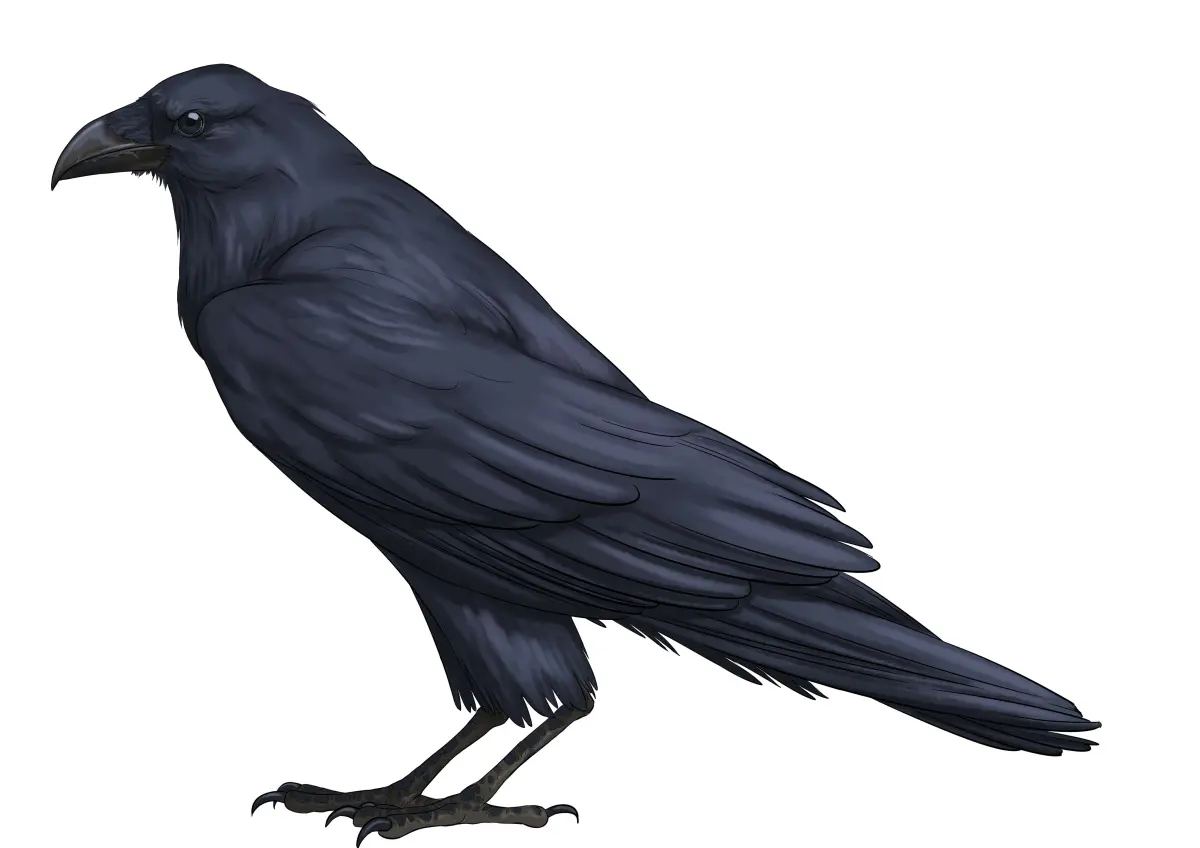
Beyond overall mass, their silhouettes provide vital clues for identification. When a raven flies, its tail feathers form a distinct wedge or diamond shape. Conversely, a crow’s tail is shaped like a fan, with the outer feathers being shorter than the central ones. Additionally, the raven possesses a much heavier, curved bill that often features shaggy throat feathers called hackles. Crows have thinner, straighter bills and lack these prominent, bristly neck feathers, giving them a smoother, more streamlined appearance in profile.
How to identify them by their calls
Vocalizations serve as a reliable indicator if you cannot get a clear visual of the bird. The American crow is famous for its classic, rhythmic "caw-caw" sound, which is usually high-pitched and repetitive. These calls are often used to communicate with family members or to alert the flock to potential threats in the area.
Ravens, however, produce a much deeper, guttural croaking sound that is often described as a "crr-ruck" or a hollow, metallic thud. Their vocal range is surprisingly complex and includes:
- Low-frequency croaks that carry over long distances.
- High-pitched knocking or clicking sounds during courtship.
- Imitations of other birds or environmental noises.
Because ravens are highly intelligent, they can mimic a wide variety of sounds, but they never truly replicate the simple, staccato "caw" of their smaller cousins.
Where to look for ravens and crows
Habitat preferences often dictate which species you are likely to encounter in a specific region. Crows are highly adaptable and thrive in human-altered environments, including suburban parks, agricultural fields, and city centers. They are social creatures that often gather in massive communal roosts, sometimes numbering in the thousands during the winter months.
Ravens are generally more elusive and prefer wilder, rugged landscapes such as mountains, forests, and coastal cliffs. While they have begun to expand into some urban areas, they remain fundamentally creatures of the wilderness. If you are hiking in a remote canyon or near a high mountain pass, you are far more likely to see a solitary raven or a mated pair. If you are in a neighborhood or near a shopping center, the black bird you see is almost certainly a crow.
How to observe their flight patterns
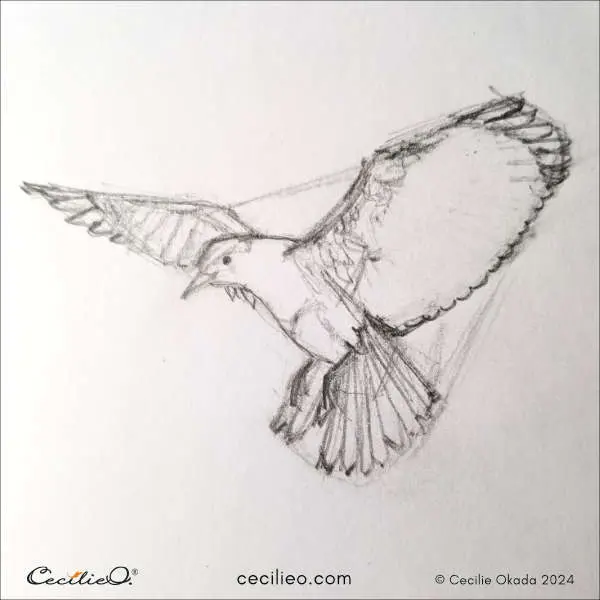
Watching how these birds move through the air provides a masterclass in identification for any birdwatcher. Ravens are masters of aerial acrobatics; they frequently soar, glide, and perform rolls or dives in the sky. Their flight is often described as "sailing" because they spend long periods with their wings held flat and motionless, catching thermals to gain altitude.
Crows, by comparison, have a more labored and steady flight style. They rely on constant, rhythmic wing beats to stay aloft and rarely engage in the soaring behavior typical of ravens. To identify them in flight, follow these steps:
- Observe the wing beats: Crows flap frequently, while ravens glide for long stretches.
- Check the tail shape: Look for the wedge of the raven versus the fan of the crow.
- Monitor the group size: A lone, large bird soaring high is likely a raven, while a group of smaller birds flapping steadily is likely a flock of crows.
Common mistakes when identifying black birds
One of the most frequent errors observers make is assuming that any large black bird is a crow. In many parts of the world, people overlook the raven simply because they are not expecting to see such a large corvid in their vicinity. Always check the bill size and the throat feathers before jumping to a conclusion, as these anatomical features are much more reliable than simple size estimates.
Another common mistake is relying solely on the bird's behavior to identify it. While crows are typically social and ravens are solitary, these rules are not absolute. During the breeding season, ravens may be seen in pairs, and crows can occasionally be found alone while foraging. Furthermore, do not mistake other black-feathered birds, such as grackles or starlings, for members of the Corvus genus. If you are unsure, focus on the bird's silhouette against the sky, as the shape of the wings and tail remains the most consistent diagnostic tool for distinguishing these two fascinating species.
Key facts
- Ravens are significantly larger than crows, often reaching the size of a red-tailed hawk.
- Crow tails are shaped like a fan when flying, while raven tails appear wedge-shaped or diamond-shaped.
- Crows have a high-pitched, nasal "caw-caw" sound, whereas ravens produce a deep, guttural croaking noise.
- Ravens possess shaggy throat feathers called hackles, which are absent in the smoother-necked crow.
- Crows typically travel in large social groups called murders, while ravens are usually seen in pairs.
- In flight, crows flap their wings constantly, while ravens frequently soar and glide for long periods.
The bottom line
Distinguishing between a raven and a crow primarily requires observing size, flight patterns, and vocalizations. Ravens are larger, soar more frequently, and emit a deep croak, while crows are smaller, flap constantly, and produce a nasal caw. By focusing on the wedge-shaped tail of the raven versus the fan-shaped tail of the crow, you can reliably identify these intelligent birds in their natural habitats.
People also ask
Do ravens and crows interact with each other?
They generally avoid one another, but they are competitors for food. Ravens are more aggressive and will often drive crows away from a carcass or nesting territory.
Which bird is more intelligent?
Both species are highly intelligent members of the corvid family. They exhibit complex problem-solving skills, use tools, and can recognize individual human faces.
Can you keep a raven or crow as a pet?
In most jurisdictions, including the United States, it is illegal to keep wild corvids as pets under the Migratory Bird Treaty Act. They require specialized care and significant space that a home cannot provide.
Do these birds migrate?
Most crows and ravens are non-migratory and remain in their established territories year-round. Some northern populations may shift southward during extreme winters to find accessible food sources.
How long do these birds live in the wild?
Crows typically live between 7 and 10 years in the wild. Ravens are longer-lived, often surviving for 10 to 15 years, though some individuals in captivity have lived much longer.
Are these birds considered pests?
Both species are scavengers that can become nuisances by raiding trash or damaging crops. However, they also provide ecological benefits by cleaning up carrion and controlling insect populations.
This answer was created with the help of AI research tools and reference sources. Spotted an error? Let us know — we correct mistakes quickly. See our editorial policy.