How do you draw a cartoon dog?
Short answer
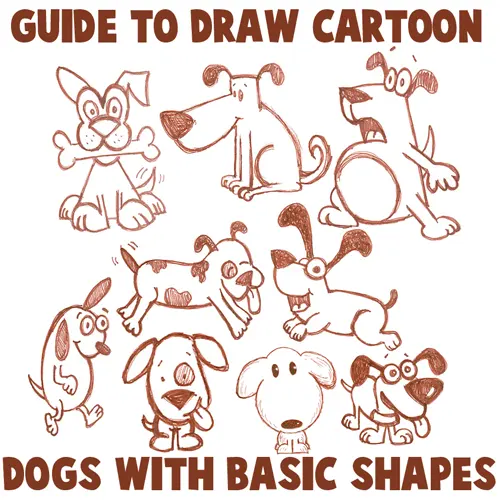
Drawing a cartoon dog involves breaking down the animal’s anatomy into simple geometric shapes like circles and ovals. By sketching a large circle for the head and a smaller oval for the snout, you establish basic proportions. Adding expressive features like floppy ears and a wagging tail brings the character to life.
On this page
How to structure a cartoon dog
To begin your drawing, think of the dog as a collection of basic shapes rather than a complex animal. Start by sketching a large circle for the head and a slightly smaller oval for the body. Connect these with a short, curved line for the neck. This skeletal framework ensures the character remains balanced and avoids awkward proportions that often plague beginner sketches.
Once the main masses are established, add guidelines for the face. Draw a horizontal line across the middle of the head circle and a vertical line down the center. These crosshairs help you place the eyes, nose, and mouth symmetrically. Keep your pencil strokes light during this phase so you can easily erase them once the final outlines are inked or darkened.
- Draw a circle for the skull.
- Add an oval below it for the chest.
- Use simple rectangles for the legs.
- Connect the shapes with fluid, rounded lines.
Best tools for drawing cartoons
Professional cartoonists often prefer using a mechanical pencil with 0.5mm or 0.7mm lead for initial sketches. The consistent line width allows for precise detail work without the need for constant sharpening. For the final outlines, artists frequently use fine-liner pens with archival, waterproof ink. These pens provide a bold, clean look that makes the character pop against the page.
If you are just starting out, a standard HB pencil and a soft white eraser are sufficient. Avoid using heavy pressure, as this can indent the paper and make clean-up difficult. Some artists also utilize a light box or digital tablet to trace over their rough sketches, which helps refine the character’s silhouette. Experimenting with different paper textures, such as smooth bristol board, can also improve the flow of your pen strokes.
- Mechanical pencils for precision.
- Fine-liner pens for final outlines.
- Soft erasers to prevent smudging.
- Smooth paper to reduce friction.
How to add personality to a dog
The key to a memorable cartoon dog lies in its facial expressions and posture. Large, wide eyes typically convey innocence or excitement, while smaller, squinted eyes suggest suspicion or sleepiness. Experiment with the placement of the eyebrows; angling them toward the nose makes the dog look angry, while arching them creates a surprised or happy expression.
Body language is equally important for storytelling. A dog with its ears perked up and tail held high appears alert and confident. Conversely, drooping ears and a tucked tail indicate sadness or fear. To make your character feel more dynamic, try giving it a distinct pose, such as sitting, begging, or chasing a ball. These actions give the viewer immediate insight into the dog’s personality and mood.
Common mistakes when drawing dogs
A frequent error for beginners is drawing the legs too thin or too short, which makes the dog look unstable. Remember that a dog’s legs should be sturdy enough to support its body weight. Another common mistake is ignoring the joints; remember that knees and elbows should have a slight bend to make the movement look natural rather than stiff.
Another issue is inconsistent sizing of the facial features. When the snout is too large or the eyes are placed too far apart, the character loses its charm. Always check your proportions against your initial guidelines before finalizing the drawing. If the dog looks "off," step back and compare your drawing to a reference photo of a real dog to identify where the anatomy might be distorted.
- Making legs look like sticks.
- Forgetting to add joints or elbows.
- Placing eyes too close to the edge of the head.
- Drawing the snout out of proportion to the skull.
How to refine your cartoon style
Developing a unique style takes time and consistent practice. Once you have mastered the basic anatomy, try exaggerating certain features to create a caricature. You might make the ears exceptionally long, the nose oversized, or the paws disproportionately large. These stylistic choices help your character stand out and become recognizable as your own creation.
Study the work of famous cartoonists, such as Charles Schulz or Walt Disney, to see how they simplified dog anatomy. Observe how they used minimal lines to convey complex emotions and movement. Do not be afraid to iterate on your designs; draw the same dog in ten different positions to see how its shape changes. With patience and repetition, you will develop a shorthand for drawing dogs that feels natural, fluid, and uniquely your own.
Key facts
- Start by sketching a large circle for the head and a smaller oval for the snout to establish basic proportions.
- Use the "rule of thirds" for facial features, placing the eyes on the horizontal midline of the head circle.
- Connect the head to the body using a simple neck shape, ensuring the torso is slightly larger than the head.
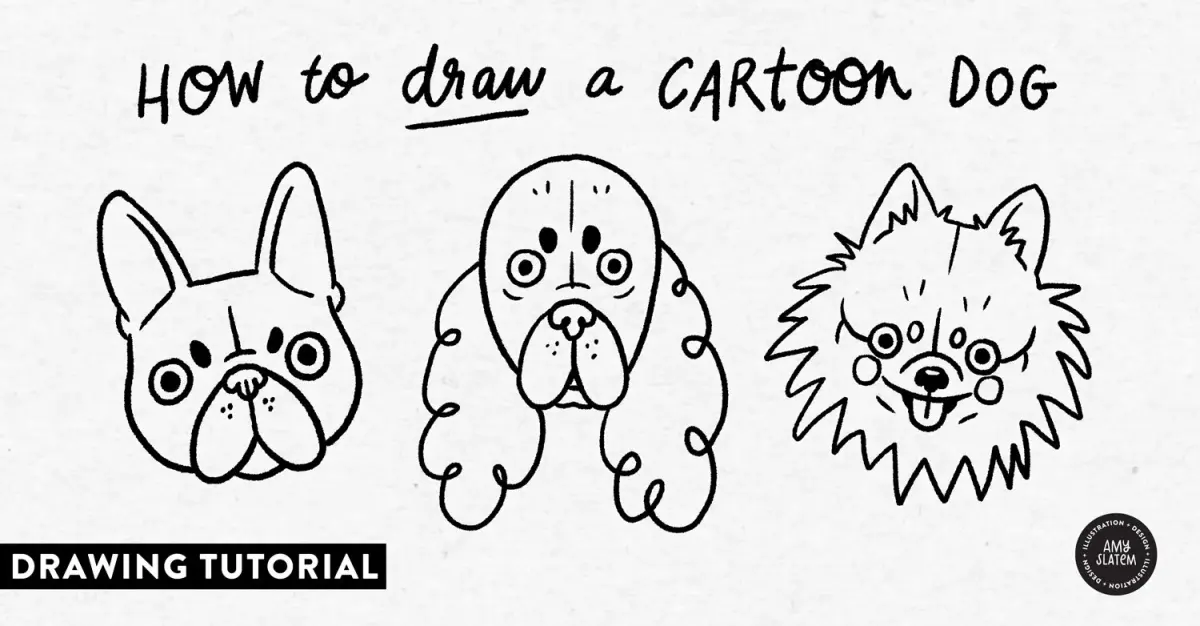
- Vary ear shapes—floppy, pointed, or triangular—to instantly change the dog's personality and breed representation.
- Keep lines fluid and confident; shaky or scratchy lines often make a cartoon drawing look messy rather than intentional.
- Add distinct personality markers like a collar, spots, or a wagging tail to make the character feel unique.
The bottom line
Drawing a cartoon dog is an exercise in simplification and exaggeration. By breaking down complex anatomy into basic geometric shapes, you can establish a solid foundation before adding personality through expressive features like eyes, ears, and posture. Remember that consistency in your style is more important than anatomical perfection. Practice these fundamental steps regularly to develop your own unique character design and improve your overall drawing technique.
People also ask
How do I make my cartoon dog look happy?
Draw the mouth as an upward-curving line and slightly raise the outer corners of the eyes. Adding a tongue lolling out of the side of the mouth reinforces a joyful expression.
What is the best way to draw fur on a cartoon dog?
Avoid drawing every individual hair, as this creates clutter. Instead, use jagged, zig-zag lines along the edges of the silhouette to suggest texture while keeping the drawing clean.
Should I use geometric shapes or organic lines?
Start with simple geometric shapes like circles and rectangles to build the structure. Once the proportions are correct, trace over them with organic, flowing lines to give the dog life.
How do I draw different dog breeds?
Focus on exaggerating breed-specific traits, such as long ears for a Basset Hound or a short, squashed snout for a Pug. Simplify these features into basic shapes to maintain a cartoon style.
Why does my cartoon dog look stiff?
Stiffness often results from drawing limbs that are perfectly straight. Add slight bends at the joints, like the elbows and knees, to create a sense of movement and natural posture.
How do I choose the right proportions for a cartoon character?
Larger heads and eyes generally make a character appear cuter or more youthful. Smaller heads and more realistic body proportions tend to make the dog look more mature or serious.
This answer was created with the help of AI research tools and reference sources. Spotted an error? Let us know — we correct mistakes quickly. See our editorial policy.