How do you draw a cartoon face?
Short answer
Drawing a cartoon face begins with a basic circular shape, which serves as the foundation for facial proportions. By dividing this circle with intersecting guidelines, you can accurately place the eyes, nose, and mouth. Adding exaggerated features and expressive eyebrows then transforms these simple geometric shapes into a recognizable, lively cartoon character.
On this page
How to structure a cartoon face
The most effective way to start any cartoon face is by drawing a simple circle or oval to represent the cranium. Once the head shape is established, draw a vertical line down the center and a horizontal line across the middle to create a crosshair. These lines act as a map for your facial features, ensuring that the eyes and nose are aligned symmetrically. The vertical line helps maintain balance, while the horizontal line dictates where the eyes will sit.
As you build the face, consider the "rule of thirds" for placement. The forehead usually occupies the top third, the eyes and nose the middle third, and the mouth and chin the bottom third. Keep your initial lines light so they can be easily erased later. Using these structural guidelines prevents the features from appearing lopsided or floating off the edge of the head shape.
How to draw expressive cartoon eyes
Eyes are the most important element for conveying emotion in a cartoon. Start by drawing two simple shapes—circles, ovals, or even triangles—on the horizontal guideline. The size and spacing of these eyes determine the character's personality. Large, closely set eyes often suggest a youthful or innocent appearance, while smaller, widely spaced eyes can make a character look more mature or serious.
To add life to the eyes, use these techniques:
- Add pupils or irises to indicate where the character is looking.
- Draw eyelids or lashes to change the character's expression from sleepy to alert.
- Vary the shape of the eyebrows to suggest specific moods like anger, surprise, or sadness.
- Use highlights, such as small white circles inside the pupils, to give the eyes a reflective, sparkling quality.
How to add the nose and mouth
Cartoon noses are often simplified into basic geometric shapes like small triangles, buttons, or simple curves. Place the nose slightly below the horizontal guideline, centered on your vertical line. You do not need to draw every nostril or bridge detail; a single line or a small shadow often suffices to suggest the nose's presence. This minimalism keeps the design clean and readable, which is a hallmark of effective cartooning.
The mouth should be placed in the lower third of the face, roughly halfway between the bottom of the nose and the chin. A simple curved line can represent a smile, while an inverted curve shows a frown. For more complex expressions, consider these steps:
- Draw a horizontal line to establish the mouth's width.
- Add a small curve or a "U" shape underneath to represent an open mouth or a chin dimple.
- Use teeth or a tongue to add depth to an open-mouthed expression.
- Adjust the corners of the mouth upward or downward to shift the character's emotional state.
Common mistakes when drawing cartoon faces
One of the most frequent errors beginners make is ignoring the curvature of the head. Even in cartoons, the face is a three-dimensional object. If you draw features as if they are resting on a flat piece of paper, the character will look stiff and unnatural. Always wrap features like the mouth and eyes slightly around the curve of the head shape to provide a sense of volume and depth.
Another common mistake is over-detailing the face. Cartoons rely on simplicity to communicate clearly. Adding too many lines—such as excessive wrinkles, skin texture, or complex shading—can clutter the design and make it look messy. Stick to the essential lines that define the expression. If a line does not contribute to the character's personality or the clarity of the emotion, it is usually better to leave it out entirely.
How to develop a unique character style
Once you master the basics, you should experiment with proportions to create your own unique style. Try drawing a character with a very large chin and a tiny forehead, or perhaps give them oversized ears and a small nose. These stylistic choices, known as caricature, help define a character's personality at a glance. Studying real people and exaggerating their most prominent features is a great way to practice this skill.
Consistency is the final key to developing a recognizable style. Once you find a set of proportions that you like, try drawing the same face from different angles, such as a three-quarter view or a profile. This practice ensures that your character remains identifiable regardless of how they are positioned. By combining these structural foundations with your own creative flair, you will be able to draw a wide variety of expressive, professional-looking cartoon faces that resonate with your audience.
Key facts
- Start by drawing a light circle to serve as the cranium, then add a jawline that descends from the sides.
- Place the eyes slightly below the horizontal midline of the head to leave room for the forehead.
- Use simple geometric shapes like ovals, triangles, or squares to establish distinct character archetypes.
- Vary the distance between the eyes to instantly change the character's perceived intelligence or personality.
- Exaggerate features like noses, ears, or chins to create a recognizable caricature or style.
- Keep your initial construction lines faint so they can be easily erased after the final ink lines are drawn.
The bottom line
Drawing a cartoon face is a process of simplification and exaggeration. By mastering basic geometric construction, you can build a solid foundation before adding expressive details. Focus on the placement of eyes and the shape of the jaw to define your character’s personality. Practice consistently, prioritize clean lines, and do not be afraid to distort proportions to create unique, memorable faces that communicate emotion effectively.
People also ask
How do I make a cartoon character look angry?
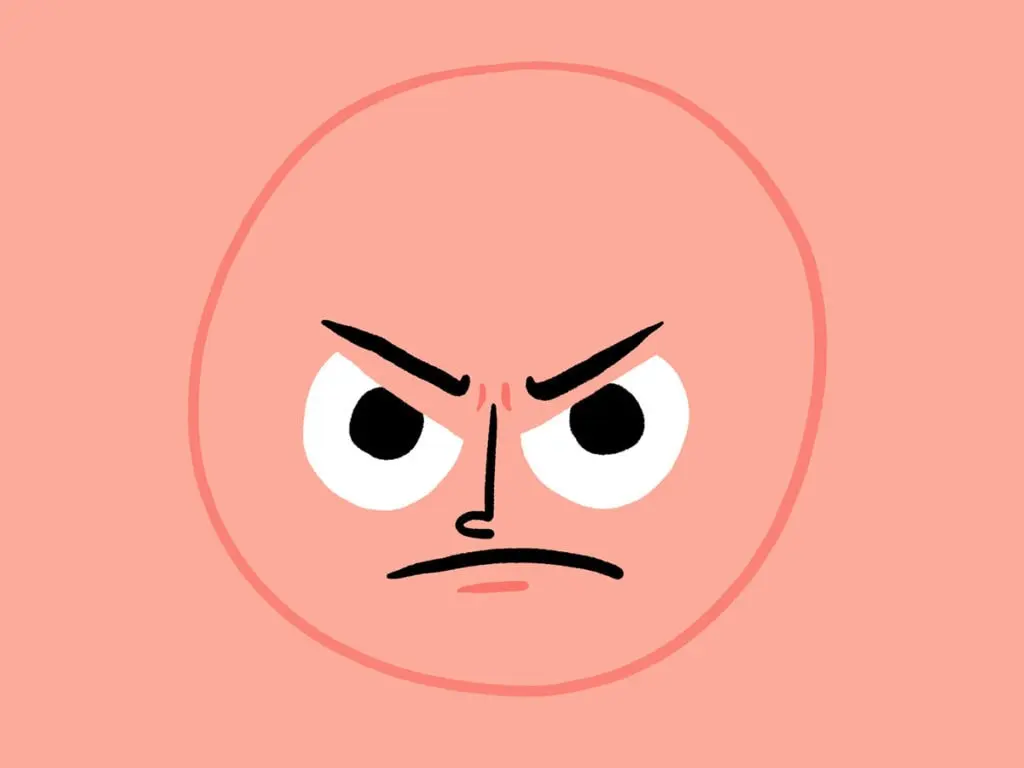
Tilt the eyebrows downward toward the center of the face to create a V-shape above the nose. Narrow the eyes slightly and draw a mouth that curves downward or shows gritted teeth.
What is the best way to draw cartoon hair?
Treat hair as a single solid shape or mass rather than drawing individual strands. Define the hairline first, then add volume around the skull shape to give the character a distinct silhouette.
How do I draw different ages for cartoon faces?
For younger characters, use larger eyes and a smaller, rounder jawline. For older characters, add wrinkles, saggy eyelids, and a more pronounced or angular jaw structure.
Why do my cartoon faces look flat?
You may be ignoring the curvature of the head. Always draw a center vertical line and a horizontal eye line to wrap your features around the three-dimensional form of the skull.
How do I make a character look surprised?
Draw large, wide-open circular eyes with the pupils centered. Raise the eyebrows high above the eyes and draw an open, O-shaped mouth to convey shock.
Should I use a specific pen for drawing cartoons?
Use a fine-liner or a felt-tip pen for bold, clean outlines. Varying the thickness of your lines can add depth and focus to specific parts of the face, such as the eyes.
This answer was created with the help of AI research tools and reference sources. Spotted an error? Let us know — we correct mistakes quickly. See our editorial policy.