How do you draw a cartoon fish?
Short answer
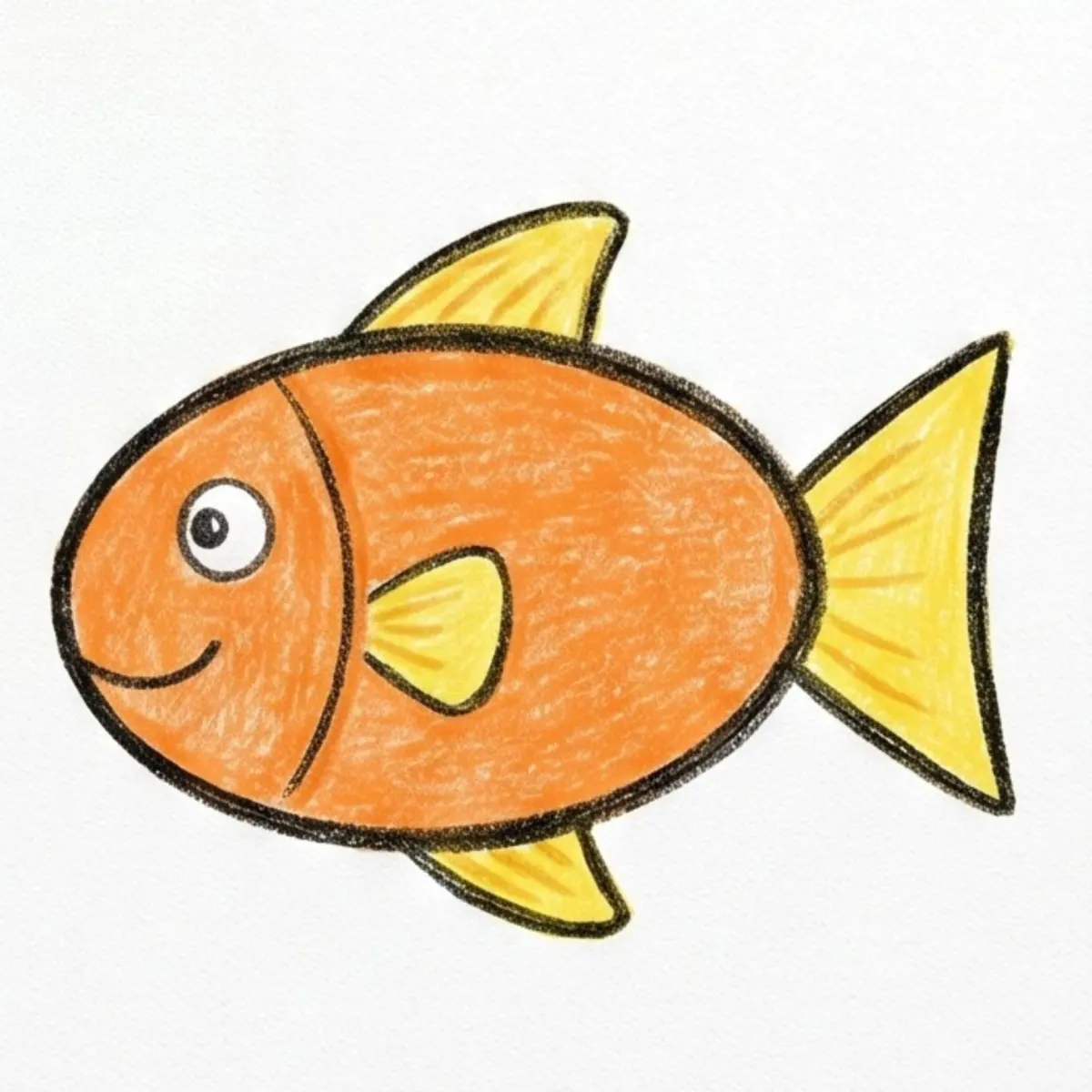
Drawing a cartoon fish involves creating a simple, rounded body shape, adding distinct fins, and incorporating expressive facial features like large eyes. By starting with basic geometric forms such as ovals or triangles, you can build a recognizable character. Focus on exaggeration and clean lines to achieve a charming, animated aesthetic.
On this page
How to sketch the basic fish shape
The foundation of any cartoon fish is a simple, exaggerated shape. Most artists begin with an oval or a teardrop form to represent the main body. This base allows you to visualize the volume of the creature before adding complex details like scales or gills. Keep your initial lines light so you can easily erase or adjust them as the character takes form.
Once the body is established, you must determine the orientation of the fish. A teardrop shape pointing toward the right suggests forward movement, which is essential for dynamic cartooning. Remember that cartooning relies on simplicity rather than anatomical precision. Focus on these steps to establish your base:
- Draw a large, horizontal oval in the center of your paper.
- Sketch a small triangle at the back of the oval to serve as the tail fin.
- Add two smaller triangles on the top and bottom of the oval for the dorsal and pectoral fins.
Best tools for beginners to use
You do not need expensive equipment to start drawing cartoons. A standard graphite pencil, such as an HB or 2B, is ideal for sketching because it allows for varying line weights. Pair this with a high-quality white eraser to clean up your construction lines once the final outline is complete. Using a smooth, acid-free drawing paper helps your pencil glide without catching on fibers.
If you prefer working with ink, wait until your pencil sketch is finished before tracing over your lines with a fine-liner pen. These pens come in various nib sizes, allowing for thick outlines that make a cartoon pop. To add color, consider these beginner-friendly options:
- Alcohol-based markers for vibrant, streak-free coverage.
- Colored pencils for blending and adding subtle textures.
- Watercolor paints if you want a softer, more artistic appearance.
How to design expressive facial features
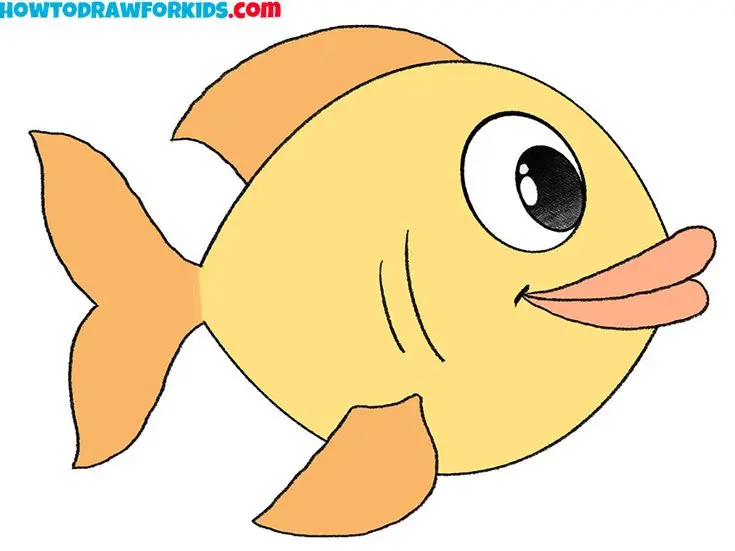
The personality of a cartoon fish is primarily conveyed through its eyes and mouth. Large, oversized eyes are a staple of the medium because they immediately signal innocence or humor to the viewer. Place the eyes near the front of the head and experiment with different pupil placements to change the character's mood. A small dot for a pupil creates a surprised look, while a larger, shaded circle feels more friendly.
The mouth is equally important for defining the character’s attitude. A simple upward curve creates a smile, while a downturned line suggests sadness or grumpiness. You can also add a small bubble or two coming from the mouth to emphasize that the fish is underwater. Follow these tips to ensure your character remains expressive:
- Vary the size of the eyes to create a sense of asymmetry, which adds charm.
- Use thick lines for the eyelids to imply a specific emotion, such as sleepiness or excitement.
- Keep the mouth simple to ensure it remains readable from a distance.
Why proportions matter in cartooning
Proportions in cartoons are intentionally distorted to create visual interest. Unlike realistic biological drawings, cartoon fish often have heads that are disproportionately large compared to their bodies. This technique, known as "chibi" or "squash and stretch" in animation, makes the character feel more approachable and cute. By exaggerating specific features, you guide the viewer's eye to the most important parts of the drawing.
However, maintain a sense of balance so the fish does not look broken. If you make the head massive, ensure the tail fin is large enough to provide visual weight on the opposite side. A common technique is to follow the "rule of thirds," where the head occupies roughly one-third of the total length of the fish. This creates a pleasing aesthetic that feels intentional rather than accidental, ensuring your character looks balanced while still maintaining its unique, exaggerated cartoon style.
Common mistakes when drawing fish
A frequent error is over-detailing the scales, which can make the drawing look cluttered and messy. In cartoons, less is often more; a few small "u" shapes or simple dots along the back are sufficient to imply texture without distracting from the character's expression. Another common mistake is neglecting the flow of the fins. Fins should look like they are moving through water, so use curved, flowing lines rather than rigid, straight ones.
Finally, avoid making the body too stiff or geometric. Even a cartoon fish should have a sense of fluidity. If your drawing feels stagnant, try adding a slight bend to the spine to give the fish a sense of swimming motion. Keep these points in mind to avoid common pitfalls:
- Do not draw every single scale; focus on the silhouette instead.
- Avoid using overly thin, shaky lines that lack confidence.
- Ensure the fins connect naturally to the body rather than appearing as floating attachments.
Key facts
- Start by drawing a simple oval or almond shape to serve as the main body of the fish.
- Add a triangle to the back of the oval to create the tail fin, ensuring it connects smoothly to the body.
- Place a small circle near the front of the oval for the eye and add a curved line nearby to represent the gill.
- Use simple triangles or semi-circles along the top and bottom of the body to form the dorsal and pectoral fins.
- Keep the design clean by using bold, continuous lines and erasing any overlapping construction marks inside the body.
- Experiment with different mouth shapes, such as a simple "O" for a surprised look or a curved line for a smile.
The bottom line
Drawing a cartoon fish is an accessible exercise that relies on basic geometric shapes like ovals and triangles. By focusing on clear outlines and exaggerated proportions, you can create a character that is both recognizable and charming. Practice varying the fin shapes and facial expressions to develop your unique style. With consistent practice, you will master the balance between simplicity and detail in your aquatic illustrations.
People also ask
How do I make my cartoon fish look more expressive?
You can add personality by adjusting the size and placement of the eyes or by adding eyebrows above them. Changing the shape of the mouth to show teeth or a frown also helps convey specific emotions.
What is the best way to color a cartoon fish?
Use bright, contrasting colors to make the fish stand out against a background. Consider using a lighter shade for the belly and a darker shade for the back to create a sense of depth.
Should I use a specific pen for drawing cartoons?
A fine-liner or a felt-tip pen works best for outlining because it provides a consistent, bold line. Start with a pencil for your initial sketch so you can easily correct mistakes before finalizing the ink.
How can I draw scales without it looking messy?
Instead of drawing every single scale, draw a few overlapping "U" shapes in specific areas like the tail or near the head. This suggests texture without cluttering the entire drawing.
What are the most common mistakes beginners make?
Beginners often draw the fins too small or place the eye too far back on the head. Ensure the fins are large enough to balance the body and keep the eye near the front to maintain a cute, cartoonish proportion.
Can I add accessories to my cartoon fish?
Yes, adding items like a top hat, glasses, or a small bubble trail can enhance the storytelling aspect of your drawing. Keep accessories simple so they do not distract from the fish's primary features.
This answer was created with the help of AI research tools and reference sources. Spotted an error? Let us know — we correct mistakes quickly. See our editorial policy.