How do you draw a manga face?
Short answer
Drawing a manga face begins with a circular head shape and a vertical center line to establish symmetry. Artists then place the eyes along a horizontal guideline, typically positioned halfway down the circle. Refinement of the jawline, nose, and mouth follows, using stylized proportions that emphasize expressive, large features characteristic of manga.
On this page
How to structure the basic head shape
The foundation of a manga face is a simple circle, which serves as the cranium. Use a light pencil to draw this shape, then extend a vertical line downward through the center to act as an axis for symmetry. Below the circle, draw a chin shape that connects to the sides of the circle, forming a smooth, tapered jawline. Beginners often make the mistake of drawing the chin too pointed or too rounded; aim for a shape that transitions naturally from the circular cranium.
To ensure proper alignment, follow these structural steps:
- Sketch a circle and divide it into four quadrants with a cross.
- Extend the vertical line downward to determine the chin's depth.
- Connect the sides of the circle to the bottom of the chin line.
- Keep these lines light so they can be easily erased later.
This framework provides the necessary proportions to keep facial features balanced regardless of the specific character style you choose to draw.
How to place eyes and facial features
In manga, the eyes are the most important feature and are usually placed on a horizontal guideline drawn halfway between the top of the head and the chin. Unlike realistic portraiture, manga eyes are significantly larger and positioned lower on the face to convey emotion. The nose is typically a small, subtle mark placed halfway between the eye line and the chin, while the mouth sits slightly below the nose.
When positioning these elements, keep the following guidelines in mind:
- Eyes should be spaced roughly one eye-width apart from each other.
- The ears should align horizontally with the space between the eyes and the nose.
- Eyebrows are placed above the eyes and can be angled to dictate the character's mood.
By maintaining these relative distances, you ensure the face remains harmonious. If you place the eyes too high, the character will look unnatural; if you place the mouth too low, the chin will appear disproportionately long.
Best tools for manga drawing beginners
While digital tablets are popular among modern professionals, beginners should start with traditional graphite pencils and smooth-surface paper. A mechanical pencil with 0.5mm HB lead is ideal because it maintains a consistent line width, which is crucial for the precise, clean strokes required in manga. You will also need a high-quality kneaded eraser, which allows you to lift graphite off the page without damaging the paper fibers or leaving smudges.
For inking your final lines, use fine-liner pens with varying tip sizes. A 0.1mm pen is excellent for small details like eyelashes and pupils, while a 0.5mm pen works well for the outer jawline and hair contours. Avoid using standard ballpoint pens, as their ink flow is inconsistent and difficult to control. Investing in a set of pigment-based ink pens will ensure your lines remain crisp and dark, providing the professional look characteristic of published manga series.
Common mistakes when drawing manga faces
One of the most frequent errors is failing to account for the three-dimensional volume of the head. Beginners often draw the face as a flat plane, ignoring the fact that the skull is a sphere. This leads to features that look "pasted on" rather than integrated into the head. To avoid this, always draw the guidelines as if they are wrapping around a 3D object, especially when drawing the head from an angle or a profile view.
Another common pitfall is inconsistent line weight. Manga art relies on "tapered" lines, where the stroke starts thin, thickens in the middle, and thins out again at the end. Beginners often use a uniform pressure, resulting in a stiff, robotic appearance. Practice varying your pressure while drawing curves to give your lines a sense of flow and energy. Additionally, avoid over-detailing the nose and mouth; in many manga styles, these features are represented by simple dots or short lines to keep the focus on the expressive eyes.
How to refine hair and expressions
Hair in manga is drawn in "clumps" rather than individual strands. Start by drawing a hairline near the top of the circle and then sketch large, geometric shapes that flow away from the crown of the head. Once the main clumps are established, you can add smaller, thinner strands at the tips to create a sense of movement. Remember that hair has volume and should sit slightly above the actual scalp line, rather than hugging the skull tightly.
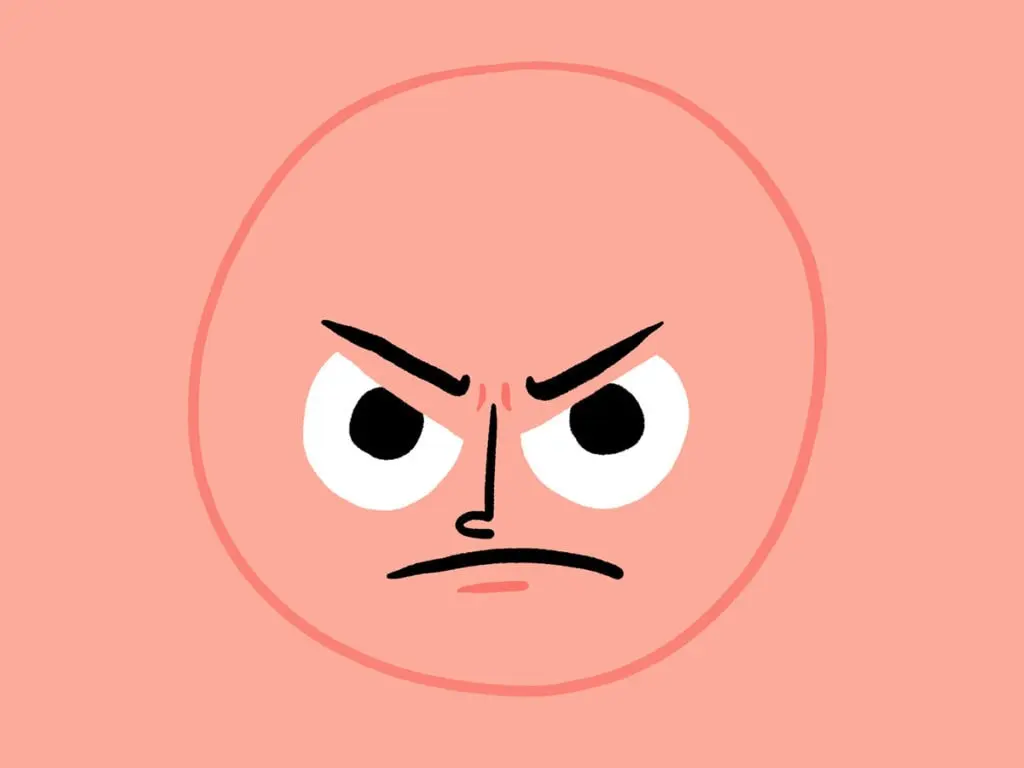
To add expression, focus on the eyebrows and the shape of the upper eyelids. A simple change in the angle of the eyebrows can transform a neutral face into one that is angry, surprised, or sad. Experiment by drawing different eye shapes—round eyes for innocent characters and narrow, slanted eyes for more serious or villainous characters. By combining these varied eye shapes with different eyebrow positions, you can create a wide range of emotions while maintaining a consistent and recognizable manga style throughout your work.
Key facts
- Start by drawing a circle to establish the cranium, then add a vertical center line to ensure facial symmetry.
- The eyes should be placed on a horizontal line that sits roughly halfway down the entire head shape.
- Manga chins are typically pointed or rounded, sitting at the end of the vertical guideline drawn from the circle.
- Ears generally align between the horizontal eye line and the bottom of the nose.
- Hair should be drawn as large, stylized clumps rather than individual strands to maintain the classic manga aesthetic.
- Avoid drawing features too close to the edge of the face; leaving space for the jawline creates a more natural look.
The bottom line
Drawing a manga face begins with mastering basic geometric construction, specifically the circle and the intersecting guidelines. By focusing on the placement of the eyes, nose, and mouth relative to these lines, you create a balanced foundation. Practice varying the proportions of these features to develop distinct character archetypes. Consistency and clean line work are essential, so prioritize structural accuracy before moving on to intricate hair and shading.
People also ask
How do I determine the correct eye size?
Eye size in manga depends on the character's age and personality. Larger eyes often denote youth or innocence, while smaller, narrower eyes are frequently used for more serious or villainous characters.
Where should I place the mouth?
The mouth is typically located about one-third of the way down from the nose to the chin. Keep it simple with a single line, as complex lips are rarely used in standard manga styles.
How do I draw a profile view?
For a side profile, use a slightly flattened circle and extend the jawline forward from the base. Ensure the nose protrudes from the center of the face while the eyes are compressed into a triangular shape.
What is the best way to draw manga hair?
Think of hair in terms of volume and layers rather than single lines. Start with a hairline at the top of the forehead and draw thick, flowing shapes that follow the contours of the skull.
Why does my character look unbalanced?
Unbalanced faces usually result from neglecting the initial construction lines. Always use a vertical axis to ensure the nose, mouth, and chin are perfectly centered before adding details.
How do I draw different expressions?
Change the shape of the eyebrows and the curve of the mouth to alter expressions. Arched brows pointing downward indicate anger, while curved, upward-facing brows suggest surprise or joy.
This answer was created with the help of AI research tools and reference sources. Spotted an error? Let us know — we correct mistakes quickly. See our editorial policy.