How do you draw speed lines?
Short answer
Speed lines are visual indicators used in illustration to represent motion or velocity. By drawing parallel, tapered strokes behind a moving object, artists create a sense of direction and kinetic energy. These lines vary in length, thickness, and density to convey different speeds, helping the viewer track the path of action.
On this page
How to draw basic speed lines
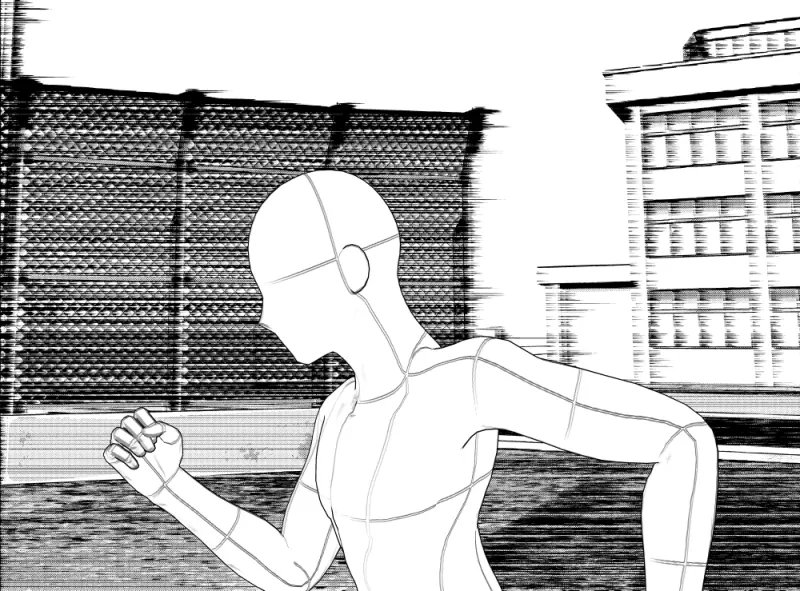
Speed lines function by mimicking the motion blur seen in photography or the trail left by a fast-moving object. To begin, identify the trajectory of your subject. If a character is running from left to right, your lines should follow that horizontal path. Use a ruler for perfectly straight, mechanical movement, or draw them freehand to suggest a more organic or chaotic sense of speed.
The most effective lines are tapered at both ends, which is achieved by applying pressure at the start of the stroke and lifting the pen or pencil as you finish. Keep the lines parallel to the object’s movement to ensure the motion looks intentional rather than messy. Focus on these three foundational steps:
- Determine the vector of the object's movement.
- Lightly sketch the path to act as a guide for your lines.
- Apply varied pressure to create tapered, sharp-looking strokes.
Best tools for speed lines
Professional illustrators often prefer tools that allow for high-contrast, clean lines. Fineliner pens, such as those with a 0.5mm tip, are excellent for crisp, uniform lines that do not smudge. For digital artists, vector brushes provide the most control, as they allow for perfect tapering and the ability to adjust the angle of the lines after they have been drawn.
If you are working with traditional media, consider using a dip pen or a brush pen. These tools respond to the pressure of your hand, naturally creating the thick-to-thin transition that makes speed lines look dynamic. Avoid using soft graphite pencils for final lines, as they tend to blur and lose the sharp, energetic quality required to sell the illusion of fast motion.
How to vary speed and intensity
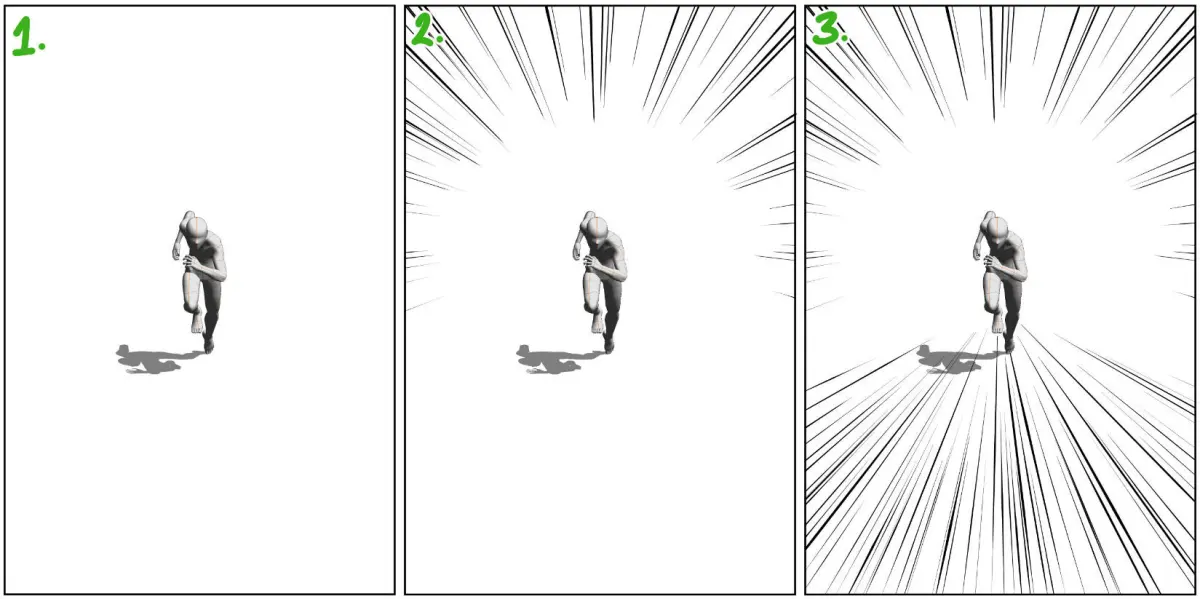
The density and length of your lines dictate how fast the object appears to be moving. Short, sparse lines suggest a moderate pace, while long, tightly packed lines imply extreme velocity. By grouping lines closer together near the trailing edge of the object, you create a focal point that draws the viewer's eye along the path of travel.
You can also experiment with line weight to add depth. Thicker lines placed further away from the subject can suggest a powerful, heavy movement, while thinner, fainter lines suggest a quick, light movement. Consider these variations to enhance your scene:
- Use curved lines to represent motion along a path or a turn.
- Vary the length of individual lines to avoid a static, "grid-like" appearance.
- Layer lines of different opacities to create a sense of atmospheric depth.
Common mistakes when drawing speed lines
A frequent error is drawing lines that cross over the subject, which can obscure the character or object and make the image difficult to read. Speed lines should almost always act as a backdrop or a trail behind the subject. If the lines intersect the subject, they should be erased or masked to maintain the clarity of the primary action.
Another common pitfall is inconsistency in the angle of the lines. If your subject is moving diagonally but your lines are perfectly horizontal, the motion will feel disjointed and confusing to the viewer. Always ensure that the angle of your lines matches the angle of the object's movement. Additionally, avoid making every line the exact same length, as this creates a rigid, artificial pattern that lacks the fluid energy of real-world motion.
Why speed lines work for storytelling
Speed lines are a fundamental component of visual storytelling, particularly in comic books and manga. They provide essential context that a static image cannot convey on its own, allowing the artist to communicate action without needing additional text or complex framing. By guiding the viewer’s eye, these lines dictate the pacing of a scene and help the audience understand the intensity of the moment.
Beyond simple velocity, speed lines can also convey impact. When an object suddenly stops or hits a target, artists often use "impact lines" that radiate outward from the point of contact. This technique, combined with standard speed lines, creates a narrative rhythm that keeps the reader engaged. Mastering these marks allows you to transform a still drawing into a vibrant, living sequence that feels like it is unfolding in real time.
Key facts
- Speed lines, or action lines, are visual shorthand used in comics and animation to represent rapid movement.
- Draw lines parallel to the direction of the object's path to suggest velocity.
- Vary the thickness and length of lines to create a sense of depth and intensity.
- Use a vanishing point to ensure lines converge correctly, making the motion look natural rather than chaotic.
- Keep lines sparse; overcrowding the frame can obscure the subject and confuse the viewer.
- Use white space between lines to maintain clarity, especially when depicting fast-moving objects like cars or projectiles.
The bottom line
Speed lines are an essential tool for conveying kinetic energy in static imagery. By aligning strokes with the intended path of motion and carefully managing line density, you can effectively direct the viewer's focus and simulate high-speed action. Remember to prioritize clarity by keeping the subject unobstructed and using varied line weights. Mastering this technique transforms simple drawings into dynamic scenes full of life and vigor.
People also ask
Do speed lines need to be perfectly straight?
No, while straight lines imply linear speed, curved lines can suggest movement along a trajectory or rotation. Curvature helps guide the eye around the action.
How do I show that a character is running?
Place horizontal lines behind the character’s legs and torso to indicate forward momentum. Ensure the lines follow the angle of the character’s stride to emphasize the physical effort.
Can speed lines be used for slow movement?
Speed lines are generally reserved for fast, dynamic action. For slower movement, artists typically use body posture or subtle environmental cues like swaying grass.
Should speed lines always be black?
Not necessarily, as the color of the lines should complement the background. White lines are often used against dark backgrounds or shadows to maintain high contrast.
How do I avoid making the drawing look messy?
Focus on consistent spacing and tapering the ends of the lines. Use a ruler for precision and avoid crossing lines over the main subject’s silhouette.
Are speed lines used in professional manga?
Yes, they are a fundamental technique in manga, often called "effect lines." Artists use them to heighten the impact of punches, falls, or high-speed chases.
This answer was created with the help of AI research tools and reference sources. Spotted an error? Let us know — we correct mistakes quickly. See our editorial policy.