How do you draw a jellyfish?
Short answer
Drawing a jellyfish begins with sketching a simple dome shape for the bell, followed by adding flowing, organic lines for the tentacles. By layering translucent textures and varying the length of the trailing appendages, you can create a realistic sense of movement and depth characteristic of these fascinating marine creatures.
On this page
How to sketch the basic anatomy of a jellyfish
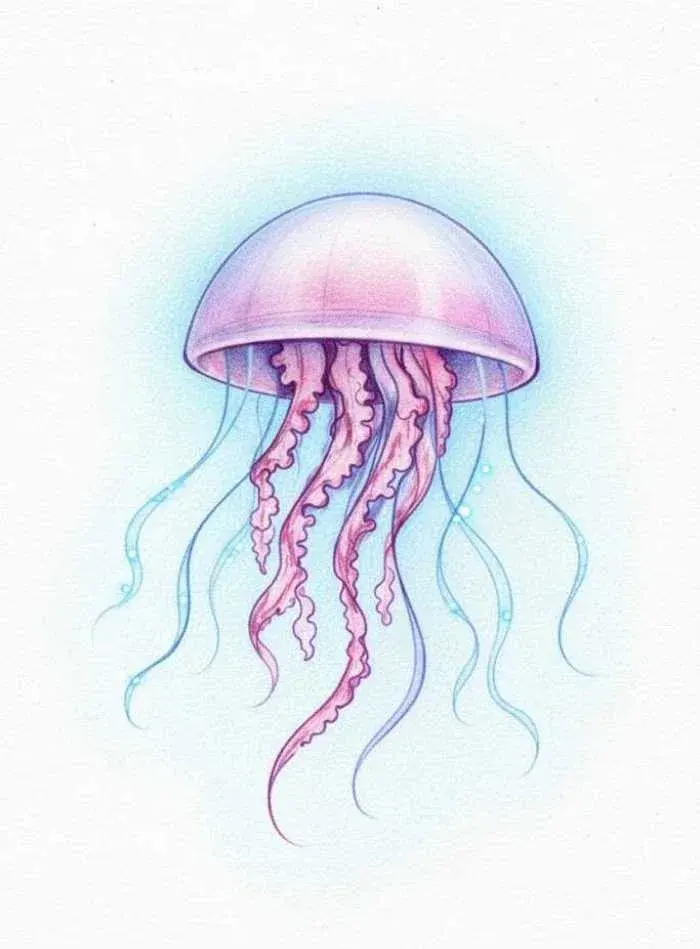
To begin your drawing, focus on the bell, which is the umbrella-shaped top portion of the jellyfish. Start by drawing a wide, shallow arc that resembles a flattened dome or a mushroom cap. Keep your pencil strokes light, as you will want to refine the edges later to ensure they look soft and organic rather than rigid or perfectly geometric. Beneath this dome, sketch a slightly curved horizontal line to represent the underside, where the oral arms will eventually attach.
Once the bell is established, define the central structure by adding a few subtle, wavy lines that suggest the internal anatomy. Jellyfish are mostly composed of water, so their bodies are translucent and lack a solid skeleton. Avoid drawing thick, dark outlines; instead, use delicate, broken lines to suggest the bell’s outer boundary. This approach helps convey the ethereal, gelatinous quality that makes jellyfish appear to float effortlessly through the water column.
Best drawing tools for beginners
For those new to sketching marine life, a set of graphite pencils ranging from 2H to 4B is ideal. The harder 2H pencils allow for faint, preliminary sketching that is easy to erase, while the softer 4B pencils are perfect for adding depth and shadows to the denser parts of the bell. Using a high-quality kneaded eraser is also essential, as it allows you to lift graphite off the paper to create the highlights and glowing effects common in deep-sea creatures.
If you prefer working with ink or markers, consider the following tools to enhance your final piece:
- Fine-liner pens (0.1mm to 0.3mm) for drawing thin, intricate tentacles.
- White gel pens to add reflective light points on the top of the bell.
- Watercolor pencils to add soft, blue or purple washes that mimic the ocean environment.
- A blending stump to smooth out transitions between light and shadow on the bell’s surface.
How to draw realistic jellyfish tentacles
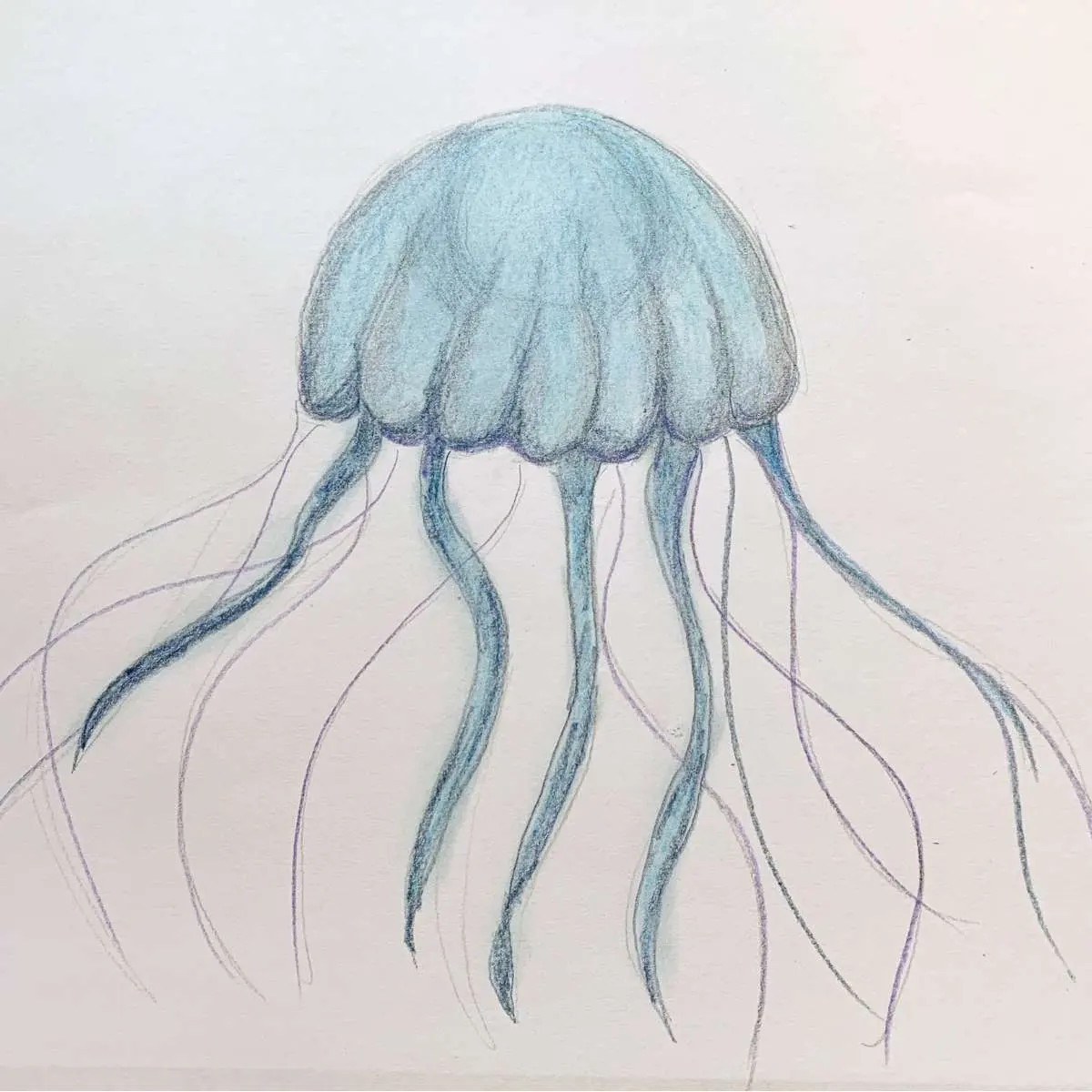
The tentacles are what give a jellyfish its graceful, flowing appearance. Instead of drawing straight, stiff lines, create long, winding ribbons that hang down from the underside of the bell. Vary the thickness of these lines; some should be very thin and wispy, while others can be slightly thicker to suggest closer proximity to the viewer. Overlapping these lines adds a sense of three-dimensional space, making the jellyfish look as though it is drifting in a current.
To achieve a natural look, follow these steps when adding the trailing appendages:
- Draw several long, primary tentacles that extend far below the bell.
- Add shorter, secondary tentacles clustered near the center to create volume.
- Use "S" curves and spirals to ensure the lines look like they are moving in water.
- Vary the spacing between tentacles to avoid a cluttered or symmetrical appearance.
- Add small, circular knots or bumps along the tentacles to represent stinging cells.
Why jellyfish drawings look stiff
A common issue when drawing jellyfish is making them look too symmetrical or static. In nature, jellyfish are constantly shifting and reacting to water currents, meaning their bells are rarely perfect circles and their tentacles are never perfectly aligned. If your drawing feels stiff, try breaking the symmetry by tilting the bell slightly or making one side of the dome flatter than the other. Adding subtle ripples to the edge of the bell will also break up the monotony of a smooth curve.
Another reason for a stiff appearance is the lack of contrast. Because jellyfish are transparent, they should interact with the light around them. If you draw the entire jellyfish with the same line weight, it will look like a flat sticker. Use darker, more defined lines for the parts of the tentacles that are closer to the viewer, and use lighter, thinner lines for the parts that are further away or obscured by the bell.
Common mistakes when drawing jellyfish
One frequent error is failing to consider the jellyfish's environment. Many beginners draw the creature in a vacuum, ignoring how the water would distort its shape or how light would pass through it. Always imagine the light source when shading; since jellyfish are translucent, light often passes through the bell, creating a glowing effect. Leaving the center of the bell lighter than the edges can help simulate this internal illumination, which is a hallmark of many species found in the deep ocean.
Avoid these mistakes to improve your overall composition:
- Over-detailing the bell: Keep the top clean to emphasize the creature's transparency.
- Uniform tentacle length: Real tentacles vary greatly in length and tension.
- Ignoring buoyancy: Ensure the tentacles look like they are floating upward or outward rather than hanging like heavy ropes.
- Opaque shading: Do not use solid, heavy blacks, as this makes the jellyfish appear solid and dense rather than gelatinous.
- Neglecting the oral arms: Remember that the central, ruffled structures are just as important as the long, trailing tentacles for a complete look.
Key facts
- A jellyfish is primarily composed of an umbrella-shaped bell and trailing, stinging tentacles.
- Start your sketch by drawing a horizontal oval or a shallow dome to represent the bell.
- Jellyfish bodies are roughly 95 percent water, meaning they often appear translucent or ghost-like.
- Add wavy, irregular lines hanging from the bottom of the bell to create the appearance of tentacles.
- Vary the length and thickness of the tentacles to make the drawing look more organic and fluid.
- Use soft shading or light strokes to suggest the gelatinous texture rather than harsh, solid outlines.
The bottom line
Drawing a jellyfish is an exercise in capturing fluid motion and transparency. By focusing on a soft, rounded bell and incorporating irregular, overlapping tentacles, you can effectively convey the creature's gelatinous nature. Avoid rigid, symmetrical lines, as natural movement is inherently chaotic. With light shading and a focus on organic, flowing shapes, you can create a lifelike representation that highlights the beauty of these marine animals.
People also ask
How do I make a jellyfish look like it is floating in water?
Draw the tentacles flowing upward or outward rather than hanging straight down. This suggests buoyancy and movement within a current.
Should I use color when drawing a jellyfish?
Yes, using light blues, pinks, or purples can enhance the ethereal quality of the creature. Use watercolors or light markers to maintain a translucent effect.
What is the most common mistake when drawing jellyfish?
Drawing tentacles that are too symmetrical or rigid is a common error. Real jellyfish tentacles are chaotic and overlap frequently, so avoid creating perfectly parallel lines.
How many tentacles should I include?
There is no set number, as species vary from a few appendages to hundreds. Start with five to seven long, flowing lines to keep the composition balanced.
Can I add detail inside the bell?
You can draw simple, circular shapes inside the bell to represent the gonads or digestive system. Keep these details faint so they do not distract from the overall silhouette.
What shape should the bell be?
While many are dome-shaped, some species like the box jellyfish have a more cuboid appearance. Choose a rounded shape for a classic look or a square shape for a unique scientific variation.
This answer was created with the help of AI research tools and reference sources. Spotted an error? Let us know — we correct mistakes quickly. See our editorial policy.