Is drawing a talent or a skill?
Short answer
Drawing is primarily a skill rather than an innate talent. While some individuals may possess a natural inclination toward spatial awareness or visual observation, technical proficiency is acquired through deliberate practice and systematic study. Like learning a musical instrument or a new language, drawing ability improves significantly with consistent, focused effort over time.
On this page
Is drawing a natural talent or a learned skill?
The common perception that drawing is a "gift" often stems from the observation of child prodigies like Pablo Picasso, who displayed advanced technical skills at a very young age. However, research in cognitive psychology and art education suggests that drawing is a cognitive process involving hand-eye coordination and spatial reasoning. These are neurological functions that can be refined through repetition and instruction. While genetic predispositions might influence how quickly someone perceives light, shadow, and proportion, they do not dictate an individual's ultimate potential.
Most people who are labeled "talented" have simply spent thousands of hours observing the world and translating those observations onto paper. The brain learns to interpret three-dimensional space and map it onto a two-dimensional surface through experience. By treating drawing as a technical craft rather than a mystical ability, learners can bypass the frustration of comparing themselves to others. Understanding that drawing is a skill empowers students to approach the blank page with a structured mindset, focusing on incremental growth rather than waiting for inspiration to strike.
How long does it take to learn to draw?
The timeline for mastering drawing depends entirely on the intensity of practice. A beginner who practices for 30 minutes daily will see significant improvements within three to six months. Mastery, however, is a lifelong pursuit. Many professional artists follow the "10,000-hour rule," a concept popularized by Malcolm Gladwell, which suggests that high-level expertise requires immense amounts of deliberate practice. This does not mean you must wait years to produce quality work; you can create meaningful art at any stage of your development.
To track your progress effectively, consider these benchmarks:
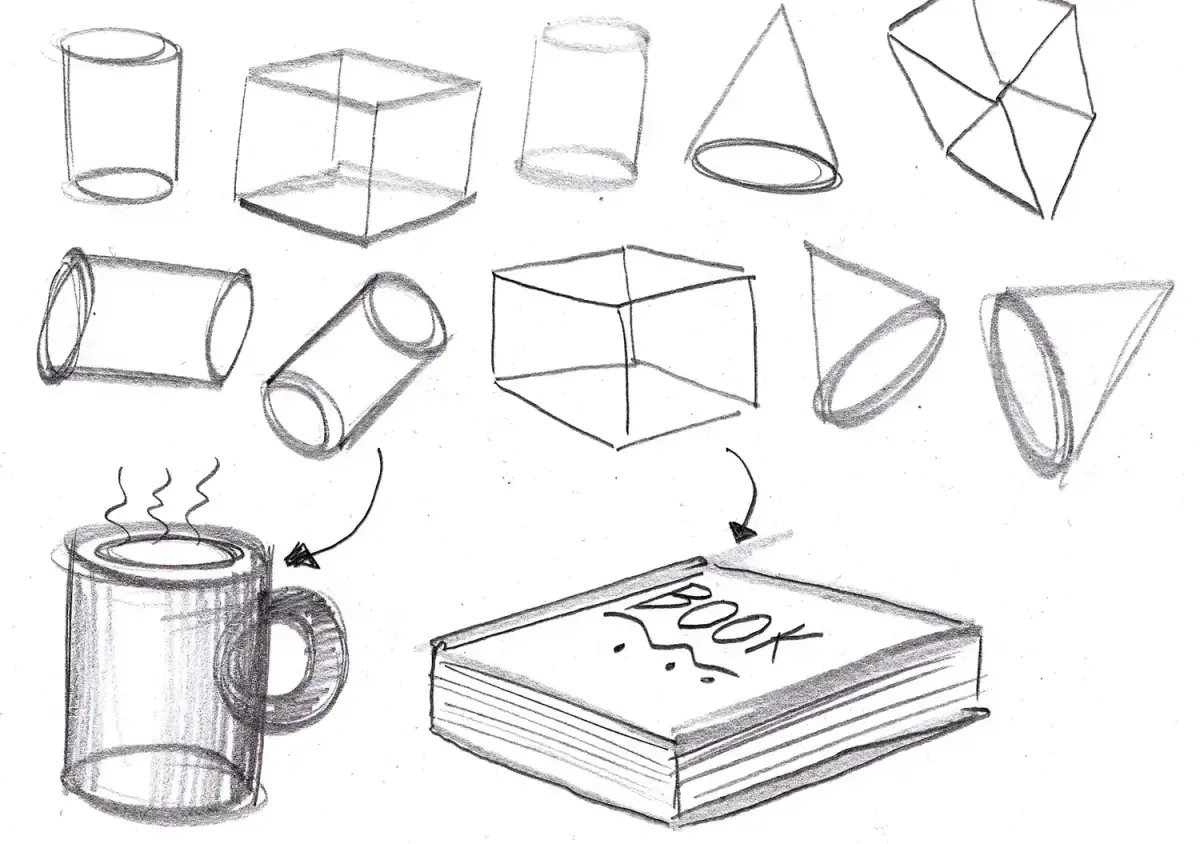
- First 50 hours: Learning to control the pencil and understanding basic geometric shapes.
- First 200 hours: Developing an eye for perspective, light, and shadow.
- First 500 hours: Gaining confidence in anatomical structure and complex composition.
- First 1,000 hours: Establishing a personal style and artistic voice.
Consistency is far more important than intensity. Practicing for 20 minutes every day is scientifically proven to be more effective for motor skill acquisition than practicing for five hours once a week.
Best exercises for drawing beginners
Beginners often focus on drawing finished portraits, which is a common mistake that leads to burnout. Instead, focus on fundamental exercises that build muscle memory and observational accuracy. Start by drawing basic geometric forms like spheres, cubes, and cylinders, as these are the building blocks of every complex object in the world. Once you can shade these shapes to create a sense of volume, you can deconstruct any subject into simpler components.
Follow these steps to build a strong foundation:
- Practice "blind contour drawing" by sketching an object without looking at your paper to force your eyes to truly see the subject.
- Use "negative space" drawing by sketching the shapes of the empty areas around an object rather than the object itself.
- Dedicate time to gesture drawing, which involves sketching the movement and flow of a subject in under 60 seconds.
- Study the "value scale" by creating a strip of ten boxes ranging from pure white to the darkest black your pencil can achieve.
Why drawing feels difficult for most people
The primary barrier to learning to draw is not a lack of talent, but a disconnect between the brain and the hand. When we look at an object, our brains often use "symbols" to represent it—for example, drawing a circle with two dots for an eye. To draw realistically, you must learn to override these symbolic shortcuts and see the actual lines, angles, and tonal values present in your field of vision. This requires a shift in mental processing known as "right-brain" thinking, where you focus on the visual data rather than the conceptual identity of the object.
Another reason drawing feels difficult is the fear of making mistakes. Because drawing is a visual medium, errors are immediately apparent, which can be discouraging. However, these mistakes are critical data points for your brain. Every time you draw a line that is slightly off, your brain recalibrates its understanding of spatial relationships. Embracing these errors as part of the learning process is the fastest way to improve your accuracy and develop the technical confidence required for more advanced artistic projects.
Common mistakes when learning to draw
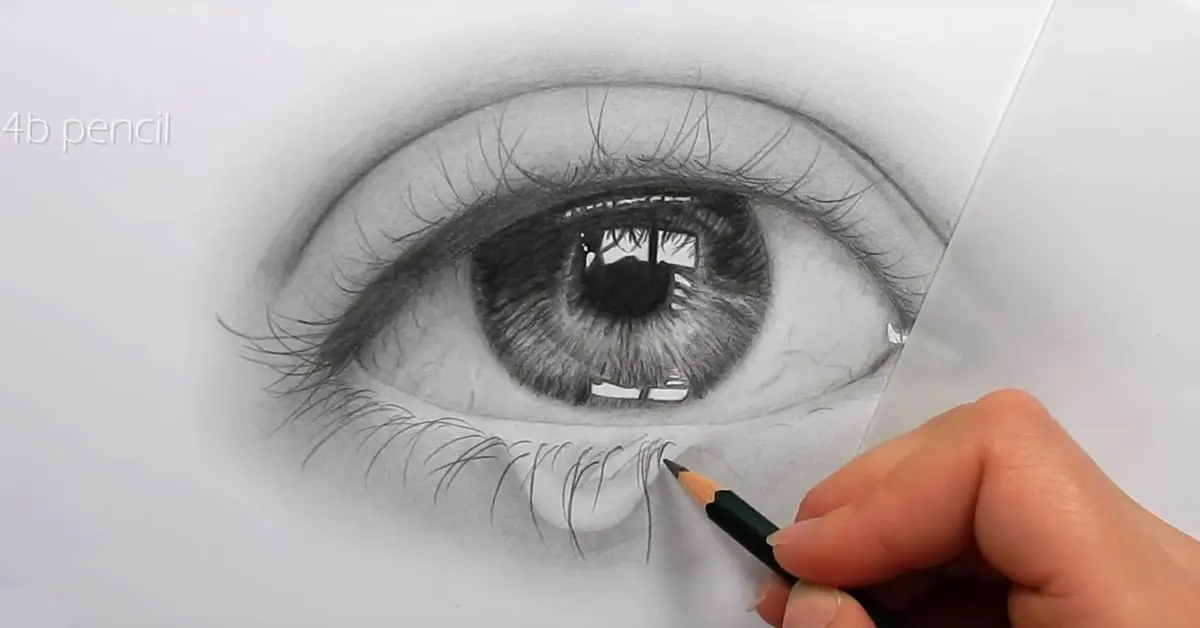
One of the most frequent errors is "fuzzing" or using short, scratchy lines to build an image. This creates a messy appearance and prevents you from developing clean, confident strokes. Instead, aim for long, fluid lines, even if they are inaccurate at first. You can always erase or refine a bold line, but a series of tiny, hesitant marks will make your work look shaky and lack structural integrity. Another mistake is failing to use a variety of pencil grades, such as 2H for light construction and 4B for deep shadows.
Avoid these common pitfalls to accelerate your growth:
- Pressing too hard with your pencil, which damages the paper and makes erasing difficult.
- Ignoring the importance of light sources, which results in flat, two-dimensional drawings.
- Working on a single drawing for too long, which causes "artist's fatigue" and loss of perspective.
- Neglecting to use reference photos or real-life objects, relying instead on memory or imagination too early.
By consciously avoiding these habits and maintaining a disciplined practice schedule, you will find that drawing is a skill that is well within your reach regardless of your starting point.
Key facts
- Drawing is primarily a motor skill involving hand-eye coordination that improves through deliberate practice.
- Neuroplasticity allows the brain to form new neural pathways, meaning anyone can physically learn to draw.
- The "talent" myth often confuses innate interest or early exposure with a biological gift.
- Observation is the most critical technical skill, requiring the artist to see shapes rather than labels.
- Muscle memory develops through repetition, much like learning to play an instrument or ride a bicycle.
- Consistent practice of 15 to 30 minutes daily is more effective than infrequent, long sessions.
The bottom line
Drawing is a technical skill built upon observation, patience, and repetition rather than an innate, mystical talent. While some individuals may have a natural inclination toward visual arts, every person can achieve high levels of proficiency through consistent, deliberate practice. By focusing on seeing shapes and understanding light, you can train your brain and hands to translate the physical world onto paper with increasing accuracy.
People also ask
Does having artistic parents mean I will be good at drawing?
Genetics do not dictate drawing ability, though growing up in an environment that encourages observation can provide an early advantage. You inherit interests and habits, not the physical skill of drawing itself.
How long does it take to learn how to draw?
Basic proficiency in perspective and shading can be achieved in a few months of daily practice. Mastery is a lifelong pursuit, but noticeable improvement typically occurs within the first 50 to 100 hours of focused effort.
What is the most common mistake beginners make?
Beginners often try to draw what they think an object looks like rather than what they actually see. This leads to symbolic drawing, where the brain uses a mental shortcut instead of observing true proportions.
Do I need expensive tools to start drawing?
High-quality materials are unnecessary for beginners and can sometimes be a distraction. A standard graphite pencil, a sharpener, and a clean sheet of printer paper are sufficient to learn the fundamentals of line and tone.
Why do some people seem to draw naturally?
People who appear "naturally gifted" usually possess a high level of curiosity and have spent years observing the world. Their ability is the result of thousands of hours of unconscious practice and deep visual engagement.
Can adults learn to draw if they never did it as children?
Yes, the brain remains capable of developing fine motor control and spatial reasoning at any age. Adult learners often progress faster than children because they possess better focus and a more analytical approach to problem-solving.
This answer was created with the help of AI research tools and reference sources. Spotted an error? Let us know — we correct mistakes quickly. See our editorial policy.