Can anyone learn to draw?
Short answer
Yes, anyone can learn to draw. Drawing is a motor skill based on observation and hand-eye coordination rather than an innate, mystical talent. While some individuals may have a natural aptitude, the ability to represent three-dimensional objects on a two-dimensional surface is a technical proficiency acquired through consistent, deliberate practice and study.

On this page
How long does it take to learn to draw?
The timeline for learning to draw varies significantly based on the intensity of practice and the specific goals of the student. Most foundational skills, such as understanding basic geometry, perspective, and shading, can be grasped within three to six months of daily practice. Achieving a level of proficiency that allows for realistic portraiture or complex anatomical rendering typically requires one to three years of focused effort.
Progress is rarely linear, often characterized by periods of rapid improvement followed by plateaus. Consistency is far more important than the length of individual sessions. Research into motor learning suggests that thirty minutes of daily practice is more effective than a single five-hour session once a week. To track progress, beginners should maintain a sketchbook to document their development over time.
- Set a goal of 15 to 30 minutes of daily practice.
- Focus on volume of work rather than the quality of a single drawing.
- Review past work every month to identify specific areas of growth.
- Increase the complexity of subjects only after mastering basic shapes.
Best tools for beginners
Starting with the right equipment prevents unnecessary frustration and allows the student to focus on technique. Beginners do not need expensive professional supplies; a basic set of materials is sufficient to learn the principles of line, tone, and texture. High-quality tools can sometimes mask poor technique, so starting with accessible materials helps build a stronger foundation.
Essential items for a beginning artist include:
- A set of graphite pencils ranging from 2H (hard) to 6B (soft).
- A kneaded eraser, which can be molded to lift graphite gently.
- A sketchbook with at least 80-pound paper weight to handle multiple erasures.
- A metal pencil sharpener to maintain precise points.
- A blending stump or tortillon for softening transitions between light and shadow.
Avoid purchasing large, multi-piece kits that include low-quality charcoal or colored pencils, as these often distract from the primary goal of learning value and form. Keep the workspace organized and ensure a consistent light source is available to study how shadows fall on objects.
Why drawing difficulty happens
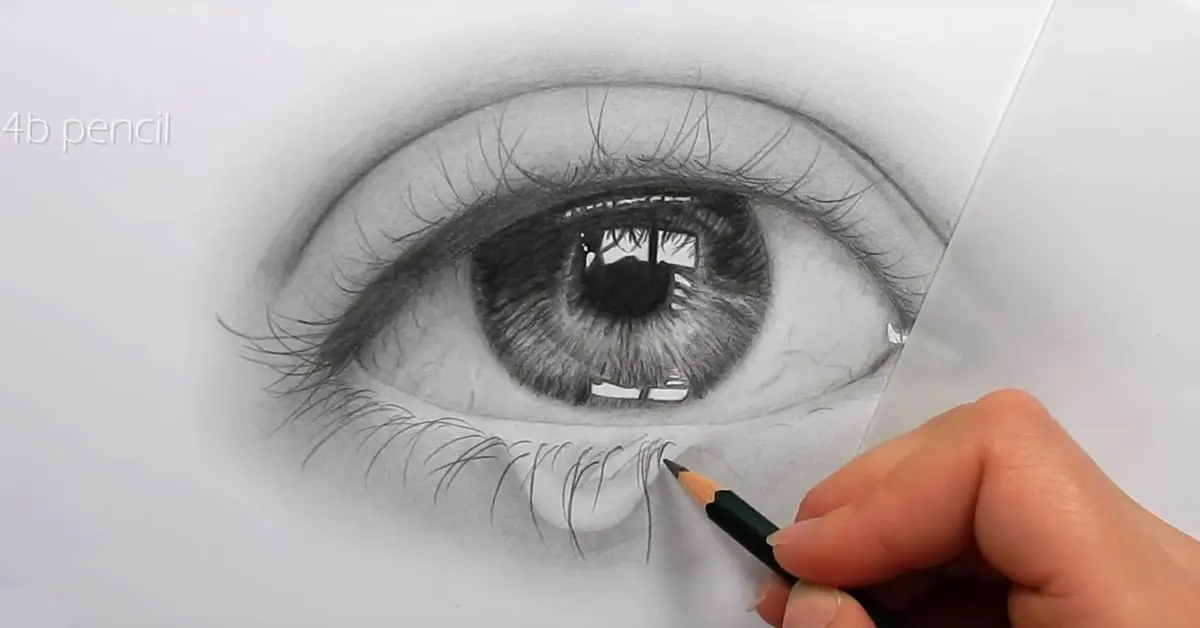
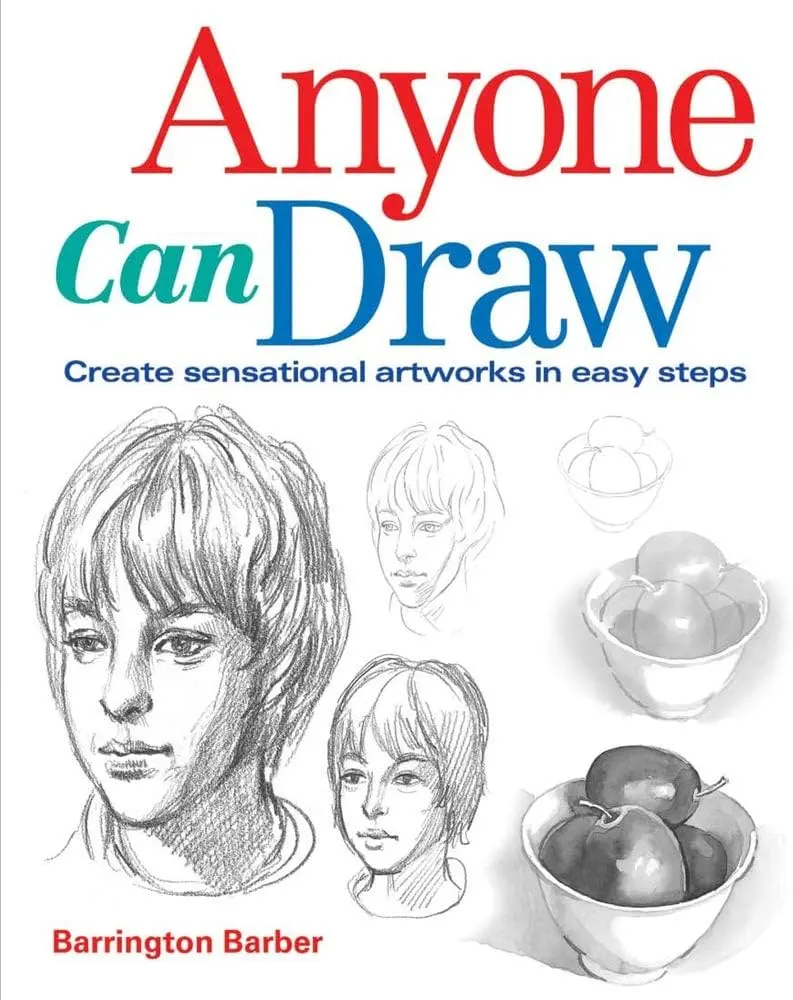
Many people struggle with drawing because they attempt to draw what they think they see rather than what is actually in front of them. The human brain is wired to categorize objects into symbols; for example, a child might draw a house as a square with a triangle on top. Learning to draw requires overriding these symbolic shortcuts and observing the specific angles, proportions, and light values of a subject.
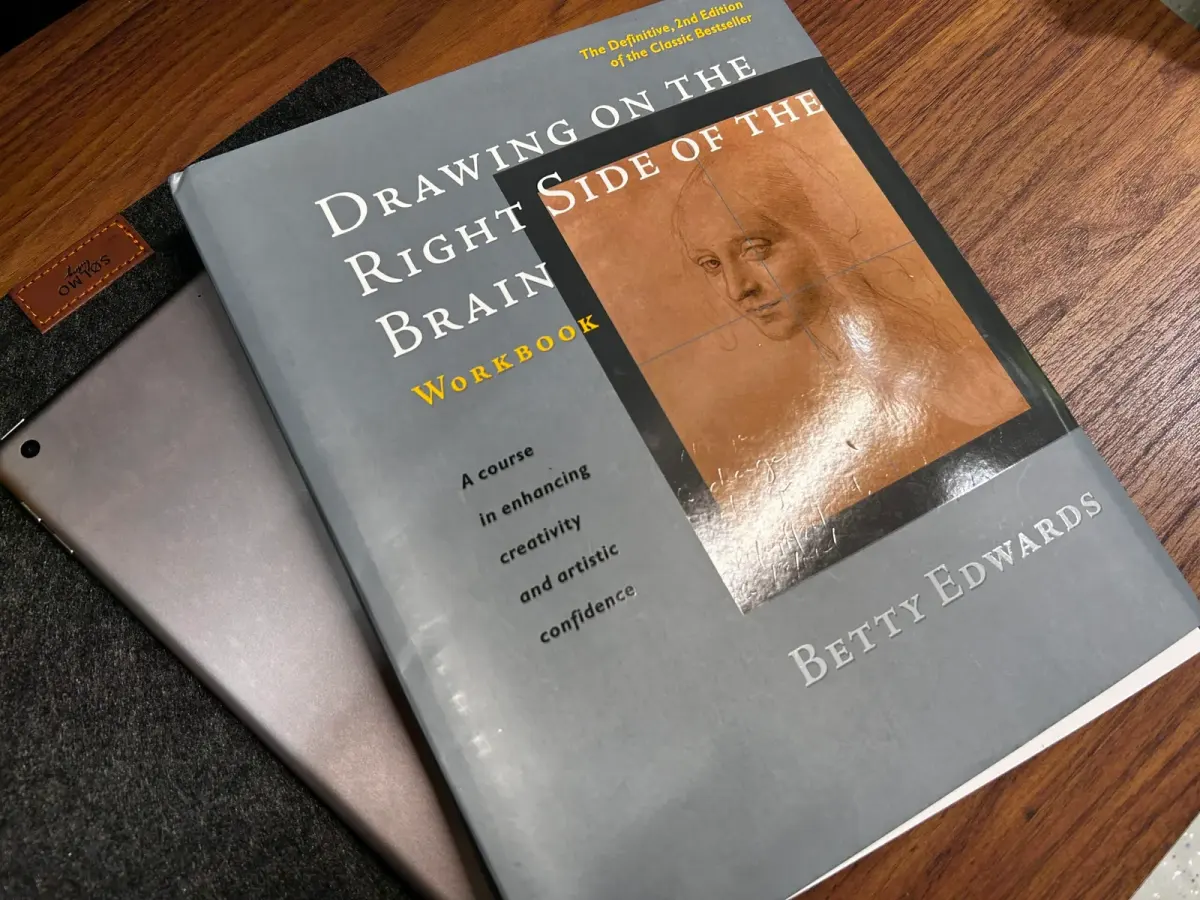
This cognitive shift is often called "drawing from the right side of the brain," a concept popularized by educator Betty Edwards in her 1979 book. By focusing on negative space—the empty areas around an object—the brain stops trying to name the object and begins processing raw visual data. This transition is mentally taxing, which is why beginners often feel tired after short drawing sessions. It is a neurological adjustment that takes time to normalize.
Common psychological hurdles include:
- Perfectionism, which leads to early abandonment of projects.
- Comparison to professional artists on social media.
- Fear of making "ugly" marks on a clean page.
- Impatience with the slow development of muscle memory.
Common mistakes when learning to draw
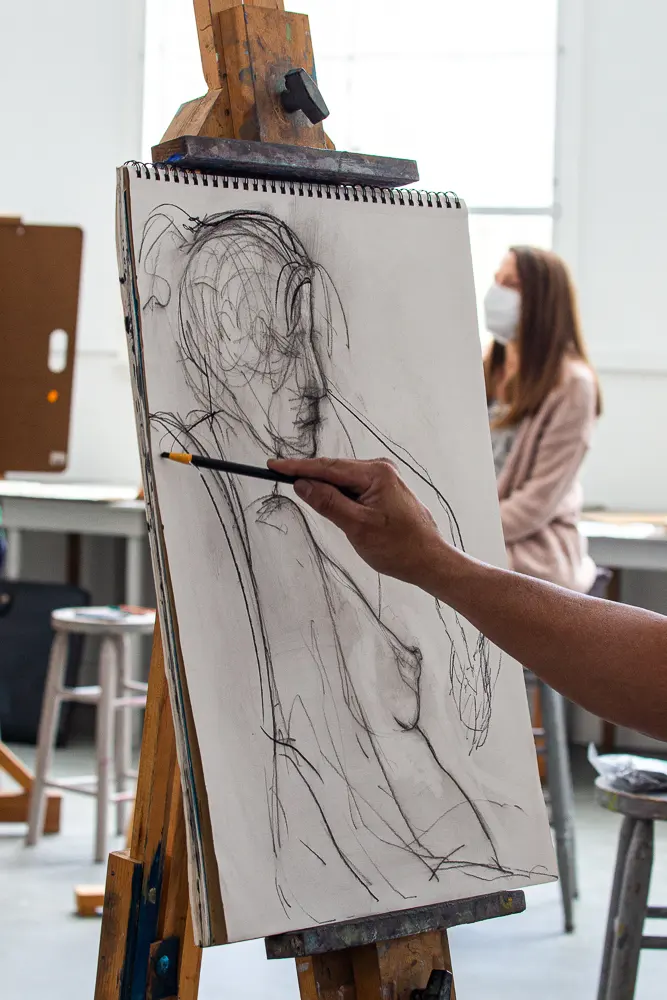
One of the most frequent errors is "outlining," where a student draws a dark, heavy border around every object. In reality, light and shadow define edges, not lines. Beginners should practice "blind contour drawing," where the eyes follow the edges of an object slowly while the hand mimics that movement without looking at the paper. This exercise forces the brain to synchronize visual input with physical motion.
Another common mistake is neglecting the "value scale." A drawing that uses only light grays will lack depth and appear flat. Beginners should strive to include a full range of values, from the darkest blacks to the brightest whites, to create the illusion of volume. Using a viewfinder—a small piece of cardboard with a rectangular hole—can also help beginners isolate their subject and simplify complex scenes into manageable compositions.
- Avoid pressing too hard with the pencil, which damages the paper fibers.
- Do not rely on smudging with fingers, as skin oils degrade the drawing.
- Stop trying to draw from memory until you have mastered drawing from life.
- Ensure your drawing surface is at a comfortable angle to prevent distortion.
How to structure a practice routine
A structured routine ensures that every practice session serves a specific purpose. Start each session with a "warm-up" to loosen the muscles in the wrist and shoulder. This might involve drawing circles, ellipses, or parallel lines for five minutes. These movements build the muscle memory required for confident, fluid strokes. After warming up, move to a specific study, such as rendering a simple sphere or a piece of fruit.
Divide your time between technical exercises and creative projects. Technical exercises, such as practicing perspective grids or anatomical studies, build the "vocabulary" of drawing. Creative projects allow you to apply those skills in a way that feels rewarding and personal. By balancing these two approaches, you maintain motivation while steadily improving your technical accuracy. Remember that every drawing is an experiment; even a failed attempt provides valuable data on where your current understanding of form or light needs improvement.
Key facts
- Drawing is a motor skill, not a mystical talent, and improves significantly with deliberate, consistent practice.
- The "50/50 rule" suggests that half of learning to draw involves observing the subject, while the other half involves mark-making.
- Betty Edwards, author of Drawing on the Right Side of the Brain, popularized the concept that drawing is a cognitive shift in how we process visual information.
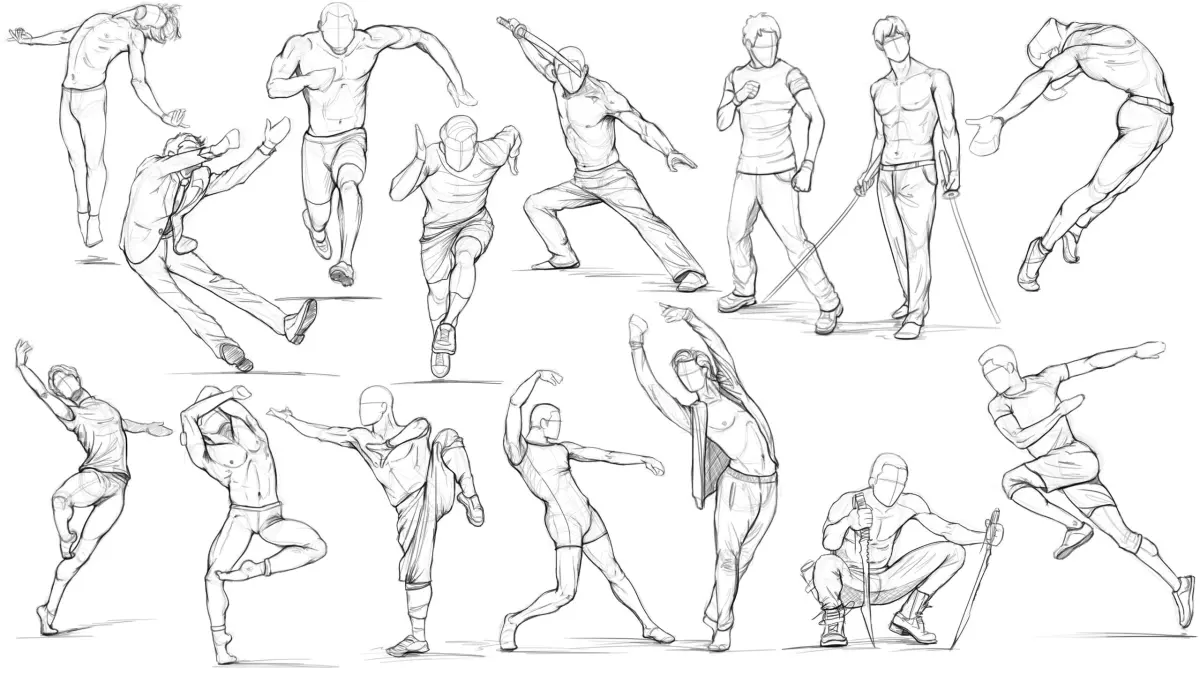
- Beginners should spend at least 15 minutes daily on "gesture drawing" to build hand-eye coordination and muscle memory.
- Using a viewfinder—a small cardboard frame—helps artists isolate compositions and ignore the distracting details of a complex environment.
- Drawing upside down is a proven exercise that forces the brain to focus on shapes and lines rather than symbolic labels like "eye" or "nose."
The bottom line
Drawing is a teachable skill rooted in observation and motor control rather than innate genius. By shifting your focus from drawing symbols to analyzing shapes, proportions, and light, you can develop technical proficiency through consistent daily practice. While the initial learning curve requires patience, the ability to translate the three-dimensional world onto a two-dimensional surface is accessible to anyone willing to commit to the process.
People also ask
Do I need expensive art supplies to learn?
No, a simple graphite pencil and standard printer paper are sufficient for mastering fundamental techniques. Expensive tools often provide comfort, but they cannot replace the necessity of developing basic observational skills through repetition.
How long does it take to become proficient?
Most students see measurable progress within three months of consistent, daily practice. Mastery, however, is a lifelong process that depends on the complexity of the subjects you choose to study.
Is it necessary to have a natural talent to succeed?
Natural inclination may provide an early advantage, but it is not a prerequisite for technical competence. Dedication to understanding perspective, anatomy, and light consistently outweighs innate ability in professional outcomes.
What is the most common mistake for beginners?
Beginners often draw what they "think" an object looks like rather than what they actually see. This symbolic drawing prevents the artist from capturing accurate proportions and unique details of the subject.
Should I learn to draw from imagination or from life?
You should always start by drawing from life to build a mental library of physical reality. Once you understand how light and form work in the real world, you can effectively apply those rules to imaginative work.
How do I overcome the frustration of early progress?
Keep your early sketches in a dated portfolio to track your incremental improvements over time. Comparing your current work to your past efforts provides objective evidence of growth that subjective feelings often overlook.
This answer was created with the help of AI research tools and reference sources. Spotted an error? Let us know — we correct mistakes quickly. See our editorial policy.