How long does it take to learn figure drawing?
Short answer
Learning figure drawing is a lifelong pursuit rather than a destination with a fixed end date. Most students require 100 to 200 hours of deliberate practice to achieve basic anatomical proficiency. Mastery of complex gesture, foreshortening, and expressive lighting typically demands several years of consistent, daily study and professional-level dedication.
On this page
How long does it take to learn figure drawing?
The timeline for proficiency depends heavily on your definition of success and the intensity of your practice. A beginner can expect to see significant improvements in their understanding of proportions and balance within three to six months of consistent weekly sessions. However, moving from a basic grasp of form to creating sophisticated, gallery-quality figurative work is a long-term commitment that often spans five to ten years.
Progress in figure drawing is rarely linear. You will likely experience periods of rapid growth followed by plateaus where your skills feel stagnant. This is a natural part of the learning process as your eye develops faster than your hand can execute. To reach an intermediate level, you should aim for at least 500 hours of focused observation and drawing. Advanced mastery, which involves mastering complex anatomy and dynamic lighting, requires thousands of hours of repetitive, intentional practice under the guidance of experienced instructors.
Best resources for beginners
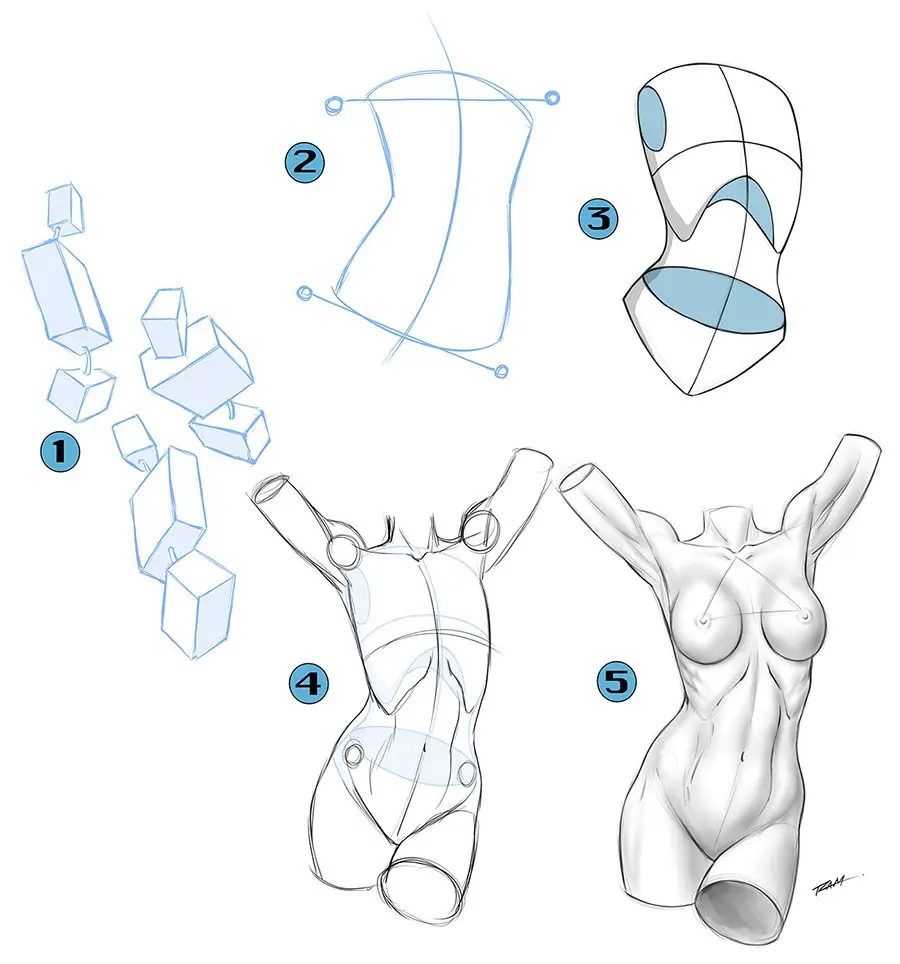
To build a strong foundation, you must prioritize structural understanding over surface details. Start by studying the works of masters like Andrew Loomis or George Bridgman, whose books provide the essential blueprints for human construction. These resources teach you to simplify the complex human form into basic geometric shapes, such as spheres, cylinders, and cubes, which are easier to manipulate and understand in three-dimensional space.
- Invest in a high-quality sketchbook and soft graphite pencils or charcoal sticks.
- Utilize online platforms that offer timed gesture drawing sessions, such as Proko or Line of Action.
- Attend local life drawing classes where you can observe live models, as drawing from a three-dimensional subject is vastly superior to working from photographs.
- Practice "blind contour" drawing to force your eyes to truly see the edges of the form rather than relying on your preconceived mental symbols of what a body looks like.
Why artistic plateaus happen
Plateaus occur when your technical skills reach a temporary equilibrium with your current level of visual perception. You may find that your drawings look "correct" but lack life or energy, signaling that you have mastered the mechanics but are failing to capture the gesture. This often happens after the initial excitement of learning basic anatomy wears off and the repetitive nature of the craft sets in.
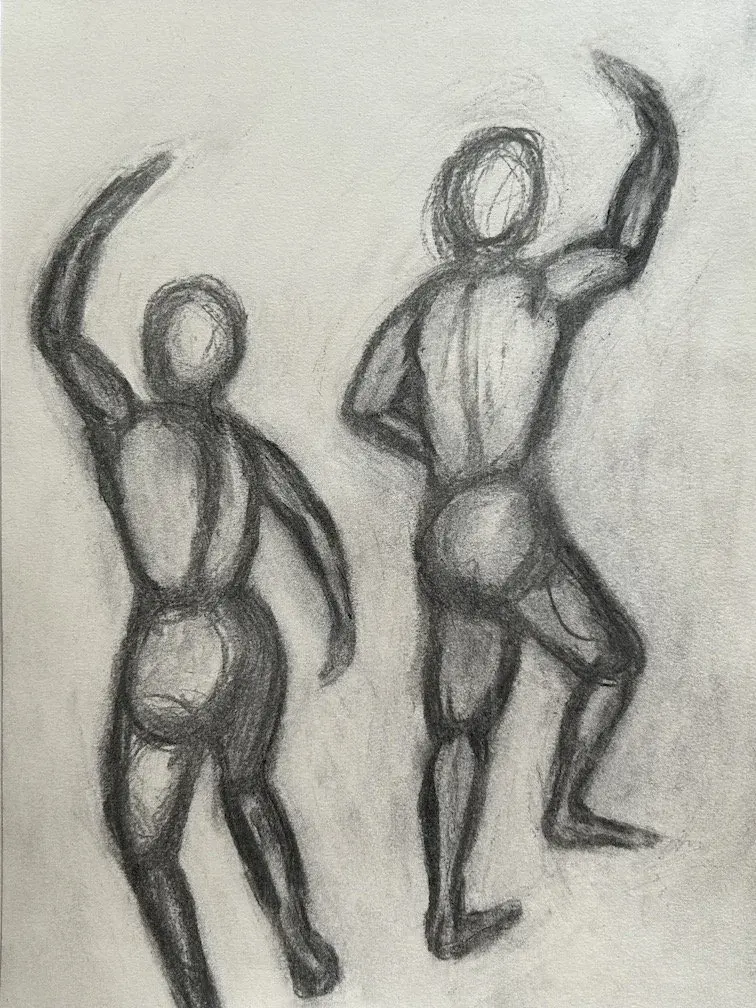
These periods of stagnation are actually indicators of growth, as they suggest your brain is processing higher-level concepts that you are not yet able to manifest on paper. To break through, you must shift your focus from "drawing the body" to "drawing the movement." Stop obsessing over individual muscles and start looking at the "line of action" that flows through the spine. When you stop focusing on the parts and start focusing on the whole, you will find that your work gains a new level of fluidity and sophistication.
Common mistakes when learning figure drawing
The most frequent error beginners make is focusing on surface details like hair, facial features, or muscle definition before establishing the underlying structure. This is often called "drawing the skin," and it inevitably leads to figures that appear flat, stiff, or anatomically incorrect. You must build the skeleton and the mass of the muscles first; if the foundation is weak, no amount of shading or detail can save the drawing.
- Avoid using an eraser for the first twenty minutes of a drawing to prevent over-fiddling with lines.
- Do not rely solely on photographs, as they lack the depth perception and subtle lighting shifts present in real life.
- Stop "symbol drawing," which is the habit of drawing what you think an eye or hand looks like rather than what you actually see.
- Beware of spending too much time on a single drawing; prioritize quantity and gesture over perfection during your early development.
How to structure your practice sessions
Consistency is the most important factor in your development. It is far more effective to draw for thirty minutes every day than to spend six hours drawing once a week. Create a routine that balances long, meditative studies with quick, high-energy gesture sketches. By alternating between these two approaches, you keep your mind sharp and your hand loose, preventing the stiffness that often plagues self-taught artists who focus only on long-form drawings.
- Dedicate the first 15 minutes of every session to 30-second and 1-minute gesture drawings to loosen your wrist and warm up your observation skills.
- Spend the next 45 minutes on a longer study, focusing on a specific challenge like foreshortening or complex lighting.
- End your session by reviewing your work against the reference to identify where your proportions drifted.
- Keep a "process journal" where you note specific struggles, such as difficulty with ribcage placement or hip tilt, and address those specific issues in your next session.
Key facts
- Mastery of figure drawing typically requires 2,000 to 5,000 hours of deliberate practice to reach a professional level.
- Beginners should prioritize gesture drawing, which involves capturing the movement and flow of a pose in 30 to 60 seconds.
- Understanding human anatomy, specifically the skeletal structure and primary muscle groups, is essential for accurate proportions.
- Drawing from life is significantly more effective than drawing from photographs because it provides essential depth perception and spatial context.
- Daily practice sessions of 30 minutes are more beneficial for muscle memory than a single five-hour session once a week.
- Using a "blind contour" technique, where you draw without looking at your paper, helps train the eye to observe shapes rather than symbols.
The bottom line
Learning to draw the human figure is a marathon, not a sprint. While you can grasp the basic principles of proportion and gesture in a few months of consistent study, true mastery takes years of dedicated practice. Focus on observation, prioritize structural integrity over decorative detail, and maintain a regular routine. With patience and systematic training, your ability to depict the human form will steadily evolve.
People also ask
Do I need to be good at math to learn figure drawing?
No, you do not need advanced math, but you must understand basic geometric proportions. Artists often use the "head count" method, where the average human body is measured as seven to eight heads tall.
Is it better to learn to draw from memory or from a reference?
You must always start with references to build a visual library of how bodies move and occupy space. Only after years of observation can an artist reliably draw convincing figures from memory.
What are the most essential tools for a beginner?
Start with simple materials like vine charcoal, newsprint paper, and a kneaded eraser. These inexpensive tools allow you to focus on form and movement without the distraction of complex color theory or expensive mediums.
How do I know if I am improving?
Keep all your early sketches in a portfolio and review them every three months. You will notice your lines becoming more confident and your ability to place limbs in correct perspective improving over time.
Should I focus on shading or line work first?
Always master line quality and structural construction before attempting shading. If the underlying anatomy and proportions are incorrect, adding shadows will only highlight the structural errors rather than fixing them.
What is the most common mistake beginners make?
Many beginners focus too much on details like eyes or fingers before establishing the overall silhouette of the figure. Always work from the largest shapes to the smallest details to ensure the entire pose remains balanced.
This answer was created with the help of AI research tools and reference sources. Spotted an error? Let us know — we correct mistakes quickly. See our editorial policy.