Should kids learn cursive?
Short answer
Learning cursive remains a valuable skill that enhances fine motor development, cognitive processing, and historical literacy. While digital typing is essential for modern communication, cursive provides unique neurological benefits and allows students to engage with primary source documents. It is a worthwhile educational investment that complements, rather than replaces, contemporary keyboarding instruction.

On this page
Why is cursive still taught in schools
Cursive writing engages the brain differently than printing or typing. Research suggests that the continuous, fluid motion required for cursive helps children develop better spatial awareness and fine motor control. By connecting letters, students learn to perceive words as cohesive units rather than isolated characters, which can improve overall reading fluency and spelling retention.
Beyond cognitive development, cursive serves as a critical bridge to history. Many foundational documents, including the United States Constitution and personal letters from the 18th and 19th centuries, are written in script. Without the ability to read these texts, students are often reliant on transcriptions, which may lack the nuance or context of the original manuscripts. Learning the script allows individuals to interact directly with the past.
How long does it take to learn cursive
Most students begin formal cursive instruction in the third grade, typically between the ages of eight and nine. The process is incremental, starting with basic letter formations and moving toward joining letters into words and sentences. While initial mastery of the alphabet can be achieved in a few weeks, developing a legible and comfortable personal style often takes an entire academic year of consistent practice.
To ensure steady progress, educators recommend the following structured approach:
- Master the four basic strokes: the undercurve, overcurve, slant, and oval.
- Practice lowercase letter groups based on similar shapes, such as the "c" family (a, d, g, q).
- Transition to connecting letters within high-frequency words.
- Focus on consistent spacing and slant before increasing writing speed.
Best tools for learning cursive
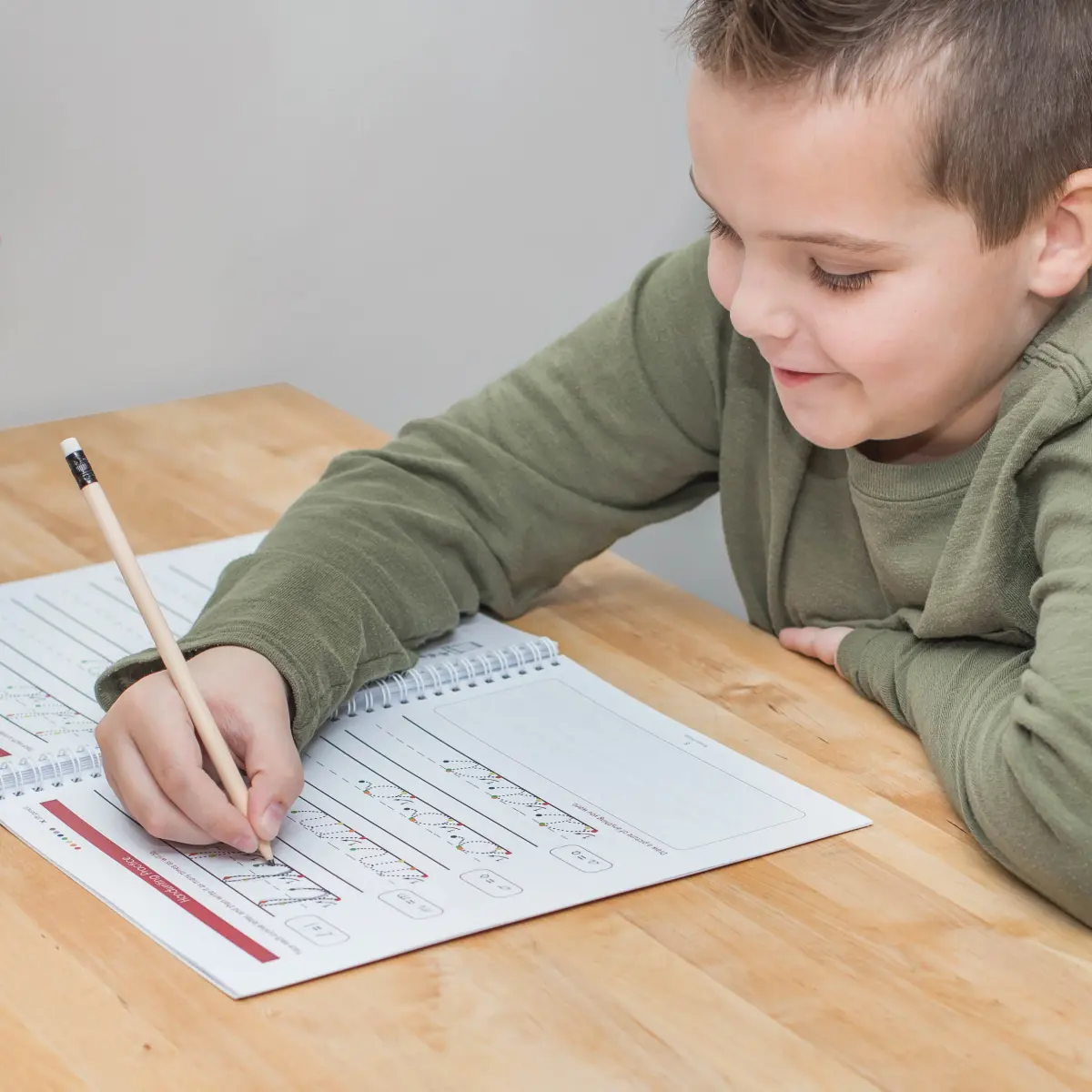
Choosing the right equipment can significantly impact a beginner's success. A standard ballpoint pen is often too slippery for a child learning to control their hand movements, as it requires more pressure and offers less friction. Instead, pencils or fountain pens with a slight "tooth" provide the necessary feedback for the student to feel the movement of the nib or graphite against the paper.
Paper selection is equally important for developing good habits. Specialized lined paper, often called "D'Nealian" or "Zaner-Bloser" paper, features a dashed middle line that helps students maintain consistent letter height and proportion. Using these tools helps prevent common frustrations:
- Use a soft-lead pencil (HB or No. 2) to reduce hand fatigue.
- Ensure the paper is angled slightly to match the student’s dominant hand.
- Utilize wide-ruled paper initially to allow for larger, more exaggerated movements.
- Keep a reference card showing the correct stroke order visible at all times.
Common mistakes when learning cursive
A frequent error is applying too much pressure to the writing instrument. This leads to "death grip," which causes rapid hand fatigue and cramping, making the writing process unpleasant. Students should be encouraged to hold the pen loosely, allowing the arm and shoulder to drive the movement rather than relying solely on the small muscles of the fingers and wrist.
Another common mistake is neglecting the importance of the slant. In cursive, the letters should lean slightly to the right, which creates a rhythmic appearance and improves legibility. When students write letters that are perfectly vertical or lean in different directions, the text becomes difficult to read. Teachers should emphasize the following:
- Avoid "hooking" the wrist, which creates an awkward angle for the hand.
- Maintain consistent spacing between words to prevent the text from appearing crowded.
- Do not lift the pen unnecessarily between letters, as this breaks the flow of the script.
How to practice cursive at home
Consistent, short practice sessions are far more effective than long, infrequent ones. Ten to fifteen minutes of daily practice is sufficient to build muscle memory without causing boredom or frustration. Parents can support this process by providing meaningful writing tasks, such as writing thank-you notes, grocery lists, or keeping a short daily journal. These activities demonstrate the practical utility of handwriting in everyday life.
To make practice more engaging, try incorporating these creative methods:
- Trace cursive alphabets written in sand or shaving cream to build large-muscle memory.
- Use "copywork," where the student copies a favorite poem or quote in their best handwriting.
- Practice writing names of family members and friends to personalize the learning experience.
- Encourage the use of different colored pens or markers to make the practice sessions feel less like a chore and more like an artistic endeavor.
Key facts
- Cursive writing involves connecting letters in a continuous flow, which can improve fine motor skills and hand-eye coordination.
- As of 2026, over 20 U.S. states mandate cursive instruction in public elementary school curricula.
- Research suggests that writing by hand, especially in cursive, helps students retain information better than typing on a keyboard.
- Learning to read cursive is essential for accessing primary historical documents, such as the U.S. Constitution and personal letters from the 18th and 19th centuries.
- To practice, use lined paper with a slanted guide to maintain consistent letter angles, which is a common area where beginners struggle.
- Avoid gripping the pen too tightly, as this causes hand fatigue and prevents the fluid movement required for cursive script.
The bottom line
Learning cursive remains a valuable educational pursuit that bridges the gap between motor skill development and historical engagement. While digital tools dominate modern communication, the cognitive benefits of handwriting—such as improved memory retention and focus—are well-documented. By teaching children to write in script, schools provide them with a functional skill for legal signatures and a key to unlocking the rich, handwritten archives of human history.
People also ask
At what age should children start learning cursive
Most educators recommend introducing cursive in the third or fourth grade, typically between ages 8 and 10. By this age, children have usually mastered basic manuscript printing and possess the necessary dexterity for fluid strokes.
Does cursive improve a child's spelling abilities?
Yes, the continuous motion of cursive helps students perceive words as single units rather than a series of disconnected letters. This holistic approach to word formation can reinforce spelling patterns and improve overall writing fluency.
Is cursive faster than printing?
For many people, cursive is faster because the pen stays on the paper, reducing the time spent lifting and repositioning the hand. However, speed depends heavily on individual practice and the development of a personal, comfortable writing style.
Can left-handed children learn cursive effectively?
Left-handed students can certainly learn cursive, though they may need to adjust their paper angle to prevent smudging. Teachers should encourage them to keep their wrists straight and their hand below the writing line to maintain visibility.
Is cursive still relevant in a digital world?
While typing is the primary mode of communication, cursive remains a vital skill for signing legal documents and personal correspondence. Furthermore, it serves as a cognitive exercise that supports brain development and historical literacy.
What is the most common mistake when teaching cursive?
A frequent error is focusing too much on perfect letter formation at the expense of flow and rhythm. It is more effective to prioritize consistent slant and fluid connections before obsessing over the precise aesthetic of individual characters.
This answer was created with the help of AI research tools and reference sources. Spotted an error? Let us know — we correct mistakes quickly. See our editorial policy.
