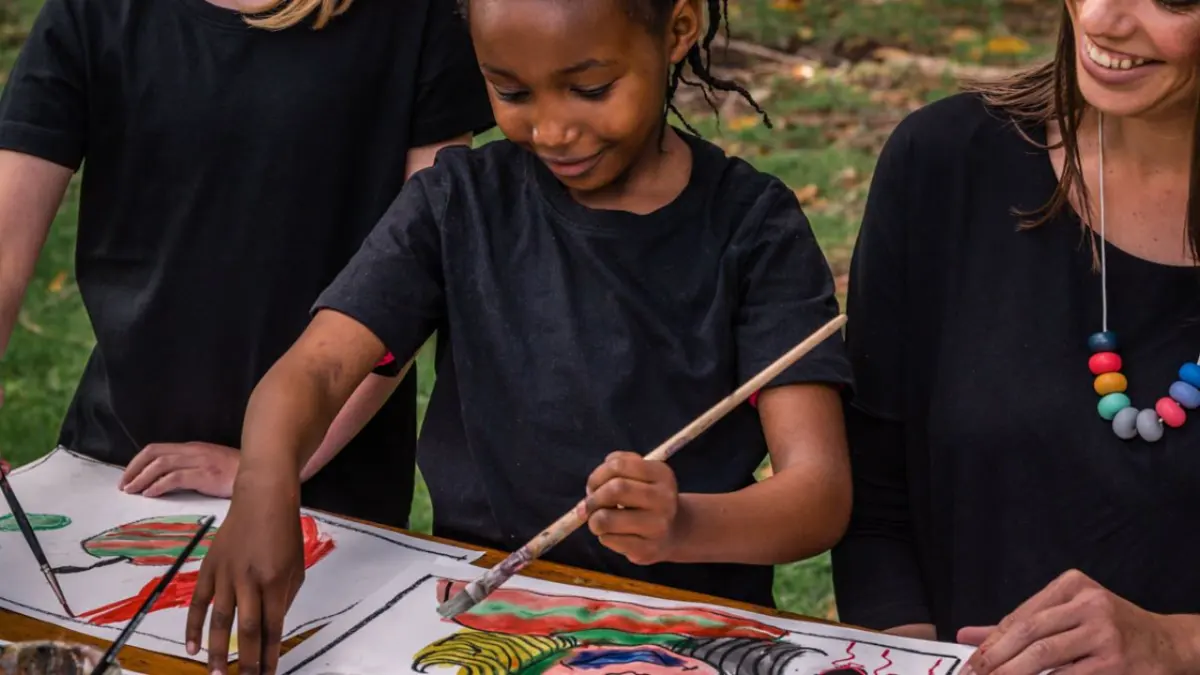
How do you draw with kids?
Short answer
Drawing with children is an iterative process that prioritizes creative expression over technical perfection. By providing age-appropriate tools, establishing a dedicated workspace, and engaging in collaborative prompts, you foster a child's confidence. Focus on the joy of mark-making rather than the final outcome to encourage lifelong artistic exploration and development.
On this page
How to set up a drawing space for kids
Creating a designated area for art helps children understand that drawing is a valued activity. You do not need a professional studio; a simple kitchen table covered with a wipeable mat or a dedicated corner with a low shelf works perfectly. Ensure the lighting is bright and natural if possible, as this reduces eye strain and helps children distinguish colors accurately. Keep supplies organized in clear bins so that children can independently select their tools, which promotes autonomy and creative ownership.
When establishing this space, consider the physical needs of growing artists. Younger children often benefit from larger surfaces, such as butcher paper taped directly to the floor or a wall, allowing them to use their whole arm for movement. As they grow, transition to smaller sketchbooks and desks. Always keep the area stocked with basic supplies like crayons, markers, and pencils, but rotate specialty items like watercolors or oil pastels to keep the experience fresh and exciting.
Best drawing supplies for beginners
Selecting the right tools can significantly improve a child's experience and prevent early frustration. For toddlers, thick, non-toxic wax crayons are ideal because they are durable and easy to grip with a developing pincer grasp. As children reach the age of four or five, introduce colored pencils and water-based markers, which allow for more precision and detail. Always ensure that materials are age-appropriate to match the child’s motor skill development.
- Large-diameter wax crayons for toddlers (ages 1–3).
- Washable markers with conical tips for preschoolers (ages 3–5).
- Graphite pencils (HB or 2B) and charcoal sticks for older children (ages 6+).
- Heavyweight drawing paper or cardstock to prevent tearing during vigorous coloring.
- Erasable pens or kneaded erasers to help children feel comfortable making and correcting mistakes.
How to encourage creativity in children
The goal of drawing with kids is to build confidence rather than teach rigid technique. Instead of drawing for them, ask open-ended questions about their process, such as "What does that shape feel like?" or "How did you choose those colors?" This shifts the focus from the finished product to the child's internal imagination. When a child asks you to draw something for them, try drawing a simple version and then asking them to add their own unique details to complete the scene.
Modeling your own drawing process is another effective way to encourage participation. Sit alongside the child and draw your own subject matter, showing them that you also make mistakes and use erasers. This vulnerability helps children understand that art is a process of experimentation. If a child expresses frustration, validate their feelings by acknowledging the difficulty of a task and suggesting a different approach or a break to reset their creative energy.
Common mistakes when drawing with kids
One of the most frequent errors adults make is providing excessive instruction or correction. Telling a child that a sun must be yellow or that grass should be green limits their ability to experiment with color theory and personal expression. Similarly, avoid taking the pen out of their hand to "fix" a drawing, as this can undermine their sense of accomplishment. Let the child lead the narrative and the aesthetic choices, even if the result looks nothing like the real world.
- Criticizing the realism of a drawing instead of praising the effort.
- Forcing a child to finish a drawing when they have lost interest.
- Using low-quality paper that tears easily, which can discourage a child.
- Providing too many choices at once, which may lead to decision paralysis.
- Ignoring the importance of cleaning up, which makes the next session feel daunting.
Why drawing helps child development
Drawing serves as a critical bridge between a child's internal thoughts and the external world. It is a primary method for developing fine motor skills, as the act of gripping a pencil and controlling lines strengthens the small muscles in the hand and wrist. These physical improvements directly correlate with the development of handwriting skills. Furthermore, drawing is a form of non-verbal communication that allows children to process complex emotions and experiences they might not yet have the vocabulary to express.
Cognitively, drawing encourages spatial awareness, pattern recognition, and problem-solving. When a child decides how to fit a large house onto a small page, they are practicing planning and proportion. This cognitive exercise builds the foundation for more advanced mathematical and scientific thinking later in life. By viewing drawing as a vital developmental tool rather than just a hobby, you provide children with a safe, constructive outlet for their curiosity and a valuable way to document their growth over time.
Key facts
- Focus on the process of creating rather than the final aesthetic result to encourage confidence.
- Provide thick crayons or jumbo markers for toddlers, as these are easier for developing fine motor skills.
- Use large rolls of butcher paper taped to the floor to give children the freedom to move their whole bodies.
- Introduce the "scribble technique" by showing children how to make loops, zigzags, and dots to build muscle control.
- Limit the color palette to three or four choices initially to prevent overwhelming young artists.
- Keep drawing sessions short, typically 10 to 15 minutes, to match the natural attention span of young children.
The bottom line
Drawing with children is less about teaching technical proficiency and more about fostering creativity and self-expression. By providing accessible materials, creating a dedicated workspace, and focusing on the joy of movement, you help children build essential motor skills and confidence. Remember to prioritize their creative process over the final product, allowing them to explore their imagination freely while developing their own unique artistic voice.
People also ask
What age should a child start drawing?
Most children begin making intentional marks between 12 and 18 months old. At this stage, they are exploring cause and effect rather than trying to represent specific objects.
How do I help a child who says they cannot draw?
Validate their feelings and suggest drawing simple shapes like circles or squares instead of complex figures. Remind them that drawing is a skill developed through practice, not an innate talent.
Should I correct a child's drawing?
Avoid correcting their work or drawing on their paper, as this can discourage their creative autonomy. Instead, ask open-ended questions like "Tell me about your picture" to encourage storytelling.
What are the best supplies for beginners?
Start with non-toxic, washable materials such as beeswax crayons, jumbo pencils, and heavy-weight construction paper. These tools are durable and safe for children who may still put items in their mouths.
How can I encourage drawing at home?
Create a dedicated "art station" with accessible supplies that the child can reach independently. Having a consistent space makes drawing a part of their daily routine rather than a special event.
Is it okay to use coloring books?
Coloring books are fine for developing fine motor control, but they should not replace open-ended drawing. Free drawing allows children to express their own ideas and develop spatial awareness.
This answer was created with the help of AI research tools and reference sources. Spotted an error? Let us know — we correct mistakes quickly. See our editorial policy.