How do you draw a sketchbook step by step?
Short answer
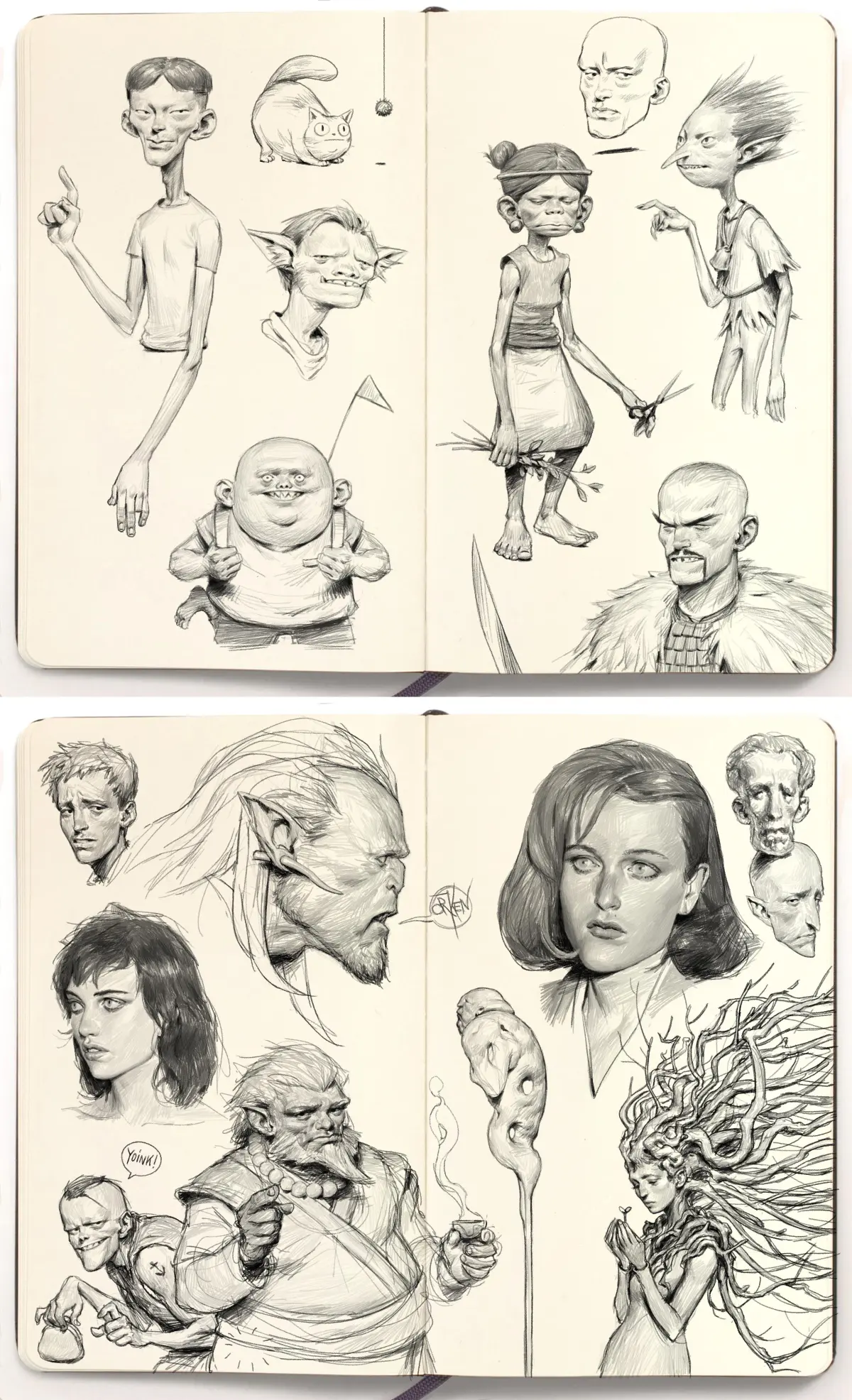
Drawing a sketchbook involves selecting quality paper, establishing a consistent habit, and focusing on observation rather than perfection. Begin by choosing a portable medium, setting aside ten minutes daily for practice, and experimenting with various techniques like contour drawing or shading to build your foundational skills and personal artistic style.
On this page
How to choose the right materials for a sketchbook
Selecting the proper tools is the first step toward a successful drawing practice. For beginners, a sketchbook with 80-pound to 100-pound paper weight is ideal because it handles both graphite and light ink washes without buckling or bleeding through the page. A spiral-bound book allows the pages to lay completely flat, which makes drawing across the gutter much easier.
Regarding drawing instruments, you do not need an expensive set to start. A standard HB pencil is versatile for both sketching outlines and adding light shading. An eraser, preferably a kneaded one, allows you to lift graphite gently without damaging the paper surface. Consider adding a fine-liner pen or a charcoal stick once you feel comfortable with the basics.
- Hardcover books provide a sturdy surface for drawing on your lap.
- A5 or A6 sizes are portable enough to carry in a small bag.
- Acid-free paper prevents your drawings from yellowing over time.
- Always test your pens on the back page to check for ink feathering.
How to start your first sketchbook page
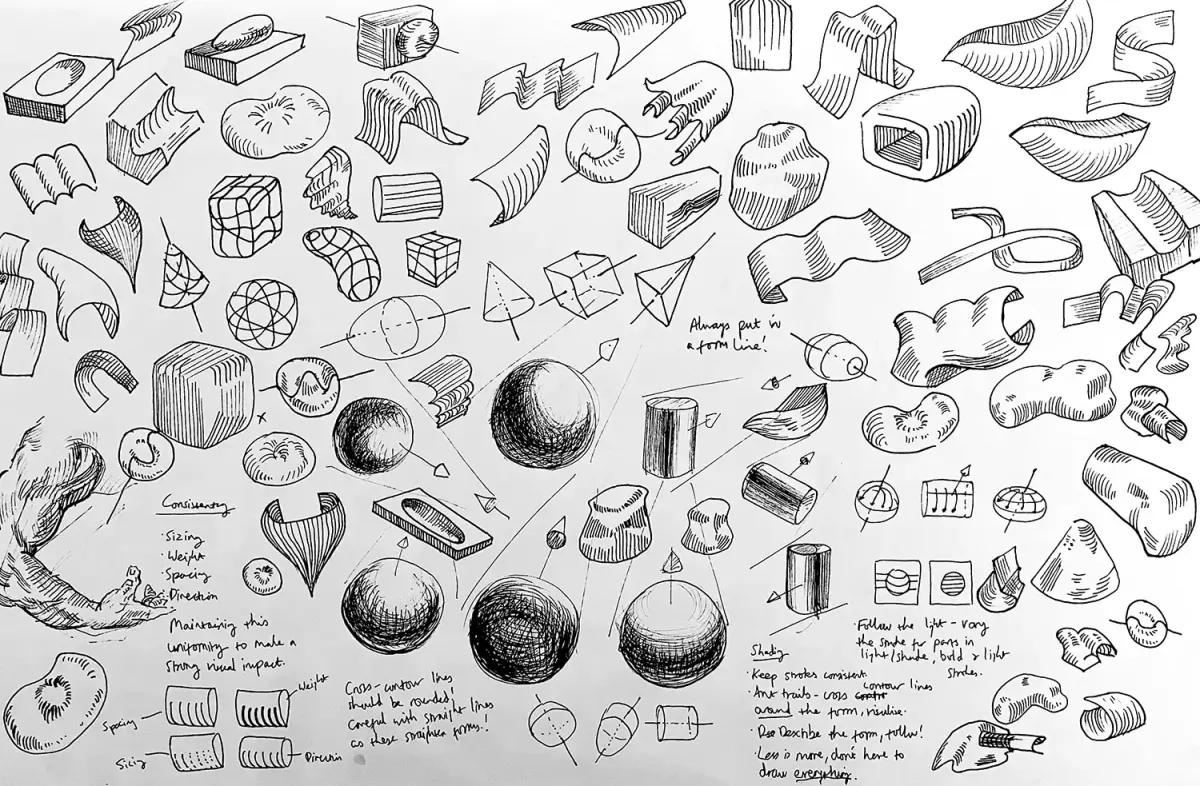
Many people feel intimidated by the sight of a blank white page. To overcome this, start by drawing simple objects found in your immediate environment, such as a coffee mug, a houseplant, or your own hand. Focus on the basic geometric shapes that compose the object—spheres, cylinders, and cubes—before adding finer details.
Do not worry about making the drawing look like a masterpiece. The primary goal of a sketchbook is to serve as a laboratory for ideas and a record of your progress. If you make a mistake, leave it or incorporate it into the design. Keeping the process low-pressure helps maintain the consistency required to improve your technical abilities over time.
- Find a quiet space with adequate lighting.
- Observe the subject for one minute before touching the pencil to paper.
- Lightly sketch the overall proportions using loose, sweeping lines.
- Refine the edges and add shadows to create a sense of depth.
How to build a consistent drawing habit
Consistency is more important than the duration of your practice sessions. Aim for a "sketch-a-day" routine, even if you only spend ten minutes capturing a quick gesture or a single object. This frequency trains your eyes to see shapes, light, and perspective more accurately, which is the cornerstone of artistic development.
To stay motivated, try thematic challenges or dedicated practice sessions. For example, spend one week focusing exclusively on textures, such as wood grain or fabric, and the next week on human anatomy. Tracking your progress by dating every page allows you to look back after a month and see tangible improvements in your line quality and shading techniques.
- Set a recurring alarm to remind yourself to draw at the same time daily.
- Keep your sketchbook and pencil in a visible, accessible location.
- Use a timer to prevent yourself from overthinking a single sketch.
- Join online communities or local groups to share your work and receive feedback.
Common mistakes when keeping a sketchbook
A frequent error is the desire to make every page look "finished" or gallery-ready. This mindset often leads to creative block and anxiety, causing artists to abandon their books entirely. Remember that a sketchbook is a private space for exploration, trial, and error; it is perfectly acceptable to have messy, incomplete, or experimental pages.
Another mistake is neglecting the fundamentals of light and shadow. Beginners often draw outlines without considering where the light source is located, resulting in flat, two-dimensional images. Always identify the highlight, the mid-tones, and the core shadow on your subject to give your drawings volume. Finally, avoid using low-quality paper that crumbles under pressure, as this can be discouraging for a developing artist.
- Avoid pressing too hard with your pencil, which leaves deep indentations.
- Do not compare your early work to the finished portfolios of professional illustrators.
- Refrain from tearing out pages, as this disrupts the chronological record of your growth.
- Do not limit yourself to one subject matter; diversify your sketches to keep things interesting.
Why sketchbook practice improves artistic skills
Regular sketching acts as a bridge between observation and execution. By drawing from life, you force your brain to process three-dimensional information and translate it onto a two-dimensional plane. This process strengthens your spatial awareness and improves your hand-eye coordination, which are essential skills for any visual medium, including painting, digital art, or sculpture.
Furthermore, a sketchbook serves as a visual diary that documents your evolving interests and aesthetic preferences. Over time, you will notice patterns in your work, such as a preference for certain subjects or a specific way of handling lines. This self-reflection is vital for developing a unique artistic voice. By the end of your first book, you will have not only improved your technical skills but also gained a deeper understanding of your own creative identity.
Key facts
- Choose a sketchbook with paper weight between 80 and 100 pounds to prevent ink or paint from bleeding through pages.
- Use a mechanical pencil for precise initial sketching, as it maintains a consistent line width without needing constant sharpening.
- Establish a "warm-up" routine by drawing simple geometric shapes or continuous lines for five minutes before starting a formal piece.
- Apply the "rule of thirds" by placing your focal point along the grid lines rather than directly in the center for better composition.
- Date every page you complete to track your technical progress and artistic growth over time.
- Keep your sketchbook in a protective sleeve or bag to prevent the edges from fraying during daily transport.
The bottom line
Drawing in a sketchbook is a journey of consistent practice rather than a pursuit of immediate perfection. By selecting the right materials, establishing a daily routine, and focusing on composition, you transform a blank book into a valuable record of your artistic evolution. Remember that every sketch, regardless of quality, serves as a necessary stepping stone toward mastering your craft and developing your unique personal style.
People also ask
What is the best pencil grade for sketching?
An HB pencil is the standard choice for general sketching because it offers a balance between hardness and darkness. Use a 2B or 4B pencil if you prefer softer, darker lines for shading.
Should I use a sketchbook with tooth or smooth paper?
Paper with "tooth," or texture, is better for charcoal and graphite because it grips the medium. Smooth paper, or hot-pressed paper, is ideal for fine-line ink pens and detailed technical drawings.
How do I overcome the fear of ruining a blank page?
Start by making a mess on the first page, such as testing your pens or scribbling colors. Once the pristine nature of the book is broken, the pressure to create a masterpiece immediately often disappears.
How often should I draw in my sketchbook?
Aim for a consistent habit, even if it is only for ten minutes a day. Frequent, short sessions are more effective for developing muscle memory than infrequent, hours-long marathon sessions.
Can I use watercolors in a standard drawing sketchbook?
Standard drawing paper usually buckles when wet. Use a dedicated watercolor sketchbook or paper labeled at least 140 pounds to handle liquid media without warping.
How do I organize my sketchbook layout?
Avoid cluttering a page by leaving "negative space" around your drawings. This helps the eye focus on the subject and gives your work a professional, intentional appearance.
This answer was created with the help of AI research tools and reference sources. Spotted an error? Let us know — we correct mistakes quickly. See our editorial policy.