How do you keep a daily drawing habit?
Short answer
Maintaining a daily drawing habit requires prioritizing consistency over perfection. By scheduling a specific time, keeping supplies accessible, and lowering expectations for each session, you build the necessary momentum. Focus on small, manageable goals, such as sketching for ten minutes, to ensure that your practice remains sustainable and enjoyable over time.
On this page
How to build a consistent drawing routine
Establishing a daily habit relies on environmental design and psychological preparation. Start by designating a specific "art station" in your home where your materials are always ready for use. When your sketchbook is open and your pens are laid out, you eliminate the friction of setup, which is the primary barrier to starting. Aim to anchor your drawing time to an existing habit, such as drinking your morning coffee or winding down before bed.
Consistency is more important than the quality of the output. If you struggle to find time, commit to a "micro-habit" of drawing for only five minutes. This low barrier to entry prevents the feeling of overwhelm that often leads to skipping days. By showing up every single day, you reinforce your identity as an artist, making the act of drawing feel like a natural part of your daily rhythm rather than an added chore.
- Pick a specific time of day that remains relatively stable.
- Keep your sketchbook and a single pen within arm's reach.
- Set a timer for a short duration to remove the pressure of completion.
- Log your progress in a calendar to visualize your streak.
How long does it take to form a habit
Research in behavioral psychology suggests that forming a new habit typically takes between 18 and 254 days, with an average of 66 days. For a creative practice like drawing, the initial month is the most critical phase. During these first few weeks, your brain is actively building the neural pathways required to make drawing an automatic response to your environment. Do not be discouraged if you miss a day; the goal is to return to the habit immediately without judgment.
As you progress, the time required to "warm up" often decreases significantly. You will find that your hand-eye coordination improves, and the mental resistance to starting a new page diminishes. After the three-month mark, drawing often transitions from a conscious effort to a subconscious necessity. By this point, the habit is firmly rooted, and you may find that you feel restless or unfulfilled on days when you do not pick up your pencil.
Best tools for daily drawing beginners
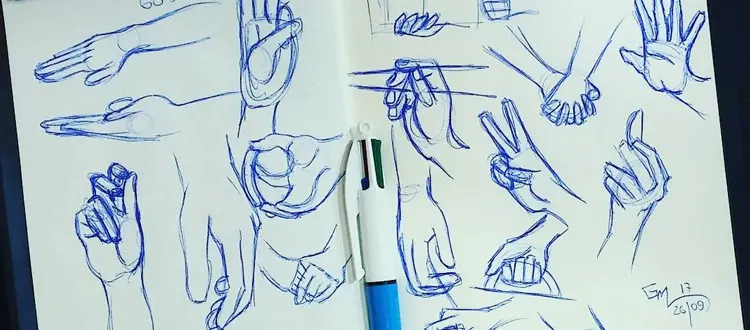
For those just starting, simplicity is the most effective strategy. Avoid the temptation to buy expensive, professional-grade equipment, as this can create unnecessary pressure to produce "masterpieces." Instead, focus on materials that are portable and require minimal maintenance. A standard A5-sized sketchbook and a reliable ballpoint pen or a mechanical pencil are sufficient to begin your journey. These tools are forgiving and allow you to sketch anywhere, from a commute to a waiting room.
If you prefer more variety, consider keeping a small kit in your bag. This ensures that you are never without the means to capture an idea or practice a gesture. The goal is to remove every possible excuse for not drawing. When your tools are simple, you focus entirely on the act of observation rather than the technicalities of your medium. Remember that the best tool is the one that you are actually willing to use every single day.
- A5 or A6 sketchbook for portability.
- A reliable ballpoint pen or fine-liner.
- A mechanical pencil that does not require sharpening.
- A small eraser, though you should try to embrace your mistakes.
Why creative blocks happen
Creative blocks often stem from the fear of failure or the desire for perfection. When you place too much importance on a single drawing, you increase the stakes, which triggers anxiety and procrastination. This "blank page syndrome" occurs when the gap between your taste and your current skill level feels insurmountable. To overcome this, treat your daily drawings as "disposable" practice rather than finished art. Remind yourself that a bad drawing is simply a necessary step toward a better one.
Another common cause of blocks is a lack of inspiration or direction. If you find yourself staring at a blank page, try using structured prompts or simple observational exercises. Draw the objects on your desk, your own hand, or a single piece of fruit from different angles. By removing the need to invent a subject, you free up your mental energy to focus on the technical process of mark-making. Remember that inspiration is a byproduct of work, not a prerequisite for it.
Common mistakes when starting a drawing habit
A frequent error is setting unrealistic expectations, such as trying to draw for two hours every day. This leads to burnout and sets you up for failure when life inevitably gets busy. Another mistake is comparing your early sketches to the polished, curated work of professional artists on social media. This comparison is inherently unfair because you are comparing your "behind-the-scenes" practice to someone else’s "highlight reel." Focus solely on your own growth and your personal progress over time.
Additionally, many beginners fall into the trap of waiting for the "right" moment or the "right" lighting to draw. This perfectionism is the enemy of consistency. If you only draw when you feel perfectly inspired, you will never develop the discipline needed for long-term success. Embrace the messy, imperfect, and rushed drawings as evidence of your commitment. By accepting that some days will produce mediocre results, you protect your habit from the volatility of your moods and ensure that you keep moving forward regardless of the circumstances.
Key facts
- Keep a dedicated sketchbook no larger than A5 size to reduce the intimidation of a blank page.
- Set a timer for exactly 10 minutes per day to ensure the habit remains manageable regardless of your schedule.
- Place your drawing tools in a visible, easily accessible location, such as on your desk or nightstand.
- Focus on the process of observation rather than the quality of the final result to lower performance anxiety.
- Use a "don't break the chain" method by marking an 'X' on a physical calendar for every day you draw.
- Carry a small pocket notebook for quick sketches during commutes or waiting periods to maximize idle time.
The bottom line
Establishing a daily drawing habit relies on lowering the barrier to entry through small, consistent actions. By prioritizing frequency over duration and removing the pressure to produce masterpieces, you transform drawing from a daunting chore into a reliable part of your routine. Consistency is the primary driver of skill development, so focus on the act of showing up every single day rather than the quality of the output.
People also ask
Should I focus on drawing from life or from imagination?
Beginners should prioritize drawing from life to build a fundamental understanding of light, shadow, and perspective. Once you have a strong grasp of physical reality, you can more effectively translate those principles into imaginative work.
What is the best time of day to draw?
The best time is whenever you can consistently commit to the practice without interruption. Many artists prefer the morning to establish a creative momentum, while others use drawing as a way to decompress before bed.
How do I handle days when I feel uninspired?
Treat drawing as a mechanical task rather than an emotional one on low-energy days. Draw simple objects around you, such as a coffee mug or a pair of shoes, to keep the habit alive without needing creative inspiration.
Is it necessary to use expensive art supplies?
High-quality materials are not required and can often be a distraction for beginners. A standard graphite pencil and a simple ballpoint pen are sufficient for developing technical skills and consistency.
How long does it take to form a drawing habit?
Studies on habit formation suggest that it takes an average of 66 days for a new behavior to become automatic. Consistent daily repetition is more important than the duration of each individual session during this period.
What should I do if I miss a day?
Do not attempt to "make up" for missed days by drawing for hours at a time, as this leads to burnout. Simply acknowledge the lapse and resume your routine the following day without self-criticism.
This answer was created with the help of AI research tools and reference sources. Spotted an error? Let us know — we correct mistakes quickly. See our editorial policy.