How do you encourage creativity in children?
Short answer
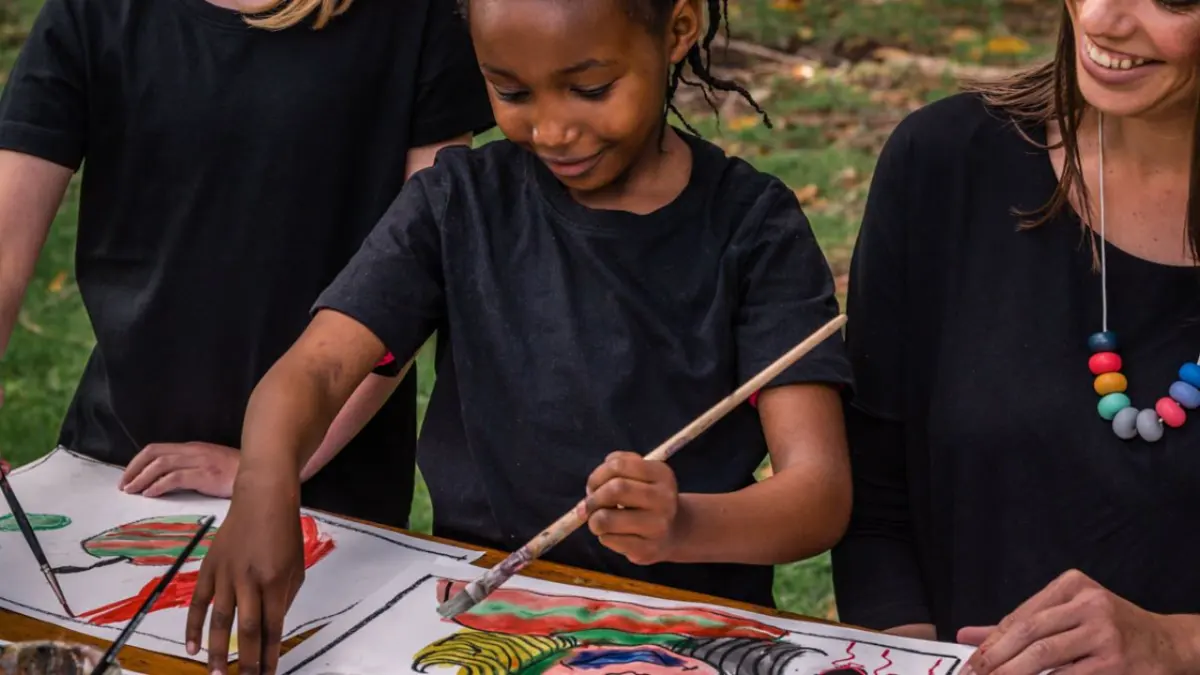
Encouraging creativity requires providing children with open-ended materials, unstructured time, and a supportive environment that values the process over the final product. By minimizing rigid instructions and allowing for safe risk-taking, adults foster the curiosity and divergent thinking necessary for children to explore unique ideas and develop their personal problem-solving skills.
On this page
How to create an environment that sparks creativity
Creativity thrives in spaces where children feel safe to experiment without the pressure of immediate perfection. To foster this, designate a specific area in your home where mess is acceptable and materials are easily accessible. When children can reach their own supplies, they gain a sense of autonomy that encourages them to initiate projects independently.
A stimulating environment should prioritize open-ended materials over single-use toys. Items that have no "correct" way to be used—such as cardboard boxes, fabric scraps, blocks, or clay—force the brain to engage in divergent thinking. By removing the limitations of a pre-defined goal, you allow the child to imagine endless possibilities for the objects in front of them.
- Clear a dedicated space for creative work.
- Provide a variety of loose parts like buttons, sticks, and paper.
- Keep supplies organized but visible to spark interest.
- Rotate materials periodically to maintain novelty and engagement.
Why unstructured play is essential for development
Unstructured play, often called "free play," is the primary vehicle through which children develop cognitive flexibility. When adults dictate every activity, they inadvertently limit a child's ability to practice decision-making and self-regulation. Allowing children to choose their own activities—even if those activities seem aimless—builds the mental muscles required for innovation and complex problem-solving later in life.
During these periods of boredom or self-directed exploration, children are forced to look inward for entertainment. This transition from external stimulation to internal motivation is a hallmark of creative maturity. Research in developmental psychology suggests that children who engage in regular, unsupervised play exhibit higher levels of resilience and adaptability when faced with challenges in academic or social settings.
- It promotes independent problem-solving skills.
- It reduces anxiety by removing performance expectations.
- It allows for the testing of social and physical boundaries.
- It facilitates the development of personal interests and passions.
Common mistakes when trying to boost creativity
One of the most frequent errors parents make is over-praising the final product rather than the effort. When you focus exclusively on "how pretty" a drawing is, children may become afraid to experiment with new techniques for fear of ruining their record of success. Instead, shift the conversation toward the process by asking questions about their choices and the challenges they encountered.
Another common mistake is providing too much guidance or "fixing" a child's work. When an adult steps in to straighten a crooked line or suggest a more realistic color scheme, they signal that there is a "right" way to create. This stifles the child’s confidence and discourages them from trusting their own vision. Always prioritize the child's perspective over aesthetic standards or adult-imposed goals.
- Praising only the outcome instead of the creative process.
- Providing step-by-step instructions for every activity.
- Correcting or "improving" a child's creative work.
- Over-scheduling the child's day with structured lessons.
How to nurture a growth mindset in young creators
A growth mindset is the belief that skills can be developed through dedication and practice. To encourage this, reframe mistakes as "happy accidents" or learning opportunities rather than failures. When a child encounters a setback, such as a sculpture collapsing or a painting not looking as intended, help them analyze what happened and brainstorm alternative solutions for the next attempt.
Encouragement should be descriptive rather than evaluative. Instead of saying "good job," which is a judgment, try saying, "I noticed you used a lot of bright colors to show how the character feels." This approach validates the child's intent and shows that you are paying attention to their creative journey. This builds the confidence necessary for them to take bigger risks in their future work.
- Model your own mistakes by talking about how you solved a problem.
- Use descriptive language to acknowledge specific efforts.
- Encourage the child to reflect on what they learned during a project.
- Celebrate the persistence shown during difficult tasks.
Best ways to support creative growth at different ages
Creativity evolves as children grow, requiring different types of support at various developmental stages. For toddlers, sensory-based exploration is key, as they are learning about the physical properties of the world. Provide them with safe materials like finger paints or water play, focusing on the tactile experience rather than any recognizable output or specific artistic goal.
As children enter school age, they begin to use creativity to express complex emotions and narratives. This is the time to introduce more sophisticated tools and encourage storytelling through writing, drama, or collaborative projects. By middle childhood, you can begin to introduce constraints—such as "build a bridge using only these three items"—to challenge their lateral thinking. Adapting your support to their changing cognitive abilities ensures that creativity remains a lifelong habit rather than a fleeting childhood phase.
Key facts
- Provide an open-ended "maker space" with materials like cardboard, tape, and clay rather than pre-assembled toys.
- Limit screen time to ensure children have the boredom necessary to trigger imaginative play and problem-solving.
- Celebrate the process of creating rather than the final aesthetic result to build intrinsic motivation.
- Allow for "productive struggle" by waiting at least five minutes before helping a child solve a creative challenge.
- Incorporate divergent thinking exercises, such as asking, "How many ways can we use this paperclip?"
- Expose children to diverse art, music, and nature to expand their internal library of creative references.
The bottom line
Encouraging creativity requires shifting your focus from the final product to the child’s unique process. By providing open-ended materials, protecting time for unstructured play, and resisting the urge to intervene too quickly, you allow children to build confidence in their own ideas. Ultimately, creativity thrives when children feel safe to take risks, make mistakes, and explore the world through their own curious lens.
People also ask
At what age should I start encouraging creative activities
You can foster creativity from infancy by providing sensory-rich environments and simple cause-and-effect toys. By age two or three, children begin symbolic play, which is the foundation for more complex creative thinking.
Is it better to provide structured art lessons or free play?
A balance is ideal, but free play is essential for developing original ideas. Structured lessons teach technique, while free play allows children to apply those skills in unique, self-directed ways.
How do I handle the mess that comes with creative projects?
Designate a specific "mess-friendly" zone, such as a plastic mat on the floor or a dedicated craft table. Using washable supplies and having a simple cleanup routine helps children feel free to experiment without fearing consequences.
Should I offer rewards for creative work?
Research suggests that external rewards can actually decrease intrinsic motivation for creative tasks. Instead of prizes, offer specific praise that highlights the child's effort, persistence, or unique choices.
What if my child says they are bored?
View boredom as a necessary precursor to creativity rather than a problem to solve. Encourage them to look around and find one object they can transform or a story they can invent.
Can creativity be taught or is it an innate trait?
Creativity is a skill that can be developed through practice, environment, and encouragement. While some children may show early aptitude, everyone can improve their creative capacity with the right support.
This answer was created with the help of AI research tools and reference sources. Spotted an error? Let us know — we correct mistakes quickly. See our editorial policy.