What is Minimalism in art?
Short answer
Minimalism is an influential art movement that emerged in the United States during the early 1960s. It emphasizes extreme simplicity, geometric abstraction, and the use of industrial materials. By stripping away personal expression and metaphorical meaning, Minimalist artists sought to focus the viewer's attention on the physical presence of the object within a space.
On this page
What defines the Minimalist art movement?
Minimalism rejected the emotional intensity and spontaneous brushwork of Abstract Expressionism. Instead, artists prioritized objectivity, logic, and clarity. They often utilized modular structures, repetitive patterns, and monochromatic color palettes to create works that felt removed from the artist's hand. The goal was to present art as a literal object rather than a window into a hidden narrative or psychological state.
The movement gained significant momentum in New York City galleries around 1962. Key figures such as Donald Judd, Dan Flavin, and Carl Andre shifted the focus from the canvas to three-dimensional space. By using materials like steel, fluorescent lights, and concrete, these artists challenged traditional notions of sculpture. They believed that by removing the artist's subjective touch, the viewer could engage more directly with the artwork's scale and its relationship to the surrounding environment.
Who are the most famous Minimalist artists?
Several artists became synonymous with the movement through their innovative use of space and industrial manufacturing. Donald Judd is perhaps the most famous, known for his "stacks"—a series of identical metal boxes arranged vertically on a wall. His work exemplifies the movement's focus on seriality and the rejection of illusionism. Dan Flavin, meanwhile, utilized commercially available fluorescent light tubes to transform gallery walls into fields of color, emphasizing the architectural context of the room.
Other influential artists helped define the movement through diverse techniques:
- Agnes Martin: Known for her subtle, grid-based paintings that explore meditation and quietude.
- Robert Morris: Created large-scale geometric forms that forced viewers to move around them to fully perceive their shape.
- Anne Truitt: Famous for her hand-painted, solid-colored wooden columns that bridge the gap between painting and sculpture.
- Sol LeWitt: Pioneered conceptual Minimalism, creating complex wall drawings based on strict, repeatable instructions.
How to identify Minimalist art in a gallery?
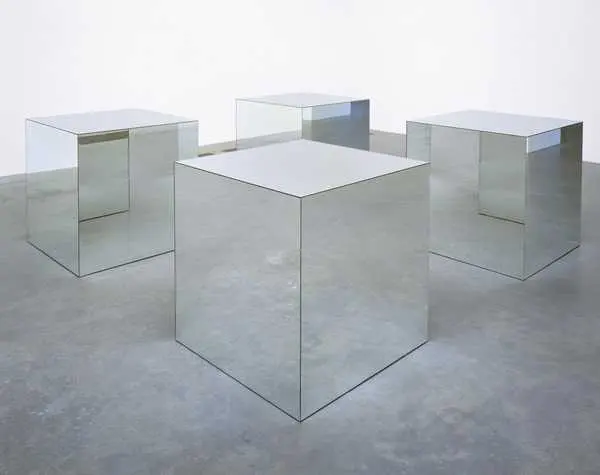
Identifying Minimalism requires looking for specific aesthetic choices that prioritize the object's physical reality. First, observe the materials; if you see industrial substances like aluminum, plywood, or industrial paint rather than traditional marble or oil, you are likely looking at a Minimalist work. Second, look for geometric simplicity. Minimalist works rarely feature irregular shapes or figurative imagery. They rely on squares, rectangles, and lines that repeat in predictable, mathematical sequences.
When viewing these pieces, consider the following checklist to better understand the artist's intent:
- Does the work occupy space in a way that makes you aware of your own body?
- Is there an absence of a central focal point or "heroic" subject matter?
- Does the work appear to be mass-produced or industrially fabricated?
- Is the color palette restricted to one or two tones, or perhaps just the natural color of the material?
Why is Minimalism important in art history?
Minimalism acted as a bridge between Modernism and Postmodernism. It forced the art world to reconsider the definition of an "artist." If a work is fabricated in a factory based on a set of blueprints, does the artist's physical labor matter? This shift paved the way for Conceptualism, where the idea behind the work is valued more than the final physical product. It also influenced architecture and interior design, popularizing the "less is more" philosophy that remains prevalent today.
The movement also changed how museums exhibit art. Minimalist works often require specific lighting and spatial conditions to function correctly. Curators began to treat the gallery space itself as part of the artwork. This "installation" approach transformed museums from passive storage spaces into active environments. By demanding that the viewer interact with the art through movement and proximity, Minimalism permanently altered the relationship between the public and the museum experience.
Common mistakes when interpreting Minimalist art?
A common error is searching for a hidden meaning or a symbolic message behind the work. Because Minimalist art is intentionally literal, it does not function like a traditional painting that tells a story. If you find yourself asking, "What does this represent?", you are likely missing the point. Instead, focus on how the work makes you feel in relation to the room, the lighting, and the scale of the object. Do not be discouraged if the work feels cold or detached; that emotional distance is a deliberate artistic choice.
Another frequent mistake is assuming that simplicity implies a lack of effort. Critics often claim that anyone could make a Minimalist box or a grid painting, but this ignores the rigorous planning and precision required to achieve such perfection. The difficulty lies in the execution and the conceptual framework, not in the complexity of the final form. To avoid these pitfalls, approach the work with an open mind, focusing on the physical experience rather than trying to decode a secret, complex narrative.
Key facts
- Minimalism emerged in New York City during the early 1960s as a reaction against the emotional intensity of Abstract Expressionism.
- The movement prioritizes geometric shapes, industrial materials, and repetitive patterns to strip away subjective meaning.
- Artists often used materials like steel, fluorescent lights, and concrete to emphasize the physical presence of the object.
- To practice minimalism, focus on the "less is more" principle by removing all non-essential elements from your composition.
- Avoid cluttering your work with personal narratives or complex textures that distract from the primary form.
- Use a limited color palette, often sticking to monochromatic or neutral tones, to maintain visual clarity and focus.
The bottom line
Minimalism is a powerful artistic movement that rejects complexity in favor of fundamental geometry and industrial materials. By stripping away personal expression and decorative excess, it encourages viewers to experience art as a direct, physical encounter. Whether applied to painting, sculpture, or daily living, the core takeaway is that removing the unnecessary allows the essential qualities of an object or space to finally emerge.
People also ask
Who are the most famous Minimalist artists?
Key figures include Donald Judd, known for his stack sculptures; Dan Flavin, who worked with fluorescent lights; and Agnes Martin, famous for her grid paintings. Frank Stella and Carl Andre are also central to the movement’s history.
Is Minimalism the same as Conceptual art?
While they often overlap, they are distinct. Minimalism focuses on the physical object and its relationship to the viewer’s space, whereas Conceptual art prioritizes the idea or the process behind the work over the final product.
Why do Minimalist works often look so simple?
The simplicity is intentional, designed to force the viewer to engage with the object’s material and surroundings rather than searching for hidden symbolism. By removing artistic ego, the artist allows the work to exist as a pure, objective presence.
Can Minimalism be applied to interior design?
Yes, it is a popular design philosophy that emphasizes open space, functional furniture, and a lack of decorative ornamentation. The goal is to create a calm, orderly environment that promotes clarity and reduces visual stress.
What is the biggest mistake beginners make when creating Minimalist art?
Beginners often mistake "simple" for "easy," leading to work that lacks precision or intentionality. True minimalism requires extreme attention to detail, as every minor flaw becomes highly visible when there are no other elements to hide behind.
Does Minimalism have to be boring or cold?
While some critics view it as cold, many find it meditative and serene. The movement invites viewers to appreciate subtle variations in light, shadow, and texture that are often overlooked in more complex, busy artworks.
This answer was created with the help of AI research tools and reference sources. Spotted an error? Let us know — we correct mistakes quickly. See our editorial policy.