What is the Paris Salon?
Short answer
The Paris Salon was the official art exhibition of the Académie des Beaux-Arts in Paris, serving as the primary arbiter of artistic taste in France from the late 17th century through the 19th century. It functioned as the most prestigious venue for artists to display their work, gain public recognition, and secure government commissions.
On this page
What was the purpose of the Paris Salon?
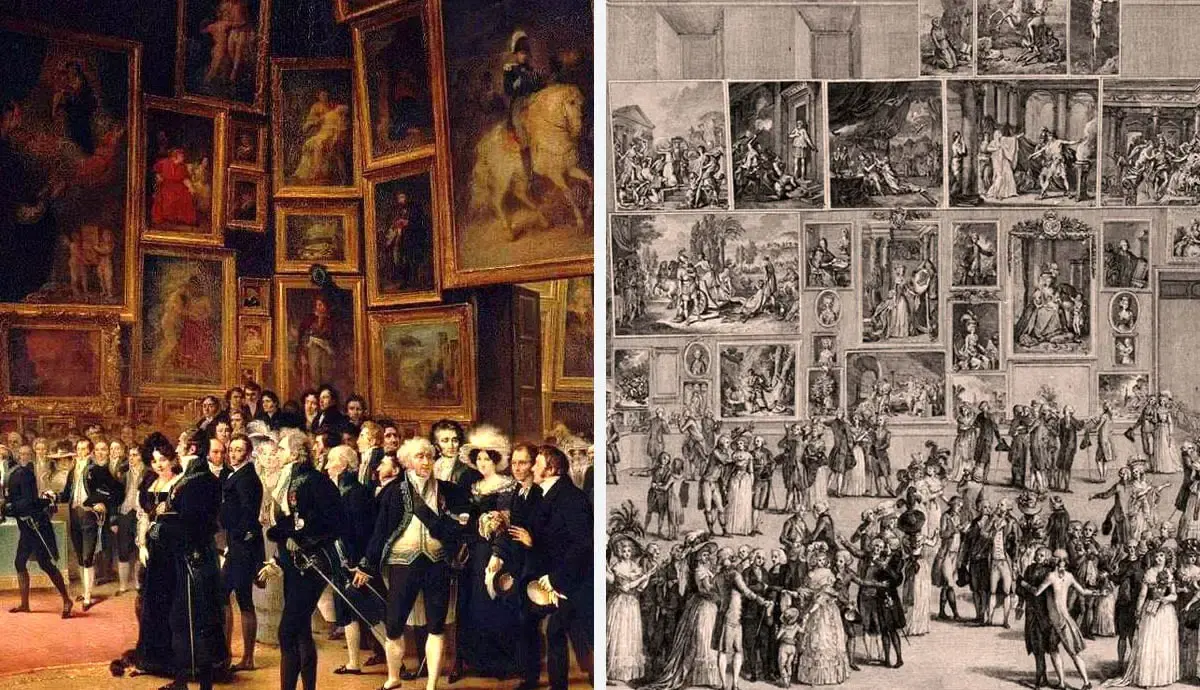
The Paris Salon originated in 1667 under the patronage of King Louis XIV, initially held in the Salon Carré of the Louvre Palace. Its primary purpose was to showcase the works of members of the Royal Academy of Painting and Sculpture, establishing a standardized hierarchy of artistic quality. By providing a centralized venue, the French monarchy exerted significant control over the visual culture of the nation, promoting academic styles that favored historical, mythological, and religious subjects.
For artists of the era, participation in the Salon was not merely an opportunity for exposure; it was the essential gateway to a professional career. The exhibition acted as a gatekeeper, as the jury’s approval could lead to state-funded commissions, royal patronage, and entry into the elite social circles of the Parisian art world. Conversely, rejection often meant professional obscurity, forcing artists to seek alternative, less prestigious avenues for selling their work to private collectors or the burgeoning middle-class market.
How did the selection process work?
The selection process was governed by a jury composed of established members of the Académie des Beaux-Arts. These jurors were typically older, traditionally trained artists who held conservative views on technique, composition, and subject matter. They favored the "Grand Manner," which emphasized clear outlines, balanced compositions, and idealized figures, often dismissing works that displayed loose brushwork or unconventional themes as unfinished or technically inferior.
The process of gaining entry involved several rigorous steps for aspiring artists:
- Submission of finished canvases to the jury for physical inspection.
- Evaluation based on adherence to classical standards of beauty and historical accuracy.
- Notification of acceptance, conditional acceptance, or outright rejection by the committee.
- Placement of the work within the gallery, with the most prestigious "on the line" spots reserved for senior Academicians.
This system created immense tension between the establishment and younger, more experimental artists who felt the jury stifled innovation and marginalized new movements like Realism or Impressionism.
Why did the Salon become so controversial?
As the 19th century progressed, the Salon became a flashpoint for cultural conflict. The rigid adherence to academic standards increasingly clashed with the changing sensibilities of the era, leading to widespread accusations of elitism and favoritism. Critics argued that the jury system was corrupt and biased against any artist who challenged the status quo, effectively preventing the evolution of French art by prioritizing tradition over genuine creative expression.
The most famous instance of this friction occurred in 1863, when the jury rejected an unprecedented number of works. This led to a public outcry, forcing Emperor Napoleon III to establish the Salon des Refusés, or "Exhibition of the Refused." This alternative event allowed the public to see the works that the official jury had deemed unworthy. While the public initially mocked the rejected paintings, the event proved that the official Salon no longer held a monopoly on artistic quality, paving the way for the eventual rise of the independent art market.
Common mistakes when studying the Salon
When analyzing the history of the Paris Salon, many students make the mistake of viewing it as a static institution that never changed. In reality, the Salon’s rules, jury composition, and political influence shifted significantly over its two-hundred-year history. It is also a common error to assume that all rejected artists were geniuses; while many avant-garde painters were indeed turned away, the jury also rejected thousands of mediocre works that failed to meet basic technical standards of the time.
To accurately understand the Salon, avoid these common pitfalls:
- Assuming that every rejected artist was a misunderstood visionary.
- Ignoring the role of political patronage in determining which artists were accepted.
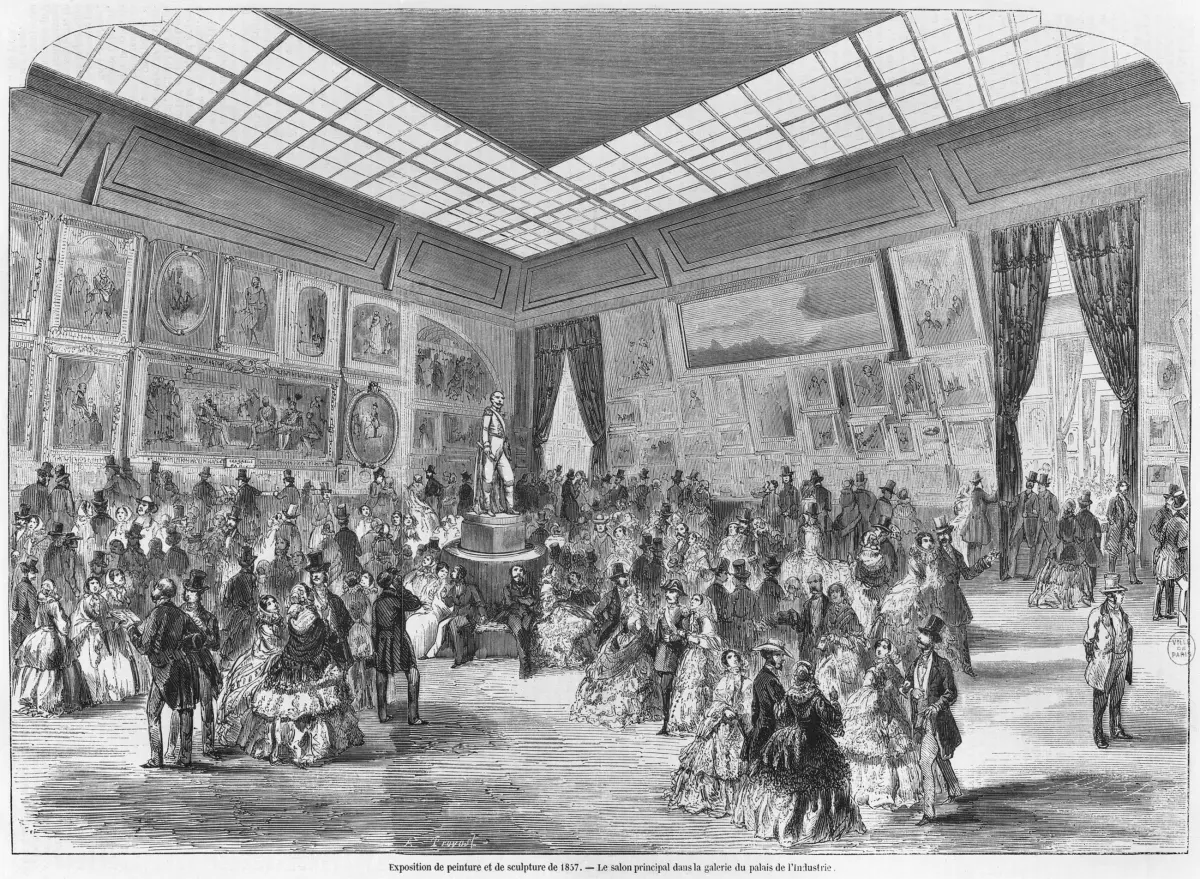
- Overlooking the importance of the physical layout of the gallery, which influenced how critics perceived the art.
- Failing to account for the impact of the Industrial Revolution on the public’s ability to attend the exhibitions.
By ignoring these nuances, one risks misinterpreting the complex power dynamics that defined the relationship between the state, the artist, and the public.
What was the legacy of the Paris Salon?
The legacy of the Paris Salon is found in the birth of modern art. By creating a rigid, exclusionary environment, the Salon inadvertently fostered the spirit of rebellion that defined the Impressionist, Post-Impressionist, and Symbolist movements. Artists like Edouard Manet, Claude Monet, and Camille Pissarro realized that if they could not succeed within the state-sanctioned system, they would have to create their own. This led to the formation of independent galleries and artist-run exhibitions that bypassed the jury system entirely.
Ultimately, the decline of the Salon marked the transition from a state-controlled art world to a decentralized, market-driven one. While the official Salon continued to exist into the 20th century, its relevance faded as collectors and the public began to value individual expression over academic conformity. The institution serves as a reminder of how artistic gatekeeping can catalyze change, as the very restrictions intended to preserve tradition ended up accelerating the arrival of modernism.
Key facts
- The Paris Salon was the official art exhibition of the Académie des Beaux-Arts in Paris, beginning in 1667.
- It served as the singular gatekeeper of artistic taste and professional success in France for over two centuries.
- Artists submitted works to a jury, which selected pieces based on strict adherence to classical standards and historical themes.
- The term "Salon" refers to the Salon Carré in the Louvre, where the most prestigious exhibitions were held.
- Acceptance into the Salon was essential for an artist to gain government commissions and private patronage.
- The rigid rejection of innovative styles like Impressionism led to the creation of the Salon des Refusés in 1863.
The bottom line
The Paris Salon was the ultimate arbiter of artistic merit in France for over two hundred years. By enforcing strict academic standards, it shaped the careers of countless painters and sculptors. While its rigid jury system eventually stifled innovation, the Salon remains a vital historical case study on how institutional power can both foster and obstruct the evolution of creative expression in the Western world.
People also ask
Why was the Paris Salon so influential?
It held a monopoly on the French art market, acting as the primary venue for public exposure. Being exhibited there provided an artist with a "seal of approval" that guaranteed sales and critical recognition.
What was the Salon des Refusés?
This was an alternative exhibition organized in 1863 by Emperor Napoleon III for artists rejected by the official Salon jury. It marked a turning point in art history, signaling the decline of academic control over modern art.
How did the jury system work?
A panel of established Academicians judged thousands of submissions based on technical skill and adherence to traditional hierarchies of subject matter. They favored historical, mythological, and religious scenes over landscapes or everyday life.
What were the common mistakes artists made when submitting?
Artists often failed by ignoring the "hierarchy of genres," which prioritized history painting above all else. Additionally, those who experimented with loose brushwork or non-traditional color palettes were frequently rejected for lacking "finish."
When did the Paris Salon lose its dominance?
Its influence began to wane in the late 19th century as independent galleries and private dealers gained power. By the early 20th century, the rise of avant-garde movements rendered the Salon's conservative standards increasingly irrelevant.
Can you still visit the Paris Salon today?
The original institution no longer exists in its historical form, but the name is still used by various contemporary art societies in France. These modern versions lack the exclusionary power and cultural authority of the 18th and 19th-century original.
This answer was created with the help of AI research tools and reference sources. Spotted an error? Let us know — we correct mistakes quickly. See our editorial policy.