What is postmodern art?
Short answer
Postmodern art is a late 20th-century movement that rejects the rigid purity of modernism. It embraces irony, skepticism, and the mixing of high and low culture. By challenging traditional notions of originality and authorship, postmodernists use pastiche, appropriation, and playfulness to reflect a fragmented, media-saturated world where no single truth exists.
On this page
What defines postmodern art?
Postmodernism emerged in the late 1960s as a reaction against the perceived elitism and austerity of Modernism. While modernists sought universal truths and "pure" forms, postmodernists argued that meaning is subjective and culturally constructed. This movement thrives on the idea that everything has already been done, leading artists to recycle, remix, and recontextualize existing imagery rather than striving for original creation.
Key characteristics that distinguish this movement include:
- Irony and playfulness: Using humor to critique serious institutions.
- Pastiche: Combining different styles or genres into a single work.
- Appropriation: Borrowing existing images or objects and placing them in new contexts.
- Pluralism: The belief that no single artistic style or philosophy is superior.
- Skepticism: A questioning attitude toward grand narratives, authority, and objective reality.
By blurring the lines between "high art" (like painting and sculpture) and "low culture" (like advertisements, comics, and television), postmodern artists democratized the creative process. They shifted the focus from the artist’s unique genius to the viewer's interpretation.
How to identify postmodern art
Identifying postmodern art requires looking for signs of self-awareness and intertextuality. You will often find works that reference other works, historical periods, or popular media. These pieces frequently dismantle the "fourth wall" of art, acknowledging their own artificiality or the context in which they are displayed. If a work feels like a collage of conflicting ideas or styles, it is likely postmodern.
When analyzing a piece, consider these common visual cues:
- Look for mixed media, such as combining photography with painting or text.
- Search for irony, where the artist mocks the very medium they are using.
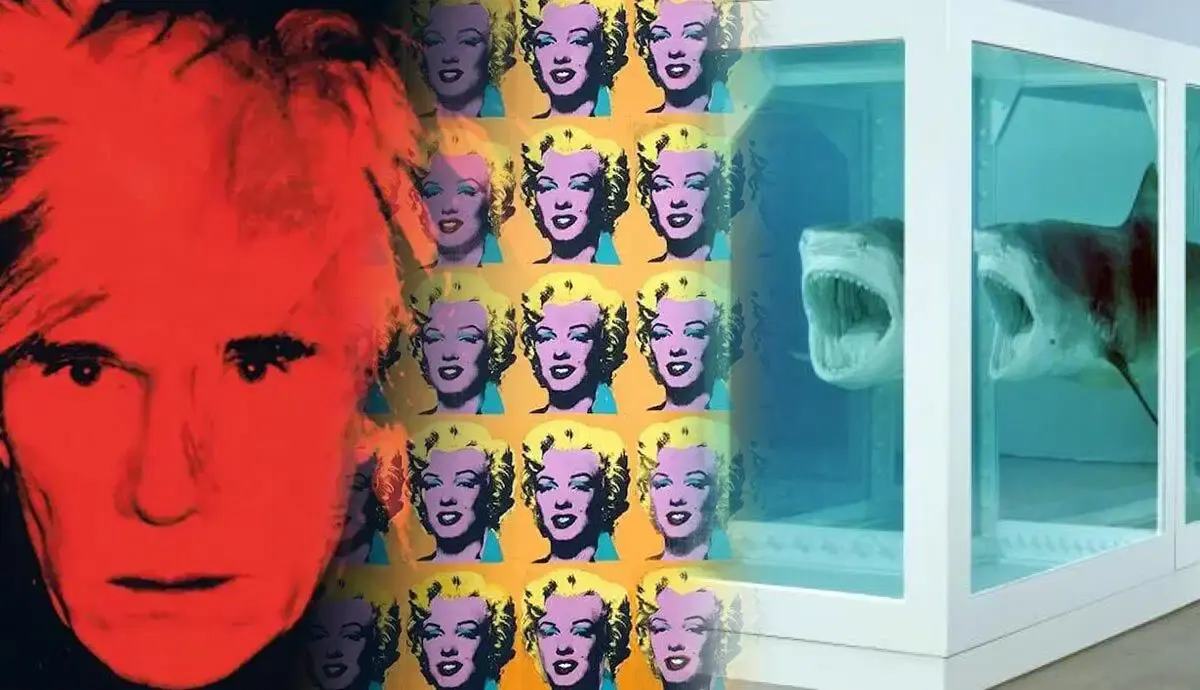
- Identify references to pop culture, such as Andy Warhol’s soup cans or Jeff Koons’s balloon animals.
- Note if the work critiques its own existence or the art market itself.
These works often feel intentionally disjointed or contradictory. Instead of seeking a single, unified message, look for the tension between the disparate elements the artist has brought together.
Why postmodern art matters today
The significance of postmodernism lies in its profound impact on how we consume and create culture. It paved the way for contemporary art by validating the use of digital media, installation, and performance. By questioning the authority of museums and galleries, postmodernists forced the art world to become more inclusive and aware of social, political, and gender-based power structures.
This movement remains relevant because it accurately reflects our modern, information-heavy environment. We live in a world of constant remixing and instant access to global history, which is exactly the environment postmodernism predicted. It teaches audiences to be critical consumers of images, training us to look beneath the surface of advertisements, news, and social media feeds. By dismantling the idea of a "correct" way to make art, it opened the door for the diverse, globalized art scene we experience in the 21st century.
Common mistakes when interpreting postmodern art
A frequent error is assuming that postmodern art is "lazy" or lacks technical skill because it uses found objects or familiar imagery. Critics often dismiss works like Marcel Duchamp’s readymades or Damien Hirst’s installations as simple pranks. However, the value lies in the intellectual labor and the conceptual framework, not just the manual craft. Dismissing the work based on its lack of traditional beauty misses the point entirely.
Another common pitfall is searching for a single, definitive meaning within a work. Because postmodernism is rooted in subjectivity, there is rarely one correct answer.
- Avoid looking for a "hidden message" that the artist intended for you to solve.
- Do not assume that the artist is being sincere; irony is a primary tool.
- Resist the urge to judge the work solely by its aesthetic appeal or technical difficulty.
- Recognize that the context—the gallery, the history, and the viewer—is part of the art.
Best ways to engage with postmodern art
To engage effectively with this style, start by visiting contemporary art museums and focusing on the accompanying wall text. These descriptions often explain the conceptual intent behind the work, which is vital for understanding postmodern pieces. Don’t be afraid to feel confused or challenged; that discomfort is often a deliberate part of the artist's strategy to make you think more deeply about your own assumptions.
Follow these steps to deepen your understanding:
- Research the historical context of the piece to see what the artist is critiquing.
- Ask yourself how the work makes you feel about the culture it is referencing.
- Compare the work to traditional art forms to see what rules the artist is breaking.
- Discuss your interpretation with others, as postmodern art is designed to spark conversation rather than provide answers.
By embracing the ambiguity of the movement, you will find that postmodern art becomes a fascinating mirror of our own complex, multifaceted reality.
Key facts
- Postmodernism emerged in the late 1960s as a reaction against the perceived elitism and rigidity of Modernism.
- It rejects the idea of a single "correct" style, instead embracing irony, playfulness, and the blending of "high" and "low" culture.
- Key techniques include appropriation, where artists reuse existing images, and pastiche, which mimics multiple styles simultaneously.
- Postmodern works often challenge the concept of the "original" genius, suggesting that meaning is created by the viewer rather than the artist.
- To identify postmodern art, look for self-referential humor, mixed media, and a lack of clear narrative or moral resolution.
- Avoid the mistake of assuming all contemporary art is postmodern; distinguish it by its specific focus on deconstructing traditional artistic hierarchies.
The bottom line
Postmodern art represents a fundamental shift in how we perceive creativity, moving away from the pursuit of singular truths toward a landscape of irony and pluralism. By blending high-brow concepts with popular culture, it encourages viewers to question the authority of traditional institutions. Ultimately, it serves as a mirror to our complex, media-saturated world, proving that meaning is not fixed but constantly evolving through interpretation.
People also ask
How does postmodern art differ from modern art?
Modern art typically sought universal truths and focused on the purity of form or medium. In contrast, postmodern art embraces fragmentation, skepticism toward grand narratives, and the mixing of diverse cultural references.
Is postmodern art meant to be taken seriously?
Much of postmodern art uses irony and satire to engage with serious subjects, meaning it often demands a critical, rather than literal, interpretation. It invites viewers to question the context of the work rather than simply admiring its aesthetic beauty.
Why is appropriation common in this movement?
Artists use appropriation to comment on the saturation of media and the history of art itself. By recontextualizing existing images, they highlight how meaning shifts depending on where and how an object is displayed.
Does postmodern art require a formal background to understand?
While historical knowledge helps, the movement is intentionally accessible because it incorporates familiar pop-culture imagery. The primary requirement is a willingness to engage with the artist's intent to subvert or question traditional conventions.
What role does technology play in postmodern creation?
Postmodernism thrived as mass media and digital tools made it easier to copy, edit, and distribute visual information. These technologies facilitated the movement's focus on reproduction and the blurring of lines between authentic and manufactured works.
Can postmodern art be beautiful?
Beauty in postmodernism is subjective and often subverted to serve a conceptual purpose. While a work might be visually striking, its primary goal is usually to provoke thought or challenge the viewer's preconceived notions about art's value.
This answer was created with the help of AI research tools and reference sources. Spotted an error? Let us know — we correct mistakes quickly. See our editorial policy.