What is Tamara de Lempicka known for?
Short answer
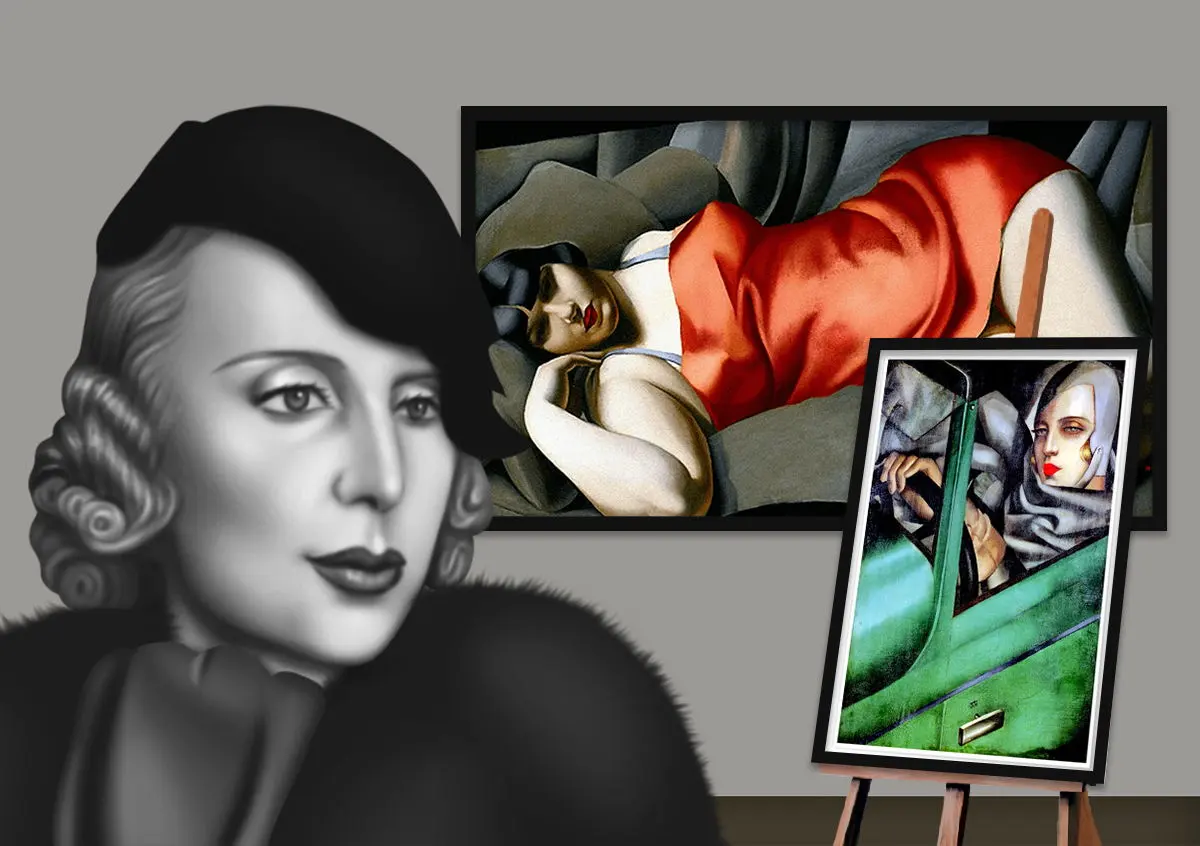
Tamara de Lempicka is best known as the definitive portraitist of the Art Deco movement. She gained international fame in the 1920s and 1930s for her stylized, glamorous depictions of the social elite. Her work is characterized by sharp, sculptural lines, bold colors, and a distinctively cool, sophisticated aesthetic that defined the era.
On this page
What defines Tamara de Lempicka’s Art Deco style
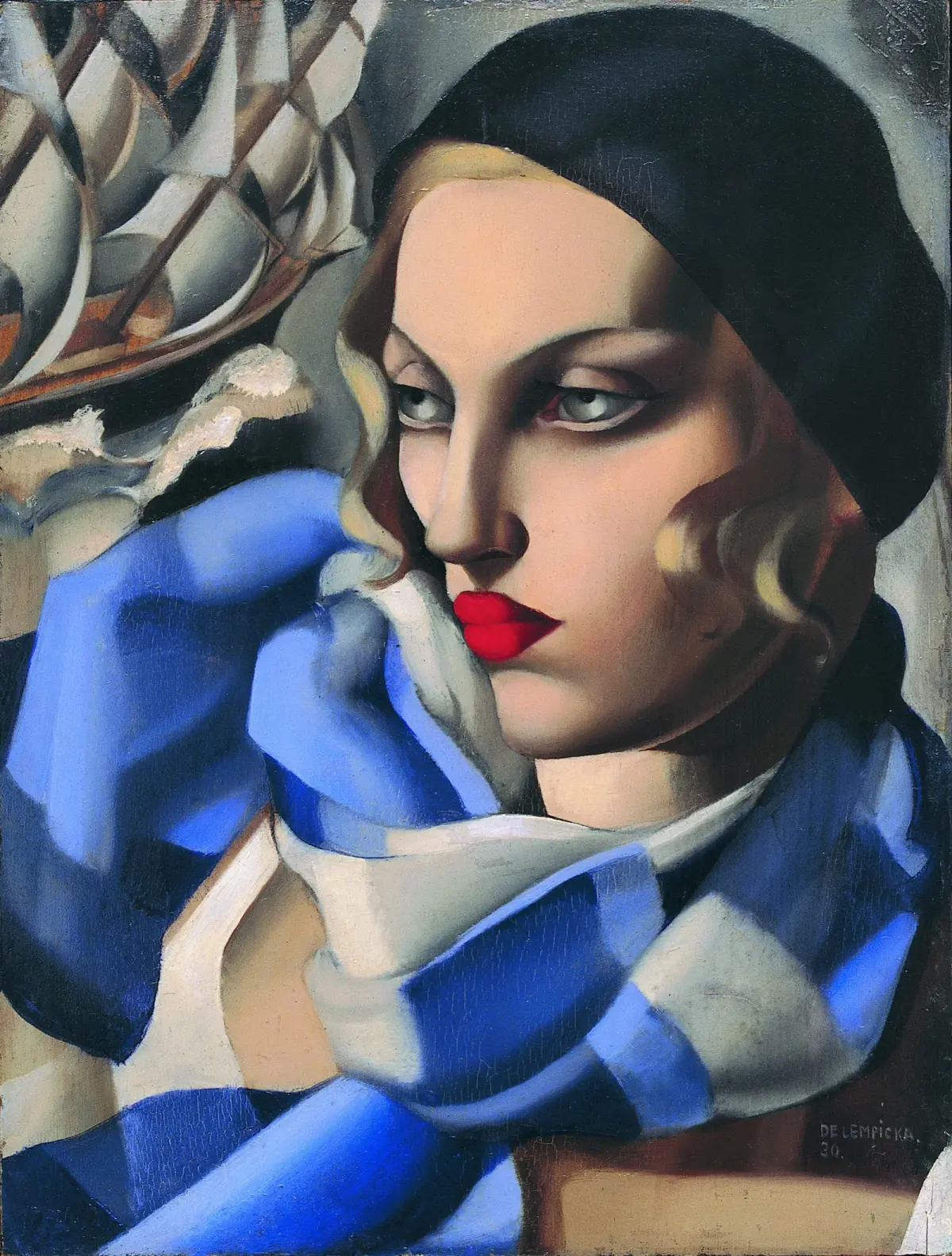
Tamara de Lempicka’s signature style emerged in Paris during the mid-1920s, blending the precision of Neoclassicism with the geometric rigor of Cubism. Her paintings are instantly recognizable for their smooth, metallic surfaces and dramatic lighting, which give her subjects a statuesque, almost carved appearance. She focused heavily on the female form, often depicting women as powerful, independent, and sexually liberated figures, which contrasted sharply with the more delicate portraits of the Victorian era.
Her technique involved meticulous layering of oil paints to achieve a porcelain-like finish. By avoiding visible brushstrokes, she created a sleek, machine-age aesthetic that perfectly captured the spirit of the Jazz Age. Her work was not merely decorative; it was a calculated projection of modern luxury and industrial progress. Today, her paintings serve as the primary visual reference for the visual language of the 1920s, influencing everything from fashion illustration to contemporary graphic design.
How to identify an authentic Lempicka painting
Identifying a genuine Lempicka requires an eye for her specific technical execution and thematic choices. Most of her most famous works were created between 1925 and 1935, a period when she was the darling of the Parisian art scene. When examining a piece, look for these specific indicators of her hand:
- Sharp, angular facial features and high-contrast shading.
- Backgrounds often featuring stylized, industrial cityscapes or minimalist architectural elements.
- A cool, sophisticated color palette dominated by icy blues, deep reds, and metallic golds.
- The use of heavy, sculptural drapery that emphasizes the volume of the subject's clothing.
- A signature, usually placed in the corner, written in a clean, elegant script.
If you are viewing a work in person, look for the absence of soft, impressionistic blending. Lempicka’s edges are almost always crisp, and her light sources are deliberate and theatrical, creating a sense of frozen motion.
Why her portraits of the elite became famous
Lempicka’s rise to fame was fueled by her ability to capture the aspirations of the interwar aristocracy. She was not just an artist but a celebrity, often hosting lavish parties and curating her own public image as a mysterious, glamorous countess. Her patrons included royalty, socialites, and industrial magnates who wanted to be immortalized in her signature style. By painting these figures, she turned them into icons of modern success.
Her most famous work, Self-Portrait (Tamara in a Green Bugatti), remains the quintessential image of the 1920s woman. Commissioned for a German fashion magazine, it depicted her as a liberated, driving force, steering her own destiny. This painting, along with her portraits of the Duchess of La Salle and various aristocrats, solidified her status as the primary chronicler of the era's social elite. Her art functioned as a status symbol, signaling that the sitter was modern, wealthy, and fashionably ahead of the curve.
Common mistakes when analyzing her work
Many observers mistake Lempicka’s work for simple commercial illustration due to its clean lines and graphic quality. While she did work for magazines like Die Dame, her fine art pieces were deeply rooted in traditional academic training. A common mistake is to view her portraits as purely superficial; in reality, they contain complex psychological undertones. Her subjects often appear detached or guarded, reflecting the underlying anxiety and instability of the period between the two World Wars.
Another error is assuming her style remained static throughout her life. While she is famous for her 1920s output, her later work shifted toward abstraction and different color palettes as she moved to the United States. To avoid misinterpretation, consider the following:
- Research the specific decade the piece was created to understand the context.
- Distinguish between her commissioned portraits and her more experimental, later abstract works.
- Observe the clothing and accessories, as these are precise indicators of 1930s fashion trends.
- Note the emotional distance in the subject's eyes, which is a hallmark of her psychological depth.
How to appreciate her legacy today
Lempicka’s influence persists in contemporary culture, particularly in fashion, film, and interior design. Her work is frequently referenced in high-fashion editorials and by designers who seek to evoke the glamour of the interwar period. To truly appreciate her legacy, look beyond the surface beauty and consider her role as a pioneering woman in a male-dominated art world. She navigated the international art market with the same precision she applied to her canvases, ensuring her name remained synonymous with the Art Deco movement.
If you are interested in deepening your understanding, visit major museum collections that hold her work, such as the Musée des Beaux-Arts in Nantes or various private collections that occasionally loan pieces for exhibitions. By studying the evolution of her technique, you can gain a clearer picture of how she transformed the portraiture of her time. Her ability to synthesize the old world of classical painting with the new world of modern technology remains a masterclass in artistic innovation that continues to captivate audiences nearly a century later.
Key facts
- Tamara de Lempicka was a Polish painter best known for her polished, jewel-toned Art Deco portraits of aristocrats and the wealthy elite.
- She moved to Paris in 1918 following the Russian Revolution, where she studied under Maurice Denis and André Lhote to refine her signature style.
- Her work is characterized by "soft Cubism," featuring stylized, sculptural figures with sharp outlines and dramatic lighting.
- Lempicka became the first woman artist to become a major celebrity in the 1920s, famously living a glamorous, high-society lifestyle.
- To replicate her technique, focus on smooth, enamel-like paint application and avoid visible brushstrokes or heavy texture.
- When studying her work, look for the "Self-Portrait (Tamara in a Green Bugatti)" from 1929, which became an icon of female independence.
The bottom line
Tamara de Lempicka remains the definitive artist of the Art Deco era, celebrated for her ability to blend classical structure with modern, machine-age elegance. Her portraits not only captured the faces of the 1920s elite but also projected an image of female autonomy and glamour. By mastering a precise, sculptural technique, she created a timeless visual language that continues to influence contemporary fashion and design.
People also ask
What was Tamara de Lempicka's most famous painting?
Her most iconic work is the 1929 "Self-Portrait (Tamara in a Green Bugatti)," commissioned for the cover of the German fashion magazine Die Dame. It captures the spirit of the Jazz Age and the newfound liberation of women.
Did Lempicka paint anything other than portraits?
While best known for portraits, she also painted still lifes, religious subjects, and scenes of urban life. However, her distinct Art Deco aesthetic remained consistent across all her subject matter.
How did the Russian Revolution affect her career?
The revolution forced her to flee to Paris, where she lost her family's wealth and status. This necessity pushed her to pursue painting professionally to support herself and her daughter, leading to her rapid rise in the Parisian art scene.
What is the "Art Deco" style in painting?
Art Deco is a visual arts style characterized by sleek, geometric forms, bold colors, and a sense of luxury. In Lempicka's case, it involved simplified, streamlined anatomy and a high-gloss finish that mimicked industrial design.
Why did her popularity decline after the 1930s?
As the Art Deco movement fell out of fashion and the world moved toward Surrealism and Abstract Expressionism, Lempicka’s rigid, decorative style was viewed as outdated. She remained active but never regained the massive commercial success she enjoyed in the 1920s.
Are her paintings valuable today?
Yes, her works are highly sought after by collectors and museums. Paintings by Lempicka have sold for tens of millions of dollars at auction, with her "Portrait of Marjorie Ferry" selling for over $16 million in 2020.
This answer was created with the help of AI research tools and reference sources. Spotted an error? Let us know — we correct mistakes quickly. See our editorial policy.