What is Russian icon painting?
Short answer
Russian icon painting is a sacred religious art form characterized by stylized, two-dimensional depictions of saints and biblical scenes. Rooted in Byzantine traditions, it uses egg tempera on wooden panels. These icons serve as windows to the divine in Orthodox Christianity, emphasizing spiritual symbolism over realistic perspective or anatomical accuracy.
On this page
What defines the style of Russian icons?
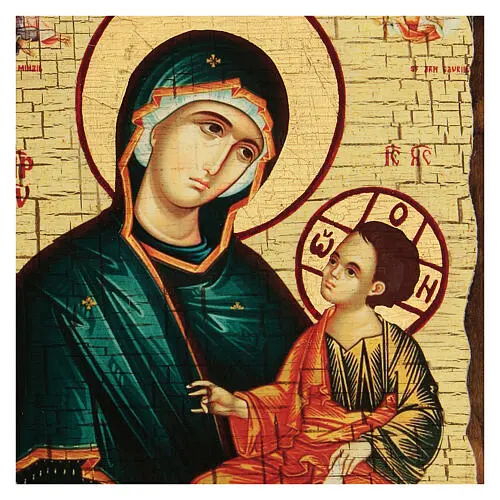
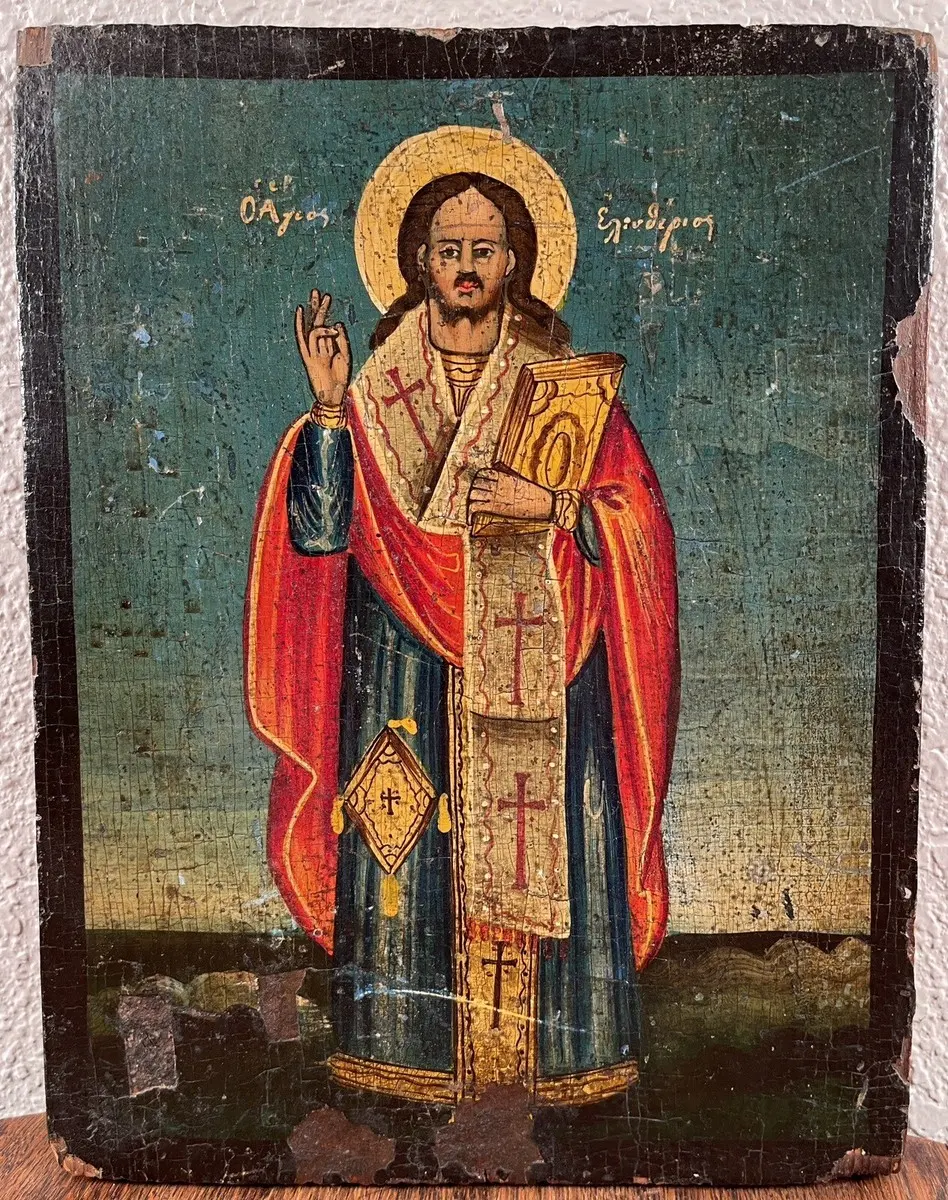
Russian icons are defined by their departure from naturalism, prioritizing spiritual meaning over physical representation. Artists use "inverse perspective," where lines converge toward the viewer rather than a distant vanishing point, creating an immersive experience. Figures are typically elongated, with small mouths and large, expressive eyes meant to convey a state of heavenly contemplation.
The color palette is highly symbolic, with specific hues denoting theological concepts. Gold leaf represents the uncreated light of God, while deep reds often signify humanity or martyrdom. Blue frequently symbolizes the celestial realm, and green represents life and renewal. These choices ensure that the icon acts as a liturgical object rather than a decorative painting, guiding the viewer toward prayer.
How are traditional icons created?
The creation of an icon is a meditative process governed by strict canonical rules. Artists do not sign their work, as they view themselves as conduits for divine truth rather than individual creators. The process follows a precise sequence:
- Prepare a wooden panel, usually linden or pine, by carving a slight depression called a "kovcheg."
- Apply a mixture of animal glue and chalk called "levkas" to create a smooth, white surface.
- Transfer the design using a charcoal sketch or a template known as a "podlinnik."
- Apply gold leaf to the background and halos.
- Paint the image using egg tempera, starting with dark base tones and layering lighter colors to achieve a luminous effect.
- Seal the finished work with a protective layer of "olifa," a linseed-oil-based varnish.
Where did Russian icon painting originate?
The tradition arrived in Kievan Rus’ following the Christianization of the region in 988 CE. Initially, Byzantine masters provided the models and techniques, but local schools soon developed distinct characteristics. The Novgorod school, for instance, became known for bold, expressive colors and simplified forms, while the Moscow school favored refined elegance and complex compositions.
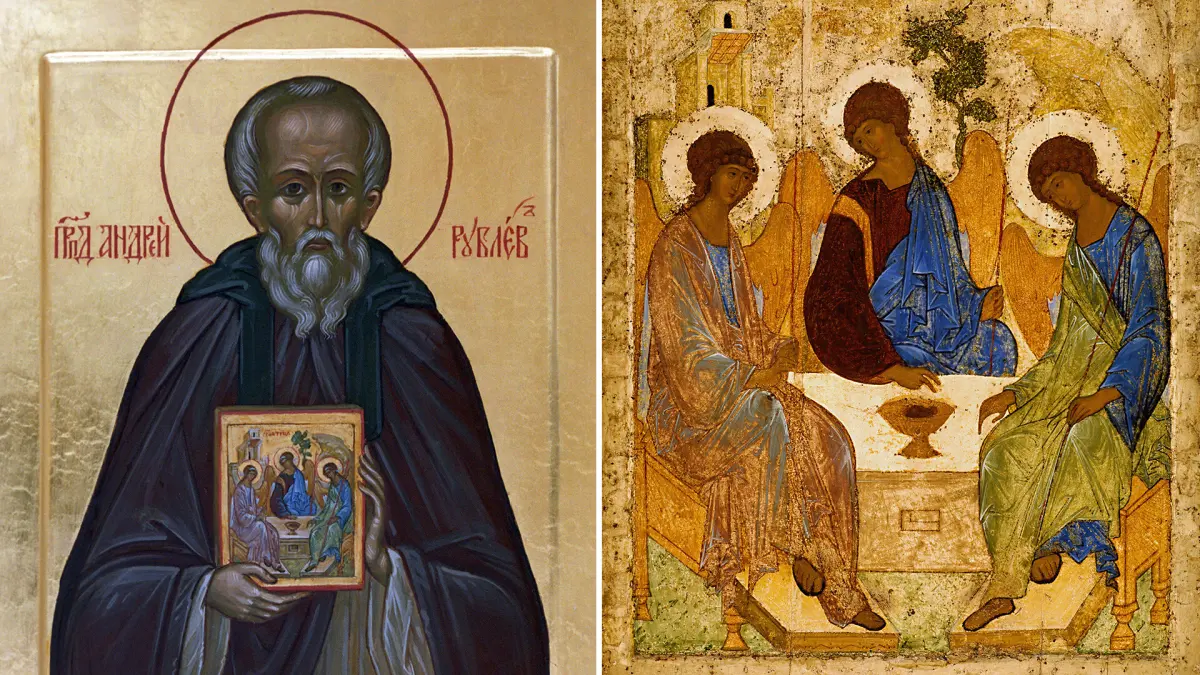
The 14th and 15th centuries marked the "Golden Age" of Russian iconography. Andrei Rublev stands as the most celebrated master of this era, known for his masterpiece, the Trinity. His work introduced a sense of harmony and gentle humanity that moved away from the more somber, rigid Byzantine prototypes. By the 17th century, the influence of Western European realism began to seep into the tradition, leading to more detailed and naturalistic styles, particularly under the influence of the Stroganov school.
How to identify authentic antique icons?
Identifying an authentic antique icon requires a keen eye for material aging and craftsmanship. Collectors should look for signs of hand-carved wood and the presence of "shponki," which are wooden cross-pieces inserted into the back of the panel to prevent warping. These structural elements are critical indicators of age and quality.
- Check the "levkas" layer for fine, natural cracking, known as craquelure, which occurs over centuries.
- Inspect the paint for signs of mineral-based pigments rather than modern synthetic dyes.
- Examine the gilding; authentic antique gold leaf often shows slight wear and a distinct, matte texture.
- Look for the "olifa" varnish, which darkens significantly over time, often giving old icons a deep, amber-toned appearance.
Avoid icons that look perfectly uniform or lack depth, as these are often mass-produced reproductions. Genuine icons possess a weight and texture that modern prints cannot replicate.
Common mistakes when studying icons
One common error is judging icons by the standards of Renaissance art. Critics often mistake the lack of realistic shadows or perspective for a lack of skill, failing to realize that these features are intentional. The goal of the iconographer is to depict the "transfigured" state of the subject, not their earthly appearance. Another mistake is ignoring the iconostasis, the wall of icons in an Orthodox church. Icons are not meant to be viewed in isolation; they are part of a larger architectural and liturgical system.
When researching or collecting, beginners often overlook the condition of the "oklad." This is the metal cover, often made of silver or brass, placed over the icon to protect it or show devotion. While beautiful, an oklad can sometimes hide damage to the painting beneath. Always ensure the icon is viewed in its entirety to assess its true state of preservation. By understanding the theological intent and the rigorous technical requirements, one can fully appreciate the depth of this ancient, enduring art form.
Key facts
- Russian icon painting is a sacred art form primarily used in Eastern Orthodox worship, serving as a "window to heaven" rather than a decorative object.
- Artists traditionally use egg tempera—a mixture of egg yolk, water, and natural pigments—applied to wooden panels prepared with gesso.
- The "reverse perspective" technique is employed, where lines converge toward the viewer rather than a distant vanishing point to emphasize the spiritual presence of the subject.
- Gold leaf is often applied to the background to symbolize divine light and the transcendence of earthly time and space.
- The most famous Russian iconographer, Andrei Rublev, lived during the late 14th and early 15th centuries and is best known for his masterpiece, the Trinity.
- When viewing or creating icons, avoid using realistic shading or anatomical proportions, as the goal is to depict the transfigured, eternal state of the holy figure.
The bottom line
Russian icon painting is a profound tradition that transcends mere artistry, functioning as a liturgical tool for spiritual connection. By adhering to centuries-old techniques like egg tempera and reverse perspective, iconographers create images that prioritize divine symbolism over naturalistic realism. Whether viewed in a cathedral or a home, these sacred panels invite the observer into a contemplative space, bridging the gap between the earthly and the eternal.
People also ask
Why are the figures in icons often stylized and elongated?
Iconographers intentionally distort human proportions to represent the spiritual rather than the physical body. This stylistic choice emphasizes the subject's holiness and detachment from earthly limitations.
Can anyone become an iconographer?
Traditionally, icon painting is considered a spiritual discipline requiring prayer, fasting, and blessing from the church. Practitioners are viewed as conduits for divine truth rather than individual creative artists.
What is the significance of the "gesso" layer on the wood?
Gesso is a mixture of animal glue and chalk that provides a smooth, white surface for painting. It acts as a foundation that reflects light through the translucent layers of tempera.
Why are icons never signed by the artist?
Icons are meant to be anonymous expressions of collective church faith. By omitting a signature, the artist humbles themselves and ensures the focus remains entirely on the sacred subject.
How should icons be maintained in a home?
Icons should be kept away from direct sunlight, extreme humidity, and smoke from candles. Gentle dusting with a soft, dry brush is preferred over using chemical cleaners or water.
What is the difference between an icon and a religious painting?
A religious painting is a subjective interpretation of a scene meant to evoke emotion or tell a story. An icon follows strict canonical rules to present a theological reality for liturgical veneration.
This answer was created with the help of AI research tools and reference sources. Spotted an error? Let us know — we correct mistakes quickly. See our editorial policy.