What is Kazimir Malevich known for?
Short answer
Kazimir Malevich was a pioneering Russian avant-garde artist and theorist best known for founding Suprematism, an art movement focused on basic geometric forms. His iconic 1915 painting, Black Square, remains one of the most significant works in modern art history, representing a radical departure from traditional representational painting toward pure abstraction.
On this page
Who was Kazimir Malevich?
Kazimir Malevich (1879–1935) was a Ukrainian-born painter and art theorist who played a central role in the development of 20th-century abstract art. Initially influenced by Impressionism and Fauvism, he transitioned through Cubism and Futurism before arriving at his own revolutionary style. He sought to liberate art from the burden of depicting the physical world, believing that true creativity resided in the expression of pure feeling.
Throughout his career, Malevich worked not only as a painter but also as a teacher and writer. He founded the group UNOVIS in Vitebsk, where he influenced a generation of artists, including El Lissitzky. Despite facing political pressure and eventual imprisonment during the Stalinist era, his theoretical writings and paintings left an indelible mark on Western modernism, influencing everything from minimalism to graphic design.
What is the Suprematist movement?
Suprematism is the art movement Malevich founded in 1913, characterized by the use of limited geometric shapes—squares, circles, and rectangles—and a restricted color palette. He argued that these forms were the "supremacy of pure artistic feeling," distinct from any utilitarian or representational purpose. By stripping away the subject matter, he aimed to reach a spiritual and universal visual language.
The movement reached its height around 1915, when Malevich debuted his Suprematist works at the "0.10" exhibition in Petrograd. To understand the core principles of Suprematism, consider these fundamental tenets:
- Non-objectivity: The rejection of depicting real-world objects or figures.
- Economy of means: Using the simplest possible forms to convey complex ideas.
- Dynamic tension: Arranging shapes to suggest movement or balance within a static frame.
- Spiritual liberation: Viewing the canvas as a window into a higher, non-material reality.
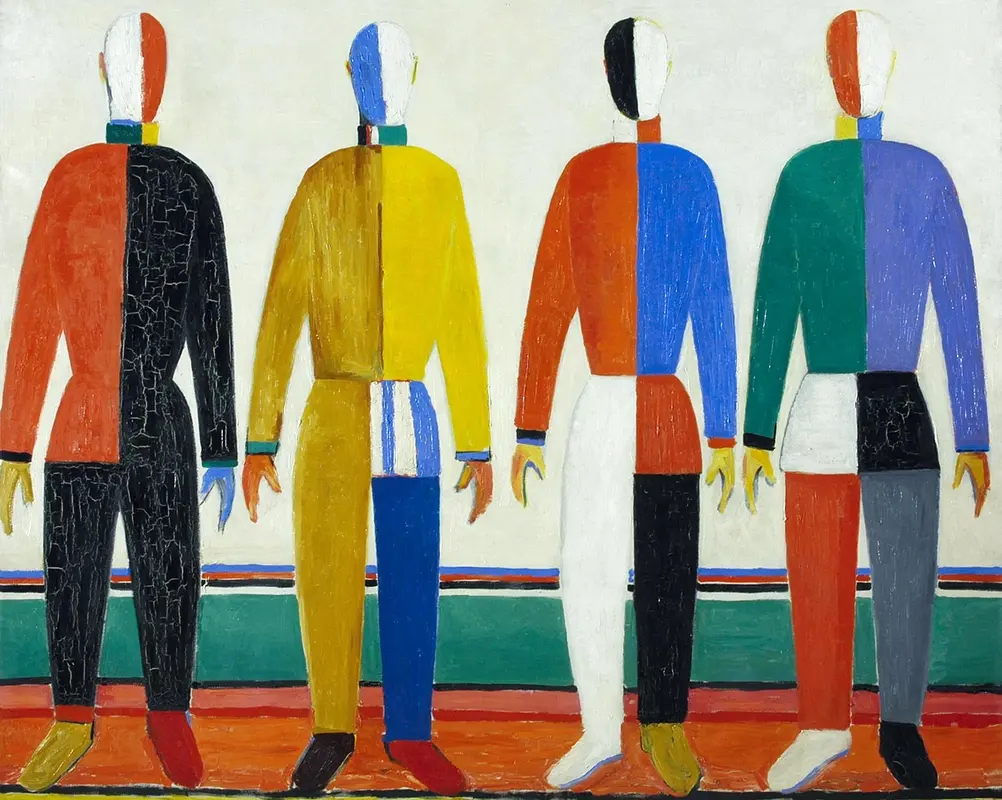
Why is Black Square famous?
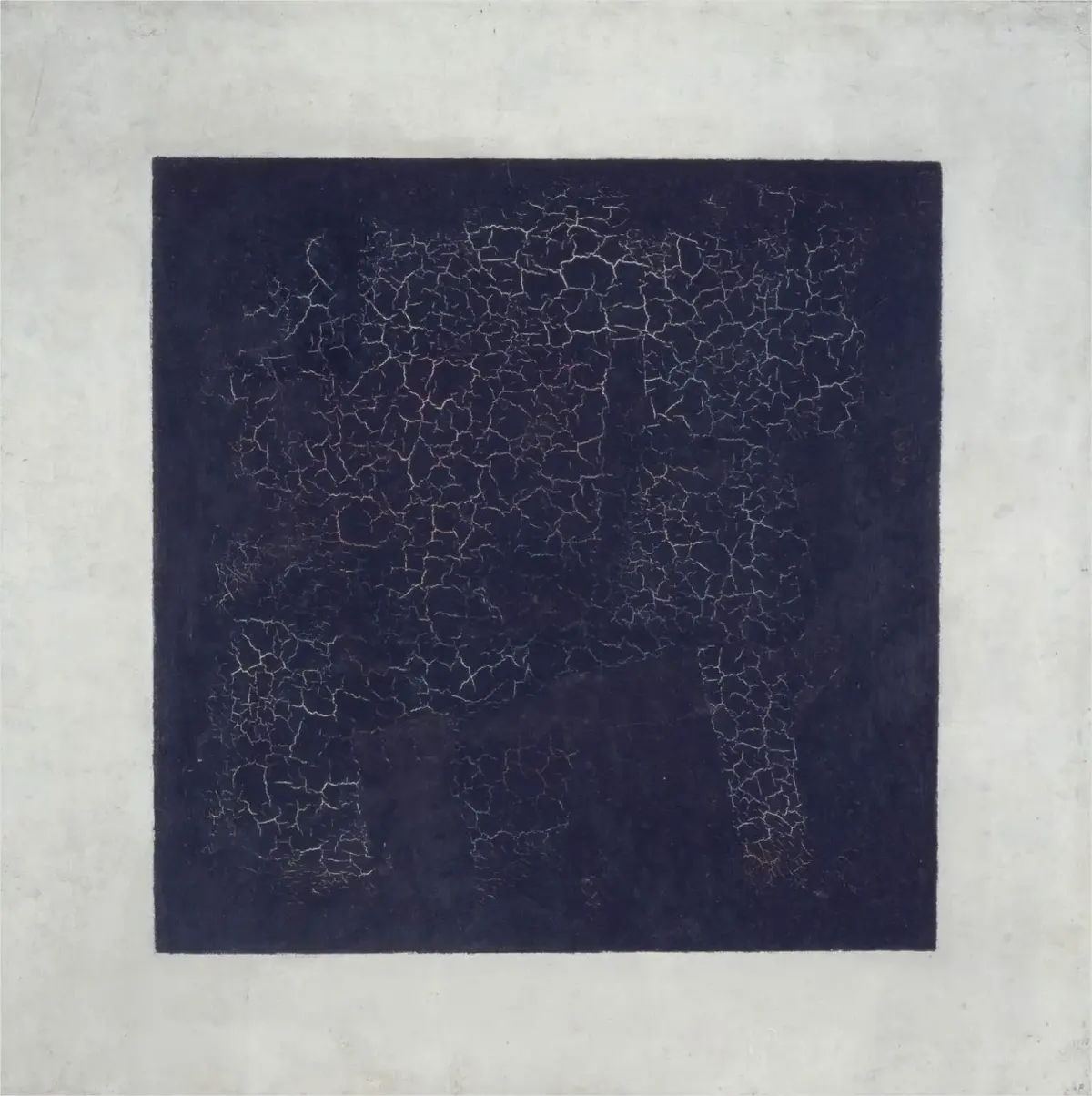
Black Square, first exhibited in 1915, is arguably the most famous work in the history of abstract art. By painting a simple black square on a white background, Malevich effectively declared the "death" of traditional painting. It challenged viewers to confront art without the crutch of narrative or recognizable imagery, forcing them to engage with the painting as a physical object and a conceptual statement.
For many critics and historians, this work marks the "zero point" of painting. It stripped away centuries of artistic convention, suggesting that art could be reduced to its most basic, essential components. While it is often criticized by those who prefer representational art, its historical importance lies in its audacity. It paved the way for later movements like Minimalism and Conceptualism by proving that an idea could be more important than technical skill or visual complexity.
How to appreciate abstract geometric art
Appreciating Suprematist art requires a shift in perspective. Rather than asking "What does this represent?" or "What is the story behind this?", you should focus on your immediate emotional and sensory response. Pay attention to the relationship between the shapes, the weight of the colors, and the balance of the composition.
If you are new to this style, follow these steps to deepen your engagement:
- Observe the scale: Notice how the size of the shapes influences your perception of the space.
- Analyze the color contrast: Consider how the black, white, or primary colors interact to create depth.
- Reflect on the title: Read the artist's intent to see if it changes your interpretation of the form.
- Step back: View the work from different distances to see how the composition changes.
- Identify the rhythm: Look for patterns or movements that lead your eye across the canvas.
Common mistakes when interpreting Malevich
A frequent mistake when viewing Malevich's work is assuming that because the forms are simple, they were easy to create or lack intellectual depth. Many viewers dismiss abstract art as "something a child could do," failing to recognize the rigorous theoretical framework and the historical courage required to break from centuries of tradition. Malevich spent years meticulously planning his compositions to achieve a precise balance.
Another common error is attempting to find hidden symbols or political allegories in every shape. While Malevich was deeply affected by the Russian Revolution, his Suprematist work was primarily concerned with universal, timeless truths rather than specific political events. Avoid over-intellectualizing the work; instead, allow yourself to experience the visual energy of the forms. By focusing on the interplay of geometry and space, you can better appreciate why Malevich is considered a foundational figure in the evolution of modern visual culture.
Key facts
- Kazimir Malevich was a Russian avant-garde artist and the founder of Suprematism, an art movement focused on basic geometric forms.
- His most famous work, Black Square (1915), is considered a landmark of abstract art because it stripped painting of all representational content.
- He believed that art should be liberated from the burden of depicting the physical world, focusing instead on "pure feeling."
- Malevich taught at the Vitebsk Art School in the early 1920s, where he influenced many students who later formed the UNOVIS group.
- His later career was marked by a shift back toward figurative painting due to political pressure from the Soviet government under Joseph Stalin.
- To understand his work, focus on the relationship between color, shape, and negative space rather than looking for a hidden narrative or subject.
The bottom line
Kazimir Malevich remains a pivotal figure in modern art for his bold rejection of traditional representation. By prioritizing geometric abstraction through his Suprematist philosophy, he fundamentally altered how viewers engage with the canvas. While his career was curtailed by political shifts in the Soviet Union, his legacy persists as a cornerstone of abstract expression, challenging audiences to find meaning in pure form and color.
People also ask
What does the term "Suprematism" mean?
Coined by Malevich in 1915, the term refers to the supremacy of pure artistic feeling over the depiction of objects. He sought to create a new visual language that did not rely on the imitation of nature.
Why is Black Square considered so important?
It represented a radical break from centuries of Western art tradition by abandoning perspective, subject matter, and texture. It is often cited as the "zero point" of painting, marking the beginning of total abstraction.
Did Malevich only paint geometric shapes?
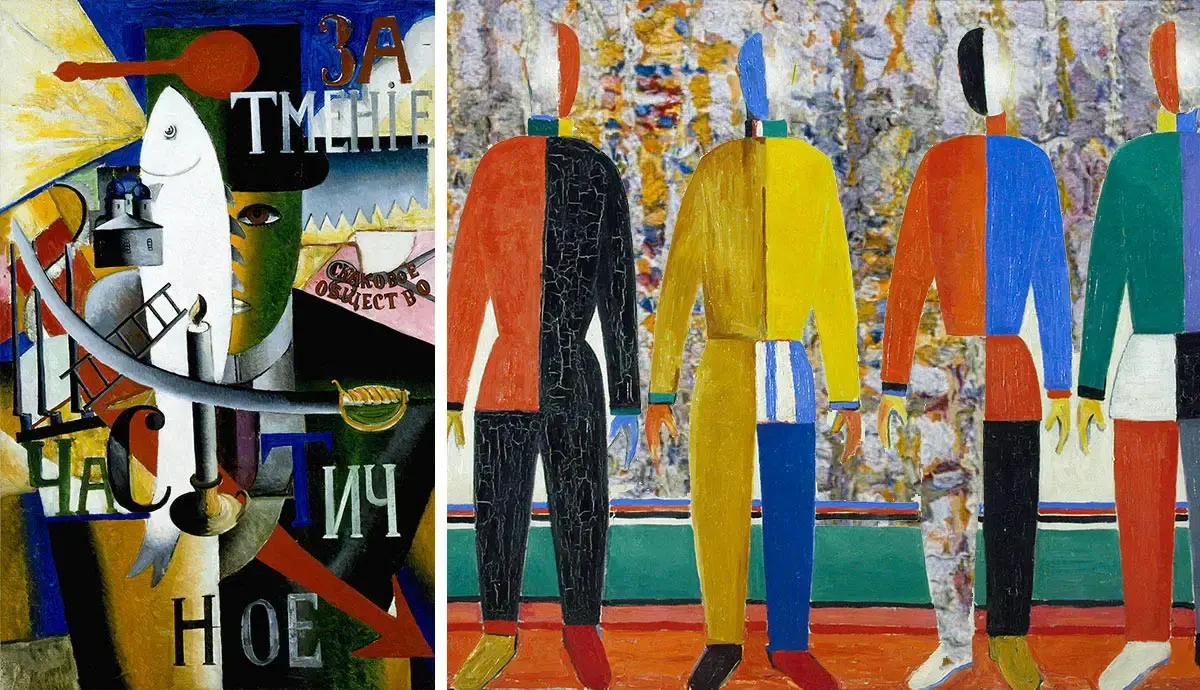
No, his career spanned several styles, including Impressionism, Symbolism, and Cubo-Futurism. Even after developing Suprematism, he returned to painting peasants and figures later in his life.
How can I interpret a Suprematist painting?
Avoid looking for a story or a specific object. Instead, observe how the placement of shapes creates a sense of balance, tension, or movement on the canvas.
What was Malevich's relationship with the Soviet government?
Initially, Malevich held high positions in the Soviet art establishment, but he eventually fell out of favor. The state began to enforce Socialist Realism, forcing him to abandon abstraction for more traditional, figurative styles.
Where can I see his original works today?
Major collections of his work are held at the State Tretyakov Gallery in Moscow, the Stedelijk Museum in Amsterdam, and the Museum of Modern Art in New York.
This answer was created with the help of AI research tools and reference sources. Spotted an error? Let us know — we correct mistakes quickly. See our editorial policy.