What is Lee Krasner known for?
Short answer
Lee Krasner was a pioneering American Abstract Expressionist painter known for her rigorous, evolving style and her pivotal role in the New York School. Though long overshadowed by her husband, Jackson Pollock, she is now celebrated for her complex collages, large-scale canvases, and her relentless commitment to artistic reinvention throughout her career.
On this page
Who was Lee Krasner in art history?
Lee Krasner was born Lenore Krassner in 1908 in Brooklyn to Russian Jewish immigrants. She was a formally trained artist who studied at the Cooper Union, the National Academy of Design, and later under the influential teacher Hans Hofmann. Her deep understanding of European modernism, particularly the works of Henri Matisse and Pablo Picasso, provided a structural foundation that distinguished her from many of her contemporaries.
She became a central figure in the development of Abstract Expressionism during the 1940s and 1950s. While she was a founding member of the American Abstract Artists group, her career was often complicated by the gender dynamics of the era. Despite these challenges, she remained a tireless advocate for the movement, helping to organize exhibitions and mentor younger artists. Today, she is recognized as one of the few female painters to achieve significant critical success within the male-dominated New York art scene.
What is the significance of her collage technique?
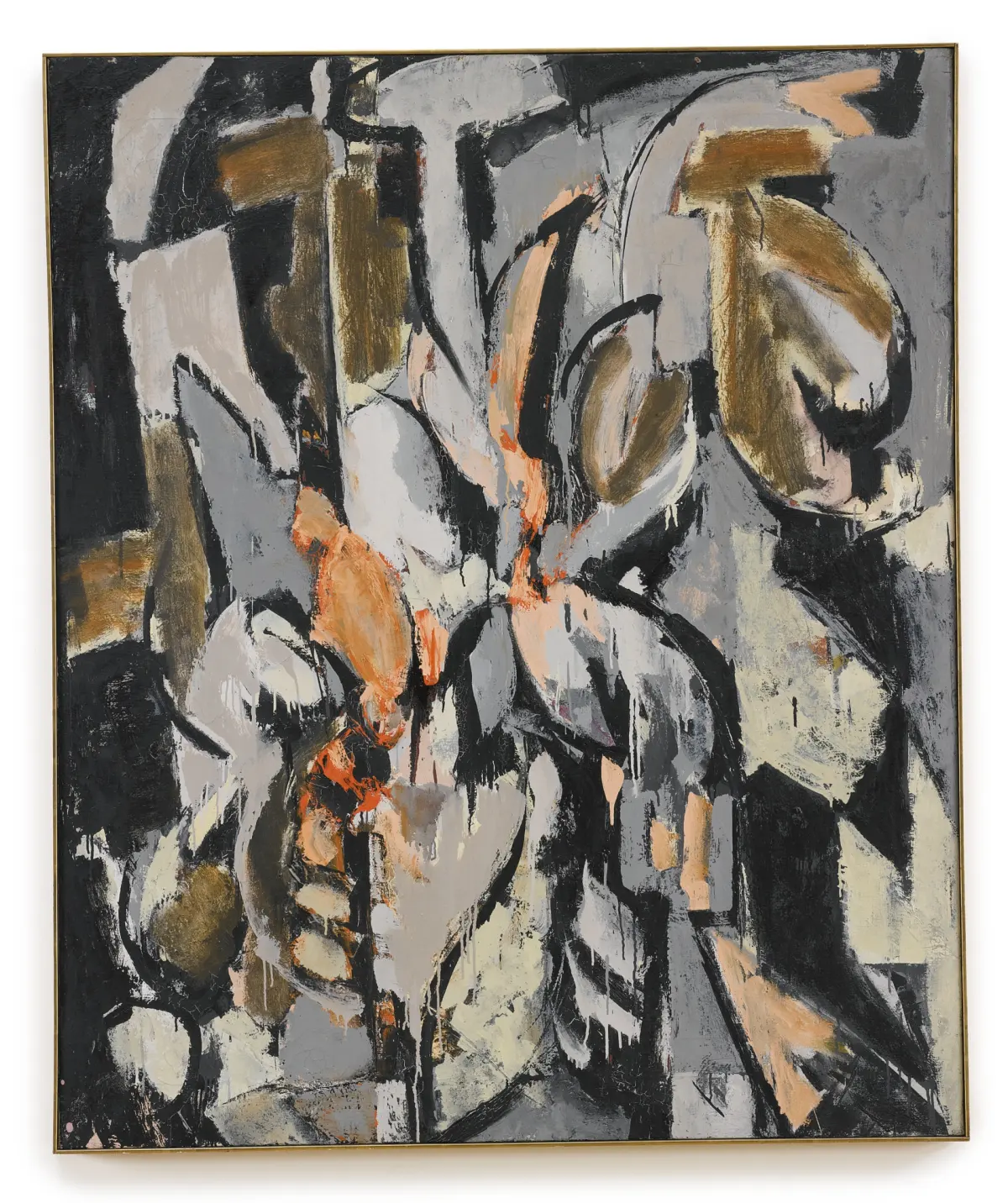
Krasner’s most innovative period involved the creation of "Little Image" paintings and later, her radical use of collage. In the mid-1950s, she began destroying her own unsuccessful canvases, tearing them into fragments and reassembling them onto new surfaces. This process was not merely a way to recycle materials but a deliberate act of artistic deconstruction and rebirth.
This technique allowed her to break free from the traditional constraints of the brushstroke. By layering painted paper, she created a sense of depth and tactile energy that defined her mature style. Her process involved several distinct stages:
- Selecting discarded canvases from her studio inventory.
- Cutting or tearing the painted surfaces into irregular, rhythmic shapes.
- Rearranging these fragments on a new backing to create a dynamic, jagged composition.
- Integrating paint or charcoal to bridge the gaps between the collage elements.
How did she influence the Abstract Expressionist movement?
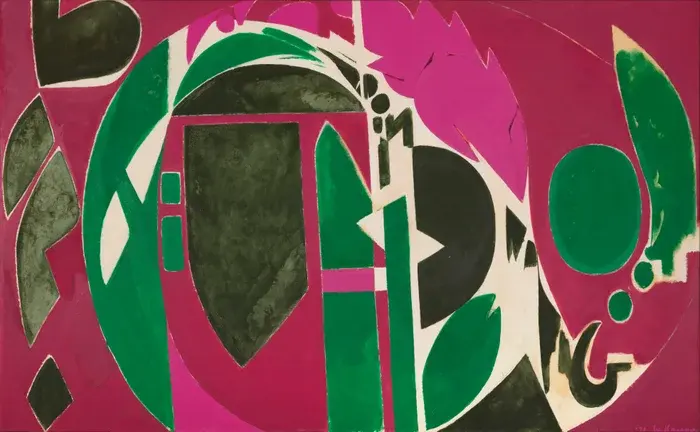
Krasner’s influence extended beyond her own canvas; she was a vital connector within the New York School. She introduced Jackson Pollock to key figures like Willem de Kooning and Clement Greenberg, facilitating the social and intellectual exchanges that defined the era. Her own work, characterized by "all-over" compositions, mirrored the intensity of her peers while maintaining a distinct rhythmic quality.
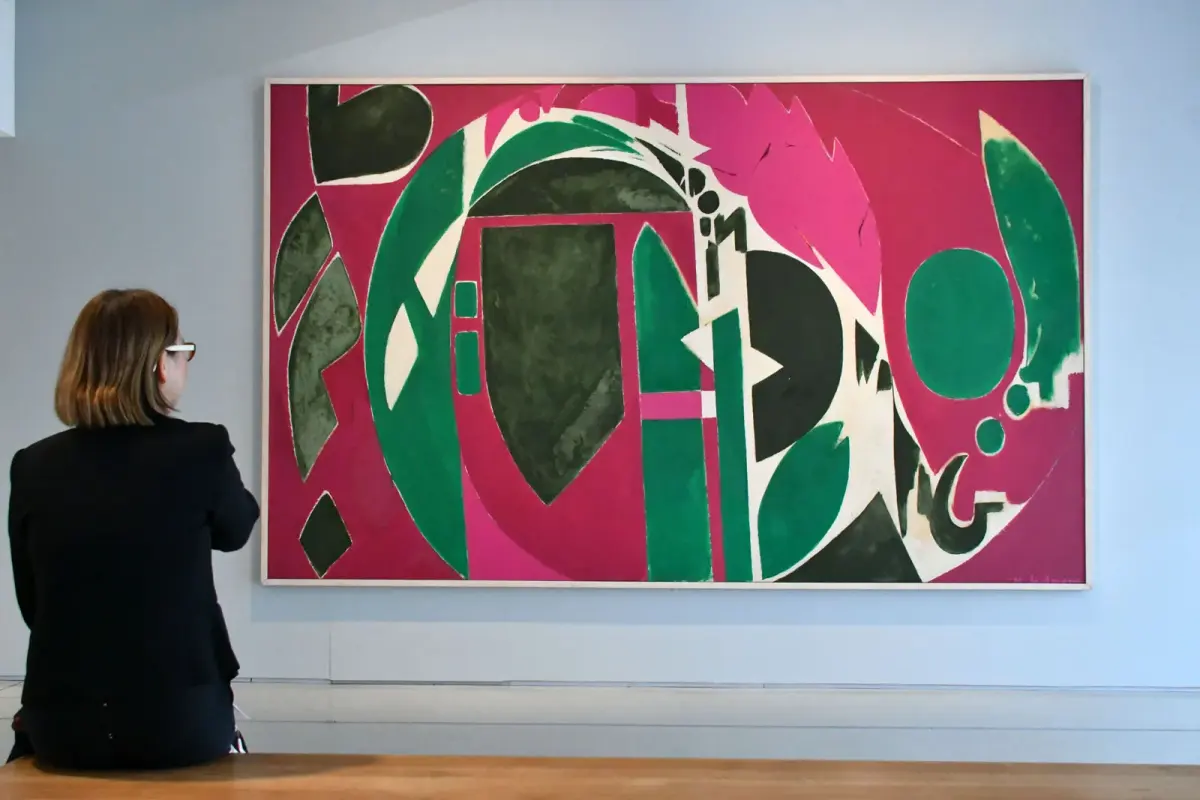
Her work is often categorized by its constant evolution. Unlike artists who found a signature style and repeated it, Krasner treated her career as a series of experiments. She frequently shifted her color palette and scale, moving from the dense, mosaic-like patterns of her early work to the sweeping, gestural strokes of her later years. This refusal to stagnate ensured that her contributions remained relevant across several decades of American art.
Common mistakes when analyzing her work
One common error is viewing Krasner solely through the lens of her marriage to Jackson Pollock. While their relationship was undeniably significant, critics often mistakenly attribute her stylistic shifts to his influence. In reality, Krasner’s formal training under Hans Hofmann and her early engagement with Cubism suggest that her artistic trajectory was largely independent and intellectually rigorous.
Another mistake is assuming her work lacks emotional depth because of its abstract nature. Observers often overlook the personal turmoil and historical context embedded in her paintings. To better understand her output, consider these steps:
- Examine the specific time period in which a piece was created, noting her personal circumstances.
- Look for the underlying structural grids that reveal her classical training.
- Compare her use of color and space to the works of her contemporaries to see where she diverged.
- Avoid searching for representational imagery, as her focus remained firmly on the physical act of painting.
Why is her legacy currently being reevaluated?
For decades, Krasner’s reputation suffered from the systemic exclusion of women from art history textbooks and major museum retrospectives. However, recent scholarship has worked to correct this imbalance, positioning her as a primary architect of modern American art. Major institutions have held comprehensive retrospectives that highlight her technical mastery and her role as a bridge between early 20th-century European abstraction and mid-century American expressionism.
Her legacy is now defined by her resilience and her uncompromising standard of quality. She famously destroyed much of her early work, ensuring that only pieces meeting her high expectations survived for posterity. This self-critical nature has made her a hero to subsequent generations of artists who value authenticity and the courage to evolve. By focusing on the physicality of paint and the importance of the studio process, Krasner remains a foundational figure whose influence continues to shape contemporary abstract painting today.
Key facts
- Lee Krasner was a central figure in the Abstract Expressionist movement, known for her energetic, large-scale gestural paintings.
- She was one of the few women to have a solo exhibition at the Museum of Modern Art during her lifetime, which occurred in 1983.
- Born in Brooklyn in 1908, she studied under Hans Hofmann, who introduced her to the principles of Cubism and modern abstraction.
- She famously destroyed many of her early works, leading to a relatively small body of surviving paintings from her formative years.
- Krasner often utilized a "collage" technique, cutting up her own discarded canvases to create new, layered compositions.
- She was married to Jackson Pollock, and she played a critical role in managing his estate and promoting his legacy after his death in 1956.
The bottom line
Lee Krasner was a formidable force in American modernism, celebrated for her relentless experimentation and technical mastery. By refusing to be confined by a single aesthetic, she created a diverse body of work that bridged the gap between early abstraction and contemporary expressionism. Her legacy remains defined by her intellectual rigor, her influential role in the New York School, and her enduring commitment to artistic evolution.
People also ask
Did Lee Krasner's style change throughout her career?
Yes, her work evolved from structured, Cubist-influenced paintings to highly rhythmic, calligraphic "Little Image" series, and eventually to expansive, explosive color-field canvases. She constantly reinvented her visual language rather than settling into a single signature style.
How did her marriage to Jackson Pollock affect her career?
While their relationship provided mutual artistic stimulation, Krasner often faced the challenge of being overshadowed by Pollock’s fame. She intentionally took a backseat to support his career, though she continued to produce significant work in their shared studio space.
What are the "Little Image" paintings?
These are a series of intricate, small-scale works created between 1946 and 1950 that feature repetitive, mosaic-like symbols. They are considered some of her most innovative contributions to the development of mid-century abstract art.
Did she work in mediums other than oil painting?
Krasner was a versatile artist who worked with charcoal, ink, gouache, and collage. She also spent time working for the WPA Federal Art Project in the 1930s, where she designed large-scale murals.
Why is she considered a pioneer for women in art?
She navigated a male-dominated art world in New York City, asserting her identity as an artist on her own terms. Her persistence and eventual critical recognition helped pave the way for future generations of female abstract painters.
What should I look for when viewing a Krasner painting?
Observe the physical texture and the way she layered paint or collage elements. Look for the underlying rhythmic patterns and the sense of movement she achieved through her bold, sweeping brushstrokes and vibrant color palettes.
This answer was created with the help of AI research tools and reference sources. Spotted an error? Let us know — we correct mistakes quickly. See our editorial policy.