What is Georges Braque known for?
Short answer
Georges Braque was a pioneering French painter and sculptor who co-founded Cubism alongside Pablo Picasso. He is best known for revolutionizing modern art by deconstructing objects into geometric forms and introducing collage techniques. His work shifted the focus from traditional perspective to a multifaceted, analytical representation of space and reality.
On this page
How did Georges Braque help invent Cubism?
In 1907, Braque encountered Pablo Picasso, marking the beginning of one of the most influential partnerships in art history. Together, they sought to break away from the Renaissance tradition of representing three-dimensional space on a two-dimensional plane. They rejected the idea of a single viewpoint, instead favoring a fragmented approach that displayed multiple facets of an object simultaneously. This movement, later dubbed Cubism, fundamentally changed how artists perceive and depict the world.
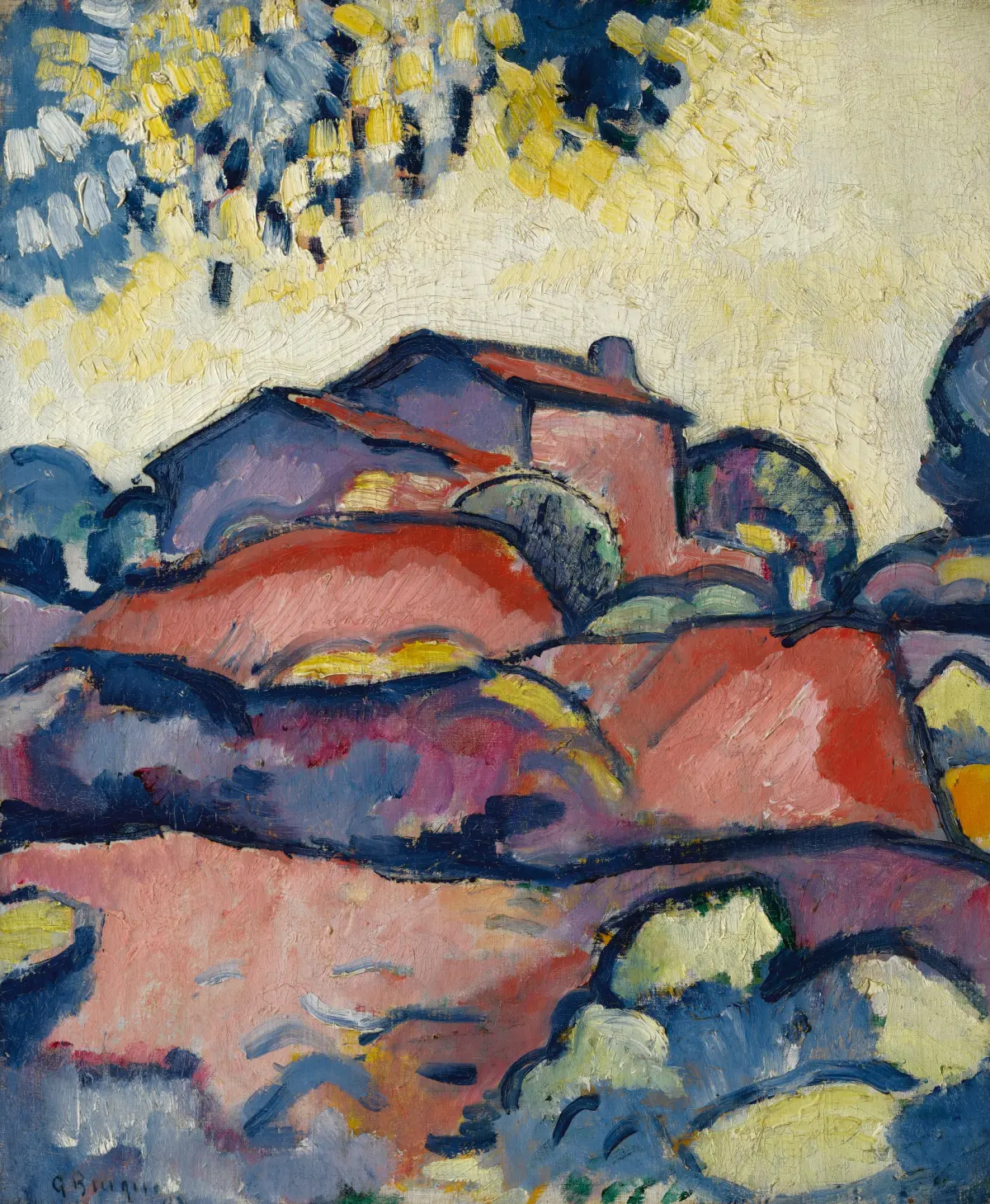
Braque’s early contributions focused on landscape paintings, specifically his work in L'Estaque. He simplified houses and trees into basic geometric shapes, such as cubes and spheres, which led to the term "Cubism." By 1910, he and Picasso moved into the Analytical Cubism phase, characterized by:
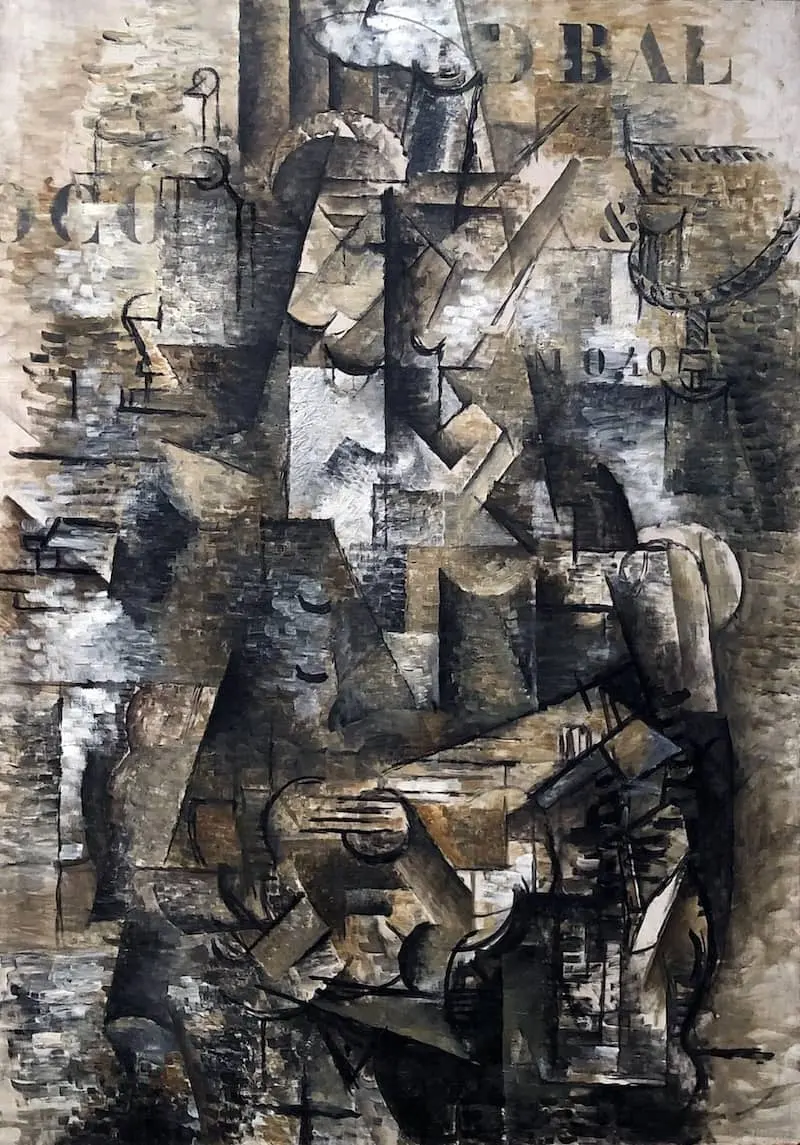
- A muted, monochromatic color palette, often using browns, grays, and ochres.
- The breakdown of objects into complex, overlapping planes.
- A deliberate rejection of traditional depth and atmospheric perspective.
- The integration of letters or numbers to ground the abstract compositions in reality.
Why did Braque introduce collage to art?
Braque is credited with the invention of papier collé, or pasted paper, in 1912. While working on his piece Fruit Dish and Glass, he incorporated pieces of wallpaper printed with a wood-grain pattern. This was a radical departure from traditional painting, as it introduced real-world, mass-produced materials directly onto the canvas. He realized that adding physical textures could bridge the gap between abstract art and the tangible environment.
This innovation allowed Braque to explore the relationship between illusion and reality. By gluing paper to the canvas, he forced the viewer to acknowledge the physical surface of the painting rather than just the image depicted. This technique became a cornerstone of Synthetic Cubism, which emphasized building up images from various elements. Common elements used in his collages included:
- Newspaper clippings or advertisements.
- Imitation wood-grain wallpaper.
- Charcoal or graphite lines to delineate shapes.
- Various types of colored or textured paper.
What are the characteristics of Braque's still lifes?
Throughout his career, Braque remained deeply committed to the still life genre. Unlike many of his contemporaries who focused on figure painting, Braque found endless possibilities in everyday objects like musical instruments, bottles, and fruit. He believed that the still life allowed for a more controlled exploration of space and light. His compositions often feel intimate and contemplative, reflecting his meticulous nature and focus on the internal structure of objects.
His later still lifes evolved to include a more vibrant color palette and a sense of "poetic space." He often utilized a technique where the objects seem to float within a shallow, ambiguous environment. This approach maintained the geometric rigor of his early work while introducing a new sense of lyricism. His dedication to these subjects solidified his reputation as a master of composition who could transform mundane items into profound visual meditations on the nature of perception.
Common mistakes when analyzing Braque’s paintings
Many viewers mistakenly assume that Cubist paintings are purely abstract or devoid of meaning. While the forms are fragmented, Braque’s work is highly structured and intentional. A common error is looking for a singular "correct" angle or narrative within the painting. Instead, the viewer should embrace the experience of seeing the object from all sides at once, which is the core intent of the Cubist movement.
Another frequent oversight is failing to recognize the influence of Braque’s background as a house painter. His early training in decorative arts, such as wood graining and marbleizing, heavily influenced his technique. When viewing his works, consider these points:
- Do not ignore the textures; they are as important as the colors.
- Look for the subtle play between the flat surface and the implied depth.
- Remember that the titles often provide clues to the subject matter, even if the image appears unrecognizable at first glance.
- Avoid comparing his work solely to Picasso’s, as Braque maintained a distinct, more restrained aesthetic throughout his life.
How to appreciate Braque’s legacy today
To truly understand Braque’s impact, one must look at how he paved the way for abstraction in the 20th century. By proving that art did not need to represent reality literally, he opened the door for movements like Futurism, Constructivism, and even pure Abstract Expressionism. His influence is visible in any art that prioritizes the formal arrangement of shapes and colors over representational accuracy.
Today, his works are housed in major museums worldwide, including the Centre Pompidou and the Museum of Modern Art. When visiting an exhibition of his work, take the time to move around the gallery to see how the lighting interacts with the textured surfaces of his collages. By focusing on the interplay of form, space, and materiality, you can better appreciate how Georges Braque fundamentally redefined the boundaries of visual art for generations to come.
Key facts
- Georges Braque was a French painter and sculptor who co-founded the Cubist movement alongside Pablo Picasso in the early 20th century.
- He pioneered the technique of papier collé, or pasted paper, by incorporating wallpaper and newspaper clippings directly onto his canvases.
- Braque served in the French army during World War I, where he was severely wounded, an experience that shifted his artistic focus toward more somber, meditative themes.
- His early work was influenced by Fauvism, characterized by bold, non-naturalistic colors, before he transitioned into the geometric fragmentation of Cubism.
- To identify his work, look for muted palettes of ochre, gray, and brown, which he favored to emphasize form over emotional color.
- When viewing his paintings, focus on how he depicts objects from multiple viewpoints simultaneously to represent the physical reality of space.
The bottom line
Georges Braque remains a titan of modern art for his revolutionary role in dismantling traditional perspective. By co-founding Cubism and inventing collage, he fundamentally altered how artists represent three-dimensional space on a flat surface. His disciplined approach to still life and his transition from vibrant Fauvism to structural abstraction offer a masterclass in artistic evolution, proving that the most profound innovations often emerge from rigorous experimentation.
People also ask
How did Braque’s Cubism differ from Picasso’s?
While Picasso often focused on human figures and emotional intensity, Braque remained committed to the structural analysis of still-life objects. His work is generally considered more disciplined and focused on the spatial relationship between objects and their environment.
What is the significance of the term "Cubism"?
The term was coined by critic Louis Vauxcelles, who mockingly described Braque’s landscapes as being composed of "little cubes." The artists eventually adopted the term, though it only captures a small part of their complex geometric approach to perspective.
Did Braque ever move away from Cubism?
Yes, after his service in World War I, his style evolved toward a more personal, poetic form of realism. He began painting domestic interiors, seascapes, and birds, often using thicker paint textures and more fluid, organic shapes.
What are Braque’s most famous works?
Some of his most celebrated pieces include Violin and Palette (1909), The Portuguese (1911), and the Atelier series created later in his career. These works illustrate his mastery of shifting planes and structural composition.
How can a beginner appreciate a Cubist painting?
Do not look for a realistic representation of a single moment. Instead, scan the canvas to see how the artist breaks an object into facets, allowing you to see the front, sides, and top of an object all at once.
Was Braque involved in any other artistic movements?
Before co-founding Cubism, he was a key figure in Fauvism, a movement defined by vibrant, arbitrary colors. His 1906 painting Landscape at La Ciotat is a prime example of his early experimentation with these intense, expressive hues.
This answer was created with the help of AI research tools and reference sources. Spotted an error? Let us know — we correct mistakes quickly. See our editorial policy.