What is Paul Klee known for?
Short answer
Paul Klee was a Swiss-German artist renowned for his highly individual style influenced by expressionism, cubism, and surrealism. He is best known for his mastery of color theory, intricate use of line, and whimsical, symbolic imagery. His prolific body of work, totaling nearly 10,000 pieces, fundamentally shaped modern art and abstract painting.

On this page
What is the artistic style of Paul Klee?
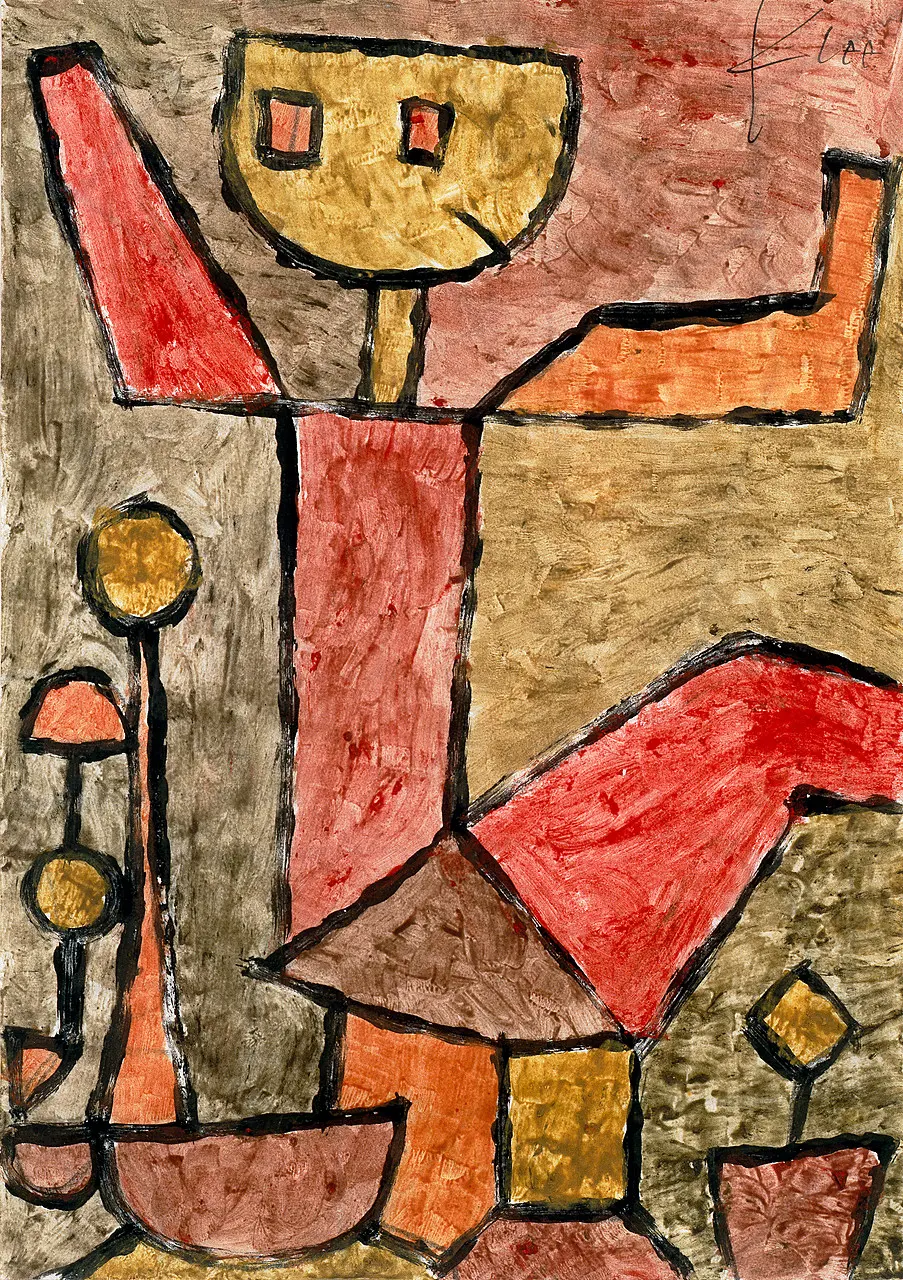
Klee’s style is defined by a unique synthesis of various avant-garde movements. He did not adhere to a single school of thought, instead blending elements of Expressionism, Cubism, and Surrealism into a personal visual language. His work often features a delicate, childlike simplicity that masks sophisticated intellectual depth and complex technical execution.
He was deeply interested in the psychological aspects of art, often creating works that functioned like musical compositions or poetic notations. His color theory, developed while teaching at the Bauhaus, remains a cornerstone of modern art education. By manipulating light and saturation, Klee created atmospheric spaces that feel both alien and intimate. Common characteristics of his style include:
- Use of geometric shapes and grids to organize space.
- A focus on linear rhythms and rhythmic repetition.
- Integration of text, symbols, and arrows to guide the viewer's eye.
- A preference for small, intimate formats rather than monumental canvases.
Why is Paul Klee famous for his Bauhaus years?
Between 1921 and 1931, Klee served as a master at the Bauhaus, the influential German art and design school. His tenure there allowed him to formalize his theories on form and color, which he documented in his extensive lecture notes. These writings, later published as the "Pedagogical Sketchbook," provided a systematic approach to understanding how visual elements interact.
During this period, Klee’s work became more abstract and structured, reflecting the school’s focus on functionalism and design. He encouraged students to look beyond the surface of objects to understand their underlying structural logic. His influence extended far beyond the classroom, as his approach helped bridge the gap between traditional fine arts and industrial design. Key contributions from this era include:
- The development of a systematic color wheel based on primary and secondary relationships.
- The exploration of "active," "medial," and "passive" lines in drawing.
- The promotion of art as a process of discovery rather than just the imitation of nature.
How to analyze a painting by Paul Klee?
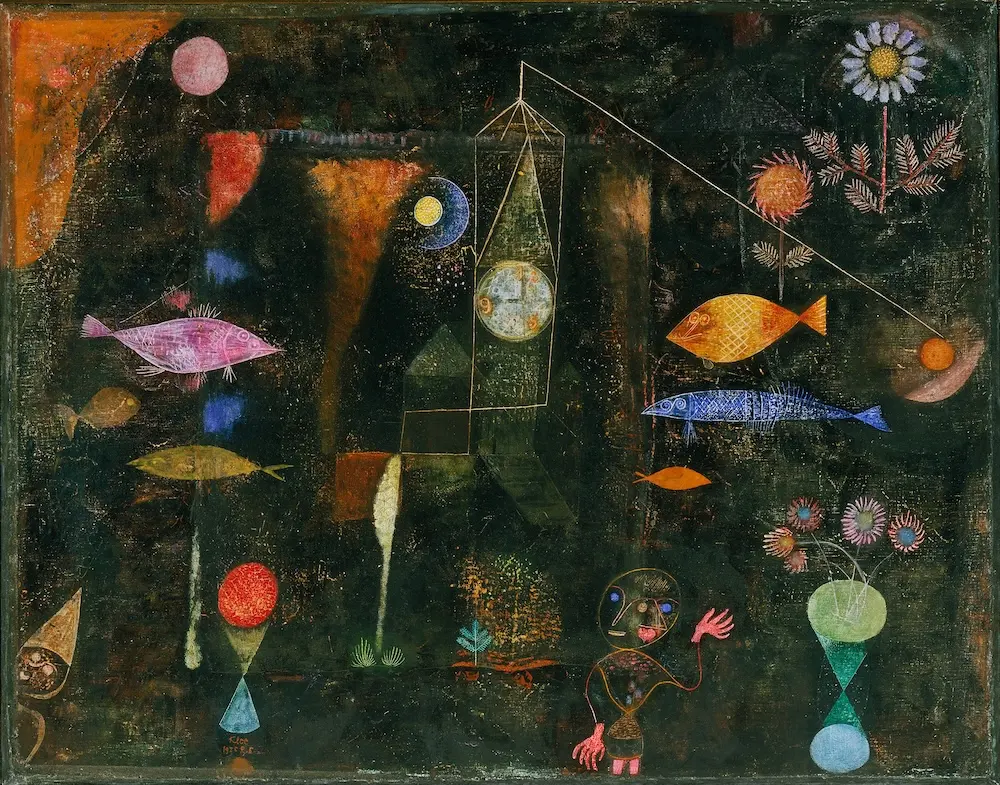
Analyzing a Klee painting requires a patient, methodical approach. Because his works are often small and dense with detail, they reward the viewer who spends time deciphering individual symbols and color relationships. Start by identifying the dominant geometric shapes, as Klee often used grids to anchor his more spontaneous, dreamlike imagery.
Next, consider the emotional tone created by his color palette. Klee was a master of "color temperature," using warm and cool tones to push elements forward or pull them back into the background. Do not try to find a single, literal narrative in his work; instead, look for recurring motifs like birds, arrows, or celestial bodies. These elements often act as metaphors for human experience, movement, or the passage of time. If a painting feels chaotic, trace the lines with your eyes to find the underlying rhythmic structure that holds the composition together.
Common mistakes when studying Paul Klee
A frequent error is assuming that Klee’s work is purely decorative or infantile due to his frequent use of stick figures and simple shapes. While his work appears playful, it is grounded in rigorous mathematical and philosophical inquiry. Dismissing his art as "doodling" ignores the calculated precision behind his placement of every dot and line.
Another mistake is attempting to categorize him strictly within one movement, such as Surrealism. Klee resisted these labels, preferring to remain an independent thinker who drew inspiration from diverse sources, including children's drawings, folk art, and ancient hieroglyphs. To avoid these pitfalls, keep the following in mind:
- Do not ignore the titles of his works, as they are often witty, poetic, or deeply philosophical clues to his intent.
- Avoid looking for traditional perspective; Klee intentionally flattened space to emphasize the two-dimensional nature of the canvas.
- Do not overlook his use of non-traditional materials, such as oil transfers, watercolors on plaster, or burlap, which add unique textures to his work.
Where to see the best of Paul Klee
The most comprehensive collection of Klee’s work is housed at the Zentrum Paul Klee in Bern, Switzerland. This architectural landmark, designed by Renzo Piano, holds approximately 4,000 of his pieces, providing the most complete overview of his career. Visiting this center is the best way to understand the scale and variety of his output, from early sketches to his final, somber works.
Other significant collections are located at the Museum of Modern Art in New York and the Tate Modern in London. When planning a visit, check if the museum is currently displaying his lesser-known drawings or his later, more abstract paintings, as these offer different insights into his process. If you cannot travel, many institutions now offer high-resolution digital archives that allow you to zoom in on the intricate textures of his paintings. Engaging with his work in person remains the best way to appreciate the subtle luminosity of his color choices and the delicate precision of his calligraphic lines.
Key facts
- Paul Klee was a Swiss-German artist born in 1879 who became a central figure in 20th-century modernism.
- He taught at the Bauhaus school in Germany from 1921 to 1931, profoundly influencing color theory and design pedagogy.
- His work is defined by a unique blend of Expressionism, Cubism, and Surrealism, often featuring whimsical, childlike forms.
- Klee was a prolific creator, producing nearly 10,000 works throughout his lifetime, including paintings, drawings, and etchings.
- To appreciate his work, focus on his use of "polyphonic" painting, where he layered colors to create complex, musical rhythms on the canvas.
- Avoid interpreting his paintings as purely literal; look for the emotional resonance and symbolic meaning in his abstract geometric patterns.
The bottom line
Paul Klee remains a titan of modern art, celebrated for his ability to synthesize complex intellectual theories with a playful, intuitive visual language. By bridging the gap between music and painting, he expanded the boundaries of abstraction. His legacy persists through his profound influence on color theory and his enduring reminder that art should capture the inner essence of reality rather than merely mimicking the visible world.
People also ask
What artistic movement is Paul Klee associated with?
Klee is primarily associated with the Bauhaus movement, though his style defies easy categorization. He was also briefly part of Der Blaue Reiter, an influential group of Expressionist artists in Munich.
Did Paul Klee have a specific musical background?
Yes, Klee was a highly skilled violinist who played professionally in an orchestra. This musical training deeply influenced his art, as he often structured his compositions like musical scores.
What materials did Paul Klee typically use?
He experimented extensively with oil, watercolor, ink, and pastel. He often applied these to unconventional surfaces like burlap, cardboard, or muslin to achieve unique textures.
Why are many of his paintings small in scale?
Klee preferred intimate, small-scale works because he believed they allowed for a more intense, focused engagement between the viewer and the art. He felt that large canvases often diluted the power of his delicate lines.
How did the Nazi regime affect his career?
In 1933, the Nazis labeled his work "degenerate art" and dismissed him from his teaching position. He subsequently fled Germany for Switzerland, where he spent the final years of his life.
What is the significance of Klee's "Angelus Novus"?
This 1920 monotype became famous after the philosopher Walter Benjamin interpreted it as the "Angel of History." It remains one of the most analyzed and debated images in 20th-century art criticism.
This answer was created with the help of AI research tools and reference sources. Spotted an error? Let us know — we correct mistakes quickly. See our editorial policy.