What is Artemisia Gentileschi known for?
Short answer
Artemisia Gentileschi is renowned as one of the most accomplished 17th-century Baroque painters. She is celebrated for her powerful depictions of strong biblical and mythological women, her mastery of chiaroscuro lighting techniques, and her status as the first woman admitted to the Accademia delle Arti del Disegno in Florence.
On this page
Why is Artemisia Gentileschi famous?
Artemisia Gentileschi stands out in art history for her technical brilliance and her defiant approach to subject matter. Born in Rome in 1593, she was trained by her father, Orazio Gentileschi, and quickly surpassed many of her male contemporaries. Her work is defined by the Caravaggiesque style, which utilizes dramatic contrasts between light and dark to create intense emotional depth.
Unlike many female artists of her era who were relegated to still-life or portraiture, Gentileschi tackled complex historical and religious narratives. She frequently chose themes involving female protagonists who exerted agency, such as Judith, Susanna, and Lucretia. By imbuing these figures with physical strength and psychological complexity, she challenged the gender norms of the Italian Baroque period and established a legacy that resonates with modern audiences.
How did her personal life influence her art?
Gentileschi’s life was marked by a traumatic event that significantly shaped her artistic output. In 1611, she was raped by her father’s colleague, Agostino Tassi, which led to a highly publicized and brutal trial. During the proceedings, she was subjected to physical torture to verify her testimony, an ordeal that profoundly impacted her perspective on justice and female vulnerability.
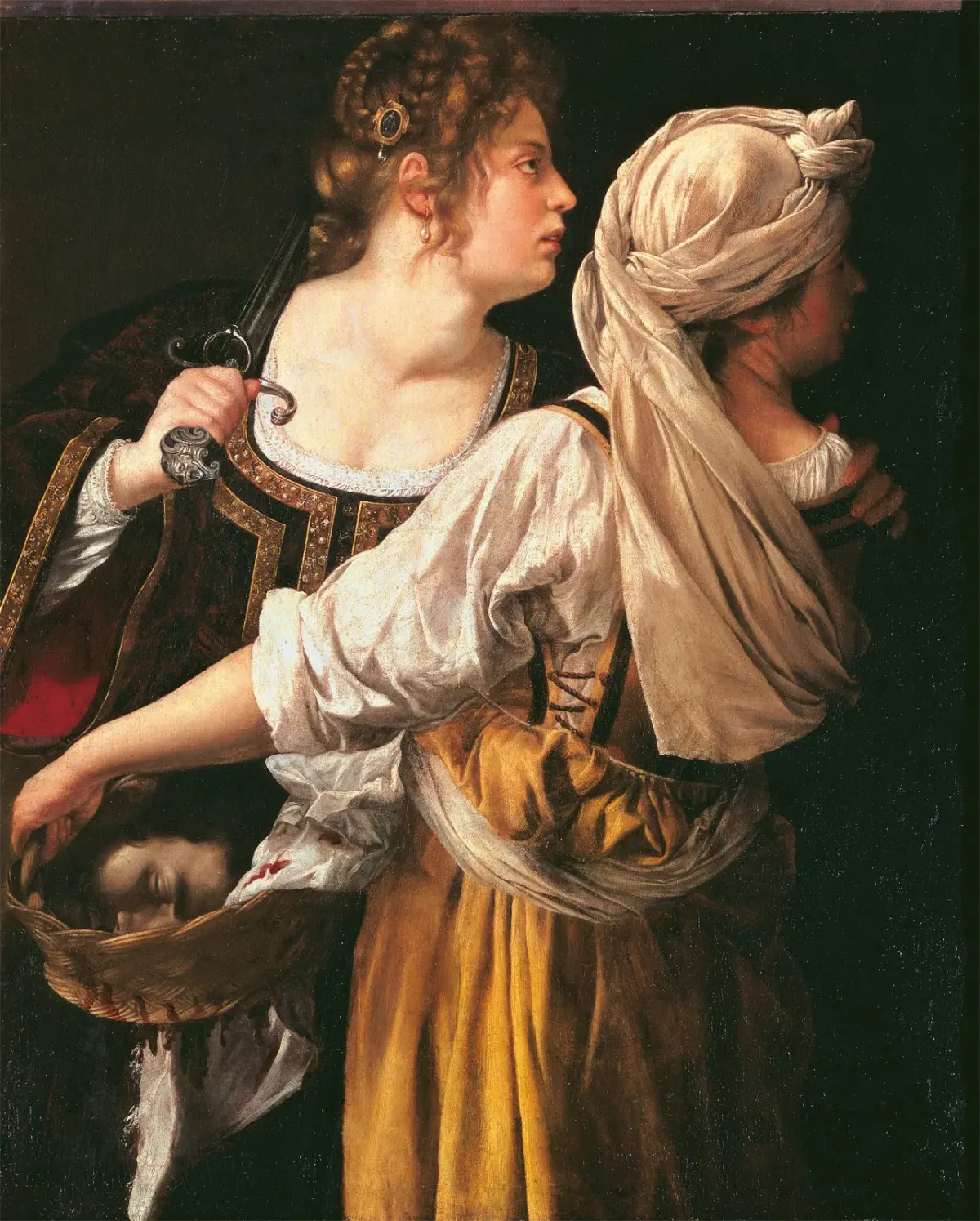
Many scholars argue that her most famous works reflect a cathartic response to this trauma. Her repeated depictions of the biblical heroine Judith beheading the general Holofernes are often interpreted as a visual manifestation of her own resilience. By focusing on the physical struggle and determination of her subjects, she transformed traditional narratives into personal statements of power. Her ability to channel lived experience into high-art compositions remains central to her enduring reputation.
What are her most important paintings?
Gentileschi produced a vast body of work, but several pieces are considered essential for understanding her skill and thematic focus. These paintings demonstrate her ability to handle large-scale compositions and complex anatomy with precision.
- Judith Slaying Holofernes (c. 1612–13): A visceral, graphic depiction of the biblical heroine, notable for its realistic blood splatter and intense focus on the physical effort required for the act.
- Susanna and the Elders (1610): Painted when she was only 17, this work portrays Susanna’s discomfort and resistance, differing sharply from the eroticized versions favored by male artists of the time.
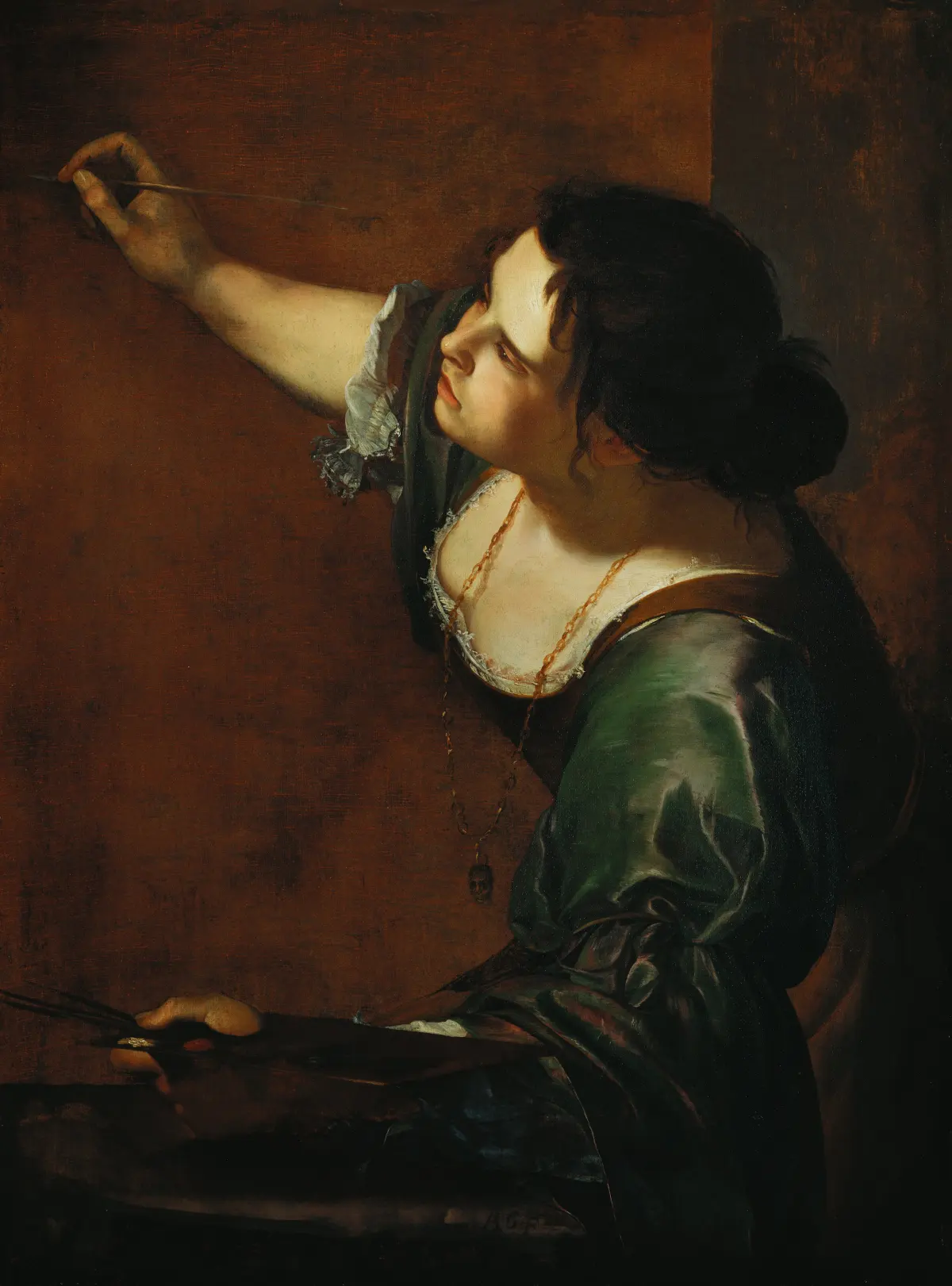
- Self-Portrait as the Allegory of Painting (c. 1638–39): A rare example of an artist identifying herself as the personification of her craft, highlighting her professional pride and technical mastery.
- Jael and Sisera (c. 1620): This work showcases her skill in rendering fabrics and textures alongside the dramatic tension of a decisive, violent moment.
How to analyze a Gentileschi painting?
When viewing a work by Gentileschi, it is helpful to look beyond the surface beauty to understand the technical choices she made. Follow these steps to appreciate the nuance in her compositions:
- Identify the light source: Look for the single, dramatic light source that illuminates the key figures while casting the background into deep shadow.
- Observe the physical gestures: Note the tension in the muscles and the positioning of the hands, which often convey the internal state of the character.
- Analyze the color palette: Look for her signature use of deep ochres, rich reds, and earthy tones, which ground the figures in a tangible, realistic space.
- Consider the perspective: Notice how she places the viewer in the scene, often making the viewer feel like a participant rather than a passive observer.
Common mistakes when studying her work
A frequent error is viewing Gentileschi’s paintings solely through the lens of her biography. While her life story is compelling, it is important not to reduce her artistic genius to a mere reaction to her assault. She was a highly trained professional who operated within the competitive art markets of Rome, Florence, and London. Ignoring her technical training and her successful career as a commissioned artist overlooks the deliberate, calculated nature of her artistic choices.
Another mistake is assuming that all of her works are autobiographical. While she explored themes of female empowerment, she was also a versatile artist who painted portraits, landscapes, and religious scenes for various patrons. To truly understand her, one must look at her entire body of work, acknowledging her as a sophisticated master of the Baroque style who navigated a male-dominated industry with immense skill, business acumen, and a deep commitment to the evolution of her craft.
Key facts
- Artemisia Gentileschi (1593–1653) was a leading Italian Baroque painter and the first woman admitted to the Accademia delle Arti del Disegno in Florence.
- She is best known for her dramatic "chiaroscuro" technique, which uses intense contrasts between light and shadow to create emotional depth.
- Her most famous work, Judith Slaying Holofernes (c. 1612–13), depicts a visceral, powerful scene of a biblical heroine beheading an Assyrian general.
- Unlike many female artists of her era who were limited to portraits or still lifes, she specialized in large-scale history paintings, which were then considered the most prestigious genre.
- She was a follower of Caravaggio, adopting his realistic style while infusing her compositions with a unique perspective on female agency and suffering.
- When studying her work, focus on the physical weight and muscular tension of her figures, which she rendered with far more anatomical accuracy than many of her contemporaries.
The bottom line
Artemisia Gentileschi stands as a monumental figure in Baroque art, celebrated for her technical mastery and unflinching depictions of female strength. By mastering the complex genre of history painting, she transcended the gender barriers of the 17th century. Her legacy endures through her dramatic use of light and shadow, which brings raw, human emotion to biblical and mythological narratives that remain profoundly impactful to modern audiences.
People also ask
Did Artemisia Gentileschi have a formal art education?
She was trained by her father, Orazio Gentileschi, a renowned painter who recognized her talent early. She worked in his studio from a young age, mastering the technical skills required for large-scale oil painting.
How did the trial of Agostino Tassi affect her career?
In 1611, she was raped by her tutor, Tassi, leading to a highly publicized trial where she was subjected to torture to verify her testimony. This traumatic event is often linked to the themes of vengeance and female strength seen in her later paintings.
What is the significance of her depiction of Judith?
Her version of the Judith story is noted for its brutal realism and the physical cooperation between Judith and her maid. It differs from male-painted versions, which often focused on the heroine's beauty rather than the graphic violence of the act.
Are her paintings still on display today?
Yes, her works are held in major institutions worldwide, including the Uffizi Gallery in Florence, the National Gallery in London, and the Metropolitan Museum of Art in New York. Many were rediscovered by art historians in the 20th century.
Why was she often overlooked by art history for so long?
For centuries, her reputation was overshadowed by her father's fame and the scandal of her personal life. It was not until the late 20th century that feminist art historians reclaimed her work, highlighting her technical mastery and unique narrative voice.
What techniques should I look for when viewing her art?
Observe the "tenebrism," or the extreme dark backgrounds that push the subjects forward into the viewer's space. Also, note the realistic textures of fabrics and the expressive, often pained, facial expressions of her subjects.
This answer was created with the help of AI research tools and reference sources. Spotted an error? Let us know — we correct mistakes quickly. See our editorial policy.