What is Paul Cézanne known for?
Short answer
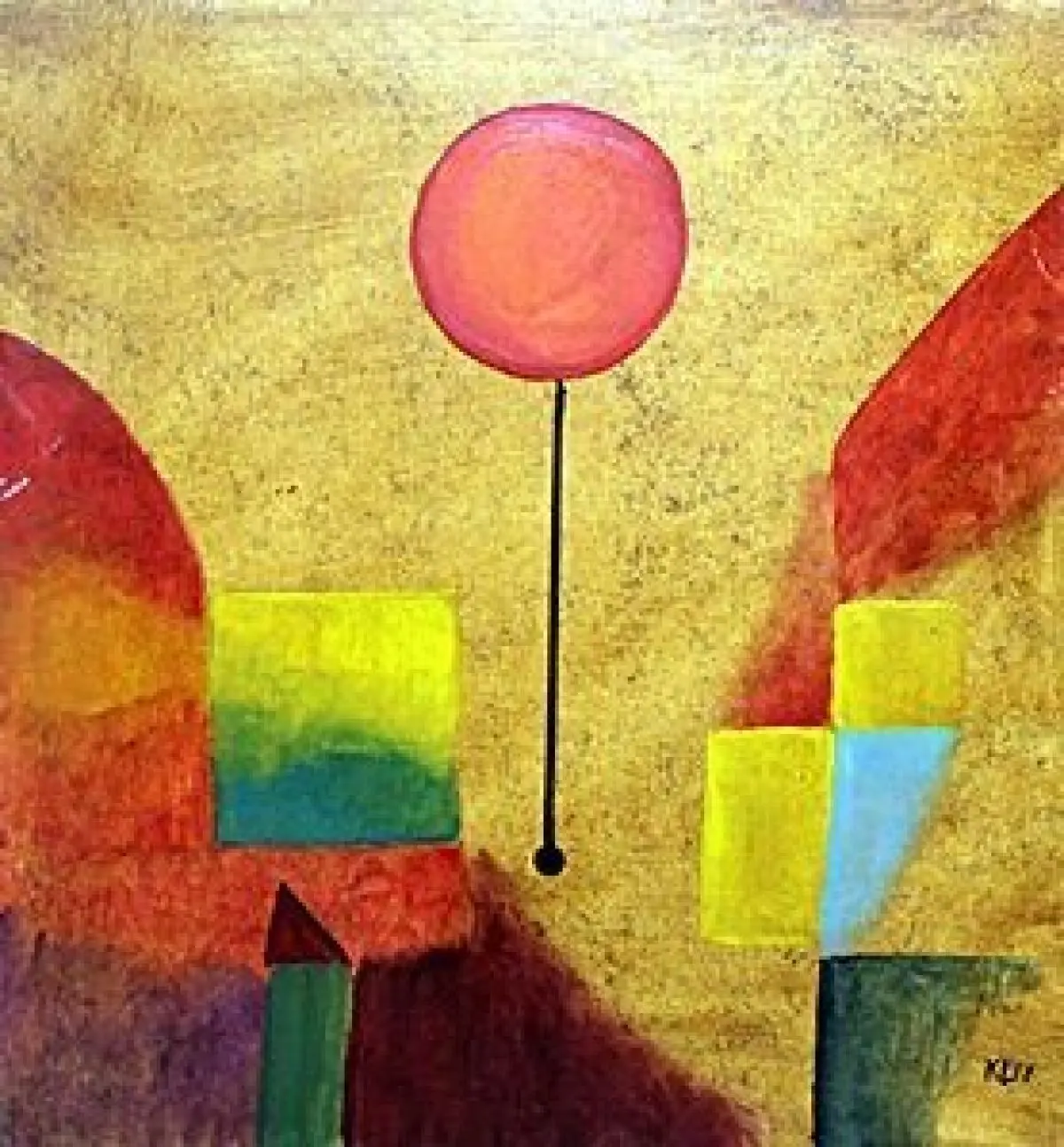
Paul Cézanne was a French Post-Impressionist painter whose revolutionary approach to form and color laid the foundation for modern art. By simplifying objects into geometric shapes and using color to create depth, he bridged the gap between 19th-century Impressionism and 20th-century movements like Cubism, profoundly influencing artists such as Pablo Picasso.
On this page
Why is Paul Cézanne considered a father of modern art?
Cézanne’s primary contribution to art history was his departure from the traditional rules of perspective that had dominated Western painting since the Renaissance. Rather than attempting to capture a fleeting moment or a perfect photographic likeness, he sought to reveal the underlying structure of his subjects. He believed that nature could be understood through the cylinder, the sphere, and the cone. By treating the canvas as a flat surface rather than a window into a scene, he challenged the viewer to engage with the painting as an object in its own right.
This shift in perspective allowed later artists to experiment with abstraction and fragmentation. Cézanne’s influence was so pervasive that his work is often cited as the essential link between the light-filled canvases of the Impressionists and the fractured, analytical style of the Cubists. His commitment to rigorous observation and structural integrity changed how generations of painters approached composition, color, and the representation of three-dimensional space on a two-dimensional plane.
How did Cézanne use color to create depth?
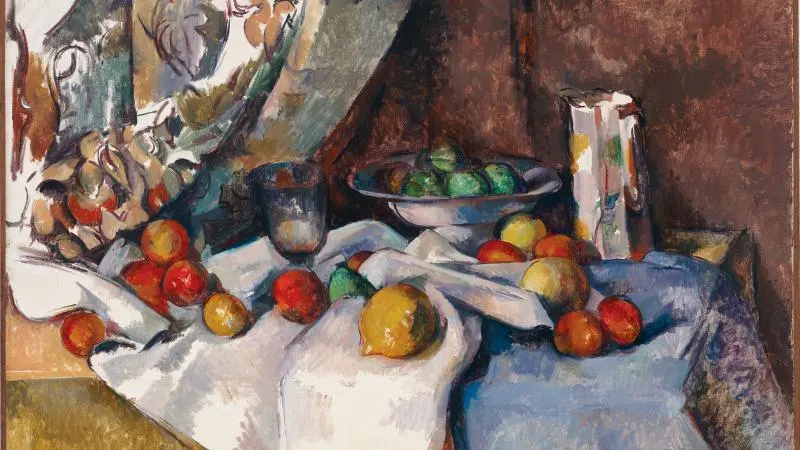
Unlike his contemporaries who relied on traditional shading or linear perspective to show distance, Cézanne developed a technique known as "constructive brushstrokes." He applied paint in small, rhythmic patches of color that built up the form of an object. By carefully placing warm colors like red and orange next to cool colors like blue and green, he created a sense of volume and movement without the need for harsh outlines. This method gave his paintings a unique, vibrating quality that felt both solid and alive.
His approach to color was deeply methodical and often required long periods of observation. He did not simply paint what he saw; he painted the sensation of seeing. Key characteristics of his color theory include:
- The use of "passage," where planes of color overlap or bleed into one another to suggest spatial depth.
- A refusal to use black, opting instead to create shadows through deep blues, violets, and browns to maintain luminosity.
- The application of color to define the edges of objects, effectively merging the background and foreground.
What are the most famous works by Paul Cézanne?
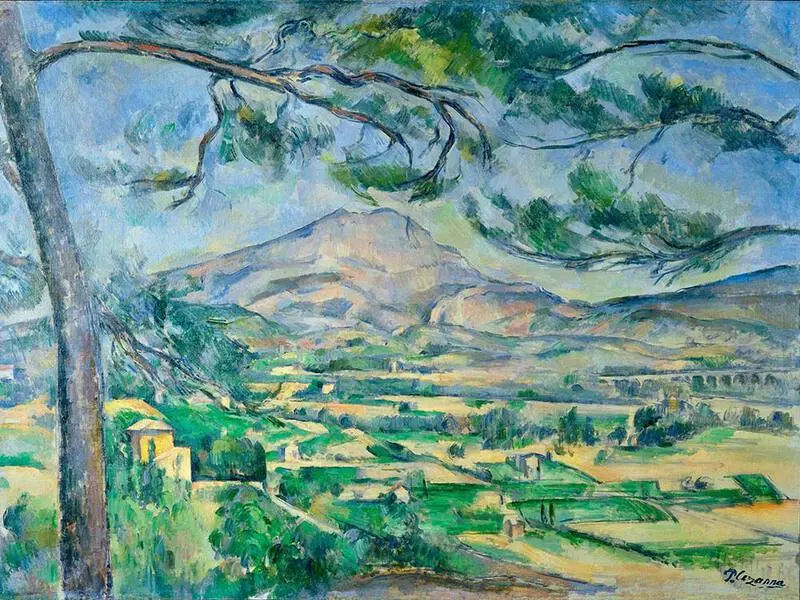
Cézanne produced hundreds of paintings throughout his career, but several stand out for their technical mastery and historical significance. His series of paintings depicting Mont Sainte-Victoire in Provence are perhaps his most iconic works. In these landscapes, he returned to the same mountain repeatedly, each time experimenting with different color palettes and structural arrangements to capture the essence of the terrain. These works demonstrate his transition toward a more abstract, analytical style.
Other essential pieces include his still lifes and portraits, which reveal his obsession with balance and stability. Notable examples include:
- The Basket of Apples (c. 1893), which features intentionally distorted perspectives that force the viewer to look at the fruit from multiple angles at once.
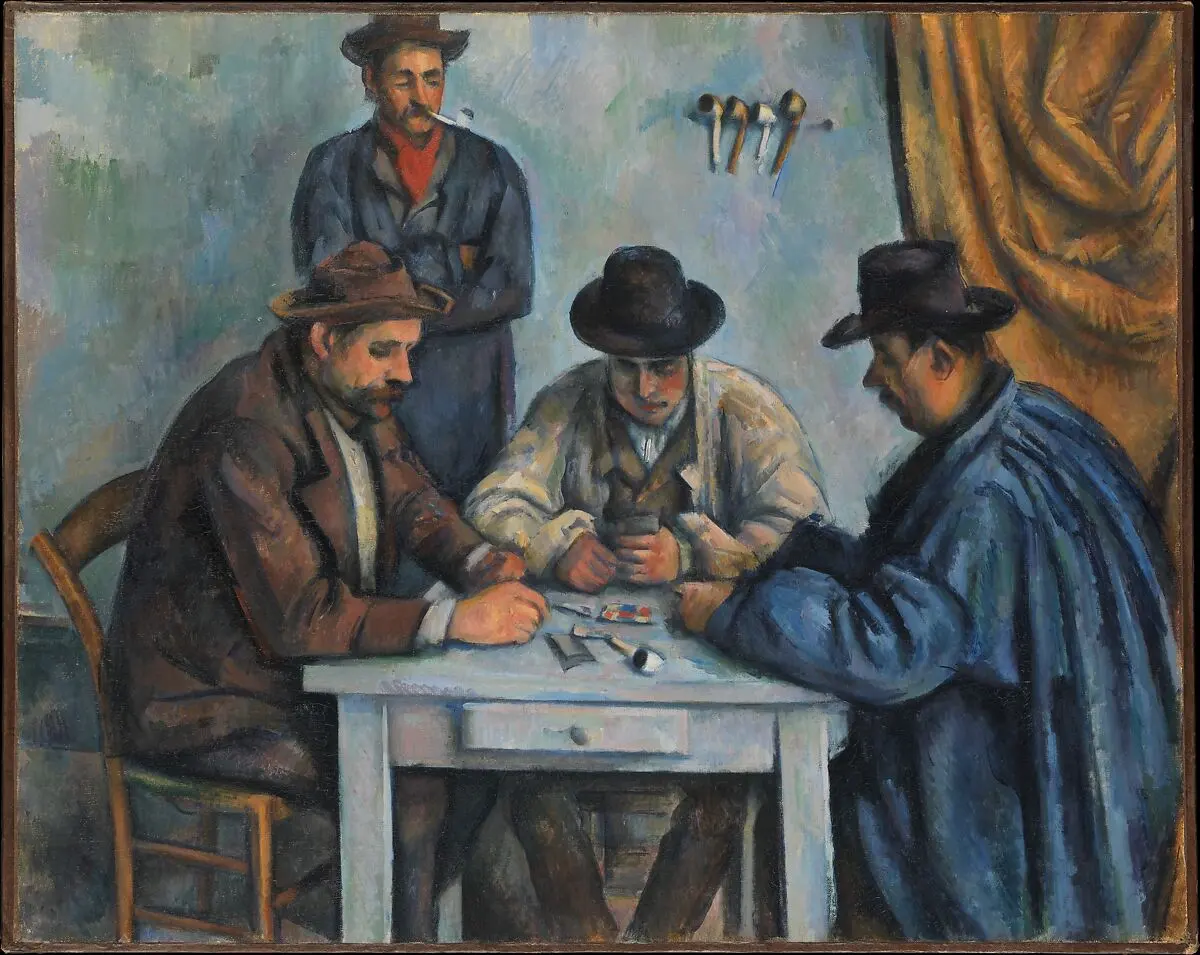
- The Card Players (1890–1895), a series of five paintings that capture the quiet intensity and gravity of his subjects.
- The Large Bathers (1906), a monumental work that occupied him for years and showcases his attempt to integrate human figures into a landscape through geometric composition.
Common mistakes when analyzing Cézanne’s paintings
One common error is assuming that Cézanne’s distorted perspectives were the result of poor technical skill or an inability to draw accurately. In reality, these distortions were deliberate choices. He intentionally tilted tabletops and skewed viewpoints to provide the viewer with more information than a single, fixed perspective could offer. When viewing his work, it is helpful to recognize that he was attempting to represent the human experience of looking, which involves scanning an object over time rather than freezing it in a single instant.
Another mistake is viewing his work solely through the lens of Impressionism. While he exhibited with the Impressionists early in his career, he eventually grew frustrated with their focus on ephemeral light effects. He wanted to make Impressionism "something solid and durable, like the art of the museums." To truly appreciate his work, one must look past the surface colors and observe how he organized the entire composition into a cohesive, architectural whole.
Best ways for beginners to study Cézanne’s technique
To understand Cézanne, start by visiting museums that house his work or reviewing high-resolution digital archives. Pay close attention to the brushwork in his still lifes. Instead of looking at the objects as individual items, look at how the background color interacts with the object's edge. You will notice that the boundary between the fruit and the table is often blurred or shared, which is a hallmark of his structural approach.
If you are an artist looking to emulate his style, consider these steps:
- Begin with simple geometric objects like spheres and cubes to practice rendering volume with color.
- Limit your palette to a few complementary colors to see how they interact when placed side-by-side.
- Focus on the "passage" technique by allowing your brushstrokes to transition smoothly between different areas of the canvas.
- Avoid using pure black; instead, mix your dark tones from deep blues and earth pigments to keep the painting vibrant.
- Work slowly and observe your subject from slightly different angles to understand how the form changes in your field of vision.
Key facts
- Paul Cézanne (1839–1906) was a French Post-Impressionist painter whose work laid the foundations for 20th-century modern art.
- He famously sought to treat nature in terms of the cylinder, the sphere, and the cone, emphasizing geometric structure over realistic detail.
- Unlike his Impressionist peers, Cézanne focused on long-term stability and permanence rather than capturing fleeting moments of light.
- To study his technique, focus on his "passage" method, where small, overlapping brushstrokes of color build up form and depth.
- Avoid using heavy black outlines; instead, define shapes by placing contrasting colors next to one another to create volume.
- His late series of "The Card Players" and "Mont Sainte-Victoire" are considered his most influential works, demonstrating his mastery of composition.
The bottom line
Paul Cézanne remains a pivotal figure who bridged the gap between 19th-century Impressionism and the radical abstractions of the 20th century. By prioritizing geometric structure, color modulation, and multiple perspectives, he fundamentally altered the trajectory of Western painting. His enduring legacy lies in his ability to transform simple subjects—like fruit, mountains, or card players—into timeless, complex compositions that continue to challenge and inspire artists today.
People also ask
Why is Paul Cézanne called the father of modern art?
Artists like Pablo Picasso and Henri Matisse credited Cézanne with inventing the structural approach that led to Cubism. By deconstructing objects into simple geometric forms, he changed how painters perceived space and depth.
Did Cézanne belong to the Impressionist movement?
He exhibited with the Impressionists in 1874 and 1877, but he eventually distanced himself from their style. He found their focus on light too ephemeral and preferred a more analytical, solid approach to painting.
What was Cézanne’s relationship with Émile Zola?
Cézanne and the famous novelist Zola were childhood friends in Aix-en-Provence. Their relationship eventually soured after Zola published a novel that featured a struggling, failed artist who many believed was a thinly veiled caricature of Cézanne.
How did Cézanne paint his landscapes?
He often spent months on a single landscape, such as his many views of Mont Sainte-Victoire. He painted directly from nature, carefully observing how color could be used to create a sense of distance and monumental scale.
What is the significance of his still-life paintings?
Cézanne revolutionized still-life by painting objects from multiple perspectives simultaneously. By tilting tabletops and shifting viewpoints, he challenged the traditional rules of linear perspective that had dominated art since the Renaissance.
Was Cézanne successful during his lifetime?
For most of his career, he was ignored or mocked by the public and art critics. It was only in the final years of his life, particularly after a major retrospective in 1904, that he gained recognition as a master.
This answer was created with the help of AI research tools and reference sources. Spotted an error? Let us know — we correct mistakes quickly. See our editorial policy.