What colors make cobalt blue?
Short answer
Cobalt blue is a specific chemical pigment, not a color created by mixing other hues. It is produced by heating cobalt salts with aluminum oxide at high temperatures. Because it is a primary mineral-based pigment, you cannot replicate its unique, vibrant, and lightfast properties by simply blending standard primary colors together.

On this page
What is cobalt blue made of?
Cobalt blue is a synthetic inorganic pigment discovered by the French chemist Louis Jacques Thénard in 1802. Unlike organic dyes or simple mixtures, this pigment is created through a high-temperature calcination process. Manufacturers combine cobalt(II) oxide and aluminum oxide, heating them to temperatures often exceeding 1,200 degrees Celsius. This chemical reaction results in a stable, crystalline structure known as cobalt aluminate.
The resulting pigment is prized by artists for its intense, cool-leaning blue tone and its exceptional permanence. Because the color is locked into the mineral structure during the firing process, it is highly resistant to fading from ultraviolet light. This chemical stability makes it a staple in professional-grade oil, acrylic, and watercolor paints, as well as in ceramic glazes where it must withstand the heat of a kiln without changing hue.
Can you mix colors to make cobalt blue?
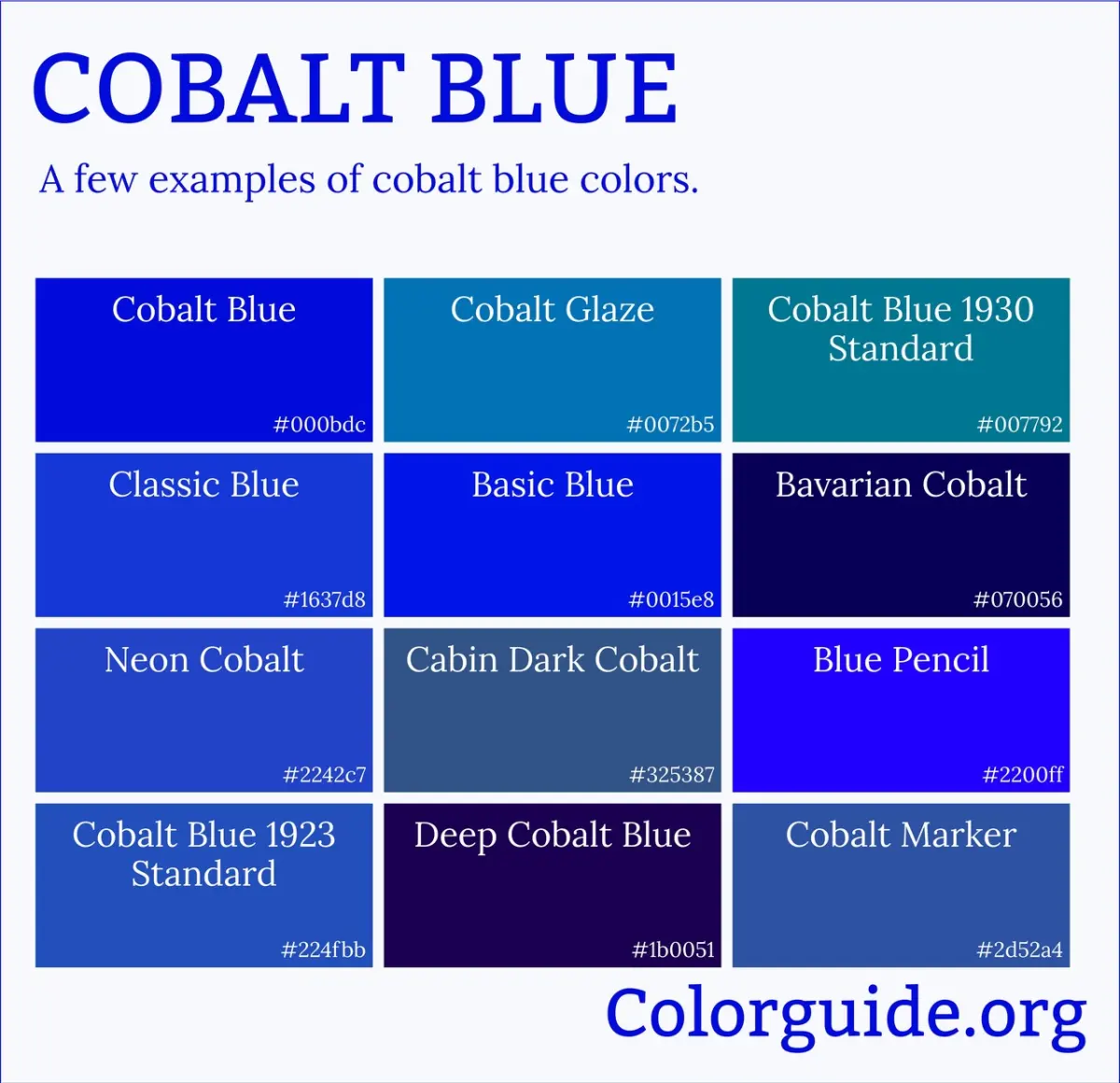
While you cannot create the exact chemical composition of cobalt blue by mixing paints, you can approximate its visual appearance. Cobalt blue is distinct because it is a "true" blue—it does not lean heavily toward green or purple. To simulate this look, artists typically start with a base of ultramarine blue, which is slightly warmer and more transparent, and adjust it to match the specific brightness of cobalt.
- Start with a generous amount of ultramarine blue on your palette.
- Gradually add small amounts of titanium white to increase the opacity and lighten the value.
- Introduce a tiny touch of phthalo green or a cool yellow to neutralize any purple undertones inherent in the ultramarine.
- Test the mixture against a swatch of genuine cobalt blue, adjusting the ratios until the saturation levels match.
Why does cobalt blue look different in paint?
The visual depth of cobalt blue is largely due to its physical properties as an inorganic pigment. When ground into a fine powder and suspended in a binder like linseed oil or gum arabic, the pigment particles reflect light in a very specific way. These particles are opaque, meaning they provide excellent coverage when applied to a canvas or paper. This opacity is a key reason why cobalt blue appears so much more "solid" than transparent blues like Prussian blue.
Another factor is the pigment's unique light-scattering profile. Because cobalt aluminate has a high refractive index, it creates a clean, bright blue that does not look muddy even when mixed with other colors. When you try to mix a "fake" cobalt using organic pigments, you are essentially layering transparent dyes. These mixtures often lose their vibrancy because the light passes through the layers and is absorbed rather than reflected, resulting in a duller, less intense finish.

Common mistakes when mixing blue paints
The most frequent error artists make is trying to achieve the intensity of cobalt blue using inexpensive student-grade paints. Student-grade blues are often formulated with "hues," which are mixtures of cheaper pigments designed to mimic the look of more expensive minerals. These mixtures rarely behave like the real thing; they often turn gray or muddy when mixed with white or other colors because the pigment particles are not chemically compatible.
- Using too much white paint, which turns the mixture into a chalky, pastel blue rather than a vibrant cobalt.
- Adding too much green, which shifts the color toward a teal or cyan, losing the essential "blueness" of the original.
- Failing to clean your brush between additions, which introduces contaminants that dull the final color.
- Relying on a single blue tube when a combination of two blues might be necessary to capture the specific temperature of the light source in your painting.
Best uses for cobalt blue in art
Cobalt blue is an essential tool for landscape and portrait painters who need a reliable, lightfast blue that does not shift during the drying process. It is particularly effective for painting clear skies, distant mountains, or the shadows on white fabric. Because it has a neutral temperature, it serves as a perfect bridge between warmer blues like cerulean and cooler, deeper blues like ultramarine.
When working with cobalt blue, keep in mind that it is a relatively heavy pigment. If you are using oil paints, it may dry faster than other colors on your palette, so it is best to use it in thin glazes or as a primary mixing agent. In watercolor, it granulates beautifully, meaning the pigment particles settle into the texture of the paper, creating a subtle, sandy effect that adds significant visual interest to large washes of color. By understanding its chemical nature and physical behavior, you can use this classic pigment to create professional results that remain vibrant for generations.
Key facts
- Cobalt blue is a chemical compound, specifically cobalt(II) aluminate, rather than a mixture of primary colors.
- You cannot create true cobalt blue by mixing red, yellow, and blue paints because it is a distinct mineral-based pigment.
- French chemist Louis Jacques Thénard first synthesized the pigment in 1802 as a stable alternative to expensive ultramarine.
- Real cobalt pigments are opaque and highly lightfast, meaning they do not fade when exposed to sunlight over time.
- When mixing paints, you can mimic the appearance of cobalt blue by combining ultramarine blue with a touch of white and a tiny amount of phthalo green.
- Avoid mixing cobalt blue with lead-based pigments, as this can cause the color to darken or react chemically over time.
The bottom line
Cobalt blue is not a color you can create by mixing standard primary paints; it is a unique chemical pigment known as cobalt aluminate. Discovered in the early 19th century, it remains a staple for artists due to its brilliant intensity and exceptional lightfastness. While you can approximate its hue using other blues and whites, the genuine pigment offers a depth and stability that synthetic alternatives cannot replicate.
People also ask
Is cobalt blue considered a primary color?
No, cobalt blue is a secondary or tertiary shade depending on the color model, as it is a specific pigment rather than a primary light or paint color.
Why is cobalt blue so expensive compared to other blues?
The high cost is due to the extraction and processing of cobalt ore, which is a relatively scarce metal used in high-demand industries like battery manufacturing.
Can I use cobalt blue for outdoor painting?
Yes, cobalt blue is an excellent choice for outdoor projects because it is inorganic and highly resistant to ultraviolet radiation, preventing it from fading.
Does cobalt blue look different in oil versus watercolor?
The appearance changes based on the binder; in oils, it remains quite opaque and heavy, while in watercolors, it provides a vibrant, granulating texture on paper.
Is cobalt blue toxic to handle?
While the pigment itself is generally stable, you should avoid inhaling the dry powder form and always wash your hands thoroughly after painting to prevent ingestion.
How do I tell if a paint is genuine cobalt blue?
Check the tube for the pigment code PB28, which is the international standard identifier for authentic cobalt aluminate pigment.
This answer was created with the help of AI research tools and reference sources. Spotted an error? Let us know — we correct mistakes quickly. See our editorial policy.