Why is The Great Wave off Kanagawa so famous?
Short answer
The Great Wave off Kanagawa is famous because it perfectly synthesizes traditional Japanese aesthetics with Western artistic techniques. Created by Katsushika Hokusai around 1831, its iconic composition, striking use of Prussian blue pigment, and dramatic depiction of nature have made it an enduring symbol of Japanese art and global cultural history.
On this page
Why is The Great Wave off Kanagawa so iconic?
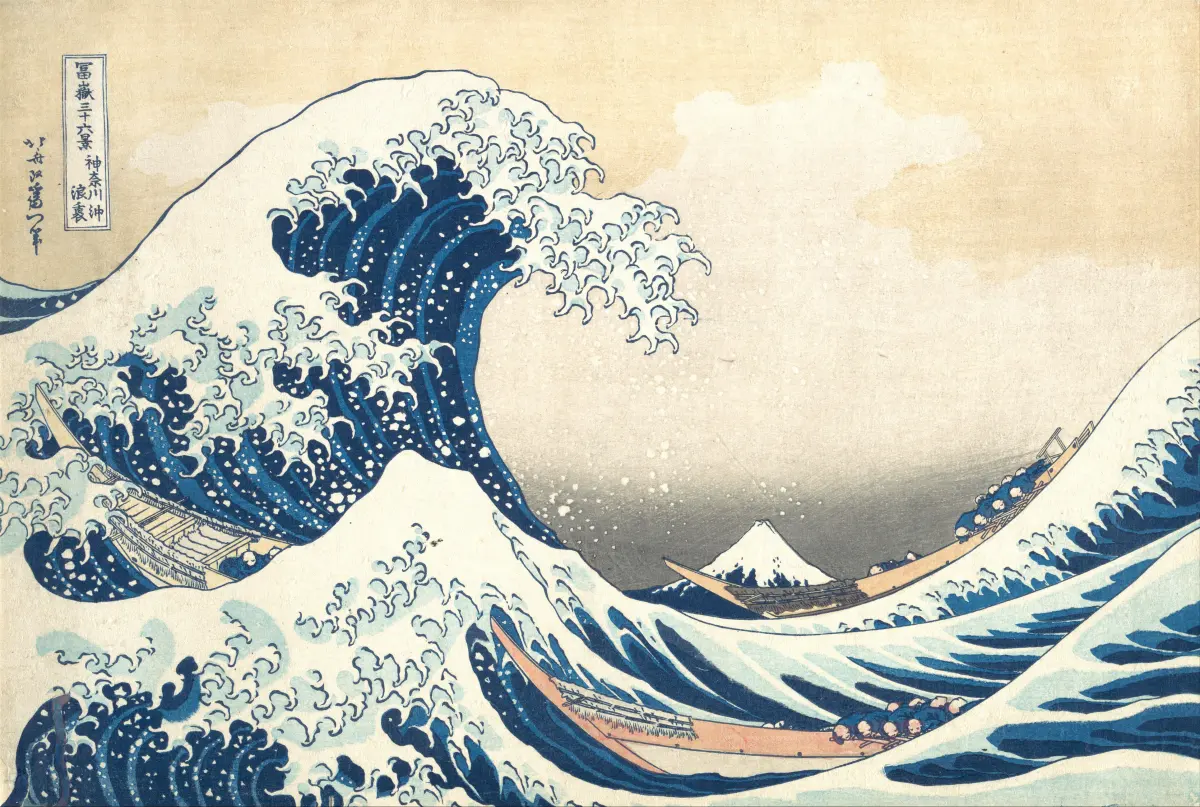
The Great Wave off Kanagawa is the most recognizable work of Japanese art in the world. As the first print in Hokusai’s series Thirty-six Views of Mount Fuji, it captures a monumental wave threatening three boats near the coast of Kanagawa. The contrast between the towering, claw-like crest of the wave and the serene, distant Mount Fuji creates a powerful visual tension. This juxtaposition of the ephemeral power of nature against the eternal stillness of the mountain resonates deeply with viewers across generations.
Beyond its subject matter, the print is a masterclass in composition. Hokusai utilized the rule of thirds and dynamic geometry to guide the viewer’s eye across the frame. The print’s fame is also tied to its historical context, as it represents the "ukiyo-e" or "pictures of the floating world" genre. By capturing a fleeting moment of human struggle against the elements, Hokusai elevated a commercial woodblock print into a profound meditation on the human condition.
How was The Great Wave off Kanagawa created?
Hokusai produced this image using the traditional Japanese woodblock printing process. This technique required a collaborative effort between the artist, a woodcarver, and a printer. Hokusai would draw the design on paper, which the carver would then paste onto a block of cherry wood and carve away the negative space. Each color required a separate block, making the registration of these blocks a highly technical and precise endeavor.
The production involved several key steps to ensure the final print quality:
- Designing the original sketch with precise ink lines.
- Carving individual blocks for each distinct color used in the image.
- Applying water-based pigments to the blocks by hand.
- Pressing handmade mulberry paper onto the blocks using a circular tool called a baren.
- Maintaining consistent pressure to ensure even ink distribution across the paper.
What makes the colors in The Great Wave special?
The striking blue hue of the wave is perhaps the most famous technical aspect of the print. Hokusai was one of the first Japanese artists to utilize "Prussian blue," a synthetic pigment imported from Europe via Dutch traders. Before this, Japanese artists relied on organic, plant-based blues that were prone to fading over time. The introduction of this vibrant, stable mineral pigment allowed Hokusai to create a depth of color that was previously impossible to achieve in woodblock printing.
The use of this pigment had a profound impact on the art world:
- It provided a stark contrast against the white foam of the waves.
- It allowed for subtle color gradations, known as "bokashi," which added a sense of volume to the water.
- It signaled Japan’s increasing openness to global trade and technological exchange during the late Edo period.
- It set a new standard for color intensity that influenced subsequent ukiyo-e artists and eventually European Impressionists.
Why did The Great Wave influence Western art?
When Japan ended its policy of national isolation in the mid-19th century, its art flooded into Europe, triggering a movement known as Japonisme. Artists like Vincent van Gogh, Claude Monet, and Edgar Degas were captivated by the flat perspective, bold outlines, and unconventional cropping found in Hokusai’s work. These elements challenged the traditional Western focus on deep, realistic perspective, encouraging European painters to experiment with new ways of seeing and representing the world.
The influence of the print on Western modernism cannot be overstated. By stripping away unnecessary detail and focusing on the essential shape of the wave, Hokusai paved the way for abstraction. Western artists saw in his work a freedom from the constraints of the academy, leading to the development of Impressionism and Post-Impressionism. The print became a bridge between two vastly different cultures, proving that visual language could transcend geographic and linguistic barriers to inspire radical innovation in art history.
Common mistakes when studying The Great Wave
Many people mistakenly believe that the print is a unique painting, but it is actually a mass-produced woodblock print. Because these prints were intended for a general audience, thousands of copies were originally produced. Over time, the woodblocks would wear down, meaning that early impressions are sharper and more detailed than later ones. Collectors often look for specific "states" of the print to determine its age and value, as the clarity of the lines changed as the blocks degraded.
When researching or viewing the print, avoid these common misconceptions:
- Thinking the wave is a tsunami; it is actually a rogue wave or a "sneaker wave" common in the region.
- Assuming the print was expensive at the time; it was actually an affordable souvenir for travelers.
- Believing Hokusai only created one version; he was a prolific artist who produced thousands of works throughout his long career.
- Overlooking the role of the publisher, who often dictated the subject matter to ensure commercial success in the competitive Edo market.
Key facts
- The print was created by Japanese artist Katsushika Hokusai around 1831 as part of his series Thirty-six Views of Mount Fuji.
- It is a woodblock print, not a painting, meaning it was reproduced using carved cherry wood blocks and ink on paper.
- The iconic blue pigment used is Prussian blue, a synthetic color imported from Europe that was revolutionary in Japan at the time.
- The composition uses a low horizon line to emphasize the massive scale of the wave in contrast to the small, stable Mount Fuji in the background.
- Original impressions were mass-produced for the common public, selling for the price of a double serving of noodles.
- Many original prints survive today in major collections, including the Metropolitan Museum of Art and the British Museum.
The bottom line
The Great Wave off Kanagawa remains globally iconic due to its masterful blend of traditional Japanese aesthetics and Western-influenced perspective. By juxtaposing the terrifying power of a rogue wave against the serene, eternal presence of Mount Fuji, Hokusai created a timeless visual metaphor for human fragility. Its historical impact on global art and its accessible, striking composition ensure its status as the world’s most recognizable Japanese artwork.
People also ask
Is the wave in the print a tsunami?
While often called a tsunami, the image actually depicts a "rogue wave" or a large breaking wave typical of the open sea. Hokusai was capturing the fleeting power of nature rather than a specific geological disaster.
Why is Mount Fuji included in the image?
Mount Fuji is a sacred symbol in Japan representing immortality and national identity. Hokusai included it in all 36 prints of the series to explore the mountain's appearance from different locations and weather conditions.
How many copies of the print exist?
Thousands of impressions were originally printed from the woodblocks, though only a few hundred remain in good condition today. Because woodblocks wear down over time, earlier prints are more detailed and valuable than later ones.
What do the boats in the image represent?
The boats are oshiokuri-bune, which were fast vessels used to transport live fish to markets in Edo, now Tokyo. They represent the human struggle for survival against the overwhelming force of the ocean.
Did the print influence Western art?
Yes, the print reached Europe in the mid-19th century and deeply influenced Impressionist painters like Claude Monet and Vincent van Gogh. This movement, known as Japonisme, changed how Western artists approached color and perspective.
Can I buy an original print today?
Authentic prints from the 1830s appear at major auction houses like Christie’s or Sotheby’s. They are highly sought after by collectors and can sell for hundreds of thousands of dollars depending on their condition.
This answer was created with the help of AI research tools and reference sources. Spotted an error? Let us know — we correct mistakes quickly. See our editorial policy.