What is a proportional divider used for?
Short answer
A proportional divider is a precision drafting tool used to scale drawings, paintings, and architectural plans accurately. By adjusting a central pivot point, it allows artists and engineers to transfer measurements from a reference object to a canvas while maintaining exact mathematical proportions, ensuring consistent scaling without the need for manual calculations.
On this page
What is a proportional divider used for?
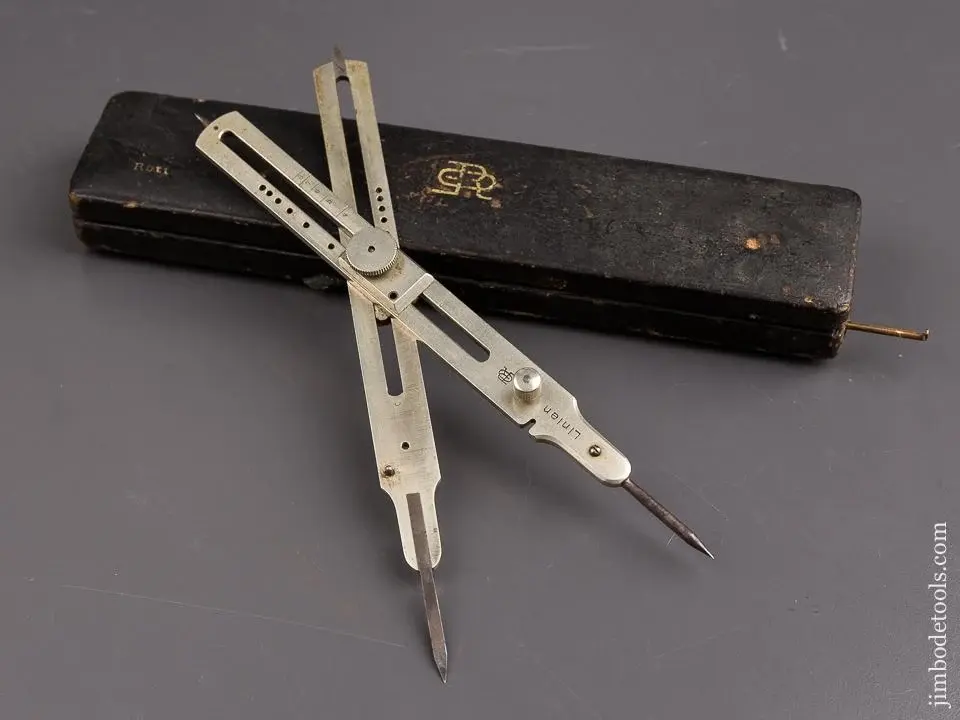
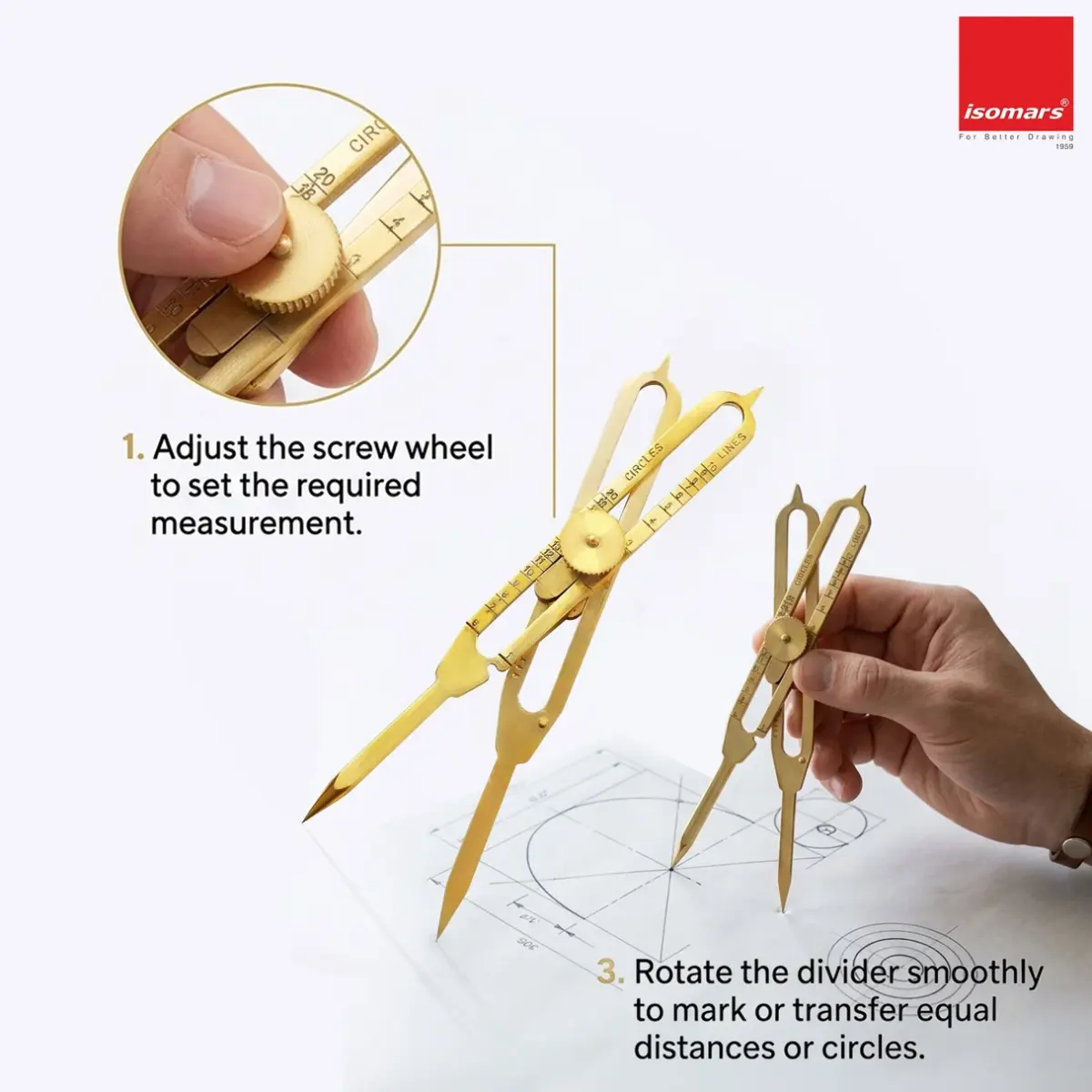
A proportional divider consists of two pointed legs joined by an adjustable pivot mechanism. When you open the legs, the distance between the points at one end is directly proportional to the distance between the points at the other end. This relationship is determined by the position of the center screw, which can be moved along a slotted track to change the ratio of the scaling.
Artists and draftsmen rely on this tool to maintain accurate ratios when enlarging or reducing an image. If you have a small reference photo and want to draw it on a larger canvas, you set the divider to the desired ratio. By measuring the width of an eye or the length of a nose on the photo, the opposite end of the tool provides the exact measurement for your canvas. This eliminates the guesswork often associated with freehand scaling.
How to use a proportional divider
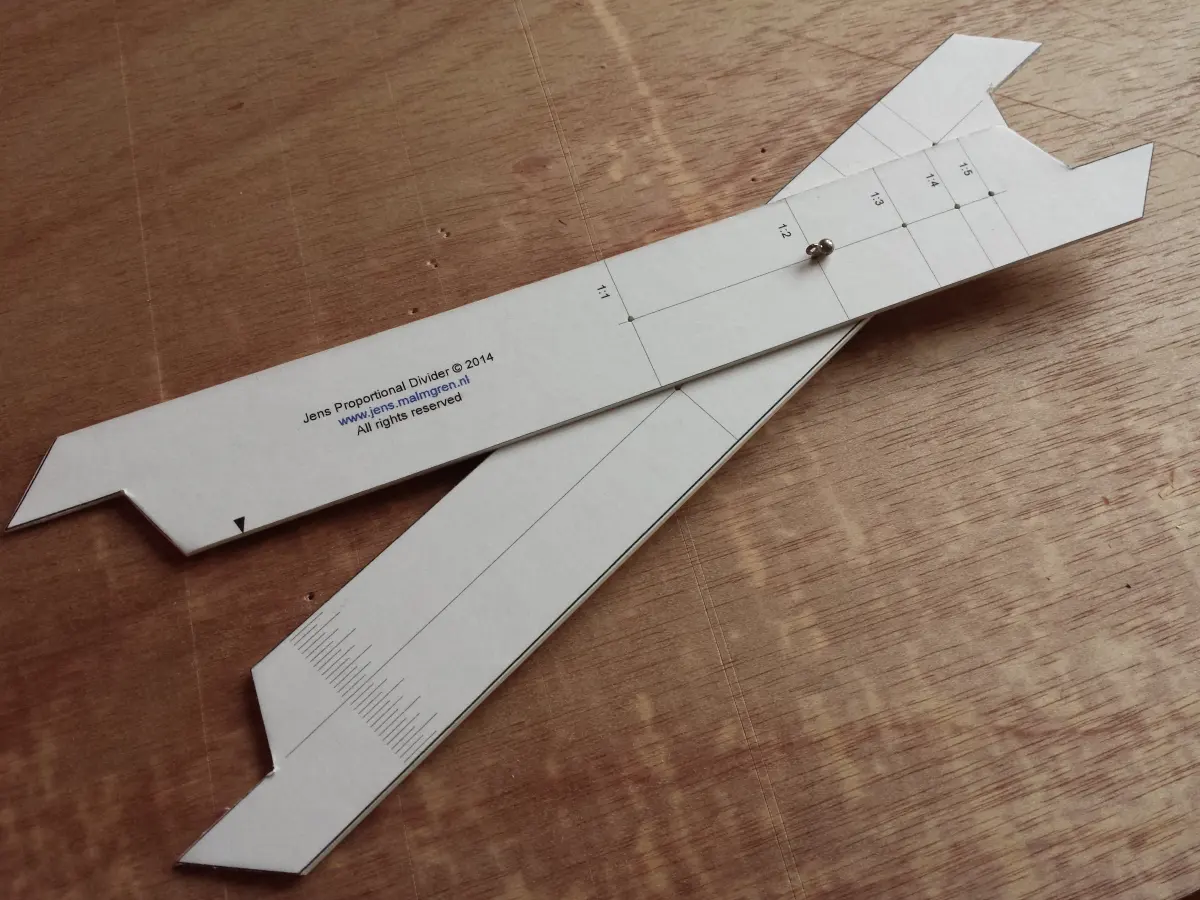
Using this tool effectively requires a steady hand and a clear understanding of the ratio settings. Most professional dividers feature a scale etched into the metal, indicating common ratios such as 1:2, 1:3, or 1:5. Once the pivot is locked into the chosen setting, the tool acts as a mechanical calculator for your spatial measurements.
- Loosen the central thumb screw to slide the pivot to the desired ratio mark.
- Tighten the screw securely to ensure the pivot does not slip during measurement.
- Use the shorter end of the divider to measure the reference object.
- Use the longer end of the divider to mark the corresponding distance on your canvas.
- Repeat this process for all key anchor points to establish the correct composition.
Always ensure the divider is held vertically or horizontally consistent with the plane of your work to avoid perspective distortion.
Best proportional dividers for beginners
For those new to the tool, a standard 8-inch or 10-inch stainless steel divider is highly recommended. These models are durable, easy to clean, and feature clearly engraved scales that are simple to read. While plastic versions exist, they often lack the rigidity required for precise work, as the pivot point can flex under pressure, leading to inaccurate measurements.
When selecting your first divider, look for models that include a locking nut rather than just a friction-based pivot. A locking mechanism provides greater stability, which is essential when you are transferring multiple measurements across a large surface. Many drafting supply companies offer student-grade versions that provide professional accuracy at a lower price point, making them excellent for learning the fundamentals of geometric scaling without a significant financial investment.
Why proportional scaling is important
Maintaining accurate proportions is the foundation of realistic representational art and precise engineering. Even a slight error in scaling can make a portrait look distorted or a mechanical part fail to fit its assembly. By using a mechanical tool like a proportional divider, you remove the human error inherent in estimating distances by eye, ensuring that every element of your work relates correctly to the whole.
Professional illustrators use this tool to ensure that complex scenes remain balanced. If you are drafting a building facade or a detailed landscape, the divider helps you maintain the integrity of the original design. It is particularly useful for:
- Mapping out the placement of facial features in portraiture.
- Ensuring architectural elements like windows and doors are spaced evenly.
- Scaling down large-scale maps for field research or navigation.
- Maintaining consistent perspective in multi-figure compositions.
Common mistakes when using a proportional divider
One of the most frequent errors is failing to keep the divider perpendicular to the surface being measured. If the tool is tilted, the measurement will appear shorter or longer than it actually is, resulting in a skewed drawing. Another common mistake is neglecting to check that the pivot screw is fully tightened before starting a series of measurements. If the screw shifts even slightly, your entire scale will be compromised, forcing you to restart the process.
To avoid these pitfalls, follow these best practices:
- Always check the pivot setting against a ruler before beginning a project.
- Keep the divider legs clean to prevent the pivot from slipping or sticking.
- Use a light touch when marking your canvas to avoid damaging the surface.
- Double-check the first three measurements to ensure the ratio is calibrated correctly.
By practicing these steps, you will develop the muscle memory needed to use the tool efficiently and maintain professional-grade precision in your creative projects.
Key facts
- A proportional divider is a drafting instrument consisting of two pointed legs joined by a movable pivot point.
- By adjusting the pivot, users can scale drawings up or down by specific ratios, such as 1:2 or 1:5.
- It is primarily used by artists, architects, and engineers to transfer measurements from a reference to a canvas while maintaining geometric accuracy.
- The tool eliminates the need for repeated mathematical calculations when enlarging or reducing the size of an image.
- Most dividers feature a calibrated scale along the legs to help the user set precise ratios before beginning work.
- To use it, measure the distance between two points on the reference with one end, then flip the tool to mark the scaled distance on your work.
The bottom line
The proportional divider is an essential manual tool for artists and designers who need to maintain accurate proportions while scaling images. By utilizing a simple pivot mechanism, it removes the complexity of manual arithmetic, allowing for precise, consistent enlargements or reductions. Whether you are sketching a portrait or drafting an architectural plan, this instrument ensures that your final output remains faithful to the original reference dimensions.
People also ask
Can a proportional divider be used for 3D modeling?
While primarily a 2D drafting tool, it can be used to manually measure physical objects for reference in 3D modeling. It helps sculptors and modelers maintain correct proportions when translating real-world dimensions to digital or clay forms.
What is the difference between a proportional divider and a standard compass?
A standard compass is used to draw circles or arcs and maintains a fixed distance between points. A proportional divider allows for the simultaneous measurement of two different distances based on a set ratio.
Do these tools require regular maintenance?
Yes, the pivot point should be kept clean and slightly lubricated to ensure smooth movement. If the pivot becomes loose, the accuracy of the ratios will be compromised, so it should be tightened periodically.
Are proportional dividers still relevant in the age of digital design?
They remain highly relevant for traditional artists and fine art painters who prefer manual workflows. They provide a tactile, immediate way to check proportions without relying on software or projectors.
What is the most common material for these tools?
High-quality proportional dividers are typically made from stainless steel or brass. These materials provide the necessary durability and weight to ensure the tool remains stable during measurements.
Can I use a proportional divider to find the golden ratio?
Many specialized proportional dividers are pre-calibrated to the golden ratio, marked as 1:1.618. This allows artists to easily compose their work according to this aesthetic principle.
This answer was created with the help of AI research tools and reference sources. Spotted an error? Let us know — we correct mistakes quickly. See our editorial policy.