What is the rule of thirds in art?
Short answer
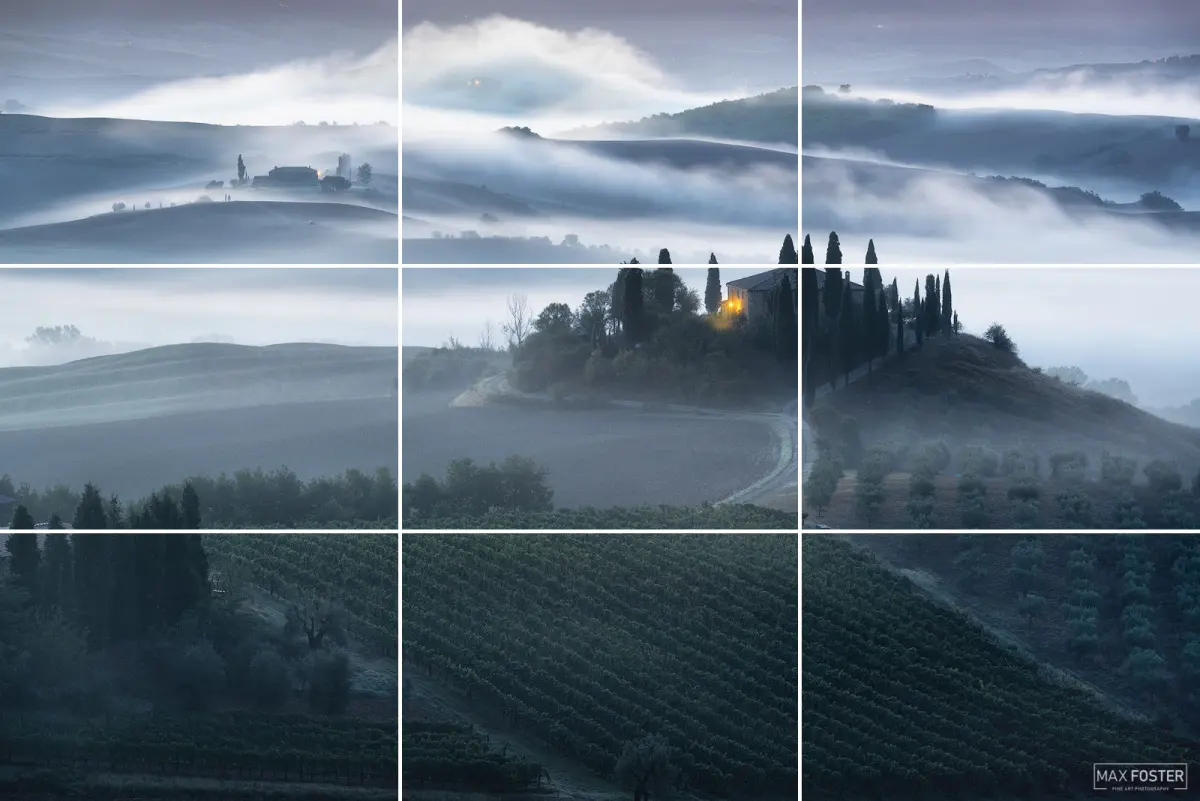
The rule of thirds is a compositional guideline that divides an image into a grid of nine equal rectangles using two horizontal and two vertical lines. By placing key subjects along these lines or at their intersections, artists create more balanced, engaging, and professional compositions that naturally guide the viewer’s eye.
On this page
What is the rule of thirds in photography and art?
The rule of thirds functions as a fundamental principle of visual design, tracing its origins back to John Thomas Smith’s 1797 book, Remarks on Rural Scenery. Smith suggested that paintings should be divided into thirds to create a more harmonious relationship between the foreground, middle ground, and background. This technique prevents the common amateur mistake of placing the subject dead-center, which often results in a static or boring composition.
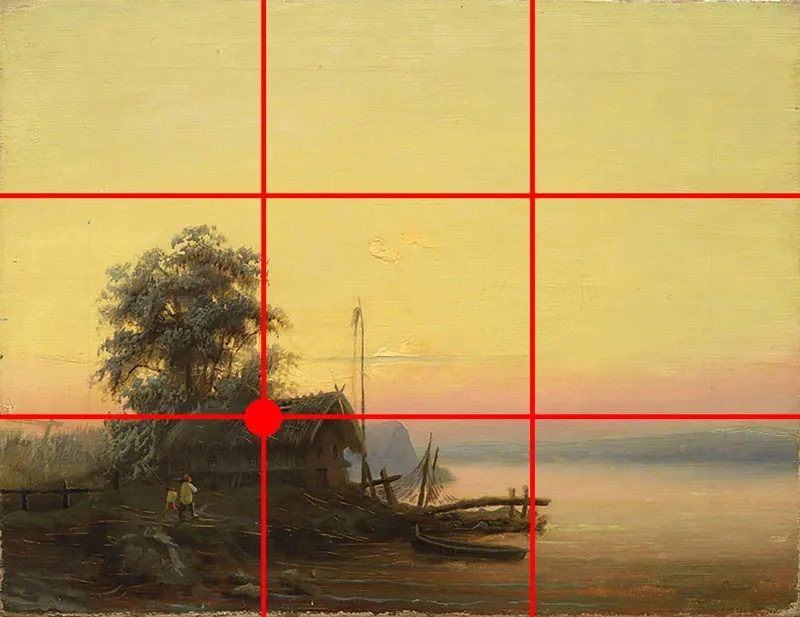
By breaking a canvas or frame into a 3x3 grid, you create four distinct points of interest where the lines intersect. Placing your focal point on one of these "power points" creates tension and interest, as the human eye naturally gravitates toward these off-center areas. This practice is widely used in everything from Renaissance portraiture to modern cinematic framing and landscape photography to ensure the image feels dynamic rather than rigid.
How to use the rule of thirds effectively
To apply this rule, you must first visualize or activate the grid overlay on your camera or drawing software. Once the grid is visible, you can align your primary subject with the vertical or horizontal lines. For landscapes, a common technique is to align the horizon line with the top or bottom horizontal line rather than splitting the image exactly in half.
- Activate your camera’s grid display in the settings menu.
- Identify your primary subject, such as a person’s eye or a distant mountain peak.
- Move your camera or adjust your composition so the subject rests on one of the four intersection points.
- Check that the surrounding elements, such as the horizon or leading lines, align with the remaining grid lines.
- Review the final composition to ensure the negative space feels balanced against the subject’s weight.
Why the rule of thirds creates better compositions
The primary reason this rule works is that it aligns with the way humans naturally scan visual information. When a subject is placed directly in the center, the eye has nowhere to travel, causing the viewer to lose interest quickly. By shifting the subject to a side, the rule of thirds encourages the viewer to explore the rest of the frame, creating a sense of movement and narrative depth.
Furthermore, this method helps manage negative space, which is the empty area surrounding a subject. When you place a subject on a grid line, you leave more room for the environment to tell a story. This is particularly effective in portrait photography, where placing the subject’s eyes on the top horizontal line creates an immediate, intimate connection with the viewer that feels more natural than a centered, "mugshot" style portrait.
Common mistakes when using the rule of thirds
One frequent error is being too rigid with the placement, leading to an image that feels mathematically forced. While the grid is a guide, it should not dictate every element of your work. If your composition looks better slightly offset from the exact intersection, prioritize the visual flow over strict adherence to the lines. Another mistake is ignoring the balance of the rest of the frame.
- Placing a subject on an intersection while leaving the rest of the image cluttered or distracting.
- Forgetting to account for the "gaze" of a subject; if a person is looking to the right, they should generally be placed on the left side of the frame.
- Over-cropping an image in post-production to force it into a rule of thirds grid, which can degrade the quality of the photograph.
- Assuming the rule applies to every single shot; some subjects, like symmetrical architecture, actually benefit from being centered.
When to break the rule of thirds
While the rule of thirds is an excellent starting point, it is not a law that must be followed in every scenario. Professional artists often break this rule to achieve specific emotional effects or to emphasize symmetry and power. For instance, centering a subject can evoke a sense of stability, authority, or intense focus that the rule of thirds would otherwise soften or disperse.
If you are shooting a portrait intended to convey dominance, a perfectly centered subject can be more impactful than one placed off-center. Similarly, in architectural photography, the beauty of a building often lies in its perfect symmetry, which demands a centered approach. The rule of thirds is a tool to be used when you want to create harmony, but you should always evaluate whether the specific subject matter requires a different approach to best communicate your artistic vision.
Key facts
- Divide your frame into a 3x3 grid using two horizontal and two vertical lines.
- Place your main subject at one of the four intersections where the lines cross.
- Align the horizon line with either the top or bottom horizontal grid line.
- Use the rule to create a sense of balance and natural flow in your composition.
- Avoid placing the subject dead-center, as this often creates a static or boring image.
- Leave "look room" or space in the direction your subject is facing or moving.
The bottom line
The rule of thirds is a foundational composition technique that helps artists create balanced and engaging visuals. By placing key elements along grid lines or at their intersections, you guide the viewer's eye through the frame effectively. While not a mandatory requirement for every shot, mastering this simple grid system provides a reliable framework for improving your photography and artistic layouts with minimal effort or equipment.
People also ask
Does the rule of thirds apply to all types of photography?
It is a versatile guideline used in landscape, portrait, and street photography. While it works well for most scenes, professional artists often break the rule intentionally to create tension or focus.
Should I always use the rule of thirds?
No, it is a tool rather than a strict law of composition. Sometimes centering a subject creates a powerful, symmetrical impact that the rule of thirds would diminish.
Can I use the rule of thirds in post-processing?
Yes, most photo editing software includes a grid overlay tool. You can crop your images after taking them to align key elements with the grid intersections.
What is the difference between the rule of thirds and the golden ratio?
The rule of thirds is a simplified approximation of the golden ratio, a mathematical proportion found in nature. The golden ratio is more complex and creates a more organic, spiral-based composition.
How do I handle portraits using this rule?
Position the subject's eyes on the top horizontal line. This placement draws the viewer's gaze directly to the most expressive part of the face.
Is the rule of thirds useful for video production?
Cinematographers frequently use it to frame shots for television and film. It helps maintain visual interest and keeps the subject properly placed relative to the background action.
This answer was created with the help of AI research tools and reference sources. Spotted an error? Let us know — we correct mistakes quickly. See our editorial policy.