What is the golden ratio in art?
Short answer
The golden ratio is a mathematical proportion approximately equal to 1.618, often denoted by the Greek letter phi. Artists use this ratio to create compositions with balanced, aesthetically pleasing dimensions. By dividing a space into these specific proportions, creators achieve a sense of natural harmony that mimics patterns frequently observed in nature.
On this page
What is the golden ratio in art?
The golden ratio, or phi, is a mathematical constant derived from the Fibonacci sequence, where each number is the sum of the two preceding ones. As these numbers increase, the ratio between consecutive figures converges toward 1.618. In visual arts, this ratio is applied by dividing a line or area into two parts such that the ratio of the whole to the larger part is the same as the ratio of the larger part to the smaller part.
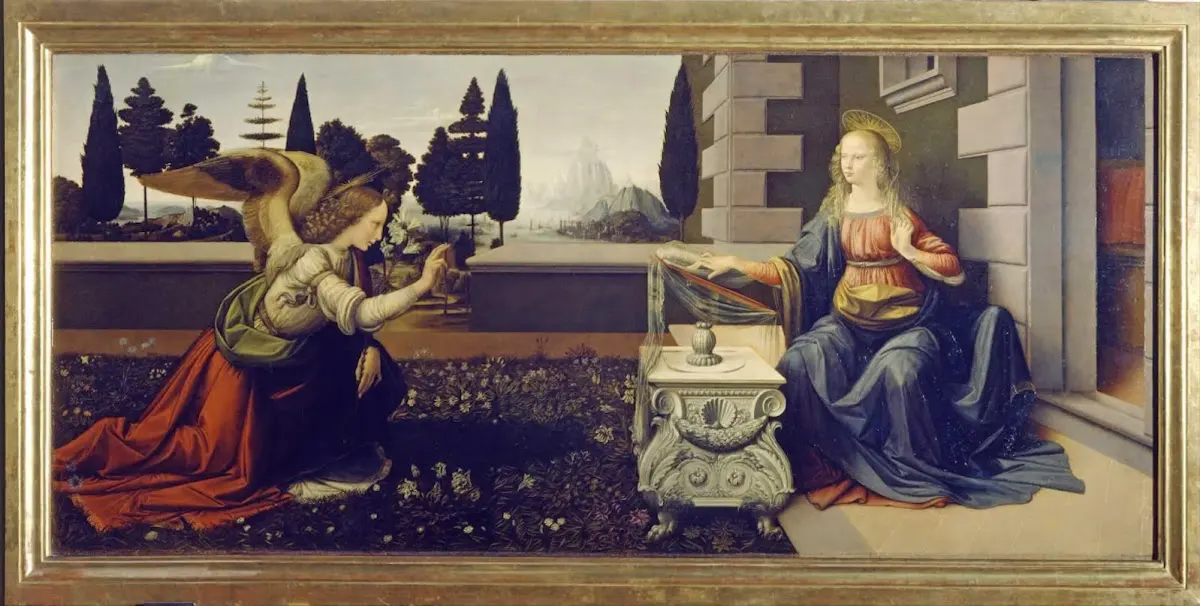
Historically, this proportion has been associated with the concept of "divine proportion." Renaissance artists and architects, including Leonardo da Vinci and Luca Pacioli, studied the ratio to imbue their works with mathematical perfection. While some claims regarding the ratio’s presence in ancient monuments like the Parthenon are debated by historians, its influence on Western composition theory remains undeniable. It serves as a foundational tool for establishing structural rhythm and visual weight in a frame.
How to use the golden ratio in composition
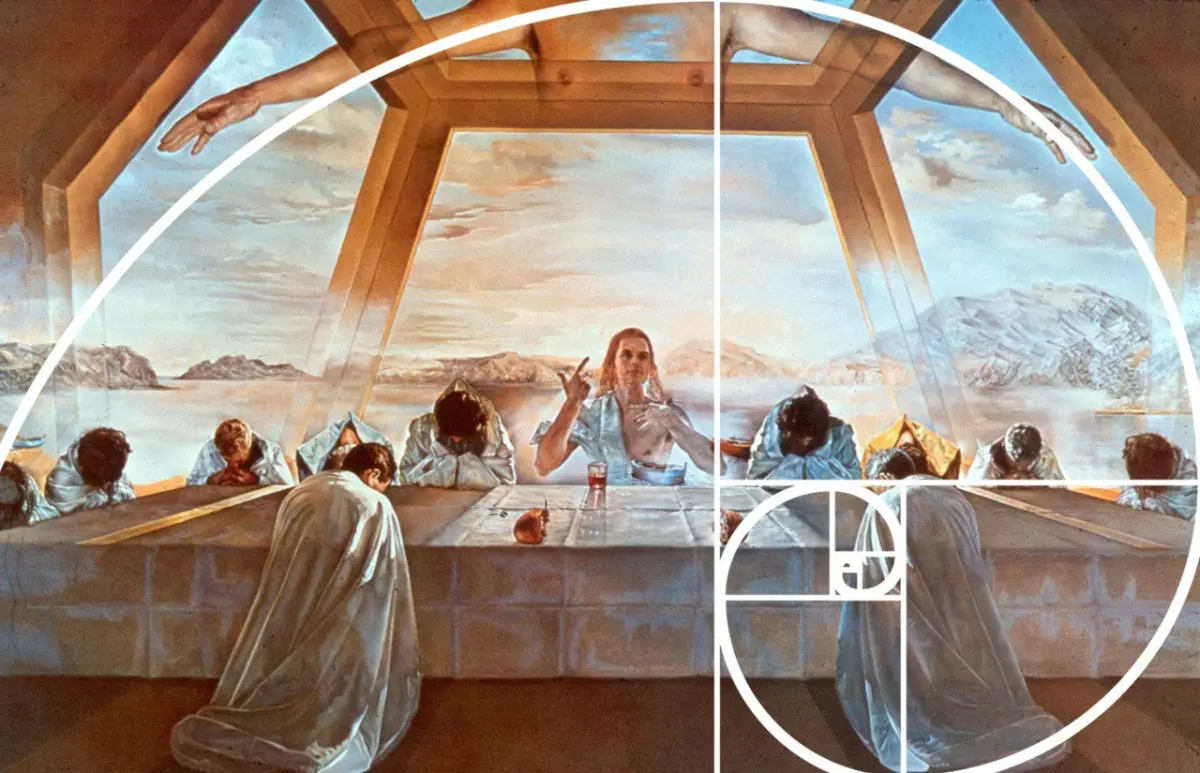
Applying the golden ratio to your own work is straightforward once you understand the underlying geometry. The most common method involves the golden rectangle, which can be subdivided into smaller squares and rectangles based on the 1.618 ratio. By placing key elements of your subject along the lines created by these divisions, you guide the viewer’s eye through the composition in a logical, pleasing flow.
- Determine the dimensions of your canvas or frame.
- Multiply the height or width by 0.618 to find the ideal placement for a focal point.
- Align your primary subject or horizon line with these calculated markers.
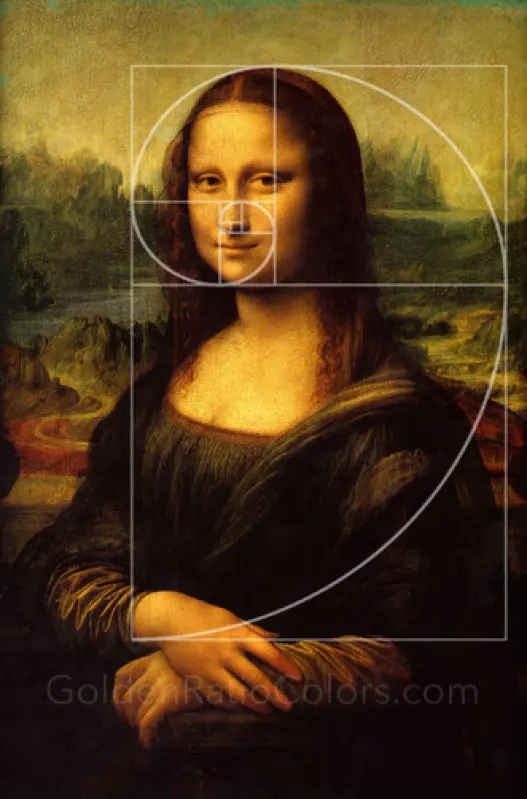
- Use the resulting "golden spiral" to arrange secondary elements, ensuring they lead the eye toward the main point of interest.
Following these steps creates a dynamic tension that feels more organic than a simple centered composition. It prevents the viewer's gaze from becoming stagnant by encouraging movement across the entire visual field.
Why the golden ratio is used in design
The primary appeal of the golden ratio lies in its ability to create balance without resorting to rigid symmetry. Symmetry can often feel static or artificial, whereas the golden ratio introduces a subtle asymmetry that feels intentional and sophisticated. This balance is particularly useful in graphic design, photography, and architectural drafting, where clarity and readability are paramount.
Beyond technical precision, the ratio is often cited as being inherently "natural." Because similar proportions appear in the spirals of seashells, the arrangement of leaves on a stem, and the structure of galaxies, the human brain is conditioned to find these ratios comfortable. By incorporating phi into a design, artists tap into these subconscious preferences. This creates a sense of stability that makes complex information or intricate imagery easier for the human eye to process and appreciate.
Common mistakes when applying the golden ratio
A frequent error is the belief that the golden ratio is a mandatory rule rather than a flexible guideline. Many beginners become obsessed with achieving an exact 1.618 measurement, which can lead to stiff, overly calculated compositions that lack artistic soul. It is important to remember that the ratio is meant to support the artist’s vision, not replace it. If a composition feels forced or cramped, prioritize the visual narrative over mathematical adherence.
- Over-reliance on the ratio can lead to predictable, formulaic layouts.
- Applying the ratio to every single element in a scene creates visual clutter.
- Ignoring the rule of thirds in favor of phi can be detrimental if the subject matter is simple.
- Failing to consider the negative space surrounding the golden-ratio-aligned elements.
Use the ratio as a starting point for your layout, but always step back to evaluate the emotional impact of the piece. If the math interferes with the story you are telling, adjust the proportions to better suit the specific needs of your work.
Best tools for golden ratio design
Modern technology has made it significantly easier to integrate the golden ratio into digital and traditional workflows. Many graphic design software packages now include overlays that automatically generate golden rectangles or spirals over your workspace. These tools allow you to experiment with different placements instantly, saving time and ensuring that your proportions remain consistent throughout the creative process.
For traditional painters and sketchers, simple drafting tools like golden ratio calipers are invaluable. These adjustable instruments allow you to measure and transfer proportions directly onto a canvas, ensuring that your initial sketch is balanced from the very beginning. Whether you are using digital overlays or physical tools, the goal is to reduce the cognitive load of measuring so you can focus on the artistic execution. By mastering these aids, you can develop an intuitive sense for the ratio, eventually allowing you to compose balanced images without needing to perform manual calculations every time you start a new project.
Key facts
- The golden ratio, represented by the Greek letter phi (φ), is approximately 1.618.
- It occurs when a line is divided into two parts such that the longer part divided by the smaller part equals the whole length divided by the longer part.
- Artists use the golden rectangle, a shape with sides in the ratio of 1:1.618, to create balanced and aesthetically pleasing compositions.
- The Fibonacci sequence—where each number is the sum of the two preceding ones—is a mathematical progression that converges toward the golden ratio.
- You can apply this ratio in design by placing focal points at the intersection of lines created by a golden spiral overlay.
- A common mistake is forcing the ratio into every element of a piece, which can result in a rigid, unnatural, or overly mathematical appearance.
The bottom line
The golden ratio is a mathematical constant that has served as a guide for artistic harmony for centuries. By utilizing the 1.618 ratio, artists can organize visual elements to create a sense of natural balance and flow. While it is a powerful tool for composition, it should be used as a subtle framework to enhance your creative intent rather than as a rigid rule for every design.
People also ask
Does the golden ratio guarantee a masterpiece?
No, the ratio is merely a compositional tool rather than a substitute for artistic vision or technical skill. While it can provide structural harmony, an image can be aesthetically pleasing without adhering to any specific mathematical formula.
How do I calculate the golden ratio for a canvas?
To find the golden section of a canvas, multiply the length of the side by 0.618. Marking this point provides a placement guide for your main subject, which often feels more natural to the human eye than centering it.
Is the golden ratio found in nature?
Yes, the ratio appears frequently in biological structures, such as the arrangement of leaves on a stem, the spirals of pinecones, and the growth patterns of nautilus shells. These natural occurrences are often cited as evidence for why the ratio feels inherently balanced to humans.
Did Leonardo da Vinci use the golden ratio?
While often associated with his work, there is little contemporary evidence to suggest Da Vinci intentionally used the golden ratio in his paintings. It is more likely that his compositions achieved balance through intuitive mastery of perspective and geometry.
Can I use the golden ratio in digital photography?
Many modern cameras and editing software include a "golden spiral" or "phi grid" overlay in the viewfinder. You can align your subject's eye or a horizon line along these curves to create a more dynamic and professional-looking shot.
What is the difference between the golden ratio and the rule of thirds?
The rule of thirds divides a frame into a simple 3x3 grid, while the golden ratio uses a more complex, organic spiral or ratio. The rule of thirds is easier to apply quickly, whereas the golden ratio offers more subtle, sophisticated compositional balance.
This answer was created with the help of AI research tools and reference sources. Spotted an error? Let us know — we correct mistakes quickly. See our editorial policy.