What is landscape photography?
Short answer
Landscape photography is the art of capturing images that embody the spirit and physical features of the natural world. It ranges from vast, sweeping vistas of mountains and oceans to intimate details of forests or deserts. The practice emphasizes composition, lighting, and perspective to convey the beauty and scale of outdoor environments.
On this page
What is the history of landscape photography?
Landscape photography emerged in the mid-19th century as a way to document the vast, unexplored territories of the world. Early pioneers like Carleton Watkins and William Henry Jackson used cumbersome large-format cameras and glass plates to capture the American West in the 1860s and 1870s. These images were instrumental in raising public awareness, eventually leading to the establishment of national parks. Their work required incredible patience and physical endurance, as they hauled heavy equipment across rugged terrain on horseback or foot.
By the early 20th century, the genre evolved through the efforts of artists like Ansel Adams. Adams introduced the Zone System, a technique that allowed photographers to precisely control exposure and contrast to achieve deep blacks and brilliant highlights. His iconic images of Yosemite National Park transformed landscape photography from mere documentation into a fine art form. Today, the genre continues to evolve with digital sensors, allowing photographers to capture dynamic ranges that were previously impossible to record on traditional film.
Best camera gear for landscape photography
For beginners, the most important piece of equipment is a sturdy tripod. Because landscape photography often requires long exposure times to capture moving water or low-light scenes, a tripod is essential to prevent camera shake and ensure image sharpness. A wide-angle lens is also standard, as it allows you to fit more of the scene into the frame, though telephoto lenses are excellent for compressing distant peaks.
When selecting your primary gear, consider these essential items:
- A camera body with high dynamic range capabilities to balance bright skies and dark shadows.
- A circular polarizer filter to reduce glare on water and increase the saturation of foliage.
- A remote shutter release or self-timer to avoid vibration when pressing the button.
- A durable, weather-sealed camera bag to protect your gear from moisture and dust.
How to compose a landscape photograph
Composition is the foundation of a compelling landscape image. The most common technique is the "Rule of Thirds," where you divide your frame into a grid of nine rectangles and place your primary subject—such as a tree, a mountain peak, or a rock formation—along the intersecting lines. This creates a more balanced and visually interesting image than placing the subject directly in the center.
Another vital element is the use of "leading lines." These are natural or man-made features, such as a winding river, a fence, or a path, that draw the viewer’s eye through the frame toward the focal point. To create a sense of depth, try to include a clear foreground, middle ground, and background. This layering prevents the image from appearing flat and invites the viewer to explore the entire scene.
Best time of day for landscape photography
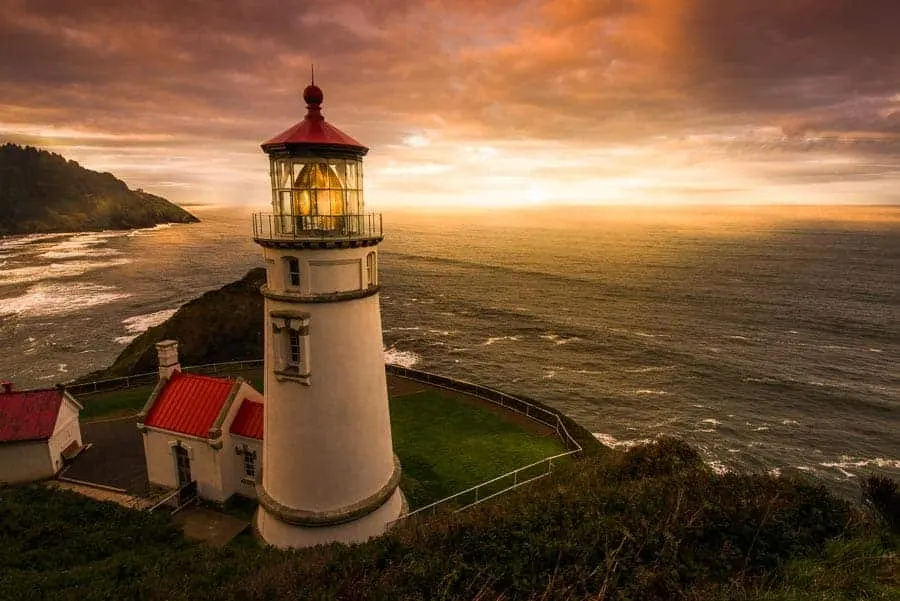
The quality of light is the most critical factor in determining the success of a landscape photograph. Photographers typically favor the "Golden Hour," which occurs shortly after sunrise and just before sunset. During these times, the sun is low on the horizon, creating soft, warm, and directional light that emphasizes texture and casts long, dramatic shadows across the terrain.
Avoid shooting at high noon on a clear day, as the harsh, overhead sun creates high-contrast shadows that can wash out colors and lose detail. If you must shoot during the day, look for overcast conditions, which act as a giant softbox, diffusing the light and creating even, saturated tones. For those interested in night photography, the "Blue Hour"—the period just before sunrise or after sunset—offers a cool, ethereal atmosphere that works perfectly for capturing silhouettes against a deep, twilight sky.
Common mistakes when shooting landscapes
One of the most frequent errors is failing to check for a level horizon. A tilted horizon line can make an otherwise perfect image feel unstable and unprofessional. Always use the built-in level feature on your camera or a bubble level on your tripod to ensure your composition is perfectly horizontal. Additionally, many beginners overlook the importance of small details, such as trash, stray branches, or footprints that might clutter the foreground and distract from the main subject.
Follow these steps to improve your workflow:
- Scout your location in advance to understand how the light will hit the landscape.
- Check the weather forecast to anticipate clouds, which often add drama to the sky.
- Use a small aperture, such as f/11 or f/16, to ensure that both the foreground and the background remain in sharp focus.
- Review your images on a large screen to spot minor distractions that you might have missed on the small camera display.
- Practice patience; the best light often appears only for a few fleeting minutes, so be ready to wait for the perfect moment.
Key facts
- Landscape photography focuses on capturing the natural world, emphasizing vast spaces, geological features, and atmospheric conditions.
- Use a small aperture, such as f/11 to f/16, to ensure that both the foreground and the distant horizon remain in sharp focus.
- The "golden hour," occurring shortly after sunrise and before sunset, provides soft, warm light that enhances textures and shadows.
- A sturdy tripod is essential to eliminate camera shake, especially when shooting with slow shutter speeds in low-light conditions.
- Including a human element or a specific object in the foreground provides a sense of scale and adds depth to an otherwise flat scene.
- Polarizing filters are vital tools that reduce glare on water surfaces and deepen the blue tones of the sky.
The bottom line
Landscape photography is the art of documenting the natural environment through careful composition, lighting, and technical precision. By mastering the use of apertures for depth, utilizing the soft light of the golden hour, and employing stable equipment, photographers can transform ordinary vistas into compelling visual stories. Success relies less on expensive gear and more on patience, planning, and an observant eye for the world's inherent beauty.
People also ask
What is the best focal length for landscape photography?
Wide-angle lenses, typically between 16mm and 35mm, are preferred for capturing expansive vistas. However, telephoto lenses are excellent for isolating specific mountain peaks or compressing distant layers of a scene.
Do I need a full-frame camera to take professional landscapes?
While full-frame sensors offer superior dynamic range and low-light performance, modern crop-sensor cameras are highly capable. The photographer's ability to compose a shot and understand light is far more critical than the camera format.
How do I keep my horizon line straight?
Most modern cameras have an electronic level display in the viewfinder or on the rear screen. If your camera lacks this, use the grid overlay feature to align the horizon with one of the horizontal guide lines.
What is the rule of thirds in landscape photography?
This composition guideline suggests dividing your frame into a 3x3 grid and placing the horizon or key focal points along these lines. It creates a more balanced and visually engaging image than placing the subject dead-center.
How can I prevent blurry photos when shooting landscapes?
Always use a tripod and a remote shutter release or the camera's self-timer to avoid vibrations caused by touching the shutter button. Additionally, turn off image stabilization when the camera is mounted on a tripod to prevent the system from searching for movement.
Is it better to shoot in RAW or JPEG format?
Always shoot in RAW format because it preserves all the data captured by the sensor. This allows for significantly more flexibility when adjusting highlights, shadows, and white balance during post-processing compared to the compressed JPEG format.
This answer was created with the help of AI research tools and reference sources. Spotted an error? Let us know — we correct mistakes quickly. See our editorial policy.