What techniques did Paul Cézanne use?
Short answer
Paul Cézanne revolutionized painting by abandoning traditional perspective for structured, geometric brushwork. He utilized "constructive strokes"—small, overlapping patches of color—to build form and depth. By simplifying nature into spheres, cones, and cylinders, he bridged the gap between Impressionism and Cubism, fundamentally altering how artists perceive and represent three-dimensional space.
On this page
How did Cézanne use constructive strokes?
Cézanne moved away from the fluid, blended brushwork of the Impressionists to develop his signature "constructive stroke." He applied paint in small, rhythmic, and parallel patches that functioned like building blocks. Rather than smoothing out his surfaces, he layered these distinct marks to create a sense of solidity and weight. This method allowed him to define the contours of objects without relying on traditional dark outlines.
By varying the direction and intensity of these strokes, he created a complex grid across the canvas. This technique gave his paintings a unique, vibrating quality that suggested both light and physical volume simultaneously. To emulate this in your own work, consider the following approach:
- Use a flat, square-tipped brush to ensure your marks have a consistent shape.
- Apply paint in a consistent direction across a single plane to establish a sense of rhythm.
- Avoid blending the edges of your strokes; let the colors sit side-by-side to allow the viewer's eye to mix them optically.
How to achieve depth without linear perspective?
Cézanne famously rejected the rigid mathematical perspective used since the Renaissance. Instead of using a single vanishing point, he often depicted objects from multiple viewpoints simultaneously. He achieved depth by manipulating "passage," a technique where the edges of objects dissolve into the background or bleed into adjacent forms. This creates a spatial ambiguity that keeps the viewer engaged with the surface of the canvas.
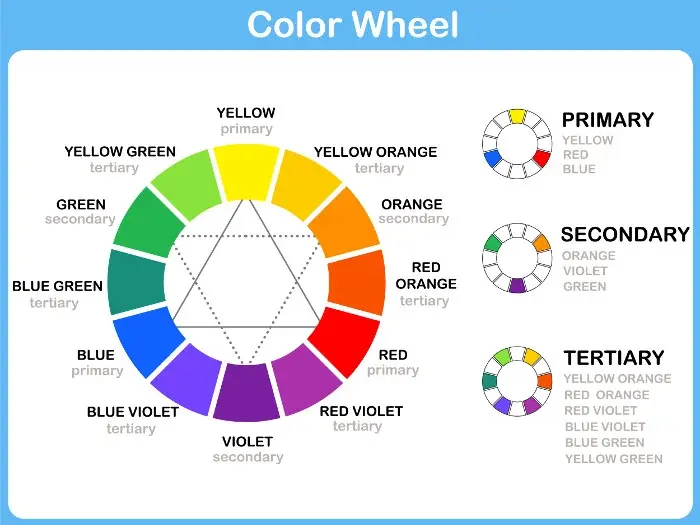
He also utilized color temperature to push and pull space. By placing warm, advancing colors like ochre or red next to cool, receding colors like blue or violet, he created a sense of distance without relying on traditional shadows. This "modulation" of color replaced the old method of using black or brown to create depth. When practicing this, focus on:
- Identifying the dominant color temperature of your foreground and background.
- Softening the edges where two objects meet to create a sense of atmospheric connection.
- Using color intensity rather than value contrast to determine how far an object sits from the viewer.
What were Cézanne's color theory techniques?
Cézanne treated color as an architectural tool rather than a decorative element. He believed that color should represent the structure of an object rather than just its surface appearance. He often used a limited palette, focusing on earthy tones—such as terra verte, cadmium yellow, and ultramarine—to maintain harmony across his compositions. His process involved building up layers of thin, transparent washes before adding thicker, opaque highlights.
This layering process, known as "glazing," allowed him to create luminosity within his shadows. He rarely used pure black, preferring to mix deep, chromatic darks using complementary colors. This prevented his paintings from looking flat or muddy. If you are experimenting with his color methods, keep these tips in mind:
- Mix your own darks by combining primary colors rather than using tube black.
- Apply thin, diluted paint for the initial structure and reserve thick, impasto paint for the final highlights.
- Observe how light changes the local color of an object, and paint those shifts as distinct, adjacent planes of color.
Common mistakes when painting like Cézanne
One of the most frequent errors beginners make is over-blending their brushwork. Cézanne’s style relies on the integrity of the individual stroke; if you smooth the paint too much, you lose the structural energy that defines his work. Another mistake is attempting to copy his perspective too literally, which can lead to a chaotic or messy composition. Remember that his distortion was intentional, designed to emphasize the physical reality of the subject rather than a photographic likeness.
Additionally, many artists fail to balance their compositions correctly. Cézanne spent months on single paintings, carefully adjusting the weight of every color patch to ensure the canvas felt balanced. Do not rush the process. If you find your work feels "flat," it is likely because you are not varying the direction of your strokes enough to describe the different planes of your subject. Focus on the geometry of the forms beneath the surface.
Why did Cézanne simplify nature into geometric shapes?
Cézanne believed that everything in nature could be reduced to the sphere, the cone, and the cylinder. By simplifying complex organic forms into these basic geometric components, he was able to focus on the underlying architecture of his subjects. This analytical approach stripped away unnecessary detail, allowing the viewer to see the "essence" of a mountain, a bowl of fruit, or a human figure. It was a move toward abstraction that stripped away the narrative or sentimental elements of 19th-century art.
This simplification process is an excellent exercise for any artist looking to improve their observational skills. By breaking down a complex landscape into basic shapes, you can better understand how light hits a surface and how those surfaces relate to one another in space. To practice this, look at a still life and try to sketch the basic geometric solids that compose each object before adding any detail. This foundation will provide a stronger, more coherent structure for your final piece of art.
Key facts
- Use the "constructive stroke," a series of parallel, diagonal brushstrokes that build form through color rather than traditional outlines.
- Apply color in thin, overlapping layers, starting with neutral tones and gradually building up to saturated hues to create depth.
- Focus on "modulation" instead of modeling, using shifts in color temperature to suggest volume rather than using black or white for shadows.
- Simplify complex natural forms into basic geometric shapes like the sphere, the cone, and the cylinder.
- Work slowly and methodically, often spending months or years on a single canvas to achieve precise color relationships.
- Avoid perspective-based realism by using "passage," a technique where planes of color bleed into one another to flatten the pictorial space.
The bottom line
Paul Cézanne transformed modern art by shifting the focus from photographic accuracy to the structural analysis of nature. By utilizing his signature constructive brushstrokes and a unique color modulation technique, he bridged the gap between Impressionism and Cubism. His methodical approach taught artists that a painting is not a window into the world, but a self-contained, geometric construction based on the artist's personal visual perception.
People also ask
Why did Cézanne paint the same subjects repeatedly?
Cézanne believed that capturing the essence of a subject required deep, prolonged observation. By painting Mont Sainte-Victoire or his still lifes dozens of times, he could refine his understanding of light and structure.
Did Cézanne use traditional linear perspective?
No, he intentionally abandoned the Renaissance rules of linear perspective. Instead, he often presented multiple viewpoints in a single image to emphasize the two-dimensional nature of the canvas.
What was Cézanne’s relationship with the Impressionists?
He participated in the first and third Impressionist exhibitions but felt the movement lacked structural integrity. He sought to make Impressionism "something solid and durable, like the art of the museums."
How did he achieve his unique color palette?
He used a limited palette of high-quality pigments, favoring earth tones paired with vibrant blues and ochres. He applied these colors side-by-side to create a vibrating optical effect.
What is the significance of his "unfinished" paintings?
Many of his works appear incomplete because he prioritized the structural logic of the composition over filling every inch of the canvas. This technique influenced later artists to prioritize the process of creation over polished realism.
Why are his still lifes considered revolutionary?
He distorted the shapes of objects like fruit and bowls to create a more dynamic composition. By tilting surfaces and ignoring fixed focal points, he challenged how viewers perceive space and reality.
This answer was created with the help of AI research tools and reference sources. Spotted an error? Let us know — we correct mistakes quickly. See our editorial policy.