What is an art certificate of authenticity?
Short answer
An art certificate of authenticity (COA) is a formal document verifying an artwork’s provenance, authorship, and originality. It serves as a legal guarantee that the piece was created by the attributed artist. While not a title of ownership, it is essential for insurance, resale value, and establishing the work's historical legitimacy.
On this page
What information should be on a certificate of authenticity?
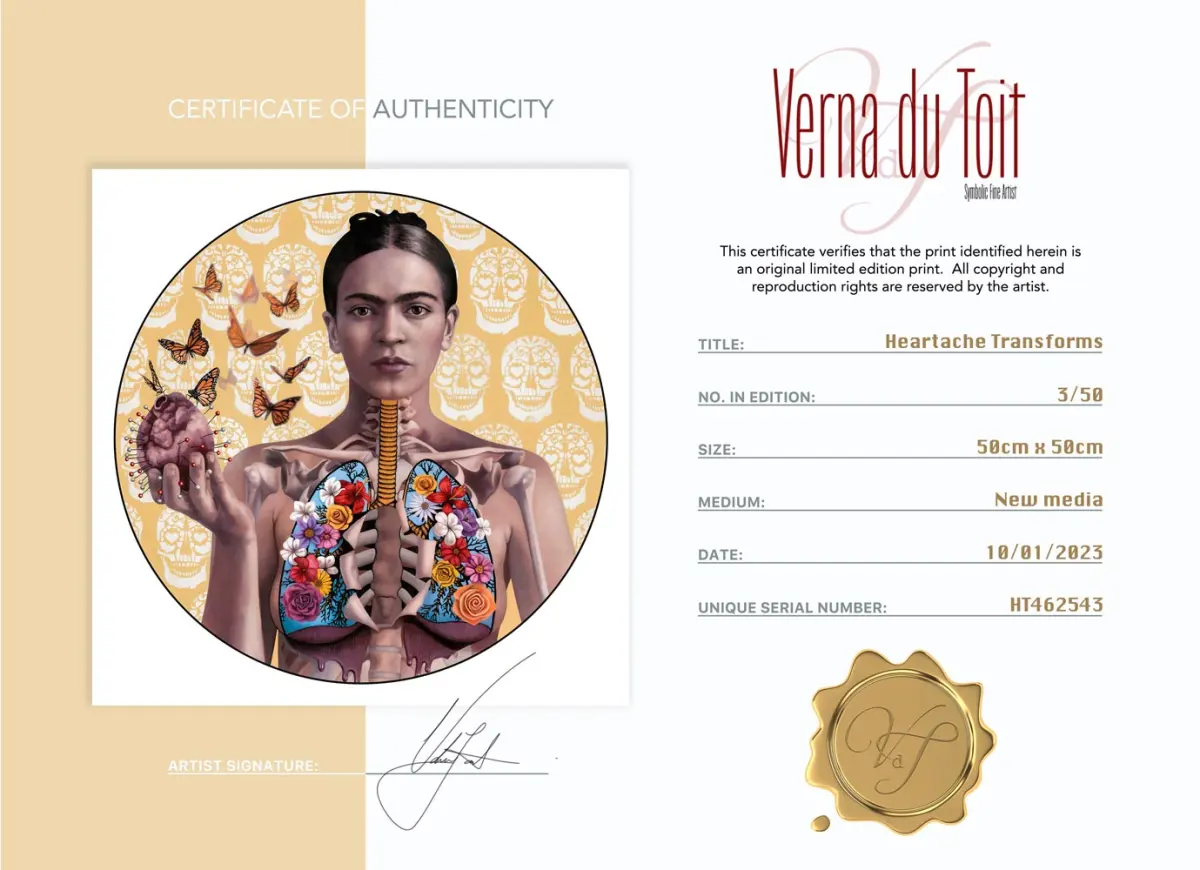
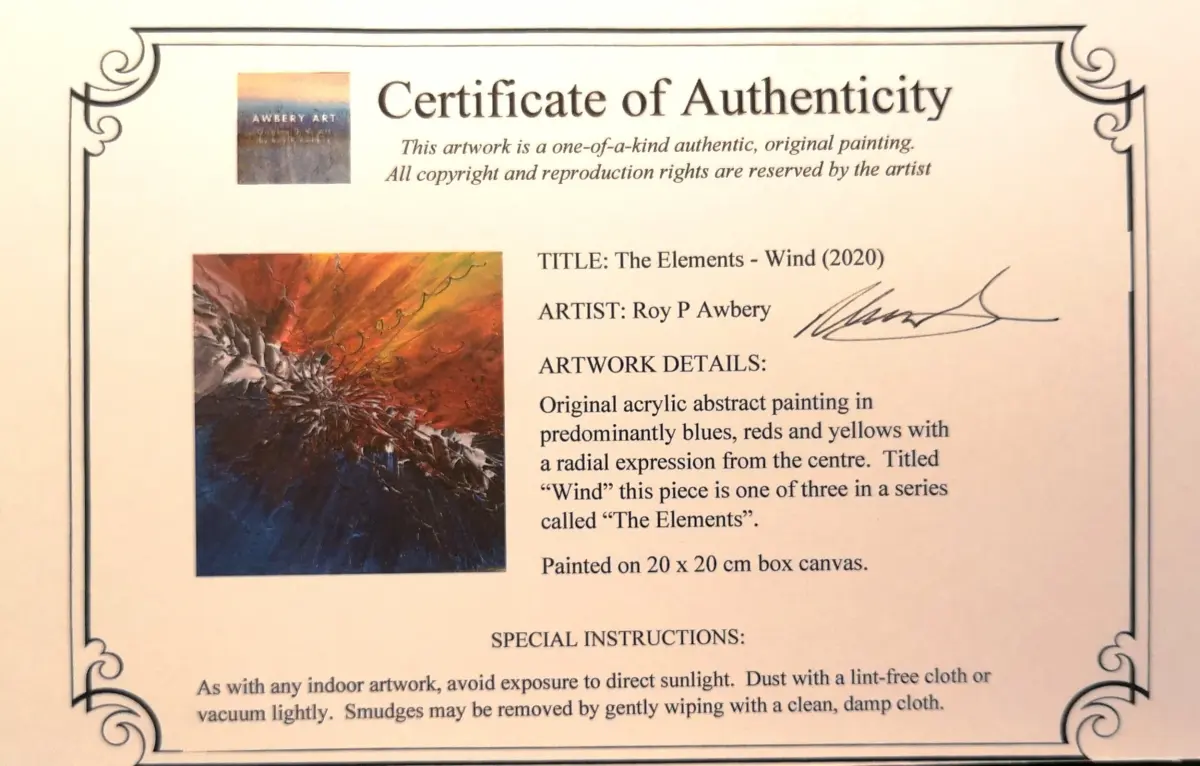
A professional certificate of authenticity must contain specific, verifiable details to be considered valid by galleries and auction houses. Without these core components, the document is often viewed as a mere souvenir rather than a legal record. The primary purpose is to link the physical object to the artist’s known body of work through precise data points.
To ensure your document is comprehensive, include the following information:
- The artist’s full name and contact information.
- The title of the artwork and the date of its completion.
- The medium used, such as oil on canvas or digital print.
- The physical dimensions of the piece.
- A unique identification number or edition number if applicable.
- A clear, high-resolution photograph of the artwork.
- The signature of the artist or an authorized representative, such as an estate executor.
Including a statement of authenticity is equally vital. This brief paragraph should explicitly declare that the work is an original creation by the artist. Some certificates also include a brief history of the work’s provenance, detailing previous owners or exhibition history, which further solidifies the item's marketability and historical standing in the art world.
Why is a certificate of authenticity important for collectors?
For collectors, the COA acts as a safeguard against forgery and misattribution. When purchasing high-value art, the certificate provides the necessary confidence that the investment is genuine. It is often the first document requested by insurance companies when a collector seeks to cover a piece against theft, damage, or loss.
Beyond insurance, the COA is critical for the resale market. Most reputable auction houses and galleries will refuse to handle a work of art that lacks proper documentation. The document creates a paper trail that follows the artwork throughout its lifetime. If you lose your certificate, the market value of your piece can drop significantly, as potential buyers may hesitate to purchase an item that cannot be definitively linked to the artist’s verified catalog.
Collectors should keep the original COA in a secure, fireproof location, such as a safe or a bank deposit box. It is also wise to maintain a digital backup of the document. If you sell the artwork, the certificate must always be transferred to the new owner, as it remains an inseparable part of the work’s identity and financial history.
How to verify a certificate of authenticity
Verifying a document requires diligence, as certificates can be forged just as easily as the art itself. The first step is to research the artist’s standard practices for issuing documentation. Many contemporary artists use specific watermarked paper, embossed seals, or holographic stickers to prevent unauthorized reproduction of their certificates.
Follow these steps to ensure the document you hold is legitimate:
- Contact the artist’s studio or official estate to confirm the certificate’s serial number.
- Examine the signature for signs of a digital print rather than an original ink signature.
- Check the paper quality and the presence of any security features like microprinting.
- Compare the provenance listed on the certificate with known records in the artist’s catalogue raisonné.
- Consult with an independent art appraiser if you have doubts about the document’s origin.
If the certificate comes from a gallery, research the gallery’s reputation. A long-standing, reputable gallery is unlikely to issue fraudulent documentation, as doing so would destroy their credibility. Always be wary of certificates that appear generic, lack contact information, or contain spelling errors, as these are common indicators of a counterfeit document intended to deceive inexperienced buyers.
Common mistakes when creating a certificate of authenticity
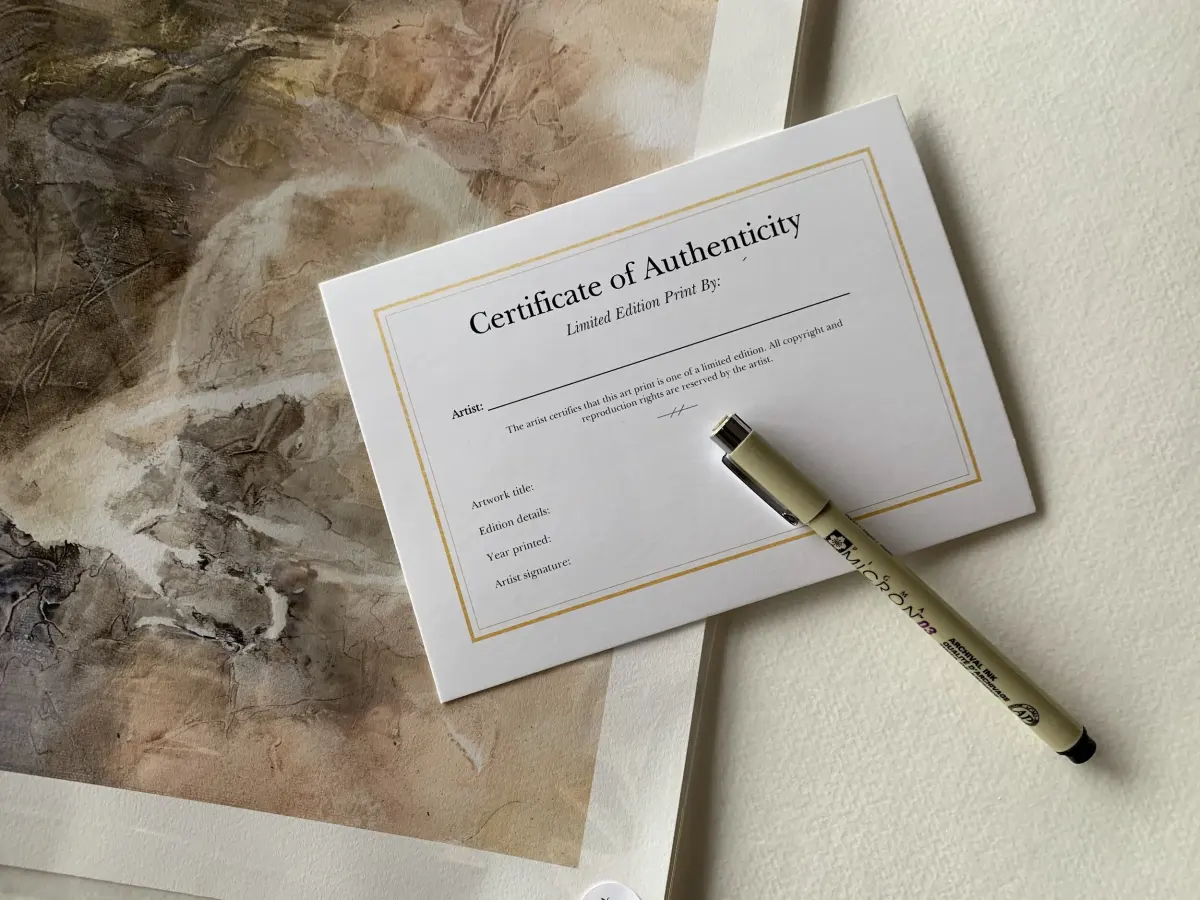
Artists often make the mistake of creating certificates that are too vague or easily reproducible. A document that simply states "This is an original" without specific details is insufficient for modern art market standards. Furthermore, failing to keep a record of issued certificates can lead to confusion if a collector later contacts the artist to verify a work.
Avoid these common pitfalls to maintain professional standards:
- Using standard printer paper that can be easily scanned and replicated.
- Forgetting to include the date of the certificate’s issuance.
- Failing to sign the document in a permanent, archival-quality ink.
- Omitting the specific edition number for limited-run prints or sculptures.
- Neglecting to provide a way for future owners to contact the artist or estate.
Another frequent error is failing to update the document if the artwork is restored or altered. If a piece undergoes significant conservation, the certificate should ideally reflect this history. Maintaining a register of all issued certificates allows the artist to track their work’s distribution and ensures that they can assist collectors with authentication requests years or even decades after the initial sale.
How to handle a lost certificate of authenticity
Losing a certificate of authenticity is a stressful experience, but it does not necessarily mean the artwork is worthless. If you find yourself in this situation, the priority is to establish a new line of communication with the artist or their estate. They are the only entities capable of issuing a replacement or a letter of confirmation.
To resolve a lost documentation issue, take the following actions:
- Gather all purchase receipts, gallery invoices, and emails related to the acquisition.
- Reach out to the original gallery where the purchase was made to see if they have a copy on file.
- Contact the artist’s studio with the title, date, and photos of the work to request a replacement.
- If the artist is deceased, contact the official estate or the foundation that manages the artist’s intellectual property.
- Consider hiring an art historian or appraiser to write a formal statement of opinion regarding the work’s authenticity.
While a replacement certificate issued by an estate is generally accepted, it may not carry the same weight as the original signed by the artist during their lifetime. Therefore, treat your documentation as a vital asset. By keeping your records organized and secure, you protect both the financial value of your collection and the artistic legacy of the creators you support.
Key facts
- A certificate of authenticity (COA) is a formal document that confirms a specific artwork is an original work by the named artist.
- It must include the artist's name, the title of the work, the medium, dimensions, and the date of creation.
- For limited edition prints, the COA should specify the total number of prints in the edition and the specific number of that individual piece.
- Always ensure the document is signed by the artist, the publisher, or a recognized expert in the artist's body of work.
- Keep the COA in a safe, separate location from the artwork, such as a fireproof safe or a digital cloud archive.
- A COA does not guarantee the financial value of an artwork, as market prices fluctuate based on provenance and demand.
The bottom line
A certificate of authenticity is an essential document that validates an artwork's origin and identity. While it does not guarantee future financial appreciation, it provides critical transparency for collectors and galleries. By ensuring your documentation includes specific details like signatures and edition numbers, you protect the long-term integrity of your investment. Always store these papers securely to maintain the historical record and marketability of your collection.
People also ask
Does every piece of art require a certificate of authenticity?
Not every piece needs one, but it is standard practice for high-value works, limited editions, and contemporary art. For inexpensive decorative items or mass-produced prints, a COA is rarely provided or necessary.
Can I create my own certificate of authenticity for a piece I sold?
If you are the artist, you are the primary authority and should provide a COA to the buyer. However, if you are a collector, you cannot issue a formal COA; you can only provide a bill of sale or documentation of provenance.
What happens if I lose the original certificate of authenticity?
Losing a COA can decrease the resale value and make it harder to sell the piece to reputable galleries. You should contact the artist’s estate, the original gallery, or the publisher to request a replacement or a letter of authentication.
Is a certificate of authenticity the same as an appraisal?
No, these documents serve different purposes. A COA confirms the identity and origin of the work, while an appraisal provides an estimate of the current market value for insurance or tax purposes.
How can I tell if a certificate of authenticity is fake?
Verify the document by cross-referencing the artist’s known signature and the gallery’s contact information. Be wary of generic, poorly printed documents that lack specific details or have spelling errors.
Does a COA prove that an artwork is not a forgery?
A COA is a strong indicator of authenticity, but it is not infallible. Sophisticated forgers can create convincing documents, so it is essential to research the history of the work, known as provenance, alongside the certificate.
This answer was created with the help of AI research tools and reference sources. Spotted an error? Let us know — we correct mistakes quickly. See our editorial policy.