What is Barbara Hepworth known for?
Short answer
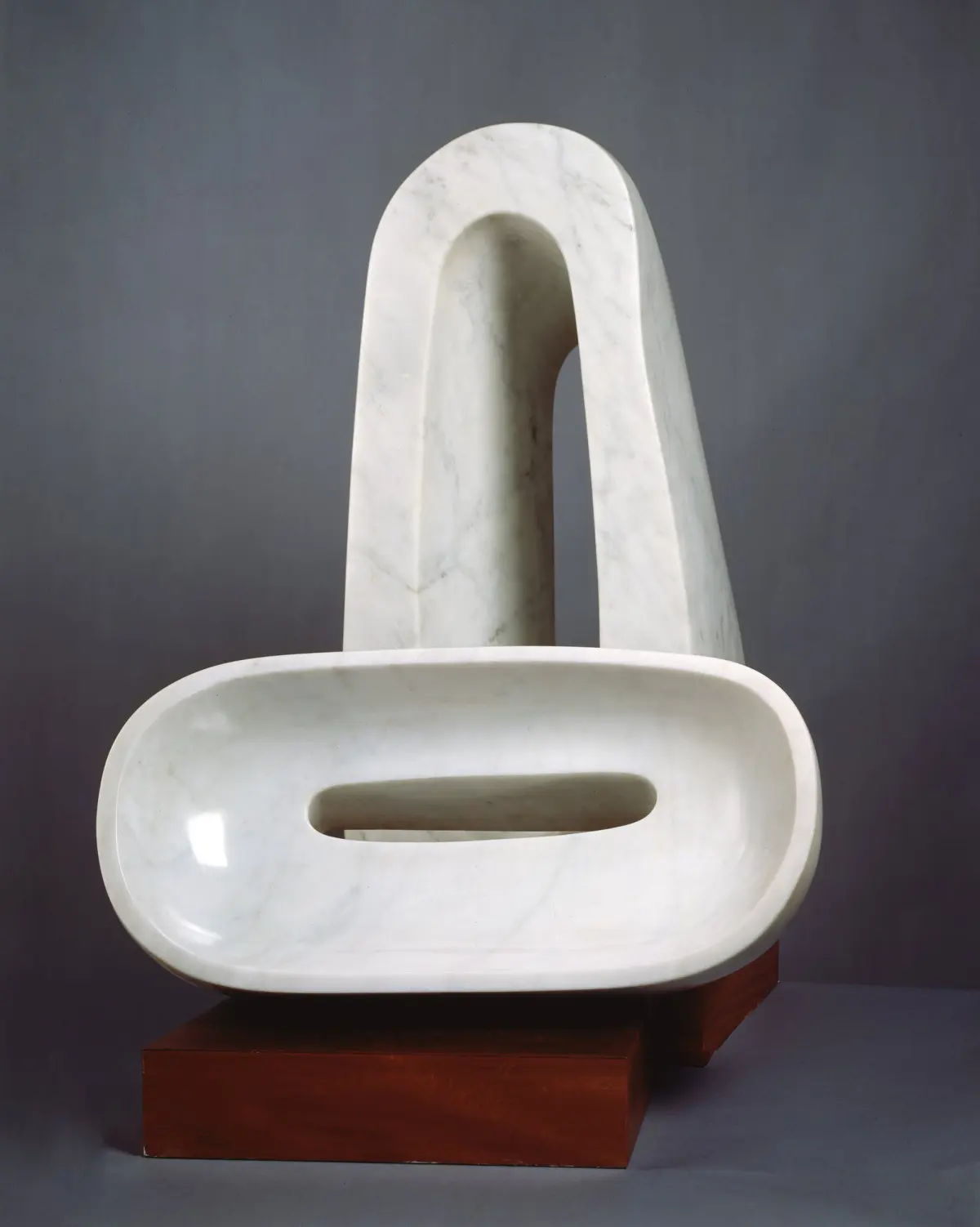
Dame Barbara Hepworth was a seminal 20th-century British sculptor renowned for pioneering modernism in abstract art. She is best known for introducing the "pierced form," incorporating holes into her sculptures to integrate space and landscape. Her work, characterized by organic shapes and smooth surfaces, profoundly influenced the development of international abstract sculpture.
On this page
Why is Barbara Hepworth famous in art history?
Barbara Hepworth occupies a central position in the history of modern art as one of the few women to achieve international acclaim during the mid-20th century. Alongside contemporaries like Henry Moore and Ben Nicholson, she helped transition British sculpture from traditional figurative representation toward radical abstraction. Her artistic philosophy was deeply rooted in the physical properties of her materials, whether stone, wood, or bronze. By stripping away unnecessary detail, she aimed to capture the essential spirit of human forms and natural landscapes.
Her reputation is largely built on her innovative approach to volume and void. Before Hepworth, sculpture was primarily viewed as a solid, impenetrable mass. By carving holes directly through her works, she forced the viewer to consider the surrounding environment as part of the sculpture itself. This technique, which she first explored in the early 1930s, transformed how artists interacted with negative space. Her legacy remains defined by this ability to harmonize the man-made object with the organic world, bridging the gap between internal emotional states and external geological forms.
How to identify a Barbara Hepworth sculpture
Identifying a Hepworth piece involves looking for specific formal characteristics that define her mature style. Her sculptures often feature smooth, polished surfaces that invite tactile engagement, though she also produced works with rough, textured finishes. Many of her pieces are abstract representations of the human figure, often referencing the landscape of Cornwall, where she lived for decades. If you are examining a work and notice a distinct hole or aperture that allows light and air to pass through the center of the mass, you are likely looking at a hallmark of her technique.
When observing her work, keep these visual cues in mind:
- Pierced forms: Holes that act as windows to the background.
- Organic silhouettes: Shapes that mimic pebbles, shells, or human torsos.
- Material honesty: Sculptures that highlight the natural grain of wood or the veins of marble.
- Stringing: The use of taut metal wires across voids to suggest tension and musicality.
- Minimalist titles: Names that often reference the sea, the sky, or specific Cornish locations.
What are the most important works by Barbara Hepworth?
Hepworth produced a vast body of work, but several pieces stand out as turning points in her career. "Pierced Form" (1931) is widely cited as one of the first instances where she successfully integrated a hole into a sculpture, marking a departure from traditional solid forms. Another iconic work is "Pelagos" (1946), a wood carving that uses stringing to evoke the rhythmic movement of waves and the curvature of the sea. Her large-scale bronze commissions, such as "Single Form" (1964) located at the United Nations headquarters in New York, demonstrate her ability to scale her intimate abstractions into monumental public art.
- "Pierced Form" (1931): The breakthrough piece that introduced the aperture.
- "Pelagos" (1946): A masterclass in using string to define internal space.
- "Single Form" (1964): A massive bronze tribute to Dag Hammarskjöld, showcasing her transition to public commissions.
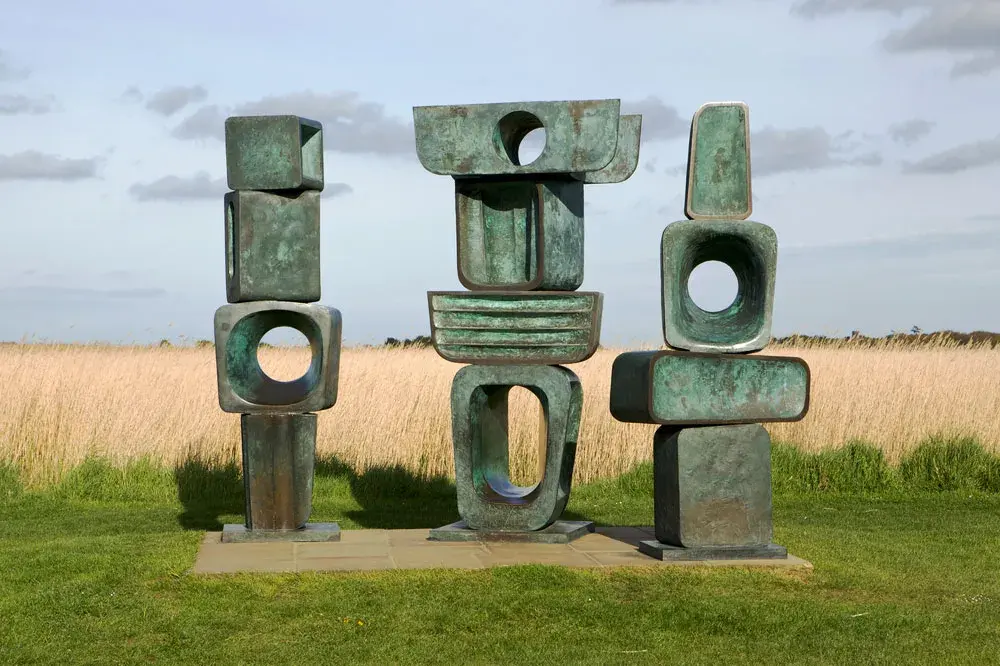
- "The Family of Man" (1970): A group of nine bronze figures that reflect her interest in human interconnectedness.
- "Four-Square (Walk Through)" (1966): A large geometric piece designed to be physically navigated by the viewer.
Where can you see Barbara Hepworth’s art today?
The most significant collection of her work is housed at the Barbara Hepworth Museum and Sculpture Garden in St Ives, Cornwall. This site was her home and studio from 1949 until her death in 1975, and it remains the best place to understand her creative process in situ. The garden features several of her large bronze sculptures displayed exactly as she intended, surrounded by the plants and coastal light that inspired her designs. Most of the works are arranged in the open air, allowing visitors to see how the sculptures change with the weather and the shifting sun.
Beyond St Ives, her work is held in major public collections worldwide. The Tate in London holds a comprehensive archive of her carvings and drawings, while institutions like the Museum of Modern Art in New York and the Hirshhorn Museum in Washington, D.C., display key examples of her mid-career output. If you are planning a visit, check the museum websites in advance, as many of her larger bronze pieces are frequently loaned for international exhibitions. Seeing these works in person is essential, as photographs often fail to convey the physical scale and the way the sculptures command the space around them.
Common mistakes when analyzing abstract sculpture
A common error when viewing Hepworth’s work is attempting to find a literal, representational meaning in every curve. Because her art is abstract, viewers often feel frustrated if they cannot identify a specific "thing" being depicted. Instead of searching for a direct likeness, focus on how the sculpture makes you feel or how the shape interacts with your own movement around it. Another mistake is ignoring the importance of the base or the surrounding environment. Hepworth often designed her sculptures to be viewed from multiple angles, and the way the work sits on the ground is as deliberate as the carving itself.
To better appreciate abstract sculpture, follow these guidelines:
- Avoid rushing: Walk slowly around the piece to see how the voids change shape from different perspectives.
- Consider the material: Ask yourself how the weight of stone or the warmth of wood changes your emotional reaction to the form.
- Contextualize the void: Pay attention to what you see through the holes; the background is an active participant in the artwork.
- Research the title: While abstract, her titles often provide a subtle clue to the inspiration, such as a specific geological feature or a personal memory.
- Don't overthink: Allow the sculpture to exist as a physical presence rather than a puzzle to be solved.
Key facts
- Dame Barbara Hepworth (1903–1975) was a pioneering English sculptor and a leading figure in the international modernist movement.
- She is world-renowned for introducing the "pierced" form, creating holes in her sculptures to integrate negative space and light into the artwork.
- Her preferred materials included bronze, wood, and stone, often polished to emphasize the organic, tactile qualities of the medium.
- She was a central member of the St Ives School in Cornwall, where the rugged coastal landscape heavily influenced her abstract style.
- Unlike many contemporaries, she often carved stone directly, a technique known as "direct carving" that prioritized the artist's physical connection to the material.
- To appreciate her work, look for how the sculpture frames the surrounding environment; avoid viewing them only from the front, as they are designed for 360-degree interaction.
The bottom line
Barbara Hepworth remains a titan of 20th-century art, celebrated for her revolutionary approach to abstract sculpture. By integrating negative space through her signature pierced forms, she transformed how we perceive the relationship between solid objects and the physical environment. Her legacy persists through her monumental bronzes and the serene, light-filled garden in St Ives, which continues to inspire artists and visitors to engage with nature.
People also ask
Why did Barbara Hepworth put holes in her sculptures?
Hepworth believed that the hole was as important as the solid material, allowing the viewer to see through the sculpture to the landscape beyond. This technique created a dynamic relationship between the object, the light, and the surrounding space.
What is the St Ives School?
This refers to a group of artists, including Hepworth and Ben Nicholson, who moved to the coastal town of St Ives, Cornwall, during World War II. The group became a hub for British modernism, focusing on abstraction inspired by the sea and cliffs.
Did Barbara Hepworth work with other artists?
Yes, she was married to the painter Ben Nicholson and worked alongside figures like Henry Moore. These artists shared a commitment to abstract art and often exhibited together in London and abroad.
Where can I see Barbara Hepworth’s sculptures today?
Her former studio and garden in St Ives, now the Barbara Hepworth Museum and Sculpture Garden, remains the best place to see her work in its intended setting. Major pieces are also held in the collections of the Tate and the United Nations headquarters in New York.
How did she create her large bronze sculptures?
While she began with direct carving in stone and wood, she later used the lost-wax casting process to create large-scale bronzes. This allowed her to produce monumental works that could withstand outdoor exposure in public parks and plazas.
What is the main difference between Hepworth and Henry Moore?
While both were pioneers of British modernism, Moore’s work often focused on the human figure and maternal themes. Hepworth leaned further toward pure abstraction, emphasizing geometric harmony and the interplay between internal and external spaces.
This answer was created with the help of AI research tools and reference sources. Spotted an error? Let us know — we correct mistakes quickly. See our editorial policy.