What is a veduta?
Short answer
A veduta is a highly detailed, large-scale painting, drawing, or print of a cityscape or some other vista. Originating in 17th-century Italy, these "view paintings" became immensely popular with European travelers on the Grand Tour. They served as artistic souvenirs, capturing the architectural grandeur and vibrant atmosphere of cities like Venice and Rome.
On this page
What is the history of veduta painting?
The term veduta is Italian for "view." While landscape painting existed for centuries, the genre emerged as a distinct professional category in the late 17th century, largely centered in Venice. Early masters like Gaspar van Wittel, known as Vanvitelli, began documenting urban environments with a new level of topographical precision. This shift moved art away from purely idealized, imaginary landscapes toward a more rigorous, observational approach that prioritized architectural accuracy.
By the 18th century, the genre reached its zenith, fueled by the rise of the Grand Tour. Wealthy young men from across Europe traveled to Italy to complete their education, and they sought high-quality depictions of the cities they visited. These paintings functioned as both prestigious status symbols and visual records of their travels. The demand was so significant that specialized workshops emerged, turning the production of these detailed cityscapes into a sophisticated, highly lucrative commercial enterprise.
Who were the most famous vedutisti?
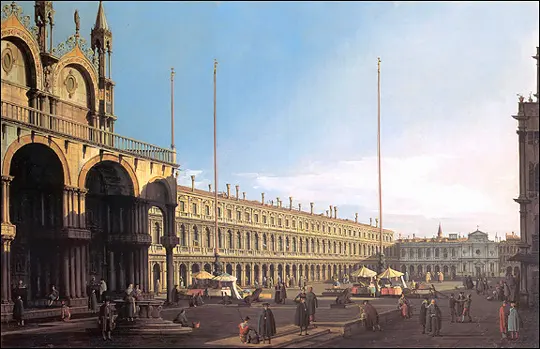
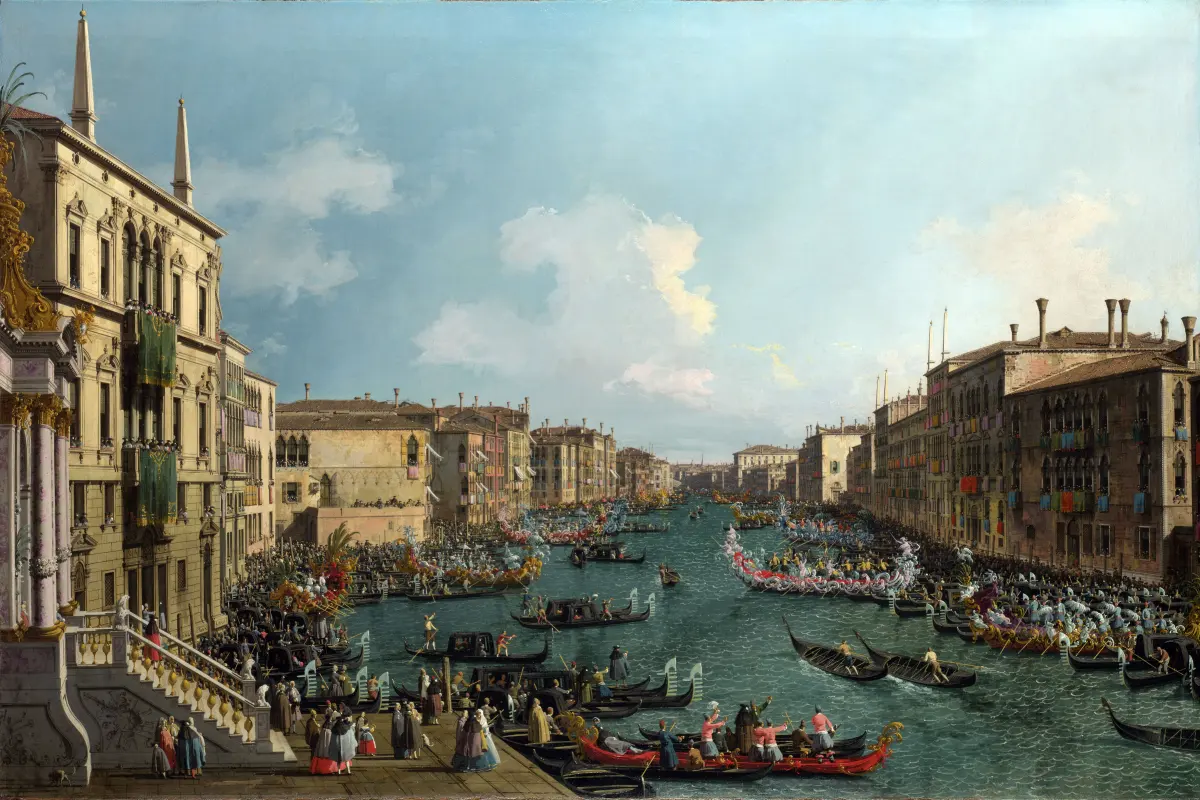
The most celebrated practitioner of the genre was Giovanni Antonio Canal, better known as Canaletto. His works are renowned for their luminous light, atmospheric effects, and meticulous attention to the structural details of Venetian palaces and canals. Canaletto often utilized a camera obscura, an early optical device, to ensure the geometric accuracy of his perspectives, which allowed him to achieve a level of realism that captivated his 18th-century audience.
Following in his footsteps was his nephew, Bernardo Bellotto, who expanded the scope of the veduta to cities such as Dresden, Vienna, and Warsaw. Bellotto’s style was even more precise and clinical than his uncle’s, often emphasizing the cold, majestic scale of urban architecture. Other notable artists who contributed to the genre include:
- Francesco Guardi, whose views were more impressionistic and focused on the flickering light of Venice.
- Michele Marieschi, who specialized in dramatic, sometimes slightly distorted perspectives.
- Giovanni Battista Piranesi, whose etchings of Roman ruins transformed the veduta into a medium for exploring historical nostalgia and architectural grandeur.
How to identify a veduta painting
Identifying a veduta requires an eye for architectural detail and spatial composition. These works are rarely abstract; instead, they function as panoramic documents of a specific time and place. When viewing a potential veduta, look for a low horizon line and a wide field of vision that encompasses major landmarks. The artist typically arranges the scene to guide the viewer’s eye through the architecture, utilizing linear perspective to create a sense of depth that feels almost three-dimensional.
Another hallmark is the inclusion of staffage, which refers to the small human figures added to the scene. These figures are not the primary subjects but are essential for providing a sense of scale and life to the urban environment. To verify if a painting fits the genre, check for:
- A recognizable urban setting, often featuring famous cathedrals, squares, or canals.
- High levels of detail in the stonework and ornamentation of buildings.
- A clear, logical light source that defines the shadows and depth of the cityscape.
- An emphasis on topographical accuracy rather than mythological or religious narrative.
Common mistakes when studying veduta art
One common mistake is assuming that all vedute are strictly realistic. While they appear photographic, artists frequently engaged in "capriccio," a technique where they would rearrange buildings or invent architectural elements to create a more pleasing or dramatic composition. Canaletto, for instance, often moved a church or tower to a different part of a square to improve the balance of his canvas. Treating these paintings as literal, unedited photographs of the past can lead to a misunderstanding of the artist's creative intent.
Another frequent error is failing to distinguish between the various mediums used for veduta production. While oil paintings are the most famous, the genre relied heavily on prints and etchings to reach a wider market. Collectors often purchased sets of engravings by Piranesi, which were just as influential as paintings in shaping the European perception of Roman antiquity. Neglecting the print tradition ignores the primary way that these images were disseminated and consumed by the public during the Enlightenment era.
Why veduta art remains important today
The legacy of the veduta is visible in modern photography and urban planning documentation. By establishing a standard for how cities are represented, these artists influenced how we perceive public space, grandeur, and civic identity. Their work provides historians with invaluable evidence regarding the appearance of European cities before the industrial transformations of the 19th and 20th centuries. The meticulous documentation found in these paintings allows us to track architectural changes, urban decay, and the restoration of historic monuments over several hundred years.
Furthermore, the genre serves as a bridge between art and science, demonstrating how optical technology can enhance human observation. The veduta reminds us that art has always been a tool for capturing the world as it is, while simultaneously reflecting the cultural values of the era. Whether through the vibrant colors of a Venetian canal or the stark, imposing ruins of the Roman Forum, these works continue to offer a profound connection to the past, grounding our modern urban experience in a rich, historical tradition of visual storytelling.
Key facts
- A veduta is a highly detailed, large-scale painting or print of a cityscape or some other vista.
- The term originates from the Italian word for "view" and flourished during the 18th century.
- Artists often used a camera obscura, an early optical device, to ensure precise architectural proportions.
- Canaletto is the most famous practitioner of the genre, known for his masterful depictions of Venice.
- These works served as the 18th-century equivalent of postcards for wealthy tourists on the Grand Tour.
- When viewing a veduta, look for the "capriccio," an imaginary or rearranged architectural scene, to distinguish it from a strictly realistic view.
The bottom line
The veduta represents a pinnacle of 18th-century topographical art, blending technical precision with atmospheric beauty. By documenting the grandeur of European cities for travelers, artists like Canaletto transformed architectural observation into a sophisticated genre. Whether realistic or subtly imagined, these views offer a window into history, capturing the light, life, and structural elegance of a bygone era through meticulous draftsmanship and careful, studied composition.
People also ask
What is the difference between a veduta and a landscape painting?
A veduta focuses specifically on urban environments, architecture, and identifiable city landmarks. In contrast, landscape painting primarily emphasizes natural scenery like forests, mountains, or rural fields.
Did artists paint these scenes entirely from memory?
Most vedute were created using a combination of on-site sketching and studio work. Artists often made quick drawings outdoors and then refined the details and lighting back in their studios.
Why were vedute so popular in the 1700s?
They became essential souvenirs for aristocratic travelers completing the Grand Tour of Europe. Wealthy visitors wanted tangible, accurate reminders of the cities they visited, such as Rome, Venice, or London.
Are all vedute strictly realistic?
No, artists frequently employed "veduta ideata," or imaginary views. They would often rearrange buildings or insert monuments from different parts of a city into a single frame for aesthetic balance.
What materials were commonly used to create these works?
Most vedute were oil paintings on canvas, though etchings and engravings were also very common. Printmakers like Giovanni Battista Piranesi used copper plates to produce mass-market versions of these views.
How can I identify a genuine 18th-century veduta?
Look for the characteristic crisp, linear perspective and the inclusion of small, anecdotal figures known as "staffage." These figures provide a sense of scale and daily life, which is a hallmark of the style.
This answer was created with the help of AI research tools and reference sources. Spotted an error? Let us know — we correct mistakes quickly. See our editorial policy.