Why is Michelangelo's David so famous?
Short answer
Michelangelo’s David is world-renowned for its unprecedented technical mastery and profound psychological depth. Completed in 1504, the 17-foot marble statue revolutionized Renaissance art by depicting the biblical hero in a moment of intense, quiet anticipation rather than post-battle triumph, establishing a new standard for human anatomy, emotional realism, and monumental scale.
On this page
Why is the statue so famous?
The fame of David stems from Michelangelo’s ability to transform a massive, flawed block of Carrara marble into a lifelike figure of immense power. Before Michelangelo began work in 1501, two other sculptors had abandoned the block, deeming it too narrow and prone to breakage. Michelangelo’s success in carving such a delicate, perfectly proportioned figure from this "difficult" stone cemented his reputation as the greatest sculptor of his age.
Beyond its technical achievement, the statue became a potent political symbol for the Republic of Florence. Positioned outside the Palazzo Vecchio, David represented the city’s defiance against larger, more powerful enemies. His intense gaze toward the south—the direction of Florence’s rivals—turned a religious subject into a secular emblem of civic liberty and courage. This dual identity as a masterpiece of art and a symbol of political resilience has kept the statue at the center of cultural discourse for over five centuries.
How to appreciate the anatomical details
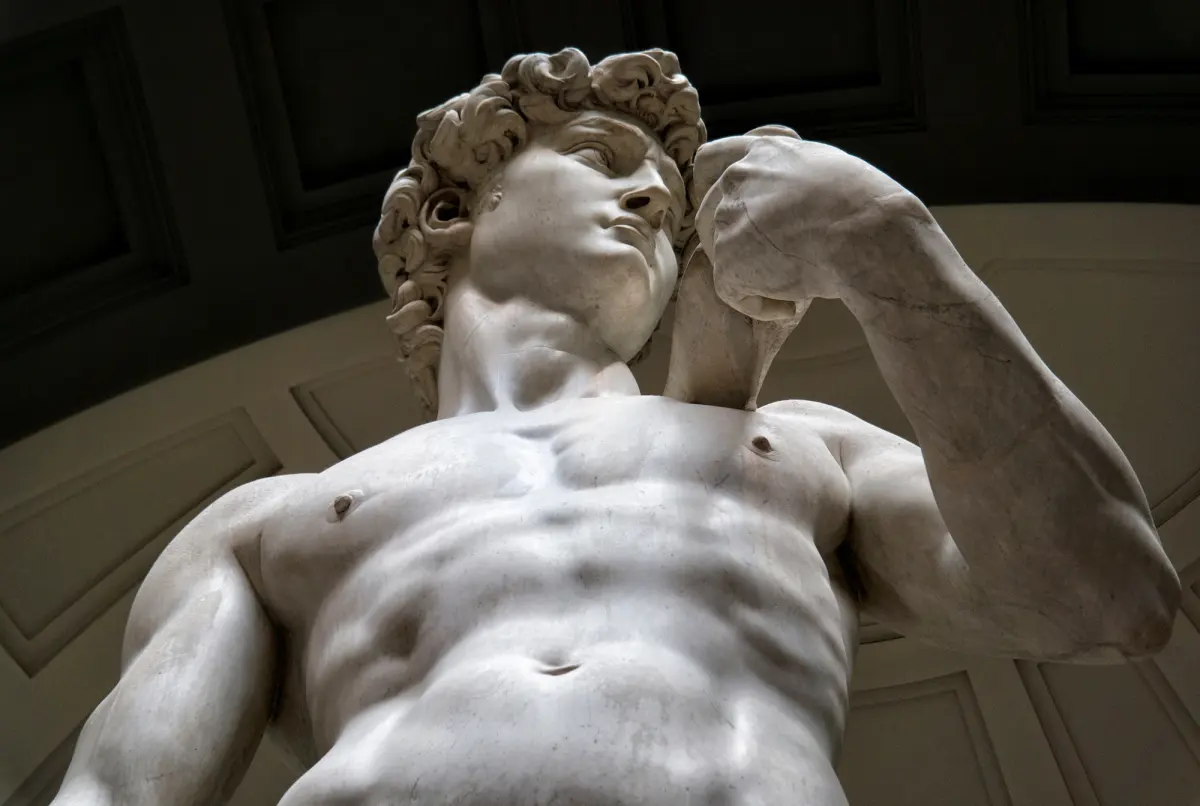
Michelangelo’s deep study of human anatomy is visible in every inch of the marble. He captured the tension of the muscles, the protrusion of the veins in the hands, and the subtle shift in weight known as contrapposto. This stance, where the figure puts most of its weight on one leg, creates a natural, dynamic curve in the body that makes the stone appear as if it could move at any moment.
To truly appreciate the craftsmanship, consider these specific features:
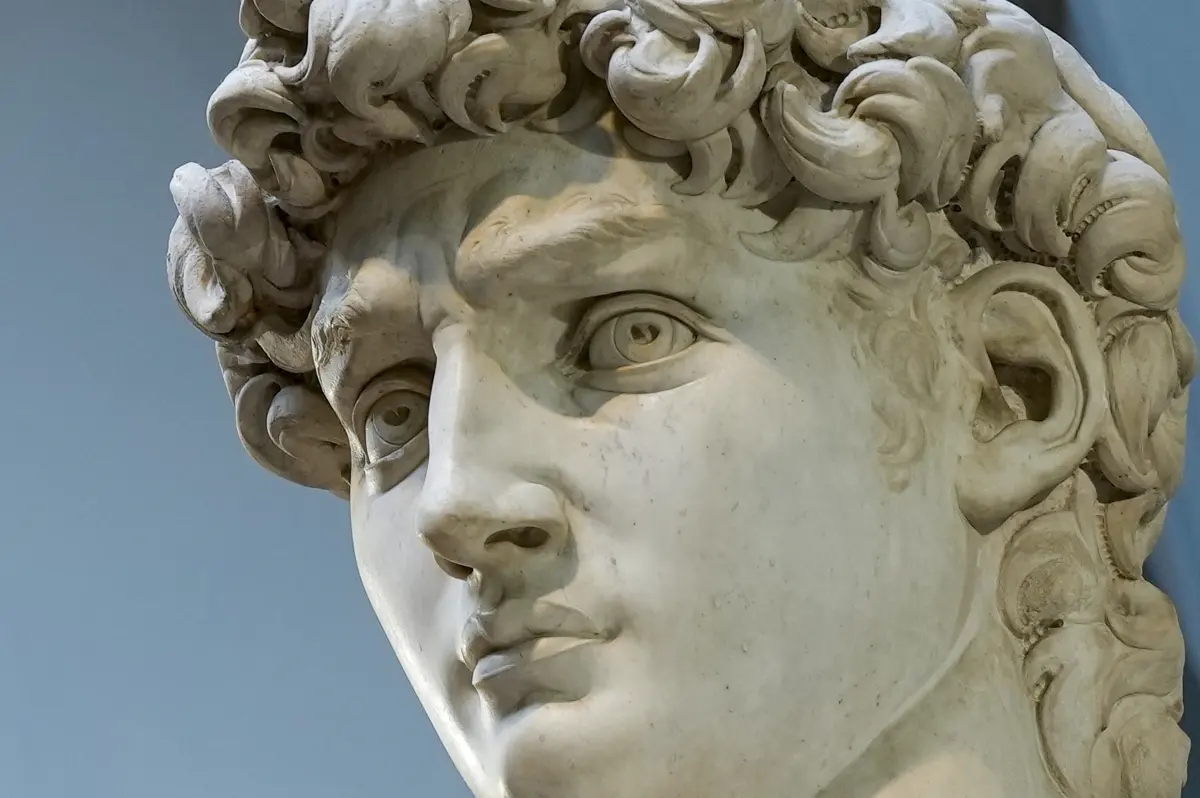
- The eyes: Michelangelo carved the pupils as heart-shaped indentations to catch the light, giving the statue an intense, piercing stare.
- The hands: The right hand is disproportionately large, a deliberate choice to emphasize the "hand of God" or the strength required to fell Goliath.
- The hair: The curls are deeply undercut, creating dramatic shadows that add texture and realism to the head.
- The torso: The rib cage and abdominal muscles are rendered with clinical accuracy, reflecting Michelangelo’s experience dissecting cadavers.
Where can you see the statue today?
While the original statue stood in the Piazza della Signoria for nearly 400 years, it was moved to the Galleria dell’Accademia in 1873 to protect it from environmental damage and vandalism. A replica now stands in the original outdoor location, but the authentic marble masterpiece is housed in a purpose-built rotunda designed to showcase its scale. Visitors from across the globe travel to Florence specifically to stand beneath the figure, which towers over 17 feet tall, including its base.
If you are planning a visit to the Galleria dell’Accademia, keep these tips in mind:
- Book your tickets weeks or months in advance, as time slots sell out quickly.
- Visit during the early morning or late afternoon to avoid the peak crowds that gather midday.
- Walk around the entire perimeter of the statue to observe how the anatomy shifts from the front to the back.
- Use the audio guide provided by the museum to understand the specific historical context of the marble block.
Common mistakes when viewing David
Many visitors make the mistake of rushing through the gallery or viewing the statue only from the front. Because Michelangelo designed the figure to be viewed from multiple angles, standing only in the main walkway misses the subtle details of the back, such as the tension in the shoulder blades and the spine. Another frequent error is failing to notice the scale of the statue; because it is so well-proportioned, it is easy to forget that the figure is nearly three times the size of an average human.
Avoid these common pitfalls to ensure a better experience:
- Do not assume the statue is small; its monumental size is its most striking physical feature.
- Avoid taking flash photography, as it is prohibited and disrupts the experience for others.
- Do not ignore the other unfinished "Prisoner" sculptures in the hallway leading to David, as they offer vital insight into Michelangelo’s carving process.
- Do not rely solely on digital images, as they fail to convey the way light plays across the polished marble surface.
What makes the composition unique?
Most Renaissance artists depicted David after he had killed Goliath, often showing him standing over the severed head of the giant. Michelangelo chose to depict the moment before the fight, showing the hero deep in thought and calculating his next move. This choice shifted the focus from the act of violence to the internal state of the hero, highlighting the intellectual and moral strength required to face a superior opponent.
This psychological focus was a departure from tradition and invited the viewer to empathize with the figure's anxiety and resolve. By choosing this moment of stillness, Michelangelo created a timeless portrait of human agency. The statue remains a masterpiece because it captures a universal experience: the quiet, internal preparation before a significant challenge. By focusing on the mind rather than the weapon, Michelangelo ensured that David would remain relevant to every generation that values courage and human potential.
Key facts
- Michelangelo sculpted the David from a single, massive block of Carrara marble between 1501 and 1504.
- The statue stands 17 feet tall, making it significantly larger than life-size to emphasize the hero's monumental status.
- Unlike traditional depictions that show David after the battle, Michelangelo portrays him in the tense moment of anticipation before fighting Goliath.
- The sculpture was originally intended to be placed high atop the Florence Cathedral, which explains the slightly oversized head and hands designed for perspective.
- It is currently housed in the Galleria dell'Accademia in Florence, where it attracts over 1.5 million visitors annually.
- When viewing the statue, focus on the intricate details of the veins in the hands and the intense, focused expression in the eyes.
The bottom line
Michelangelo’s David remains iconic because it perfectly balances technical precision with profound psychological tension. By capturing the hero in a moment of quiet concentration rather than active combat, the artist elevated sculpture to a new level of human storytelling. Its massive scale, historical significance as a symbol of Florentine liberty, and masterful anatomical detail ensure its enduring status as the definitive achievement of the Italian Renaissance.
People also ask
Why is the statue's head disproportionately large?
Michelangelo intentionally carved the head and right hand larger than the rest of the body to compensate for the viewer's perspective. He originally designed the statue to be placed on a cathedral roofline, where observers looking up from the ground would see the proportions as balanced.
What material was used to create the David?
The statue is carved from a single block of Carrara marble, a high-quality white stone sourced from the mountains of Tuscany. This specific block had been abandoned by two previous sculptors because it was considered too narrow and prone to cracking.
Is the David a religious or political symbol?
While the subject is a biblical figure, the statue became an important political symbol for the Republic of Florence. It represented the city's defiance and independence against more powerful neighboring states and the ruling Medici family.
How long did it take to complete the sculpture?
Michelangelo worked on the David for approximately three years, beginning his labor in September 1501. He officially unveiled the finished masterpiece to the public on September 8, 1504, in the Piazza della Signoria.
Why is the statue considered a masterpiece of the Renaissance?
The work exemplifies the High Renaissance ideal of terribilità, or an intense emotional power and psychological depth. Michelangelo’s mastery of human anatomy and his ability to transform cold stone into a lifelike, muscular figure set a new standard for Western art.
Can visitors touch the statue?
No, touching the marble is strictly prohibited to prevent damage from oils and skin contact. Visitors must remain behind protective barriers, though the open layout of the Accademia allows for excellent 360-degree viewing.
This answer was created with the help of AI research tools and reference sources. Spotted an error? Let us know — we correct mistakes quickly. See our editorial policy.