What techniques did Michelangelo use?
Short answer
Michelangelo primarily utilized the buon fresco technique for painting, requiring rapid execution on wet plaster. In sculpture, he employed the "subtractive" method, carving directly into marble blocks without preliminary models. His approach emphasized disegno, the intellectual design and anatomical precision of the human form, achieved through rigorous study of cadavers.
On this page
How did Michelangelo paint frescoes?
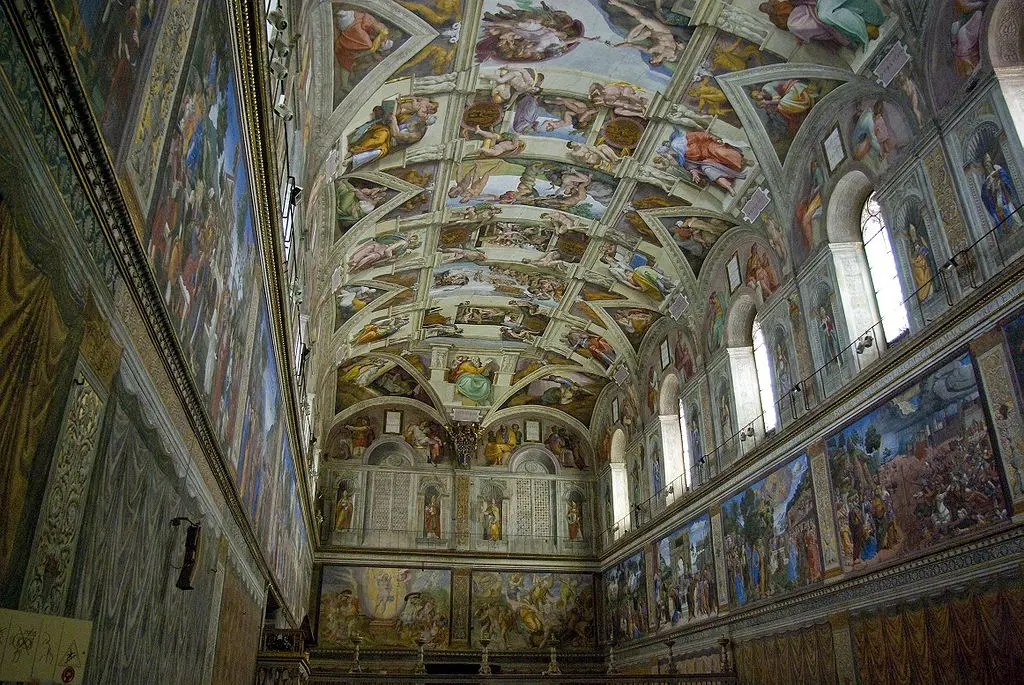
Michelangelo’s work on the Sistine Chapel ceiling utilized the buon fresco technique, which involves applying pigments to wet lime plaster. As the plaster dries, a chemical reaction bonds the pigment into the wall, making the image permanent. He had to work in small sections called giornate, or "a day’s work," before the plaster dried. If the plaster set too early, he could not blend colors or make corrections, necessitating precise planning.
To achieve his iconic results, he followed a rigorous sequence:
- Prepare the wall with a rough layer of plaster called the arriccio.
- Transfer a full-scale drawing, known as a cartoon, onto the wall using charcoal or pouncing.
- Apply the final, smooth layer of plaster, the intonaco, only to the area he could finish that day.
- Paint rapidly while the surface remained damp to ensure color absorption.
Common mistakes during this process included applying too much pigment, which could cause flaking, or working too slowly, which resulted in visible seams between the daily sections. Michelangelo often hid these seams within the contours of his figures to maintain a seamless appearance across the vast ceiling.
How to sculpt marble like Michelangelo?
Michelangelo famously viewed sculpture as a process of liberating a figure trapped within the stone. He used the subtractive method, starting from the front of the block and working inward, rather than building up a form as in clay modeling. He relied on a deep understanding of the stone’s grain to prevent cracks and fractures during the intense physical labor of carving.
He utilized a specific set of iron tools to refine the marble:
- The subbia (point chisel) to remove large chunks of excess stone.
- The gradina (toothed chisel) to refine the shape and create texture.
- The gradina or flat chisel to smooth the surface.
- Abrasive stones and pumice for the final polish.
A frequent error for beginners is removing too much material too quickly, which is irreversible. Michelangelo avoided this by constantly rotating the block and checking his proportions from multiple angles. He also used a "water-level" technique, submerging a block in water to see how the figure would emerge as the water level dropped, though this remains a debated historical theory.

Why did Michelangelo emphasize anatomy?
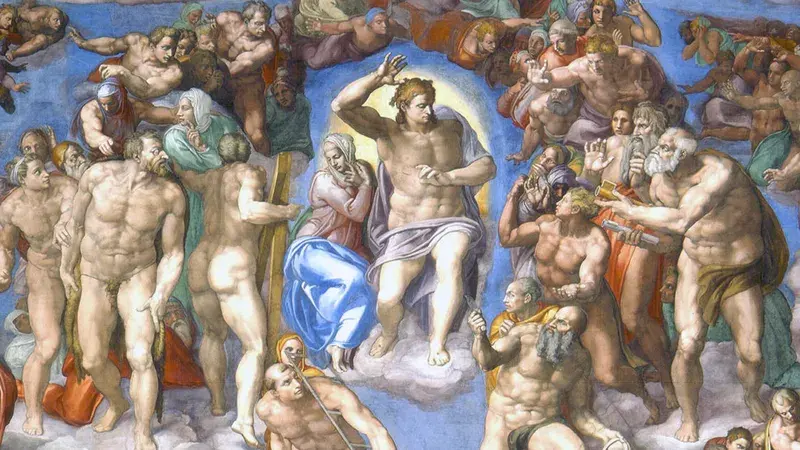
Michelangelo’s mastery of the human form was rooted in his extensive study of human anatomy. Starting in his youth, he gained permission to dissect cadavers at the church of Santo Spirito in Florence. This practical experience allowed him to understand how muscles, tendons, and bones interacted beneath the skin, giving his figures a sense of weight and kinetic energy.
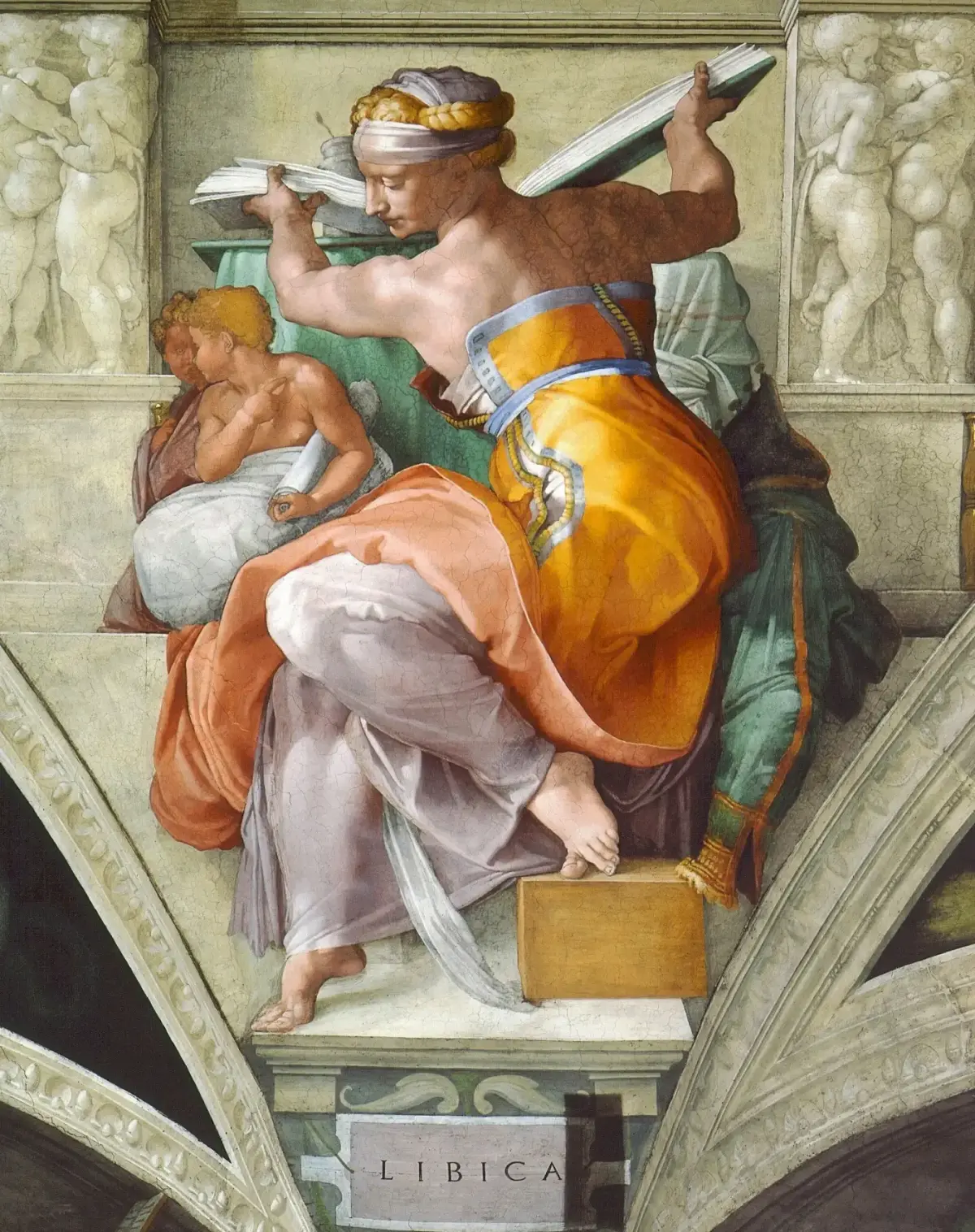
His focus on anatomy led to the development of figura serpentinata, a twisting, serpentine pose that suggests movement even in static figures. By exaggerating certain muscle groups, he imbued his subjects with a sense of "terribilità," or emotional intensity. He believed that the body was the window to the soul, and he used anatomical distortion to convey psychological depth rather than mere biological accuracy.
How to use the disegno technique?
Disegno refers to the intellectual design and the primary importance of line in Italian Renaissance art. For Michelangelo, this meant that the drawing was the foundation of all artistic creation. He spent months creating detailed preparatory sketches before touching a canvas or a block of marble. These drawings served as the blueprint for his complex compositions.
To practice this method, focus on these steps:
- Begin with a clear conceptual sketch of the figure’s posture and movement.
- Use cross-hatching to define shadows and volume, creating a three-dimensional effect on a two-dimensional surface.
- Refine the outlines to emphasize the tension and grace of the limbs.
- Study the interaction of light on the body to determine where the highlights should fall.
The common mistake here is focusing on detail before establishing the structural integrity of the pose. Michelangelo always prioritized the overall balance and weight distribution of the figure before adding refined features like facial expressions or drapery folds.
How to achieve realistic textures in art?
Michelangelo achieved realistic textures by varying his tool pressure and the finish of his materials. In his sculptures, he often left some areas rougher than others to create a contrast between the skin of the figure and the surrounding environment. This technique, known as non-finito, draws the viewer’s eye toward the polished, highly detailed focal points of the work.
In his paintings, he used subtle gradations of color, known as cangiante, to represent light and shadow on fabric. Instead of using black to darken a color, he would shift to a lighter or more vibrant hue to suggest the way light hits a fold. This creates a luminous effect that makes the drapery appear heavy and voluminous. By mastering these physical and visual techniques, Michelangelo ensured that his work remained both grounded in reality and elevated by artistic genius.
Key facts
- Michelangelo utilized the cangiante technique, using contrasting, unnatural colors to model form in his frescoes.
- When sculpting, he employed the "subtractive" method, carving directly into marble blocks without the use of full-scale clay models.
- He practiced disegno, prioritizing the human figure’s anatomical structure and muscular tension as the foundation of his compositions.
- In fresco painting, he used the buon fresco method, applying pigments to wet lime plaster so the paint became part of the wall.
- He often used a drill to create deep undercuts in his sculptures, adding dramatic shadow and texture to hair and drapery.
- To avoid errors in marble, he used a "pointing" technique, measuring points from a small wax model to transfer proportions to the stone.
The bottom line
Michelangelo’s mastery stemmed from his relentless dedication to anatomical precision and his technical versatility across multiple mediums. Whether carving marble or painting frescoes, he prioritized the human form, using light, shadow, and deliberate structural planning to create enduring masterpieces. His ability to blend rigorous scientific observation with profound emotional expression remains the defining characteristic of his legacy, setting a standard for artistic excellence that continues to influence creators today.
People also ask
Did Michelangelo use assistants for his work?
While he famously claimed to work alone, he employed assistants for the Sistine Chapel ceiling to grind pigments and prepare the plaster. However, he insisted on painting the primary figures himself to ensure stylistic consistency.
What was the most common mistake Michelangelo avoided in sculpture?
He avoided the "shallow" carving common in his era by working deep into the marble. By removing large amounts of stone, he gave his figures a sense of weight and three-dimensional presence.
How did he achieve such realistic skin tones in his paintings?
He used complex layering techniques, building up translucent glazes over an earthy underpainting. This provided a luminous, lifelike quality that mimicked the depth of human skin.
Why did he leave some of his sculptures unfinished?
Michelangelo often believed the figure was already trapped inside the stone and he was merely "liberating" it. If he felt the stone was flawed or the vision was complete, he stopped working.
What tools did he primarily use for marble carving?
He used a subbia (pointed chisel) for roughing out the shape, a gradina (toothed chisel) for refining surfaces, and a rasp for final smoothing. These tools allowed him to control every detail of the anatomy.
How did he ensure his frescoes lasted for centuries?
He was meticulous about the quality of his lime and sand mixture. By applying paint while the plaster was still chemically active, he ensured the pigments bonded permanently with the surface.
This answer was created with the help of AI research tools and reference sources. Spotted an error? Let us know — we correct mistakes quickly. See our editorial policy.