What is opera?
Short answer
Opera is a dramatic art form where singers and musicians perform a theatrical work combining a libretto, or text, with a musical score. Originating in late 16th-century Italy, it integrates singing, orchestral accompaniment, acting, scenery, and costumes to convey complex narratives, typically performed in an opera house without the use of microphones.

On this page
How does opera work as an art form?
Opera functions as a "total work of art," a concept famously championed by Richard Wagner as Gesamtkunstwerk. At its core, it relies on the human voice to express heightened emotional states that spoken dialogue cannot capture. The singers are supported by an orchestra, which provides the harmonic foundation and atmospheric color for the drama. Unlike musical theater, opera is traditionally performed entirely through song, ranging from recitative—speech-like singing that advances the plot—to arias, which are solo moments where a character reflects on their inner feelings.
The production involves a massive collaborative effort between the composer, who writes the music, and the librettist, who writes the text. Behind the scenes, directors, set designers, and costume experts work to translate the score into a visual experience. Because the performers must project their voices over a full orchestra in large halls, they undergo years of rigorous vocal training to develop the power and resonance necessary to be heard clearly without amplification.
Why is opera performed in different languages?
Opera emerged in Florence around 1597, and for centuries, Italian remained the dominant language of the medium. Because many foundational works by composers like Giuseppe Verdi, Giacomo Puccini, and Gioachino Rossini were written in Italian, the language became synonymous with the operatic tradition. However, as the form spread across Europe, composers began writing in their native tongues to make the stories more accessible to local audiences. This led to the development of distinct national styles, such as the German Singspiel and the French Grand Opéra.
Today, opera houses typically perform works in their original language to preserve the specific rhythmic and phonetic nuances intended by the composer. To ensure the audience understands the narrative, modern theaters use "supertitles"—electronic translations projected above the stage. This allows viewers to follow the plot in real time while still enjoying the authentic sound of the original language.
Best operas for beginners to watch
If you are new to the medium, it is helpful to start with works that feature well-known melodies and straightforward plots. Many newcomers find it easier to connect with operas that are shorter in length or grounded in realistic human experiences, a style known as verismo. When selecting your first performance, consider the following recommendations:
- La Bohème by Giacomo Puccini: A heart-wrenching story about young artists living in Paris.
- The Magic Flute by Wolfgang Amadeus Mozart: A fantastical fairy tale with some of the most famous melodies in history.
- Carmen by Georges Bizet: A dramatic tale of passion and jealousy set in Spain, featuring iconic musical themes.
- The Barber of Seville by Gioachino Rossini: A fast-paced, hilarious comedy that is perfect for those who enjoy wit and vocal virtuosity.
How to prepare for your first opera visit
Attending an opera can feel intimidating, but a little preparation goes a long way toward enhancing the experience. You do not need to be an expert to appreciate the artistry on display; you simply need to be open to the emotional scale of the performance. Follow these steps to ensure a smooth first visit:
- Research the plot: Read a summary of the story beforehand so you are not confused by the shifting scenes.
- Listen to highlights: Find a playlist of the opera’s most famous arias to familiarize yourself with the musical themes.
- Check the dress code: While formal wear is common at gala openings, most modern opera houses have no strict dress code, so choose something comfortable.
- Arrive early: Give yourself time to find your seat and read the program notes, which often contain helpful context about the production.
Common mistakes when watching opera
One common mistake is expecting the performance to be realistic in the way a film is. Opera is inherently stylized; characters often express their emotions through long, repetitive musical passages that pause the action. If you try to analyze the plot with the same logic as a modern thriller, you may find the pacing frustrating. Instead, focus on the emotional truth being conveyed through the music and the singer's performance.
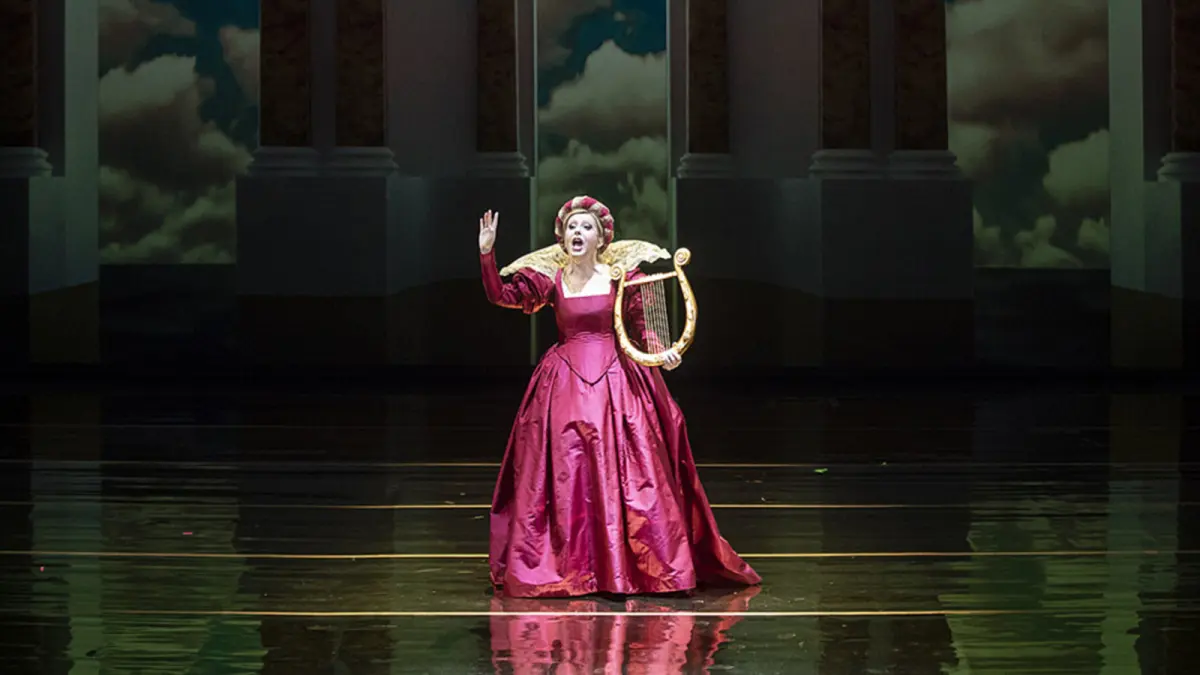
Another error is failing to engage with the visual elements of the production. Modern directors often use "regietheater," or conceptual staging, which might place a classic story in a contemporary setting. Do not be surprised if you see characters in modern dress or abstract sets; these choices are intended to highlight universal themes rather than historical accuracy. Finally, avoid the mistake of worrying about when to clap. While tradition dictates waiting for the end of an aria, if you are moved by a performance, it is perfectly acceptable to applaud during the natural pauses in the music.
Key facts
- Opera is a staged drama set to music, where the entire text is sung rather than spoken.
- The art form originated in Italy around 1600, with Jacopo Peri’s Dafne often cited as the first opera.
- A standard opera performance typically features a full orchestra, vocal soloists, a chorus, and elaborate sets.
- The term "libretto" refers to the written text or script of the opera, while the "score" contains the musical notation.
- Common vocal types include soprano, mezzo-soprano, tenor, baritone, and bass, categorized by their range and timbre.
- When attending an opera, avoid talking during the performance and wait for the final notes to fade before applauding.
The bottom line
Opera is a rich, multidisciplinary art form that blends music, theater, dance, and visual arts into a single performance. By prioritizing the emotional depth of the human voice, it creates an immersive experience that transcends language barriers. Whether you are a newcomer or a seasoned enthusiast, opera offers a profound exploration of human storytelling through the power of melody, harmony, and dramatic staging.
People also ask
What is the difference between an opera and a musical?
Operas are typically sung throughout with little to no spoken dialogue, whereas musicals rely heavily on spoken scenes interspersed with songs. Furthermore, opera singers generally perform without amplification, relying on vocal technique to fill the theater.
Do I need to understand a foreign language to enjoy an opera?
No, most modern opera houses provide "surtitles," which are translations projected on a screen above the stage. Reading these helps you follow the plot while listening to the music.
What is an aria?
An aria is a self-contained piece for a solo voice that reflects on a character's emotions or thoughts. It is often the highlight of an opera where the singer demonstrates their technical skill and expressive power.
How long does an average opera last?
Operas vary significantly in length, ranging from brief one-act pieces of 60 minutes to epic works by Richard Wagner that can last over four hours. Most standard repertoire operas run between two and three hours including intermissions.
What should I wear to an opera?
Modern dress codes are generally casual, though many attendees enjoy dressing up for the occasion. There is no strict requirement for formal attire unless you are attending a specific gala or opening night.
Why do opera singers use such intense vibrato?
Vibrato is a natural oscillation in pitch that adds warmth and resonance to the voice. It allows the singer to project their sound over a large orchestra without straining their vocal cords.
This answer was created with the help of AI research tools and reference sources. Spotted an error? Let us know — we correct mistakes quickly. See our editorial policy.