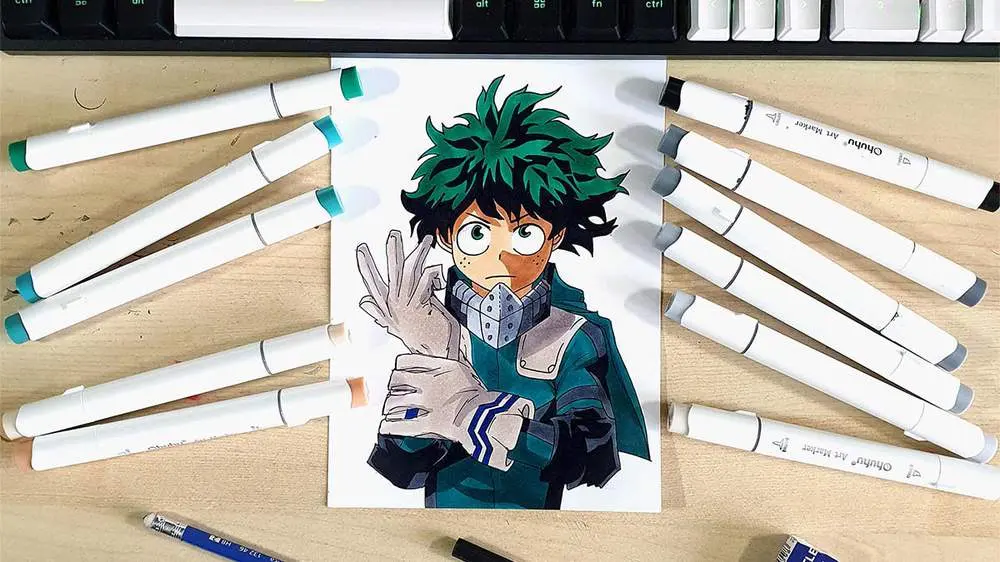
How do you find your art style?
Short answer
Finding an art style is the process of synthesizing your technical skills, personal interests, and repeated visual choices into a cohesive aesthetic. It emerges naturally through consistent practice and experimentation rather than deliberate invention. By analyzing your past work and embracing your unique preferences, you gradually refine a signature visual language.
On this page
How to discover your personal art style
Developing a style is not about choosing a look from a catalog, but rather about identifying the recurring patterns in your work. Start by gathering your past drawings or paintings and looking for common threads. You might notice a preference for specific color palettes, a particular way of handling line weight, or a tendency to focus on certain subjects like architecture or anatomy. This retrospective analysis acts as a mirror, showing you what you are naturally drawn to when you are not overthinking your process.
Once you identify these patterns, lean into them intentionally. If you find that you consistently use high-contrast lighting, practice that technique until it becomes your default. The goal is to narrow your focus until your work feels like a natural extension of your personality. Remember that style is a cumulative result of thousands of small decisions made during the creative process, so do not rush the evolution of your aesthetic.
How long does it take to find an art style
There is no fixed timeline for finding a style, as it depends entirely on the volume of work you produce and your willingness to experiment. Many professional artists spend years or even decades refining their visual voice. It is helpful to think of style as a moving target that evolves as you gain new technical skills and life experiences. Expect your work to look different every few years, as this is a sign of growth rather than a lack of direction.
To accelerate the process, focus on quantity over perfection. By producing a high volume of work, you provide yourself with more data to analyze. Consider these milestones in the development journey:
- The Imitation Phase: You copy masters to learn techniques.
- The Synthesis Phase: You combine influences from multiple sources.
- The Refinement Phase: You discard elements that do not feel authentic.
- The Signature Phase: Your work becomes instantly recognizable to others.
How to use inspiration without copying
Looking at the work of others is essential for growth, but it can lead to mimicry if not managed correctly. To avoid simply copying, analyze the "why" behind an artist's style rather than the "what." Instead of tracing a specific character design, ask yourself why the artist chose that specific color scheme or brush texture. By deconstructing the underlying principles, you can apply those concepts to your own subject matter, ensuring the final result remains uniquely yours.
A practical method to synthesize inspiration is the "three-influence rule." Select three artists you admire, but ensure they work in different mediums or genres. For example, you might combine the lighting style of a Renaissance painter, the line quality of a Japanese woodblock print, and the color theory of a modern graphic designer. By blending these disparate influences, you create something new that cannot be easily attributed to a single source.
Common mistakes when searching for a style
The most frequent error artists make is forcing a style before they have mastered the fundamentals. If you try to adopt a minimalist or abstract style without understanding anatomy, perspective, or color theory, your work may look unpolished rather than intentional. Style should be a tool that highlights your strengths, not a mask used to hide a lack of technical proficiency. Spend time building a strong foundation of skills first, as this will give you the freedom to break rules effectively later.
Another common mistake is becoming too rigid too early. Many artists feel pressured to make every piece look identical to build a "brand," which can stifle creativity and lead to burnout. Avoid these traps:
- Limiting your subject matter before you know what you enjoy.
- Ignoring your own intuition in favor of current social media trends.
- Abandoning a technique too early because it did not look perfect on the first try.
- Comparing your early, experimental work to the polished portfolios of veteran professionals.
Why your style changes over time
Your art style is not a permanent destination but a reflection of your current state of mind and skill level. As you encounter new environments, learn different software, or experience life changes, your artistic output will naturally shift. This fluidity is a positive trait, as it prevents your work from becoming stagnant or repetitive. Embracing change allows you to stay engaged with your craft, ensuring that your art remains a genuine expression of who you are at any given moment.
Do not fear the transition periods where your work feels inconsistent. These phases often precede a significant leap in quality or a new discovery in your creative process. Keep a sketchbook of your experiments so you can look back and see how your preferences have shifted over time. By accepting that your style will continue to evolve throughout your career, you remove the pressure to find a "final" look, allowing you to focus on the joy of making art.
Key facts
- An art style is the consistent combination of subject matter, color palette, and technical execution that makes an artist's work recognizable.
- Most professional artists develop their signature style after producing hundreds of sketches and completing dozens of finished pieces.
- Copying the techniques of masters like Vincent van Gogh or Claude Monet is a legitimate way to learn, provided you eventually synthesize these influences.
- Limiting your color palette to three or four primary colors forces you to focus on composition and value rather than relying on complex hues.
- Style is often a byproduct of your limitations; embracing the specific way your hand moves or your preference for certain brushes creates unique character.
- Consistent daily practice for at least 30 minutes is more effective for stylistic growth than sporadic, long sessions.
The bottom line
Finding your art style is not a sudden epiphany but a gradual accumulation of your technical choices and personal preferences. By consistently creating work, analyzing your favorite techniques, and embracing your natural limitations, you will naturally develop a visual signature. Focus on the process of making art rather than the end result, and your unique artistic voice will emerge through the repetition of your daily practice.
People also ask
Does having a style mean I can only draw one thing?
No, a style is a visual language rather than a restriction on subject matter. You can apply the same stylistic approach to landscapes, portraits, and abstract concepts simultaneously.
How long does it take to find a personal style?
There is no set timeline, but most artists begin to see a cohesive thread in their work after two to three years of consistent practice. It is an evolutionary process rather than a destination you reach overnight.
Should I worry about my style being "marketable"?
Focusing on marketability too early often stifles creativity and leads to generic work. Prioritize personal expression first, as authenticity is what ultimately resonates with audiences and collectors.
Can I have more than one art style?
Yes, many professional illustrators maintain different styles for different clients or mediums. However, most artists have a "base" style that reflects their natural instincts and personal preferences.
What if I don't like my current style?
Styles are not permanent, and it is healthy to pivot as your skills and interests change. If you feel stuck, try switching your primary medium, such as moving from digital tablets to oil paints.
Is it bad to be influenced by other artists?
Influence is an essential part of artistic development, as every style is a remix of previous inspirations. The goal is to absorb these influences until they become an unconscious part of your own unique process.
This answer was created with the help of AI research tools and reference sources. Spotted an error? Let us know — we correct mistakes quickly. See our editorial policy.