What art style did Pablo Picasso use?
Short answer
Pablo Picasso did not use a single art style; he was a restless innovator who constantly reinvented his approach. While he is most famous for co-founding Cubism, his career spanned diverse movements, including Blue, Rose, Neoclassical, and Surrealist periods. He mastered realism before deconstructing form to explore new ways of seeing.
On this page
What art styles did Picasso use?
Picasso’s career is famously divided into distinct stylistic periods, reflecting his rapid evolution as an artist. His early work began with the Blue Period (1901–1904), characterized by somber, monochromatic canvases depicting poverty and despair. This transitioned into the Rose Period (1904–1906), where he utilized warmer palettes of pinks and oranges, often focusing on circus performers and acrobats.
Following these, he pioneered Cubism, a revolutionary movement that shattered traditional perspective. He later experimented with Neoclassicism, returning to monumental, sculptural figures, and eventually engaged with Surrealism. His ability to shift styles allowed him to respond to the changing political and social landscapes of the 20th century. Key phases include:
- Blue Period: Focus on melancholy and social outcasts.
- Rose Period: Focus on lighter themes and circus life.
- Analytic Cubism: Breaking objects into geometric, fragmented planes.
- Synthetic Cubism: Incorporating collage elements like newspaper and fabric.
- Surrealism: Exploring dreamlike, distorted, and psychological imagery.
How to identify a Cubist painting
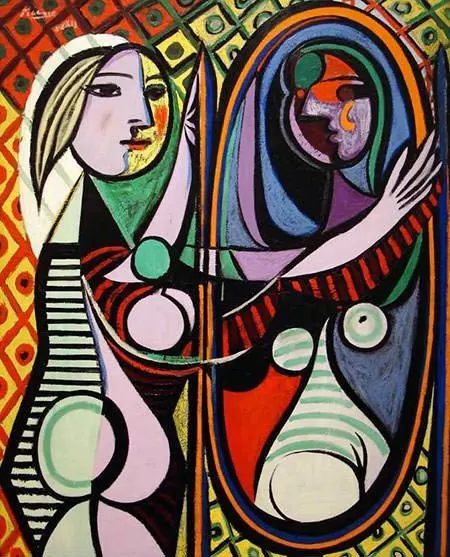
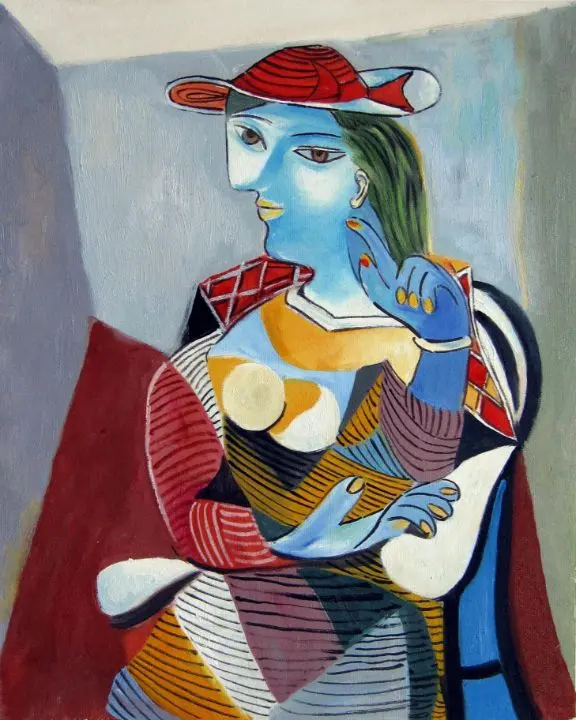
Cubism is perhaps Picasso’s most recognizable contribution to art history. To identify a Cubist work, look for the abandonment of a single viewpoint. Instead of painting a subject from one angle, Picasso depicted multiple perspectives simultaneously on a flat surface. This creates a sense of fragmentation, where the background and foreground merge into a complex, interlocking grid of geometric shapes.
Common characteristics of his Cubist style include:
- Geometric simplification of human figures and objects.
- Muted color palettes, particularly in the Analytic phase.
- Overlapping planes that defy traditional depth.
- The inclusion of text or everyday objects in Synthetic Cubism.
If a portrait looks like a puzzle of jagged, overlapping shapes where the eyes or nose appear shifted or distorted, it is likely influenced by his Cubist experiments. He aimed to represent the "truth" of an object by showing all its facets at once rather than just its surface appearance.
Why did Picasso change his style so often?
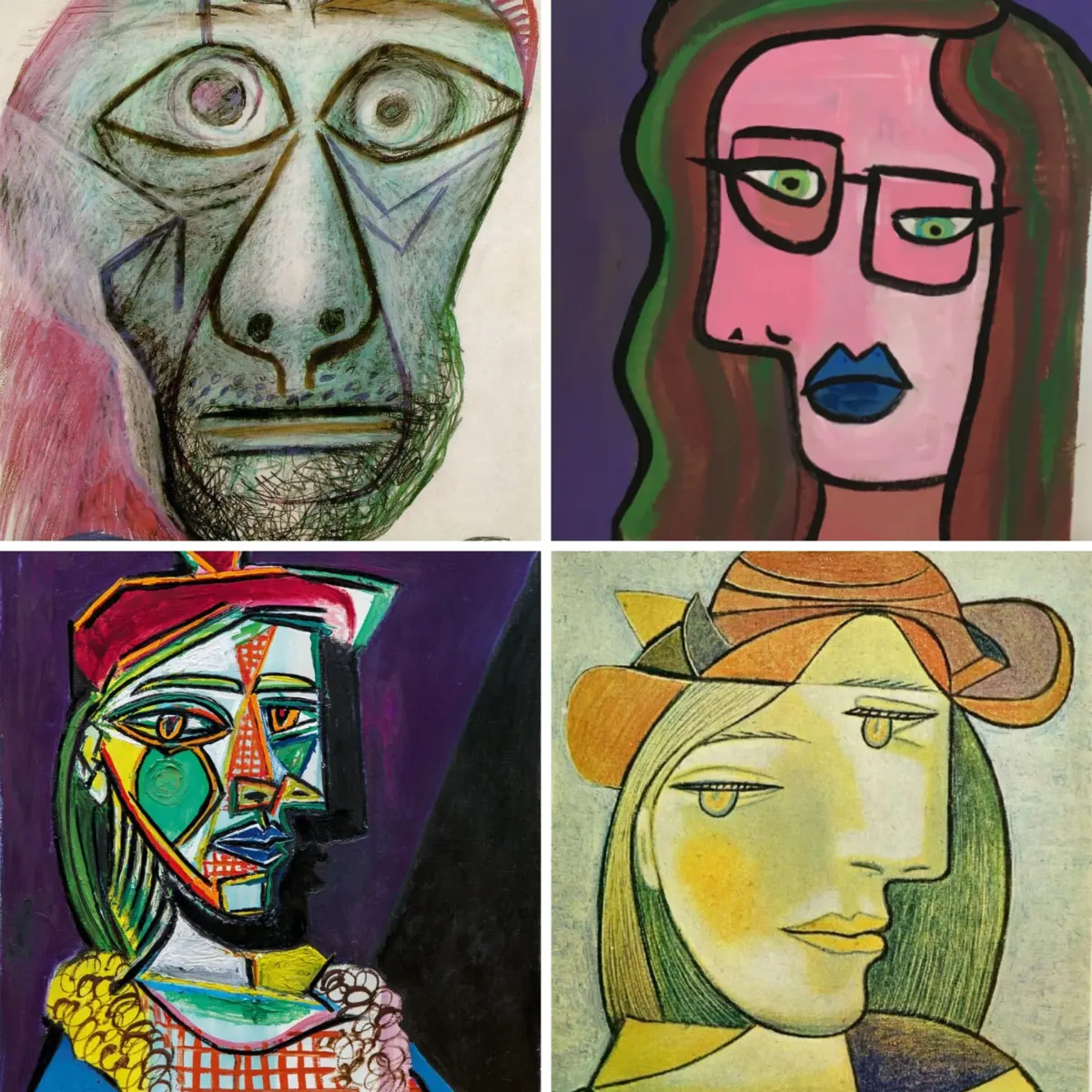
Picasso’s stylistic shifts were driven by a relentless intellectual curiosity and a refusal to be defined by a single aesthetic. He believed that art should not be a static repetition of past successes. By constantly discarding his own established methods, he maintained a state of creative tension that forced him to solve new visual problems. This fluidity allowed him to remain at the forefront of modern art for over seven decades.
His shifts were also reactions to his personal life and the world around him. The death of a close friend triggered the somber tones of his Blue Period, while his travels and exposure to African tribal masks directly inspired the distorted, angular faces seen in his seminal work, Les Demoiselles d'Avignon. He treated art as a form of autobiography, meaning his style was always a direct reflection of his current emotional and philosophical state.
Common mistakes when analyzing Picasso’s work
A frequent error is assuming that every painting by Picasso is "Cubist." Because he was so prolific, many viewers mistakenly label his later, more expressionistic or traditional works as Cubism simply because they bear his name. Another mistake is ignoring the chronological context of his pieces. Understanding that his style evolved alongside major historical events, such as the Spanish Civil War, is essential to interpreting his intent.
Avoid these common pitfalls when studying his art:
- Assuming his style remained consistent throughout his life.
- Overlooking the influence of non-Western art, such as African sculpture.
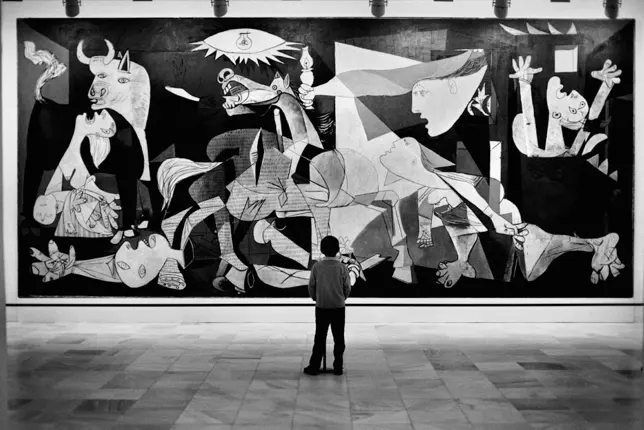
- Ignoring the political subtext, particularly in works like Guernica.
- Confusing his experimental sketches with his finished, deliberate masterpieces.
- Failing to recognize that he continued to paint in realistic styles even after mastering abstraction.
By avoiding these generalizations, you can appreciate the nuance of his technical skill and the deliberate choices he made in every phase of his career.
Best way to explore Picasso for beginners
For those new to Picasso, the best approach is to view his works in chronological order. Start by visiting a digital archive or a museum catalog that categorizes his work by period. This helps you visualize the transition from his academic training in realism to the radical fragmentation of his middle years. Observing how he transformed a simple portrait of a woman over twenty years provides a masterclass in artistic development.
- Begin with his early academic portraits to appreciate his technical precision.
- Compare a Blue Period painting with a Cubist work to see the shift in color and form.
- Research the specific historical context behind his major works like Guernica.
- Look at his late-career ceramics and prints to see his mastery of different mediums.
Engaging with his work in this structured way reveals that his radical style was not a result of a lack of skill, but a calculated choice to redefine the boundaries of visual representation.
Key facts
- Picasso did not use just one style; he famously reinvented his artistic approach multiple times throughout his 70-year career.
- He co-founded Cubism in 1907 with Georges Braque, a style that breaks objects into geometric shapes and multiple perspectives.
- His "Blue Period" (1901–1904) is defined by somber, monochromatic paintings of impoverished people and outcasts.
- The "Rose Period" (1904–1906) shifted to warmer tones, focusing on circus performers, acrobats, and harlequins.
- Picasso’s Neoclassical phase in the 1920s saw him return to more traditional, realistic forms and heavy, sculptural figures.
- When studying his work, focus on the specific decade rather than looking for a single, consistent "Picasso style."
The bottom line
Pablo Picasso’s legacy is defined by his relentless rejection of artistic consistency. By moving through distinct phases like the Blue Period, Cubism, and Neoclassicism, he transformed the trajectory of modern art. Rather than seeking a single signature style, viewers should appreciate his versatility. Picasso proved that an artist’s identity is not tied to one visual technique, but to the courage to constantly reinvent their creative vision.
People also ask
Did Picasso invent Cubism alone?
No, Picasso developed Cubism alongside French artist Georges Braque. They worked so closely between 1908 and 1912 that their paintings from that period are sometimes difficult to distinguish from one another.
What is the most famous painting by Picasso?
Guernica (1937) is widely considered his most significant work. It is a massive, monochromatic mural depicting the horrors of the Spanish Civil War and the bombing of a Basque town.
How many works of art did Picasso create?
Picasso was incredibly prolific, creating an estimated 150,000 works. This total includes roughly 13,500 paintings, 100,000 prints and engravings, and thousands of sculptures, ceramics, and drawings.
Why did Picasso change his style so often?
Picasso believed that repeating a style was a form of stagnation. He constantly challenged himself to see the world through different lenses, reflecting his personal life, political views, and evolving artistic philosophy.
Was Picasso a surrealist?
While he was not a formal member of the Surrealist group, he was deeply influenced by the movement in the late 1920s and 1930s. His work from this era often features distorted, dreamlike, and psychologically charged figures.
What is the best way to identify a Picasso painting?
Look for his signature, but also analyze the brushwork and subject matter. Because his style changed so drastically, identifying a Picasso requires understanding the specific era—such as the monochromatic blues of 1903 or the fragmented planes of 1910—in which the piece was created.
This answer was created with the help of AI research tools and reference sources. Spotted an error? Let us know — we correct mistakes quickly. See our editorial policy.