How do you draw ellipses?
Short answer
Draw an ellipse by using the pin-and-string method, which utilizes two fixed points called foci to maintain a constant distance sum. Alternatively, use a compass or digital software to define the major and minor axes. These geometric techniques ensure precision, symmetry, and accurate curvature for artistic, architectural, and mathematical applications.
On this page
How to draw an ellipse with string
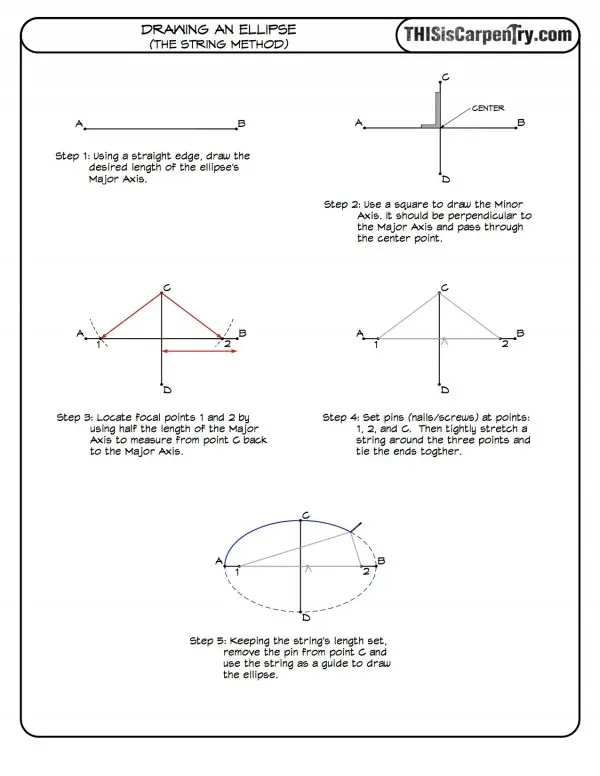
The pin-and-string method is the most reliable way to draw a perfect ellipse on paper or wood. By definition, an ellipse is the locus of points where the sum of distances from two fixed points, known as foci, remains constant. To begin, place two pins into your surface at a chosen distance apart. The distance between these pins determines the eccentricity; the further apart they are, the more elongated the ellipse will be.
- Tie a piece of non-stretchy string into a closed loop.
- Place the loop around both pins.
- Insert a pencil inside the loop and pull the string taut.
- Move the pencil around the pins while keeping the string tension consistent.
- Ensure the pencil stays vertical to maintain an even line throughout the rotation.
This technique is favored by carpenters and artists because it creates a mathematically precise curve without complex calculations. If the string is too long, the ellipse will be wide; if it is too short or the pins are too far apart, the shape will be narrow.
How to draw an ellipse with a compass
While a standard compass is designed for circles, you can approximate an ellipse using a four-center method. This approach involves drawing four circular arcs of different radii to simulate the curvature of an ellipse. First, draw a rectangle that represents the bounding box of your desired ellipse, with the length representing the major axis and the width representing the minor axis. Mark the center point and divide the space into four quadrants.
- Draw a line connecting the end of the major axis to the end of the minor axis.
- Use a compass to swing arcs from the corners of the rectangle to meet this diagonal line.
- Use the intersection points to set your compass radius for the final arcs.
- Carefully blend the four arcs together so the transitions appear seamless to the eye.
This method is useful for drafting projects where a string is impractical. While not a true mathematical ellipse, it is visually indistinguishable for most structural designs.
Best tools for drawing ellipses
For those who require frequent and highly accurate ellipses, specialized drafting tools are essential. An ellipse template is a plastic stencil containing various sizes and angles of ellipses, which is the standard tool for technical drawing and engineering. Simply align the center marks of the template with your axis lines and trace the inner edge with a fine-point pencil. These templates come in sets, usually categorized by the degree of the ellipse, such as 30, 45, or 60 degrees.
Digital software provides the most efficient alternative for modern designers. Programs like Adobe Illustrator or CAD software allow you to define an ellipse by simply dragging a bounding box or specifying the major and minor radii. These tools eliminate human error and allow for instant resizing or rotation. Whether using a physical stencil or software, the key is to ensure the major and minor axes are perpendicular to prevent lopsided results.
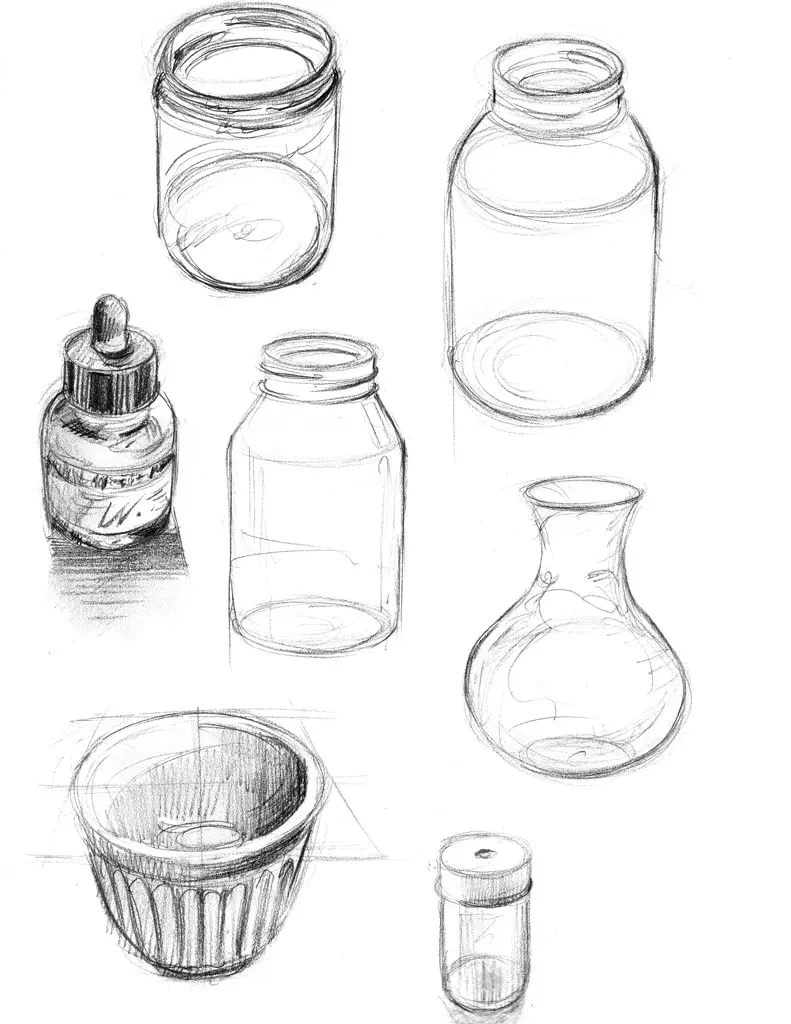
Why ellipse drawing errors happen
The most common issue when drawing ellipses is a lack of symmetry. If the major axis is not perfectly perpendicular to the minor axis, the resulting shape will appear skewed or egg-shaped. Another frequent error is inconsistent tension when using the string method. If the string stretches or the pencil pressure fluctuates, the curve will deviate from the intended path. This often happens when the pencil is tilted at an angle rather than held upright.
Poor planning of the focus points is another frequent mistake. If the two pins are placed too close to the edges of your paper, you may run out of room to complete the full rotation. Always sketch your axes lightly in pencil first to establish the boundaries of the shape. If you are using the four-center method, failing to align the arcs properly will result in visible "kinks" or sharp corners where the curves should transition smoothly into one another.
Common mistakes when drawing ellipses
Novices often attempt to draw ellipses freehand, which rarely results in a smooth, balanced curve. The human hand naturally tends to create "pointed" ends rather than the rounded, tapering curves required for a true ellipse. To avoid this, always use a mechanical guide or a geometric construction method. Another mistake is ignoring the importance of the center point; failing to mark the intersection of the axes makes it nearly impossible to keep the shape centered on your page.
- Avoid using elastic materials like rubber bands instead of string, as they will stretch and distort the shape.
- Ensure your pencil lead is sharp to maintain consistent line weight.
- Verify that your surface is flat, as any bumps will cause the pencil to skip or deviate.
- Take your time during the transition points of the four-center method to avoid abrupt changes in the curve.
By following these structured methods and avoiding these common pitfalls, you can achieve professional-grade results in your geometric drawings.
Key facts
- An ellipse is defined as the locus of all points where the sum of the distances to two fixed points, called foci, is constant.
- The "string-and-pin" method is the most accurate manual way to draw an ellipse by anchoring two pins and looping a string around them.
- The major axis is the longest diameter of the ellipse, while the minor axis represents the shortest diameter.
- Eccentricity measures how much an ellipse deviates from a perfect circle, ranging from zero for a circle to nearly one for a flat line.
- When drawing by hand, keep the pencil tension constant against the string to ensure the curve remains smooth and symmetrical.
- A common mistake is placing the foci too far apart, which makes the ellipse look like a thin, elongated needle rather than a balanced oval.
The bottom line
Drawing an ellipse requires understanding the relationship between its foci and axes. Whether you use the classic string-and-pin technique for large-scale projects or a mechanical compass for smaller diagrams, maintaining consistent tension and alignment is essential. By mastering these geometric principles, you can create accurate, aesthetically balanced shapes that serve as the foundation for technical drafting, artistic perspective, and complex architectural designs in various fields.
People also ask
How does an ellipse differ from an oval?
An ellipse is a precise mathematical shape with specific geometric properties, whereas an oval is a general term for any egg-like or rounded shape. Ellipses have two axes of symmetry, while many ovals are asymmetrical or lack defined foci.
Can I draw an ellipse using a rectangle?
Yes, you can use the "trammel method" or a four-center approximation to sketch an ellipse inside a bounding box. This involves marking the center and using the rectangle's width and height to guide the curvature of the arcs.
What is the relationship between a circle and an ellipse?
A circle is a special case of an ellipse where the two foci are located at the exact same point. If you move the foci apart, the circle stretches into an ellipse.
Why do planets move in elliptical orbits?
According to Kepler’s First Law of Planetary Motion, planets orbit the Sun in ellipses with the Sun at one of the two foci. This occurs due to the gravitational interaction between the planet and the star.
How do I calculate the area of an ellipse?
The area is calculated using the formula π times the semi-major axis times the semi-minor axis. If you know the lengths of the two radii, simply multiply them together with pi.
Is it possible to draw a perfect ellipse freehand?
While professional artists can approximate the shape, achieving mathematical precision freehand is extremely difficult. Most illustrators use templates, compasses, or digital tools to ensure the curves are perfectly symmetrical.
This answer was created with the help of AI research tools and reference sources. Spotted an error? Let us know — we correct mistakes quickly. See our editorial policy.