Why is Guernica so famous?
Short answer
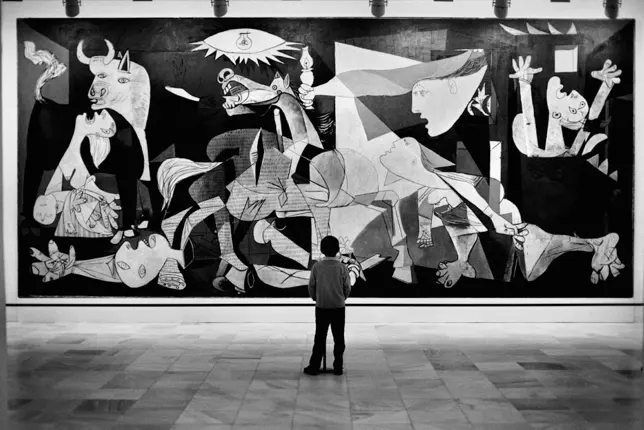
Guernica is famous because it serves as a universal, timeless symbol of the horrors of war. Painted by Pablo Picasso in 1937, the massive mural depicts the brutal bombing of a Basque town during the Spanish Civil War, transforming a specific historical tragedy into a powerful, enduring protest against human suffering and civilian violence.
On this page
Why did Picasso paint Guernica?
In January 1937, the Spanish Republican government commissioned Pablo Picasso to create a mural for the Spanish Pavilion at the Paris International Exposition. Picasso struggled for months to find a subject until the German Luftwaffe, acting in support of General Francisco Franco, bombed the Basque town of Guernica on April 26, 1937. The attack was one of the first instances of saturation bombing against a civilian population in modern history.
Deeply moved by the reports and graphic black-and-white photographs of the destruction, Picasso abandoned his previous ideas. He completed the massive oil-on-canvas mural, measuring approximately 11 feet tall and 25 feet wide, in just over a month. The painting was intended to draw international attention to the plight of the Spanish Republic and expose the fascist brutality of the Nationalist forces. By focusing on the victims rather than the soldiers, Picasso created a visual indictment of war that transcended the specific conflict in Spain.
What do the symbols in Guernica mean?
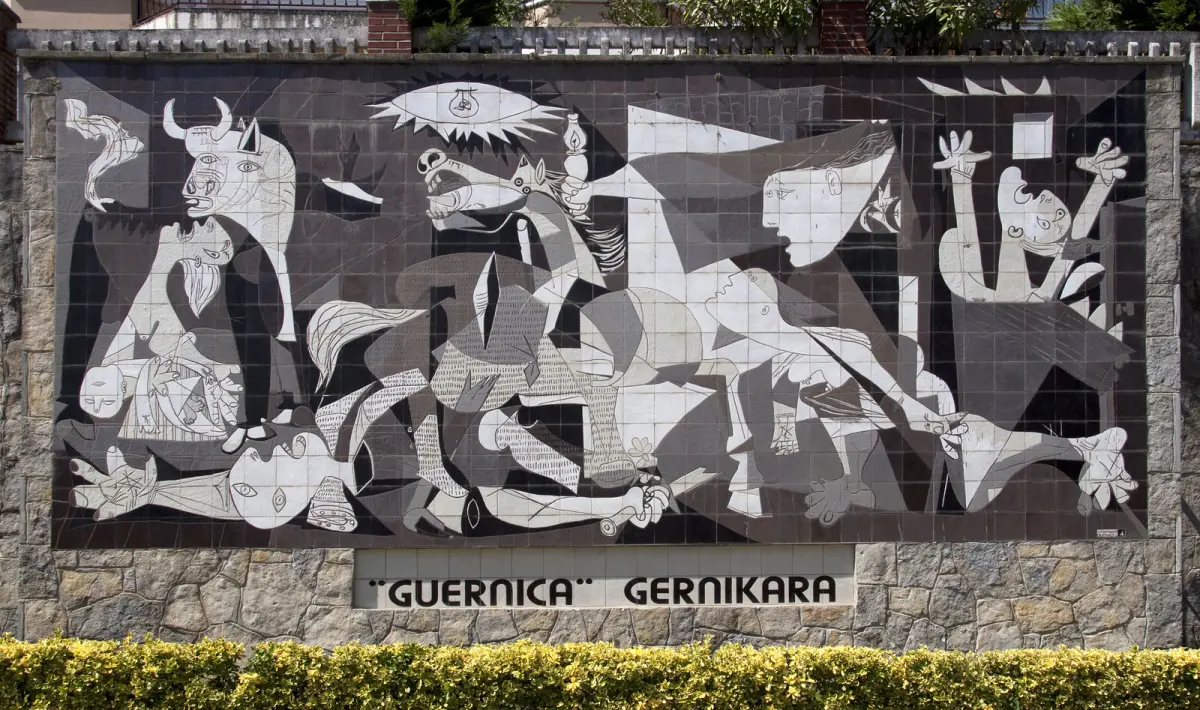
The painting is famously devoid of explicit references to modern weaponry or specific political figures. Instead, Picasso utilized a series of stark, expressionist symbols to convey the chaos and agony of the event. The monochromatic palette of black, white, and gray emphasizes the documentary-like quality of the tragedy, stripping away the distraction of color to focus on the raw emotional impact of the scene.
Key elements within the composition include:
- The Bull: Often interpreted as a symbol of Spain or the brutality of fascism, though its exact meaning remains debated.
- The Horse: Represents the suffering of the people, its body pierced by a spear and its mouth open in a silent scream.
- The Fallen Soldier: A broken statue holding a shattered sword, from which a single, fragile flower grows as a symbol of hope.
- The Light Bulb: A jagged, eye-like shape that suggests both the harsh glare of an interrogation lamp and the destructive power of modern technology.
How did Guernica become a global icon?
Following the Paris Exposition, the painting toured Europe and the United States to raise funds for Spanish refugees. As the threat of World War II loomed, the work gained new resonance as a warning against the rise of totalitarianism. Picasso requested that the painting remain in the custody of the Museum of Modern Art in New York until democracy was restored in Spain, ensuring it remained a protected symbol of resistance for decades.
The painting’s fame grew as it became a focal point for anti-war protests throughout the 20th century. Its presence in New York kept the memory of the Spanish Civil War alive during the Franco dictatorship. When the painting finally returned to Spain in 1981, six years after Franco’s death, it was installed in Madrid as a symbol of the country's transition to democracy. Today, it stands as the centerpiece of the Museo Reina Sofía, attracting millions of visitors who seek to engage with its profound message of peace.
How to analyze Guernica like an expert
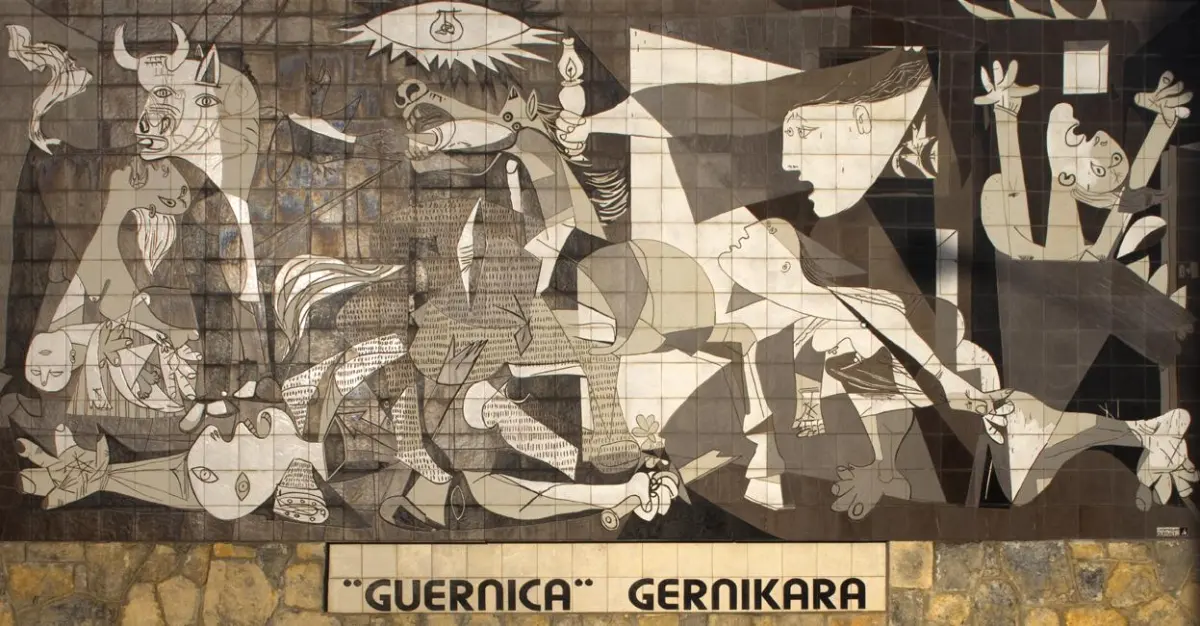
When viewing the mural, it is helpful to follow a structured approach to appreciate the complexity of the composition. Avoid the common mistake of looking for a linear narrative; instead, focus on the spatial relationships and the frenetic energy of the figures.
- Stand back to observe the overall composition, noting how the triangular structure centers the light and the horse.
- Examine the individual figures to identify the contrast between the static, stoic nature of the bull and the dynamic, tortured movements of the human figures.
- Observe the brushwork and textures, which Picasso intentionally kept raw and agitated to reflect the urgency of the moment.
- Consider the scale of the work, which forces the viewer to physically confront the immense size of the tragedy.
By focusing on these elements, you can better understand how Picasso manipulated space and form to create a sense of overwhelming, claustrophobic despair.
Common mistakes when interpreting Guernica
A frequent error is assuming that the painting is a direct historical record of the bombing. While it was inspired by the event, Picasso did not attempt to depict the specific buildings or the planes that destroyed the town. Another mistake is over-analyzing the symbolism to find a single "correct" meaning. Picasso himself famously refused to provide a definitive explanation for the figures, stating that the viewer should interpret the work based on their own emotional response and understanding of humanity.
Avoid the pitfall of viewing the painting only through the lens of the Spanish Civil War. While its origins are rooted in that conflict, the work’s enduring power lies in its ambiguity and universality. It does not illustrate a specific battle, but rather the universal experience of terror and loss. By resisting a singular interpretation, the painting remains relevant to any conflict, serving as a timeless reminder of the civilian cost of war and the necessity of human empathy in the face of absolute destruction.
Key facts
- Pablo Picasso painted Guernica in 1937 to protest the aerial bombing of a Basque town during the Spanish Civil War.
- The mural is massive, measuring approximately 11.5 feet tall by 25.5 feet wide.
- Picasso used a stark, monochromatic palette of black, white, and gray to emphasize the tragedy and journalistic urgency of the scene.
- The painting features symbolic figures, including a gored horse, a bull, and a mother clutching her dead child.
- It spent decades in New York City’s Museum of Modern Art before returning to Spain in 1981, as per Picasso's request for democracy to be restored.
- Today, the masterpiece is permanently housed at the Museo Reina Sofía in Madrid, serving as a universal symbol against war and violence.
The bottom line
Guernica remains famous because it transcends its specific historical context to become a timeless, universal indictment of war. By stripping away color and focusing on the raw agony of victims, Picasso created a visual language that resonates with anyone witnessing conflict. Its journey from a political protest in 1937 to a global icon of peace cements its status as one of the most important artworks ever created.
People also ask
What does the bull in the painting represent?
The bull is one of the most debated symbols in the work. Some interpret it as a representation of fascist brutality, while others see it as a symbol of the Spanish people or resilience.
Why did Picasso choose not to use color?
The lack of color mimics the aesthetic of newspaper photography from the 1930s. This choice gives the painting a documentary-like quality, underscoring the reality of the devastation.
Was the painting commissioned by the Spanish government?
Yes, the Spanish Republican government commissioned Picasso to create a mural for the 1937 Paris World's Fair. He chose the subject of the bombing after reading reports of the attack.
How long did it take to complete the mural?
Picasso worked with intense speed, completing the entire massive canvas in just 35 days. He produced numerous sketches and studies to refine the composition before beginning.
Where was the painting kept during the Franco regime?
Picasso refused to let the painting return to Spain while Francisco Franco remained in power. It was held in trust by the Museum of Modern Art in New York for nearly 40 years.
Is Guernica considered a Cubist painting?
While it utilizes Cubist techniques like fragmented forms and multiple perspectives, it is primarily categorized as a Surrealist-influenced political work. These styles combine to heighten the emotional chaos of the scene.
This answer was created with the help of AI research tools and reference sources. Spotted an error? Let us know — we correct mistakes quickly. See our editorial policy.