What is the Lascaux cave art?
Short answer
The Lascaux cave art is a collection of Upper Paleolithic paintings located in southwestern France, created approximately 17,000 years ago. Featuring nearly 2,000 figures—mostly animals, abstract signs, and human representations—the site is renowned for its sophisticated use of color, perspective, and scale, offering profound insight into early human symbolic behavior.
On this page
What is the history of the Lascaux cave?
The Lascaux cave was discovered on September 12, 1940, by four teenagers near the village of Montignac in the Dordogne region. Marcel Ravidat, the first to enter the cave, alerted his teacher, who recognized the significance of the images covering the walls. The site was opened to the public in 1948, becoming a major tourist attraction, but the influx of thousands of visitors caused severe environmental damage to the paintings. Carbon dioxide, moisture, and light led to the growth of algae and the formation of calcite crusts, threatening the integrity of the prehistoric pigments.
To preserve the fragile environment, the cave was permanently closed to the public in 1963. Scientists implemented rigorous climate control measures to stabilize the cave’s atmosphere and halt the degradation of the artwork. Today, the original cave is accessible only to a small number of researchers and conservationists who monitor the site with extreme care. The site remains a protected monument under the stewardship of the French Ministry of Culture, serving as a critical touchstone for understanding the artistic capabilities of early modern humans.
What are the main features of the cave paintings?
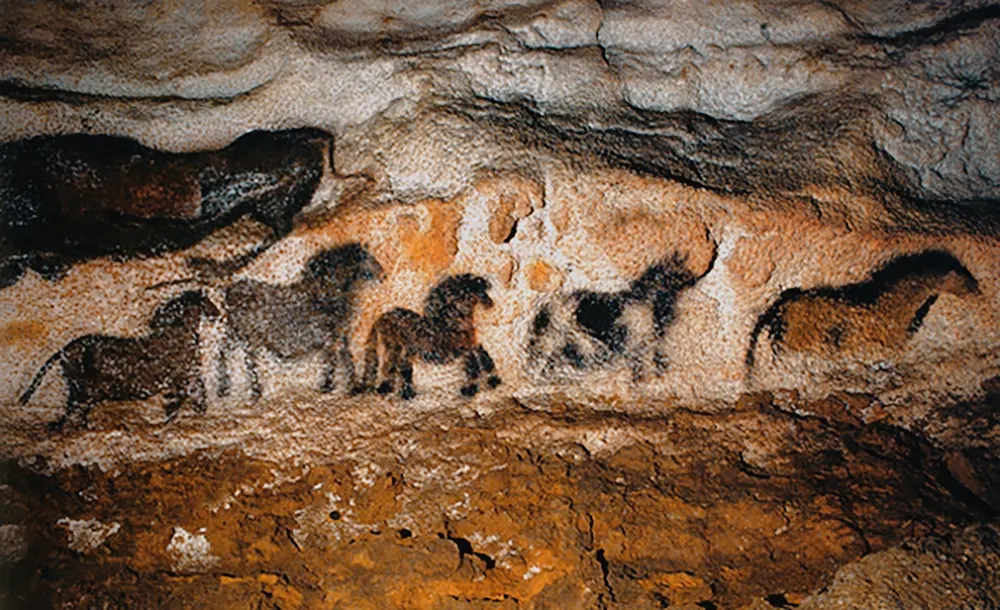
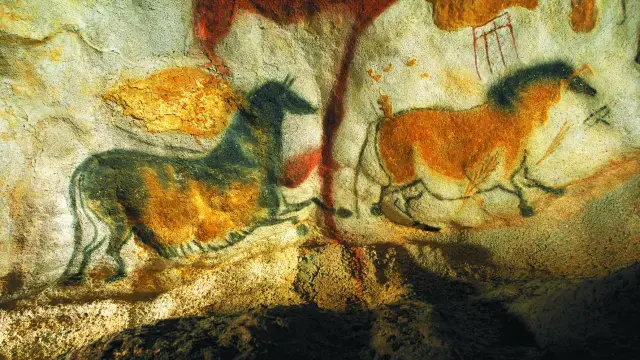
The artwork at Lascaux is primarily concentrated in several chambers, including the Great Hall of the Bulls, the Painted Gallery, and the Shaft of the Dead Man. The paintings are characterized by their vibrant colors, derived from natural minerals like iron oxide and manganese. Artists utilized the natural contours of the limestone walls to give their subjects a three-dimensional appearance, a technique that demonstrates a high level of artistic intent and spatial awareness.
The imagery is dominated by large-scale animals, reflecting the fauna of the Pleistocene epoch. Key features include:
- The Great Hall of the Bulls, which contains the largest animal figures ever discovered in cave art, some measuring over 17 feet long.
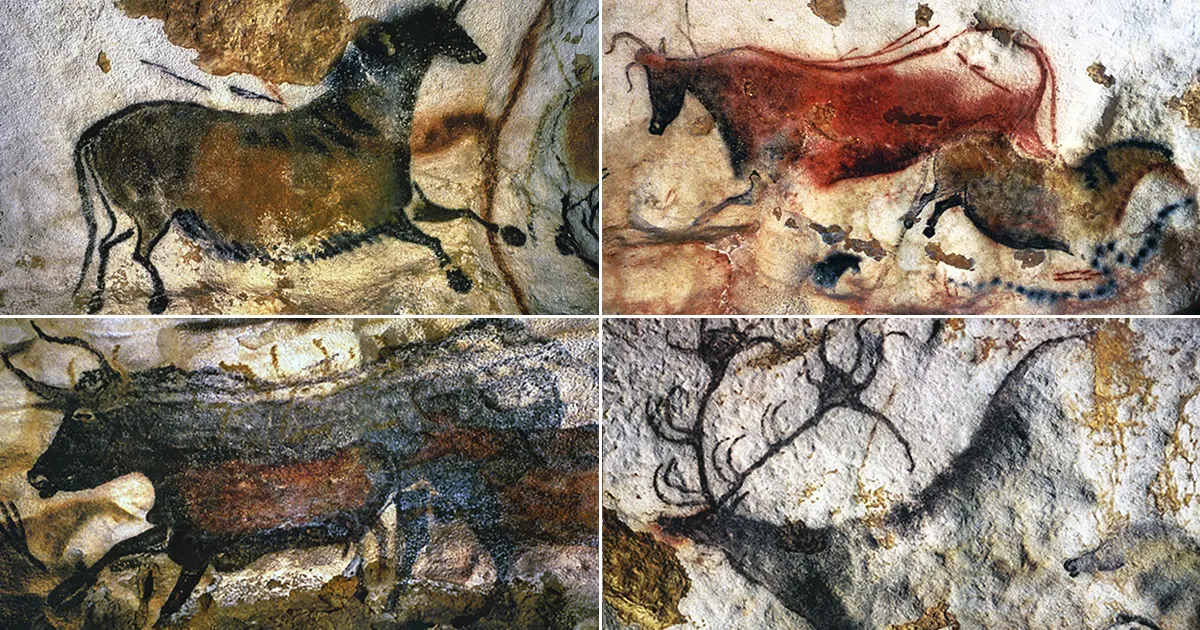
- The use of polychromy, where artists combined red, yellow, black, and brown pigments to create depth and texture.
- Abstract geometric signs, such as dots, grids, and lines, which appear alongside animal figures and remain largely undeciphered by modern scholars.
- A singular, rare depiction of a human figure in the Shaft of the Dead Man, which features a bird-headed man lying near a disemboweled bison.
How can you visit the Lascaux cave today?
Because the original cave is closed, visitors cannot walk through the actual site where the paintings were created. However, the French government commissioned high-fidelity replicas to ensure the public could still experience the majesty of the art. The most comprehensive version is Lascaux IV, an international center for cave art located at the foot of the hill where the original cave is situated. This facility uses advanced laser-scanning technology to recreate the cave’s interior with millimeter precision.
To plan your visit effectively, follow these steps:
- Book your tickets online several weeks in advance, especially during the peak summer tourist season, to ensure availability.
- Allocate at least three hours for your visit, as the center includes an interactive museum and a guided tour of the replica.
- Wear comfortable walking shoes, as the replica is designed to mimic the uneven terrain of the original cave.
- Check the official website for seasonal opening hours, as the center may adjust schedules during winter months.
Why are these paintings important to archaeology?
The Lascaux paintings provide an unparalleled window into the cognitive development of humans during the Magdalenian period. The complexity of the compositions suggests that these early societies possessed a sophisticated culture, likely involving complex social structures, storytelling, and perhaps even ritualistic practices. By analyzing the pigments and the tools used to apply them—such as brushes made of animal hair or blowpipes made of bone—researchers have gained insights into the technical ingenuity of their ancestors.
The presence of these paintings challenges the notion that early humans were solely focused on survival. Instead, the effort required to create such elaborate works in deep, dark, and difficult-to-access areas of the cave implies that these spaces held significant symbolic or spiritual importance. The site serves as a foundational reference point for the study of prehistoric art, forcing historians to reconsider the timeline of human aesthetic evolution and the origins of human communication through visual symbols.
Common mistakes when studying Lascaux
Many people approach the study of Lascaux with misconceptions that can hinder a genuine understanding of the site. A frequent error is assuming that the paintings were merely decorative or simple hunting tallies. In reality, the specific selection of animals—many of which were not the primary food sources for the people of that time—suggests that the art served a deeper, possibly mythological or totemic purpose. Avoiding these assumptions allows for a more nuanced interpretation of the evidence.
Other common mistakes include:
- Assuming all the paintings were created at the same time, when they were actually produced over several thousand years.
- Ignoring the role of the cave's natural geology, which played a crucial part in how the artists chose to place their figures.
- Believing that the paintings are "primitive," when they actually exhibit advanced mastery of perspective and anatomical detail that rivals much later artistic movements.
- Failing to recognize that the "human" figures are stylized and symbolic rather than literal portraits of the artists themselves.
Key facts
- The Lascaux cave complex, located in southwestern France, contains over 600 wall paintings and 1,500 engravings.
- Created during the Upper Paleolithic period, these works date back approximately 17,000 years to the Magdalenian culture.
- The cave was discovered by four teenagers in 1940 and opened to the public in 1948 before closing to preserve the art.
- The paintings primarily depict large animals, including horses, stags, cattle, and ibex, often rendered in mineral pigments like ochre and hematite.
- Visitors today can explore Lascaux IV, a high-fidelity, full-scale replica that uses laser scanning and 3D printing to mimic the original site.
- To avoid damaging sensitive archaeological sites, never touch cave walls or use flash photography, as light and humidity can cause irreversible pigment decay.
The bottom line
The Lascaux cave art represents a pinnacle of prehistoric human expression, showcasing remarkable technical skill and an intimate connection to the natural world. By preserving these masterpieces through high-fidelity replicas, we ensure that the legacy of Magdalenian artists remains accessible to future generations. These paintings serve as a vital window into the cognitive development and symbolic life of our ancestors during the late Ice Age.
People also ask
Why was the original Lascaux cave closed to the public?
The cave was closed in 1963 because the carbon dioxide, heat, and humidity introduced by thousands of daily visitors triggered the growth of mold and algae. These biological contaminants began to damage the ancient pigments, forcing authorities to seal the cave to stabilize the internal environment.
What techniques did the artists use to paint the walls?
Artists applied pigments using brushes made of animal hair, moss, or pads of fur, and they also used hollowed-out bones as primitive airbrushes to blow pigment onto the stone. They frequently utilized the natural contours of the cave walls to give the animals a three-dimensional, lifelike appearance.
Are humans depicted in the Lascaux cave paintings?
Human figures are extremely rare in Lascaux, with only one prominent example known as the "Shaft of the Dead Man." This scene depicts a bird-headed man lying near a disemboweled bison, which remains one of the most mysterious and debated images in prehistoric art.
How did the artists reach the high ceilings to paint?
Archaeologists have found evidence of postholes and sockets in the rock face, suggesting that the artists constructed scaffolding to reach the upper sections of the galleries. This indicates a sophisticated level of planning and social cooperation among the Paleolithic groups.
What materials were used to create the colors?
The artists sourced pigments from local minerals, primarily iron oxides for reds and yellows, and manganese or charcoal for blacks. These powders were mixed with binders like water, vegetable juices, or animal fats to create a paint that has adhered to the limestone for millennia.
Can I visit the original cave today?
No, the original cave is restricted to a handful of scientists and conservators who monitor the site's health. The public is directed to the International Centre for Cave Art, which provides an immersive experience that replicates the cave's environment and art without endangering the original artifacts.
This answer was created with the help of AI research tools and reference sources. Spotted an error? Let us know — we correct mistakes quickly. See our editorial policy.