What are good art challenges?
Short answer
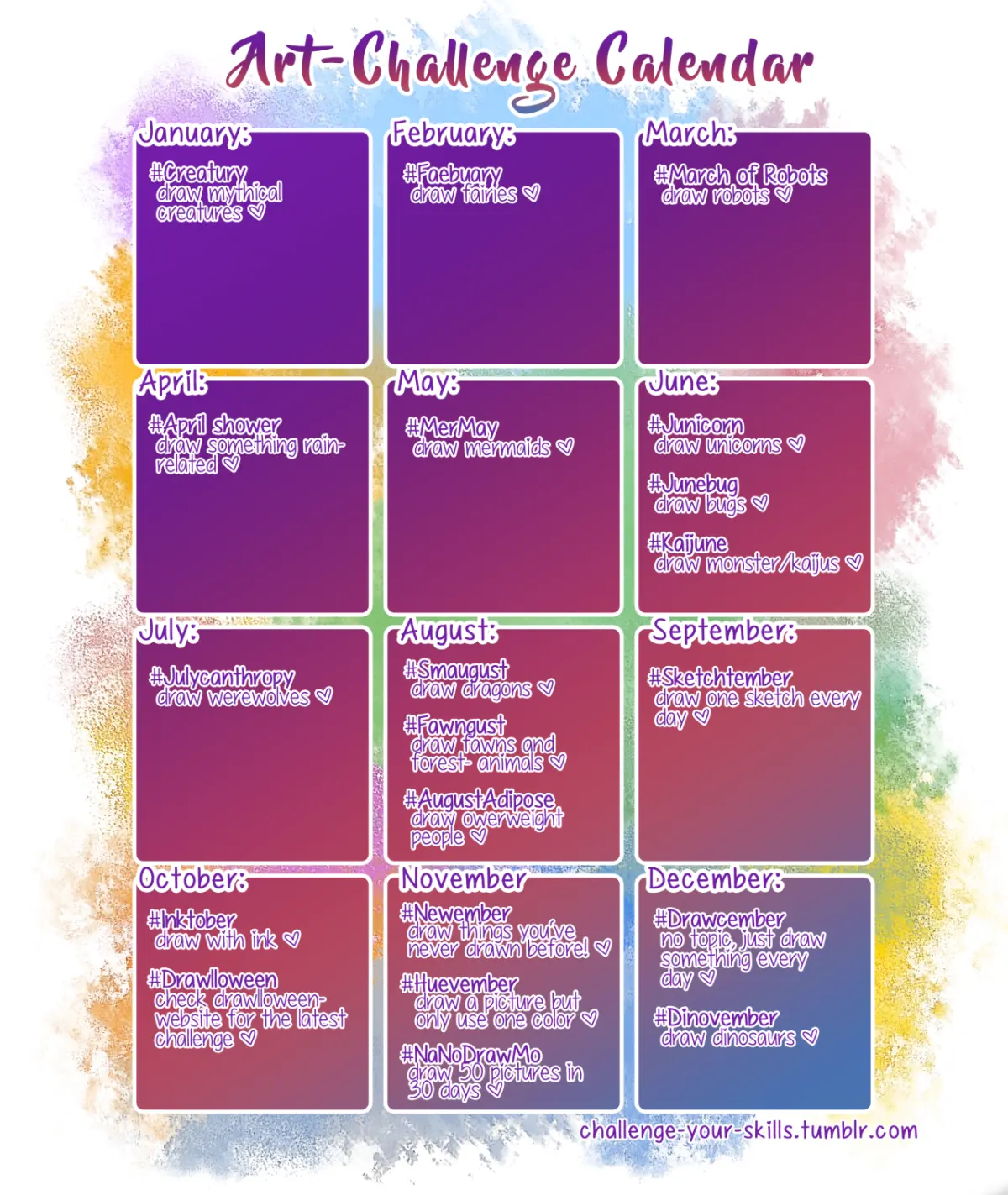
Art challenges are structured prompts designed to improve creative consistency and technical skill. Popular examples include Inktober, 100-day projects, and limited-palette exercises. These challenges work by imposing constraints that force artists to problem-solve, experiment with new mediums, and build the habit of daily creation regardless of their current skill level.
On this page
What are the best art challenges for beginners?
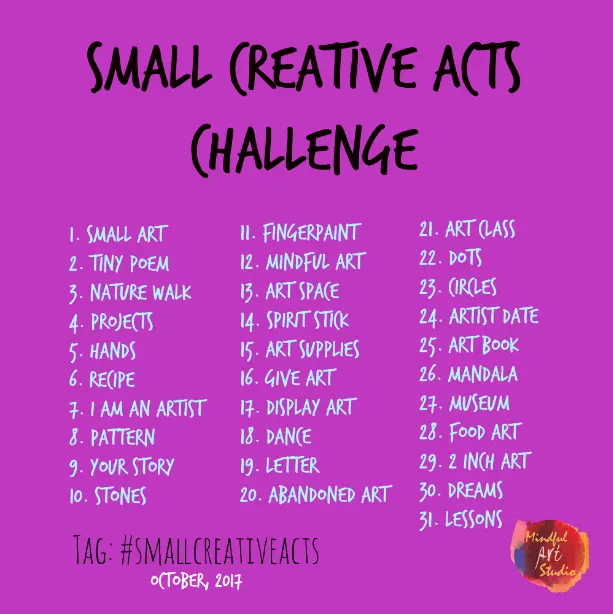
Beginners often struggle with the "blank canvas" syndrome, where the freedom to choose any subject becomes paralyzing. Structured challenges provide a clear roadmap, removing the mental load of decision-making so you can focus entirely on execution. The most effective starting point is a daily drawing prompt list, which provides a specific subject for each day of the month. These lists ensure you practice a variety of shapes, textures, and concepts rather than sticking only to what you find comfortable.
Another excellent option for novices is the "limited medium" challenge. Instead of worrying about complex color theory or expensive supplies, you commit to using only one tool, such as a ballpoint pen or a single graphite pencil, for one week. This constraint encourages you to explore mark-making, line weight, and shading techniques that are often overlooked when working with a full studio setup. By simplifying your tools, you accelerate your understanding of fundamental visual elements.
- Inktober: A month-long challenge focusing on pen and ink drawings.
- The 100-Day Project: A commitment to create something small every day for 100 days.
- Limited Palette Challenge: Using only three colors plus white to create a painting.
- Master Study Month: Recreating one famous painting per week to learn composition.
How to start a daily art challenge successfully
Success in an art challenge is less about raw talent and more about logistics and environment. Before you begin, clear a dedicated space where your materials are ready to use at a moment's notice. If you have to spend fifteen minutes setting up your easel or hunting for a sketchbook, you are significantly more likely to skip a day. Keep your kit minimal and mobile so that you can create even when you are traveling or have limited time.
Consistency is built by lowering the barrier to entry. Do not aim for a masterpiece every single day; instead, focus on the habit of showing up. If you are exhausted, a five-minute sketch of your coffee mug is a successful completion of the challenge. The goal is to build the "art muscle" through repetition. Tracking your progress on a physical calendar or a digital app can also provide a psychological boost, as seeing a streak of completed days motivates you to keep the momentum going.
- Select a challenge that fits your current schedule, such as a weekly prompt rather than a daily one.
- Gather all necessary supplies and store them in one accessible location.
- Set a specific time of day for your practice to integrate it into your routine.
- Share your work on a designated platform if you want external accountability.
- Review your progress at the end of the challenge to identify areas for growth.
Why do art challenges improve technical skills?
Art challenges function as a form of deliberate practice, a concept where you intentionally push your boundaries to improve specific abilities. When you participate in a timed challenge, you are forced to work faster and make decisions with more confidence. This prevents the common trap of over-rendering or obsessing over minor details, teaching you to prioritize the overall composition and gesture of your work. You learn to trust your instincts and stop second-guessing every stroke.
Furthermore, challenges often push you outside your comfort zone by requiring you to draw subjects you would normally avoid. If you usually draw portraits, a challenge might force you to draw landscapes or mechanical objects. This cross-training effect broadens your visual library and improves your ability to translate three-dimensional forms onto a two-dimensional surface. By engaging with diverse subjects, you develop a more versatile toolkit, allowing you to handle complex commissions or personal projects with greater ease and technical proficiency.
Common mistakes when doing art challenges
One of the most frequent mistakes artists make is setting unrealistic expectations for the quality of their output. Many beginners start a challenge expecting every piece to be portfolio-ready, which leads to burnout and frustration when the inevitable "bad" drawing occurs. It is crucial to remember that challenges are about the process of learning, not the final result. If you find yourself spending four hours on a daily sketch, you are likely overworking the piece and missing the point of the exercise.
Another pitfall is neglecting rest days or failing to account for life's unpredictability. If you miss a day, do not try to "catch up" by doing three drawings at once, as this usually results in low-quality work and resentment toward the challenge. Simply skip the missed day and move on to the next prompt. The objective is to maintain a sustainable practice rather than achieving a perfect record. Treating the challenge as a marathon rather than a sprint will help you maintain your enthusiasm over the long term.
How to stay motivated during long challenges
Maintaining motivation over a long period, such as a 100-day project, requires a shift in mindset. Instead of focusing on the finish line, focus on the small, incremental improvements you see in your work over time. Keep a "progress journal" where you jot down one thing you learned or one technique you improved upon each week. Recognizing these small wins provides the dopamine hit necessary to continue when the initial excitement of the challenge begins to fade.
Community involvement is another powerful tool for staying engaged. Joining a group of artists who are participating in the same challenge creates a sense of shared purpose and camaraderie. Seeing how others interpret the same prompt can be incredibly inspiring and can introduce you to new techniques or styles. If you feel your motivation dipping, look at the work of your peers to reignite your creative spark. Remember that you are part of a larger movement of people striving to improve their craft, and your presence contributes to that collective energy.
Key facts
- Inktober, established by Jake Parker in 2009, challenges artists to create one ink drawing every day throughout October.
- The 100 Heads Challenge requires artists to draw 100 unique faces within ten days to improve portraiture skills.
- The "Limited Palette" challenge restricts artists to using only three or four specific colors to master color theory and harmony.
- Mermay, held annually in May, encourages participants to illustrate mermaids to practice character design and anatomy.
- The "Draw This in Your Style" (DTIYS) challenge involves recreating another artist's work to explore different techniques and stylistic interpretations.
- A common mistake is prioritizing speed over quality, which leads to burnout rather than actual skill acquisition.
The bottom line
Art challenges serve as effective tools for breaking creative blocks and refining technical skills through consistent, deliberate practice. By imposing specific constraints—such as time limits, color restrictions, or daily quotas—artists force themselves to solve problems and experiment with new methods. Regardless of the chosen challenge, the most important takeaway is to prioritize steady progress and personal learning over the pursuit of immediate, flawless results.
People also ask
How do I choose the right art challenge for my skill level?
Select challenges that focus on a specific weakness, such as anatomy or lighting, rather than broad goals. Beginners should start with low-pressure prompts, while advanced artists may benefit from constraints that force creative problem-solving.
Should I post my daily progress on social media?
Sharing your work can provide accountability and community feedback, but it may also create unnecessary anxiety. If external pressure hinders your creativity, complete the challenge privately and post a summary at the end.
What should I do if I miss a day during a challenge?
Do not abandon the entire project because of one missed day. Simply pick up where you left off or combine two prompts into one piece to keep the momentum going.
How can I prevent creative burnout during long challenges?
Limit your daily practice time to a specific window, such as 30 or 60 minutes. If you feel overwhelmed, allow yourself to produce "bad" art just to complete the task without aiming for perfection.
Are these challenges effective for professional development?
Yes, they function as deliberate practice, which is essential for building muscle memory and artistic vocabulary. Consistent repetition under specific constraints helps artists identify their unique visual voice.
Can I modify the rules of a popular challenge?
You are encouraged to adapt any challenge to fit your schedule or artistic goals. The primary purpose of these exercises is personal growth, so feel free to skip prompts or extend deadlines as needed.
This answer was created with the help of AI research tools and reference sources. Spotted an error? Let us know — we correct mistakes quickly. See our editorial policy.