How do you paint a palm tree with acrylic paint?
Short answer
Painting a palm tree with acrylics involves creating a vertical trunk using brown tones and fanning out long, textured fronds with a thin brush. By layering dark shadows and lighter highlights, you build depth. Focus on the signature "V" shape of the leaves to capture the iconic silhouette of the tree.
On this page
How to prepare the canvas for painting palm trees
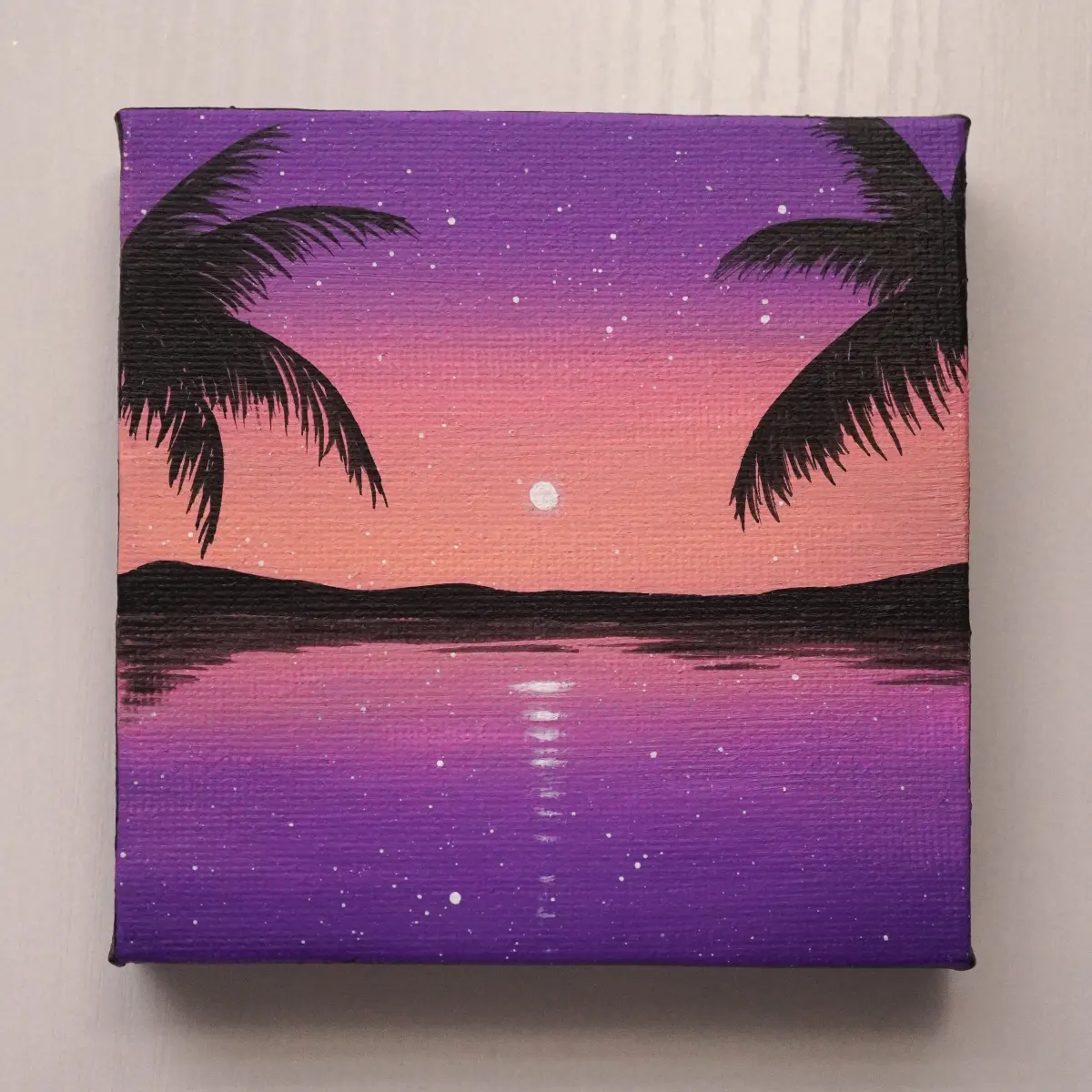
Before applying paint, ensure your surface is primed with gesso to prevent the acrylic from soaking into the fabric. A smooth, white background allows colors to appear more vibrant and makes it easier to blend sky tones. If you are painting a sunset or tropical scene, start by applying a base layer of color for the sky, such as gradients of orange, pink, or deep blue. Allow this background to dry completely before you begin sketching the tree, as wet paint will cause your lines to smear and muddy the colors.
To plan your composition, lightly sketch the trunk and the general spread of the palm fronds using a piece of white chalk or a light pencil. This prevents permanent mistakes and helps you visualize the tree's placement within the landscape. Keep your sketch loose, as palm trees are organic, asymmetrical structures that do not require perfect straight lines. A well-prepared canvas serves as the foundation for a professional-looking result, ensuring that your final work remains crisp and clearly defined.
Best brushes for painting palm trees
Choosing the right tools is essential for capturing the fine details of palm foliage. For the trunk, use a medium-sized flat brush to establish the width and texture. For the fronds, a small liner brush or a round brush with a fine tip is necessary to create the thin, sweeping strokes that define the leaves. Synthetic brushes are generally preferred for acrylics because they hold their shape well and provide the tension needed for precise application.
Consider these brush types for your project:
- Flat brush: Ideal for blocking in the trunk and adding texture to the bark.
- Liner brush: Essential for painting individual leaflets and thin, wispy tips.
- Filbert brush: Useful for blending colors on the trunk or creating soft, rounded edges.
- Fan brush: Can be used sparingly to suggest the texture of smaller, distant fronds.
Having a variety of sizes allows you to transition smoothly from the broad base of the tree to the delicate, airy canopy. Always clean your brushes thoroughly after use, as acrylic paint dries quickly and can permanently damage bristles.
How to paint a realistic palm tree trunk
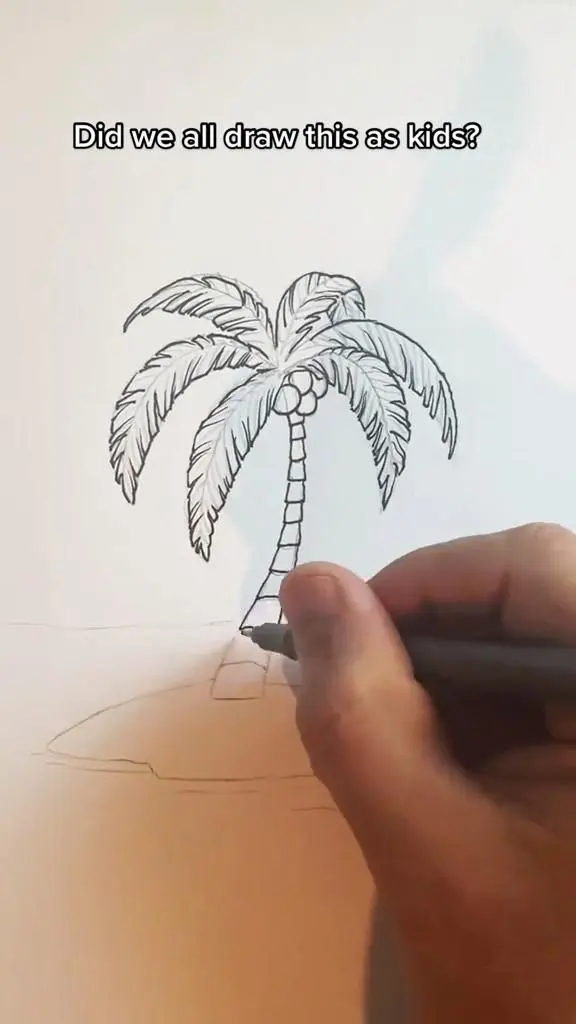
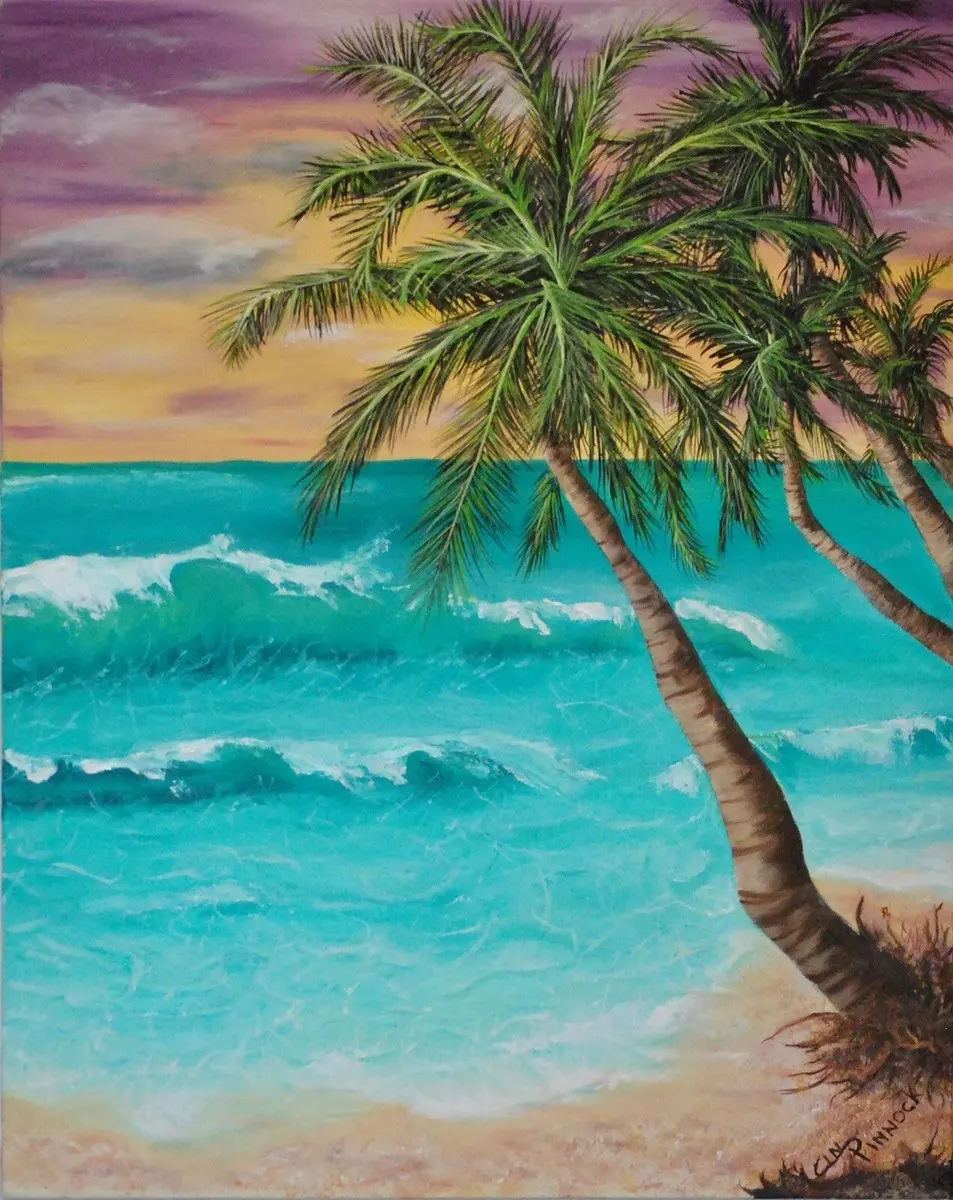
The trunk of a palm tree is rarely a uniform color; it is usually a complex mixture of browns, grays, and blacks. Start by painting a vertical column using a base of burnt umber or raw sienna. Once the base is dry, use a darker shade, such as a mix of brown and black, to create horizontal marks that represent the scars left by old fronds. These marks should be slightly curved to mimic the natural growth pattern of the tree.
Add depth by applying a lighter highlight on one side of the trunk, which suggests the direction of the light source. A touch of white or yellow mixed into your brown paint can create this effect. Avoid making the trunk perfectly straight; a slight lean or curve adds character and realism. By layering these tones, you transition from a flat shape to a three-dimensional object that anchors the tree within the scene.
How to paint palm tree fronds
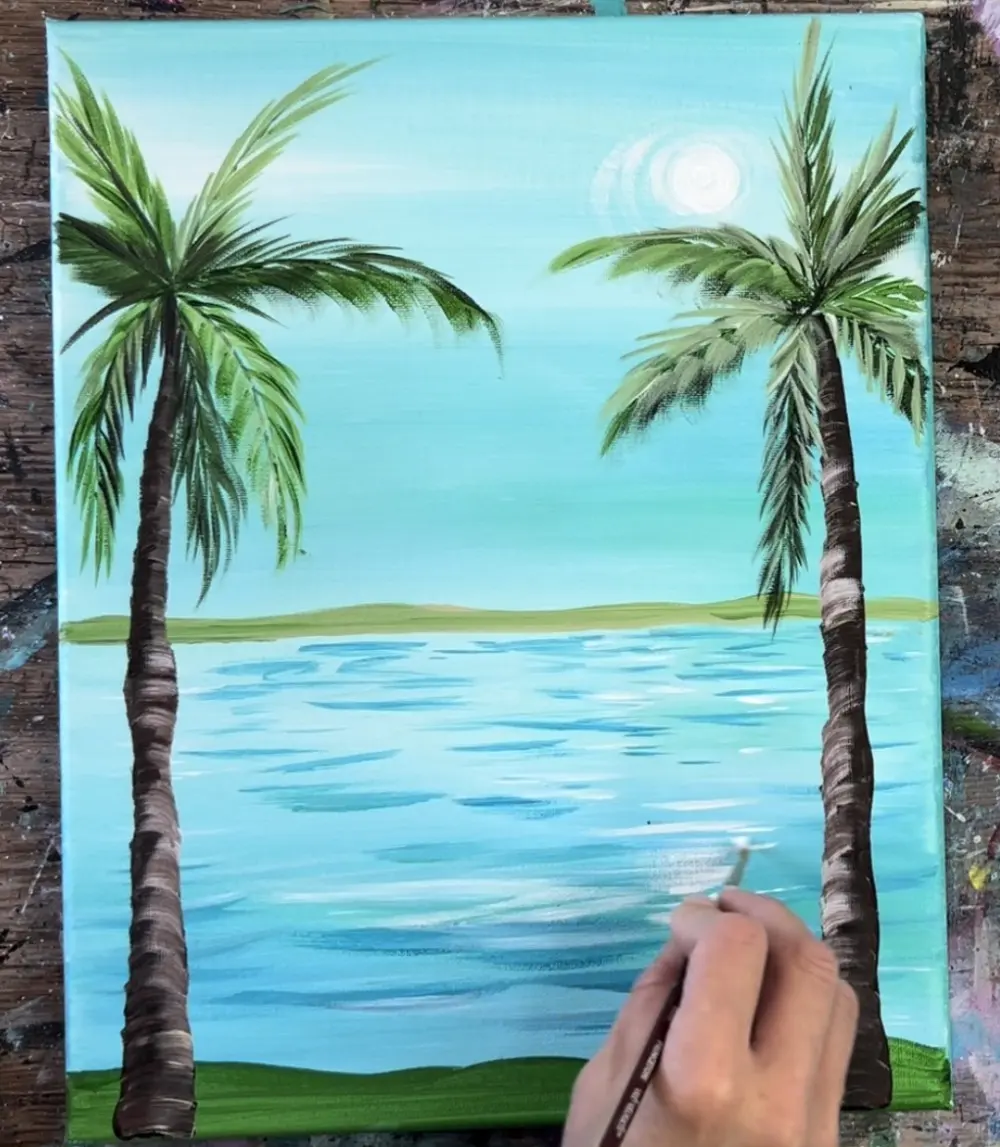
Painting the foliage is the most distinct part of the process, requiring a rhythmic, flicking motion. Start by painting the central spine of each frond, which should arch gracefully from the top of the trunk. From this spine, pull your brush outward in quick, thin strokes to create the leaflets. Remember that palm leaves are not perfectly symmetrical; some should overlap, while others should hang lower to show the weight of the foliage.
Follow these steps to build your canopy:
- Paint the primary spines to establish the overall shape and direction of the fronds.
- Use a thin brush to pull outward from the spine, creating individual leaflets that taper at the ends.
- Vary the length and angle of the leaflets to make the tree look natural rather than mechanical.
- Add highlights to the top edges of the fronds to reflect sunlight, using a lighter green or yellow-green.
- Add shadows on the underside of the fronds using a darker green or blue-green to create volume.
Common mistakes when painting palm trees
One of the most frequent errors is making the fronds too uniform or stiff. Palm leaves should look like they are swaying in the wind, so avoid painting them all at the exact same angle. Another mistake is using too much paint on your brush, which can result in thick, blobby lines that lack the delicate appearance of real foliage. Always test your brushstroke on a scrap piece of paper before touching the canvas to ensure the paint consistency is correct.
Additionally, many beginners fail to account for the light source, resulting in a tree that looks flat. Always decide where the sun or light is coming from before you start adding highlights and shadows. If your tree looks like it is floating, ensure the base of the trunk is grounded by adding a bit of shadow or surrounding vegetation at the bottom. By paying attention to these details and practicing your brush control, you will be able to create a convincing and beautiful palm tree.
Key facts
- Use a palette knife or a small flat brush to create the textured, overlapping bark pattern on the trunk.
- Mix a touch of blue or grey into your brown paint to create shadows on one side of the trunk for a three-dimensional effect.
- Paint palm fronds using a thin liner brush, starting from the center vein and pulling outward with quick, flicking strokes.
- Layer darker greens at the base of the fronds and lighter, yellow-tinted greens at the tips to simulate sunlight.
- Keep the trunk slightly curved rather than perfectly straight to achieve a more natural, organic look.
- Clean your brushes immediately after use, as acrylic paint becomes water-resistant and difficult to remove once it dries.
The bottom line
Painting a palm tree with acrylics relies on layering and brush control. Begin by establishing the trunk’s curve and texture, then build the fronds using flicking, outward strokes. By varying your green tones and paying attention to light placement, you can create a vibrant, realistic tree. Remember to work from the background forward and allow drying time between layers to ensure your final painting remains crisp and professional.
People also ask
Should I paint the background before the palm tree?
Yes, it is best to paint the sky and landscape background first. Once the background is dry, you can layer the trunk and fronds on top without worrying about smearing colors.
What type of brush is best for palm leaves?
A small, pointed round brush or a fine liner brush works best for detailing fronds. These brushes allow you to control the thickness of the leaves and create sharp, tapered ends.
How do I make the palm tree look realistic?
Focus on the "v" shape of the fronds and the irregular, rough texture of the trunk. Adding highlights on the side where the light source is located will add depth and realism.
Can I use water to thin my acrylic paint?
You can use a small amount of water to improve the flow of the paint, but too much will break down the binder. Use an acrylic medium if you need to thin the paint while maintaining its adhesive properties.
How long does it take for acrylic paint to dry?
Acrylic paint typically dries to the touch within 15 to 30 minutes, depending on the thickness of the application. It is advisable to wait at least an hour before painting fine details over a base layer.
What colors should I mix to get a realistic palm trunk?
Combine burnt umber with a small amount of black or ultramarine blue for the dark areas. Mix in raw sienna or white to create the lighter, sun-drenched highlights on the bark.
This answer was created with the help of AI research tools and reference sources. Spotted an error? Let us know — we correct mistakes quickly. See our editorial policy.