How do you draw white on black paper?
Short answer
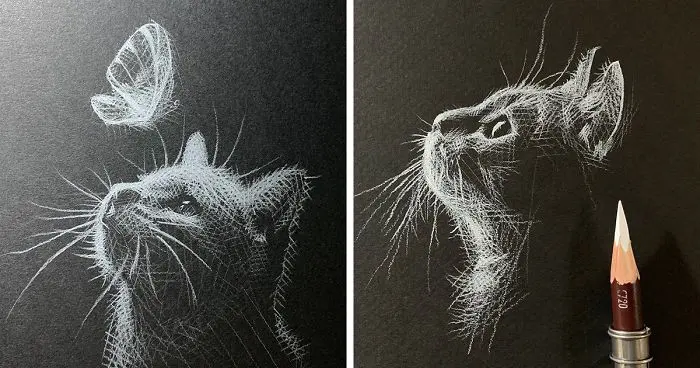
Drawing white on black paper requires using opaque, high-pigment media that can sit on top of the dark surface rather than soaking into it. Because standard graphite and ballpoint pens are translucent, artists must rely on specialized tools like gel pens, white charcoal, or gouache to achieve high-contrast, vibrant results.
On this page
Best white drawing tools for beginners
Achieving a bright white mark on dark paper requires media with high opacity and significant pigment density. Standard office supplies, such as white crayons or wax-based colored pencils, often lack the necessary saturation to show up clearly against black fibers. Instead, beginners should invest in tools specifically formulated for dark surfaces, which are designed to sit on top of the paper rather than absorbing into the grain.
The following tools are highly recommended for those starting out:
- White gel pens: These provide a smooth, consistent flow and are excellent for adding fine highlights or crisp details.
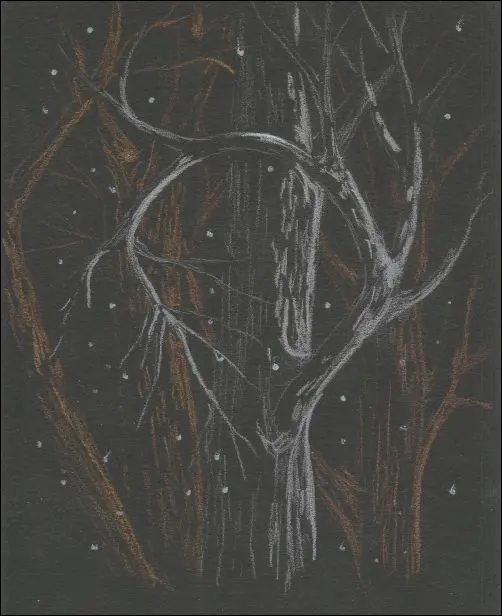
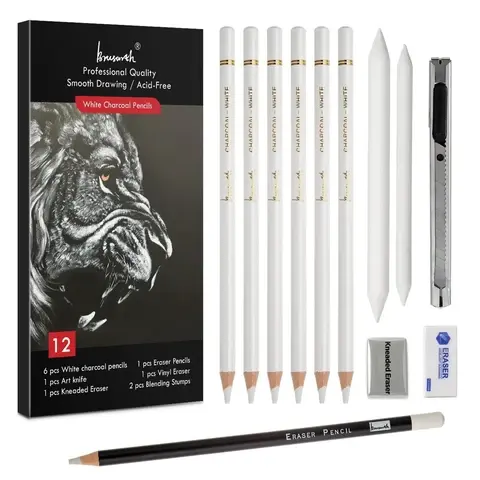
- White charcoal pencils: These offer a soft, blendable texture that mimics traditional drawing styles while maintaining strong opacity.
- Opaque paint markers: These utilize acrylic or oil-based paint to create bold, permanent lines that stand out vividly.
- White gouache: This water-based paint is highly pigmented and can be applied with a fine brush for precise, opaque coverage.
How to layer white media effectively
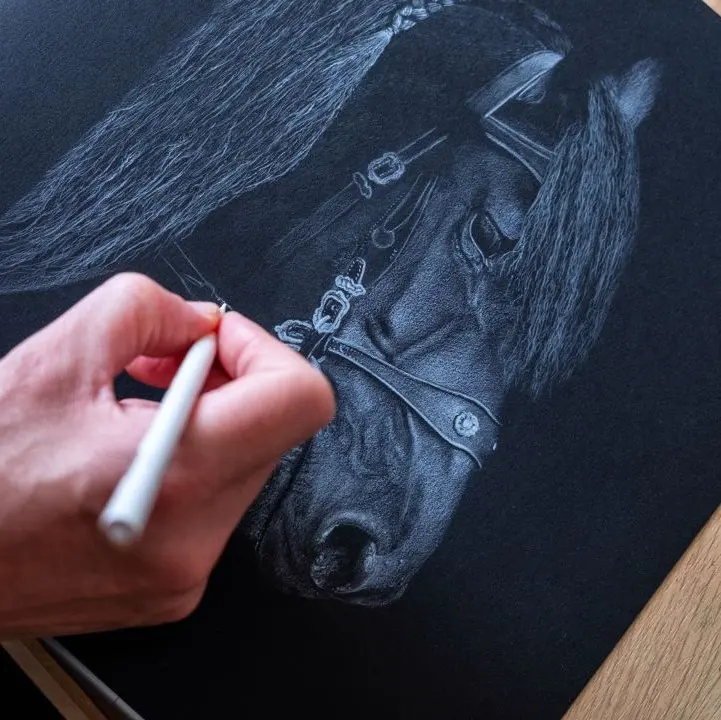
Layering white media on black paper follows a different logic than traditional sketching. When working on white paper, you typically start with light tones and build up to dark shadows. On black paper, you must invert your process, starting with your darkest mid-tones and gradually adding layers of white to define the highlights. Because the paper serves as your deepest shadow, you do not need to fill the entire page with ink or lead.
To achieve successful layering, follow these steps:
- Sketch your initial outlines using a light-colored pencil or a faint pastel that can be easily covered.
- Apply your first layer of white media to define the brightest highlights and structural edges.
- Build up density in the brightest areas by applying multiple layers, allowing each one to dry completely to prevent smudging or lifting.
- Use a blending stump or a clean brush to soften the transitions between the white marks and the black background to create realistic gradients.
Why white ink looks transparent
A common frustration for artists is the tendency for white ink to appear faint or translucent once it dries. This occurs because the pigments in many white pens are designed for light paper and are not thick enough to mask the deep color of black cardstock. When the ink dries, the black fibers of the paper show through the thin layer of pigment, resulting in a dull grey appearance rather than a brilliant white.
To ensure your white marks remain opaque, choose products labeled specifically as "opaque" or "high-pigment." If you are using gouache, avoid over-diluting the paint with water, as this thins the pigment concentration. If your marks still look weak, allow the first layer to dry entirely before applying a second coat. This "double-pass" technique ensures that the second layer sits firmly on top of the first, creating a solid, light-reflecting surface that will not fade into the background.
Common mistakes when drawing on black paper
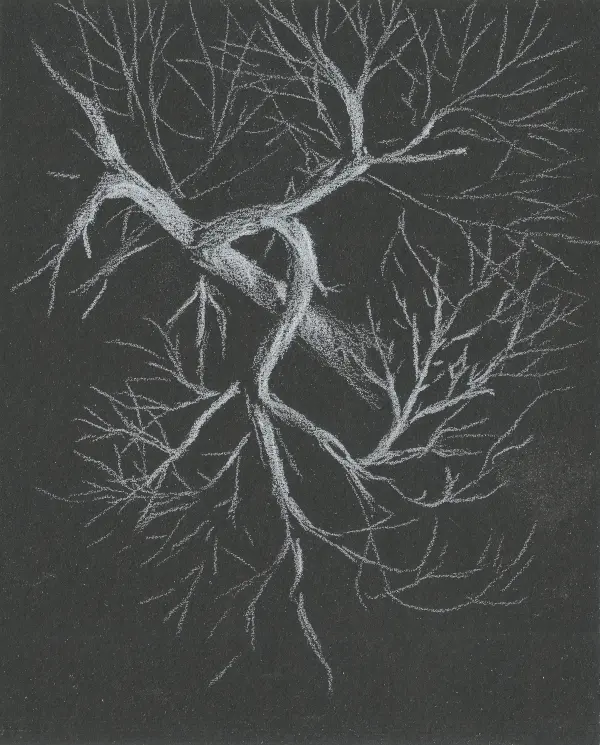
Many artists struggle when they treat black paper like white paper, often attempting to shade in the same way they would on a standard sketchbook. One major error is trying to blend white charcoal too aggressively, which can muddy the pigment and turn the bright white into a dull, dusty grey. Another mistake is using pens that are not archival or lightfast, which can lead to the white lines yellowing or disappearing over time as the ink reacts with the paper's acidity.
Avoid these pitfalls by maintaining a clean workspace and using the right tools:
- Do not touch the paper with your bare hands, as natural skin oils can prevent white ink from adhering properly.
- Avoid using standard ballpoint pens, as the oil-based ink will likely be absorbed or become invisible against the black surface.
- Refrain from using excessive pressure, which can damage the paper fibers and create a rough texture that catches light unevenly.
- Always test your media on a scrap piece of the same black paper to ensure the opacity meets your requirements before starting your final piece.
How to preserve white drawings
Because white media is often more fragile than standard graphite, finished drawings on black paper require careful handling to prevent smearing or flaking. White charcoal and pastel are particularly prone to dusting off the page if they are not properly protected. To preserve your work, you must use a fixative spray that is specifically formulated for dry media, which locks the pigment onto the paper fibers without significantly altering the contrast.
For long-term storage, keep your finished drawings in a protective sleeve or a portfolio with glassine paper between the pages to prevent friction. If you are framing your artwork, ensure that the glass does not touch the surface of the drawing, as moisture can cause the pigment to adhere to the frame. By using high-quality materials and applying a protective finish, you can ensure that your high-contrast drawings remain vibrant and sharp for many years to come.
Key facts
- Opaque media like gel pens, gouache, or colored pencils are required because standard graphite or ink will not show up on dark surfaces.
- White charcoal pencils are ideal for sketching because they can be easily erased or blended compared to permanent markers.
- High-pigment white gel pens, such as the Sakura Gelly Roll, are the industry standard for adding fine highlights to drawings.
- Use a light touch when layering; applying too much pressure can tear the paper fibers and prevent the pigment from sitting on top.
- White gouache paint mixed with a tiny drop of water provides the most intense, opaque coverage for large areas.
- Always test your drawing tools on a scrap piece of the same black paper first to ensure the pigment is truly opaque.
The bottom line
Drawing on black paper requires a shift in perspective, as you are essentially adding light to darkness rather than shading a white void. By selecting high-opacity tools like gel pens, gouache, or white charcoal, you can create striking, high-contrast images. Remember to work in layers and use a light touch to ensure your highlights remain crisp, vibrant, and perfectly opaque against the dark background.
People also ask
Can I use a standard white crayon on black paper?
While a wax crayon will appear on black paper, it often lacks the opacity to create crisp, professional lines. It is better suited for children's crafts rather than detailed fine art.
Why does my white pencil look grey on black paper?
This usually happens because the pencil lacks sufficient wax or pigment density. Switch to a professional-grade white charcoal or pastel pencil for a brighter, more vibrant finish.
Should I use a primer on black paper before drawing?
Generally, no, as the paper is already designed to be the background. However, if you are using thin paper, a light spray fixative can prevent the surface from becoming too slick for your tools.
How do I erase mistakes on black paper?
You can use a kneaded eraser to lift charcoal or pastel, but permanent ink or gel pens cannot be erased. If you make a mistake with ink, wait for it to dry and cover it with a small dab of opaque white paint.
Is black construction paper good for drawing?
Construction paper is often too porous and acidic, which can cause your artwork to fade or bleed. Use acid-free, heavy-weight black cardstock or specialized drawing paper for better results.
How do I prevent my hand from smudging the white pigment?
Place a clean sheet of scrap paper under your hand while you work to avoid transferring skin oils or smearing the pigment. This is especially important when using charcoal or soft pastels.
This answer was created with the help of AI research tools and reference sources. Spotted an error? Let us know — we correct mistakes quickly. See our editorial policy.