How do you use a white charcoal pencil?
Short answer
White charcoal pencils are specialized drawing tools used primarily on dark or toned paper to create highlights, add depth, and define light sources. Unlike standard graphite, they contain a pigmented binder that sits on top of the surface. Artists use them for subtractive drawing, sketching, and blending to achieve high-contrast effects.
On this page
How to use a white charcoal pencil effectively
Using a white charcoal pencil requires a different approach than working with traditional graphite. Because the pigment is opaque and chalky, it is designed to be applied over darker media or directly onto colored paper. To begin, ensure your paper has enough "tooth" or texture, as this allows the white particles to grip the surface effectively. If the paper is too smooth, the pigment may slide off or appear translucent.
When applying the pencil, use light pressure initially to establish your highlights. You can build up the intensity by layering the strokes, but avoid pressing too hard, which can cause the tip to snap or create a waxy buildup. If you are working on a dark background, treat the white pencil as your light source, focusing on where the illumination hits the subject.
- Select a high-quality, toothy paper in a dark tone like charcoal gray, deep blue, or black.
- Sketch your initial composition lightly using a neutral-toned charcoal or pastel pencil.
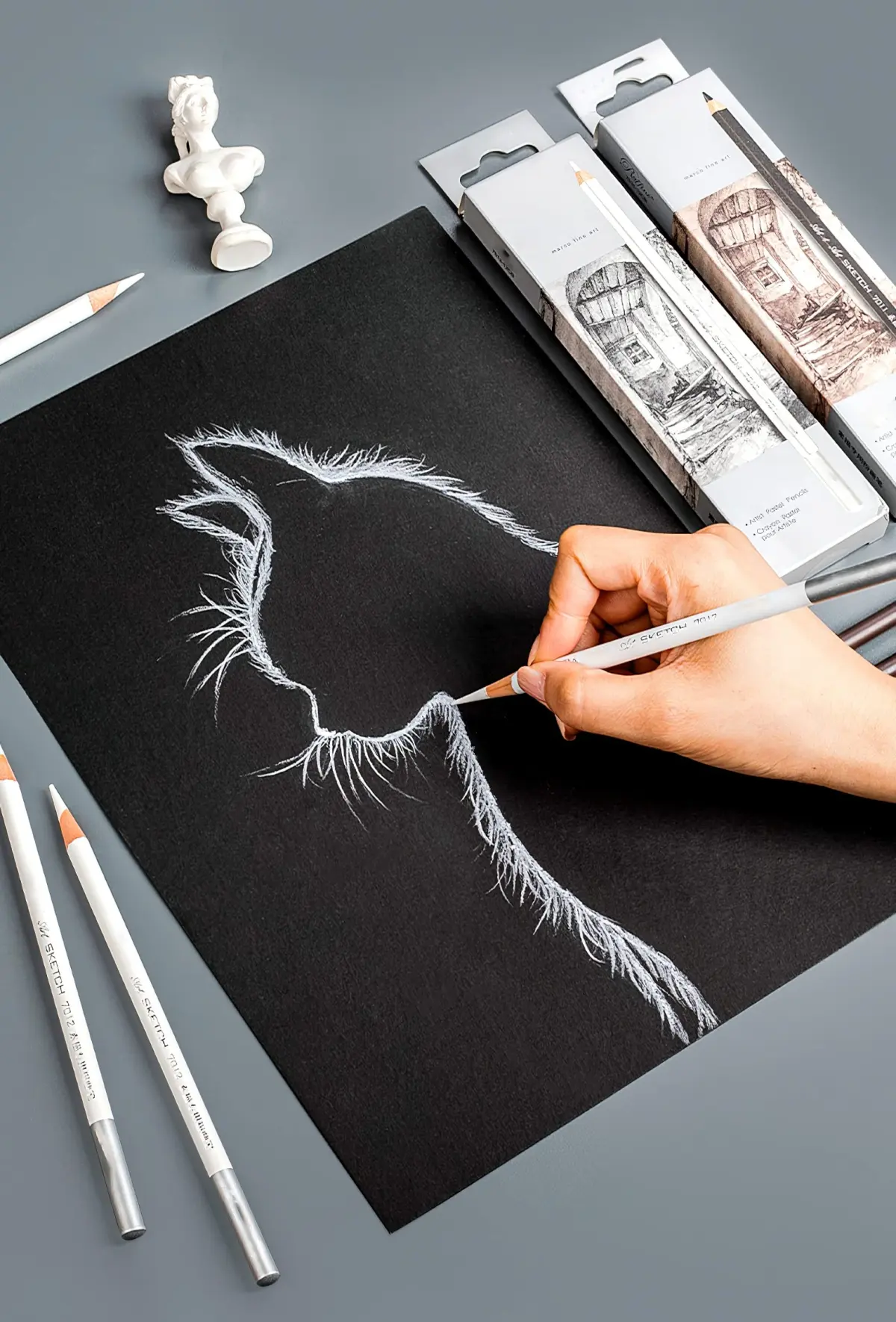
- Apply the white charcoal to the brightest areas of your subject, such as reflections or direct light.
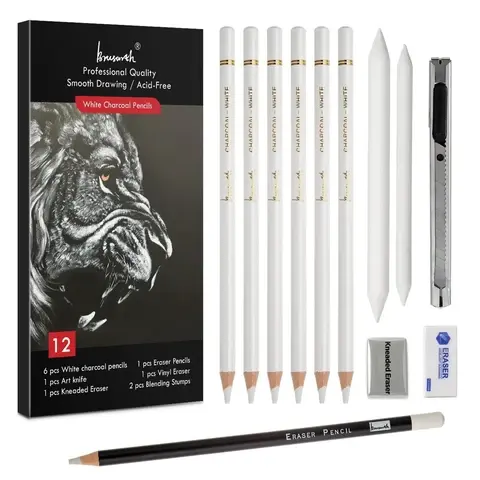
- Use a blending stump or a clean finger to soften the edges of the white highlights.
- Reapply the white pencil over the blended areas to sharpen the brightest points of light.
Best surfaces for white charcoal pencils
The effectiveness of a white charcoal pencil depends heavily on the substrate. Smooth printer paper or standard sketchbook paper rarely provides the necessary grip for the chalky binder. Instead, look for papers labeled as "charcoal paper," "pastel paper," or "toned sketch paper." Brands such as Canson Mi-Teintes or Strathmore Toned Tan are industry standards because they provide a consistent, textured surface that holds pigment well.
When choosing a surface, consider the weight of the paper. Heavier paper, typically 80 pounds or higher, is less likely to warp when you apply multiple layers of charcoal. Additionally, the color of the paper dictates the final look of your drawing. A black background creates the most dramatic contrast, making white highlights appear almost luminous. A toned tan or gray paper offers a more subtle, mid-tone aesthetic that allows for a broader range of values between your shadows and highlights.
- Toned paper: Provides a neutral mid-tone that makes both shadows and highlights pop.
- Black paper: Ideal for high-contrast, dramatic lighting effects.
- Pastel paper: Features a unique texture that holds heavy layers of pigment.
- Textured cardstock: A budget-friendly alternative for practice and quick sketches.
How to blend white charcoal correctly
Blending is essential for creating realistic gradients and soft transitions in a drawing. Unlike graphite, which smears easily, white charcoal can become muddy if over-blended. Use a paper blending stump, known as a tortillon, to move the pigment gently across the paper. This tool allows for precision, especially when you need to soften the edges of a highlight without losing the brightness of the center.
Avoid using your bare fingers for large areas, as the oils from your skin can transfer to the paper and create uneven patches. If you must use your fingers, ensure they are clean and dry. For very fine details, a kneaded eraser can be used to lift away excess white charcoal, effectively "drawing" with the eraser to refine the shape of your light sources. Always work from the darkest areas to the lightest, keeping your hand clean to prevent smudging the darker charcoal into your white highlights.
Common mistakes when using white charcoal
One of the most frequent errors is attempting to use a white charcoal pencil over graphite. Graphite is inherently slick and waxy, which prevents the white charcoal from adhering properly. This often results in a gray, messy smear rather than a crisp white highlight. If you need to combine media, use charcoal or pastel for your darks instead of graphite to ensure compatibility.
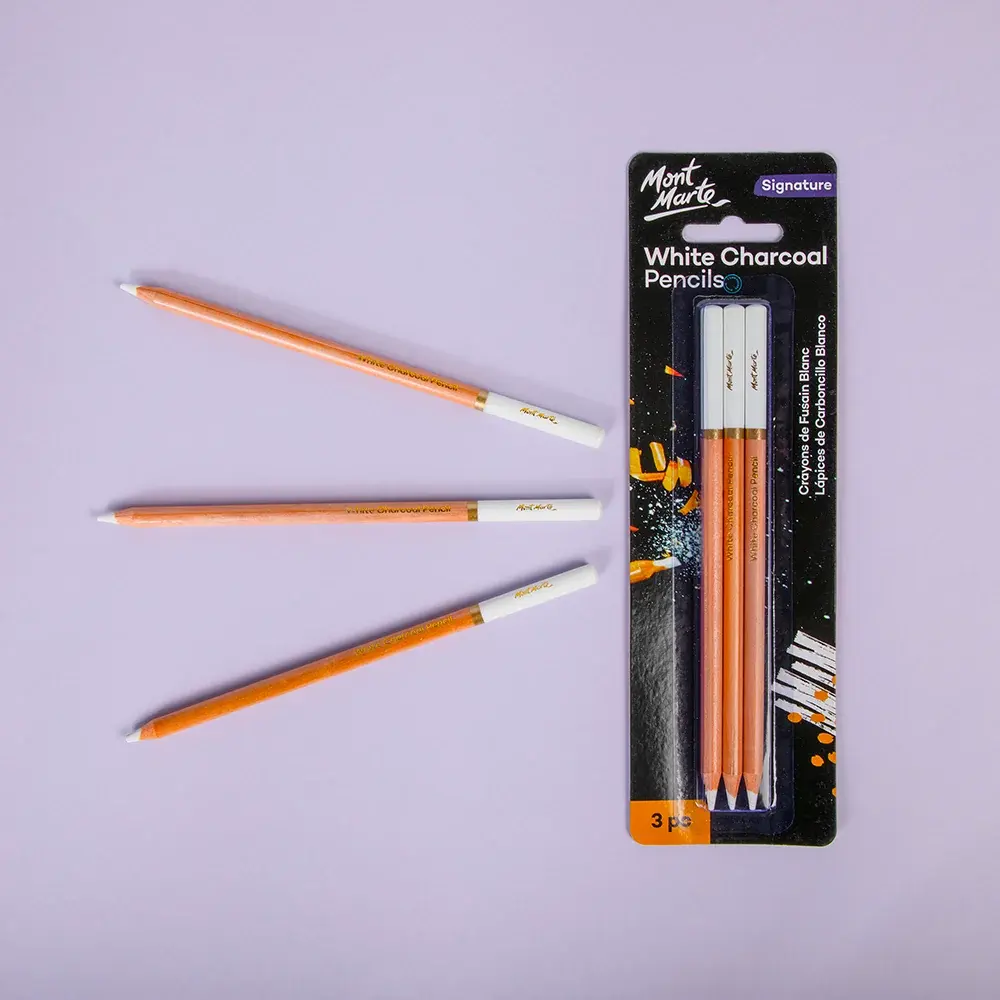
Another common mistake is failing to sharpen the pencil correctly. White charcoal is fragile and prone to breaking if put through a standard mechanical sharpener. Use a manual metal sharpener or a hobby knife to carefully shave the wood casing, leaving a long, exposed lead. This allows you to use the side of the lead for broad shading or the tip for fine detail. Furthermore, avoid over-layering; if you apply too much white charcoal, the surface will become saturated, and the pigment will begin to flake off the paper.
- Using graphite underneath white charcoal, which causes slipping and smudging.
- Over-sharpening the pencil, leading to frequent breakage of the brittle core.
- Applying too much pressure, which prevents further layering and creates a waxy sheen.
- Neglecting to use a fixative spray, which leaves the drawing vulnerable to accidental erasure.
Why white charcoal pencils break easily
The core of a white charcoal pencil is composed of chalk, pigment, and a binder, making it significantly more brittle than a graphite lead. The manufacturing process involves compressing these materials into a thin rod, which is then encased in wood. Because the core lacks the flexibility of clay-based pencils, it is susceptible to snapping if dropped or if the sharpener is dull.
To minimize breakage, store your pencils in a flat case rather than a cup, as the impact of the tip hitting the bottom can shatter the internal lead. When sharpening, hold the pencil firmly and rotate the sharpener rather than the pencil itself. If you find your pencil is consistently breaking, try warming it slightly in your hands before use or switching to a higher-quality brand that uses a more durable binder. Proper handling and storage are the best ways to ensure your tools remain functional throughout your creative process.
Key facts
- White charcoal pencils are typically made from a blend of white pigment, clay, and binder, unlike traditional charcoal which is carbon-based.
- They are best used on toned or dark-colored paper to create highlights, as the pigment is often too translucent to show up well on white paper.
- These pencils can be layered over black charcoal or graphite to add depth and realistic light reflections to a drawing.
- Unlike graphite, white charcoal is non-reflective and matte, preventing the "shine" that occurs when layering light pencils over dark ones.
- You can sharpen these pencils with a standard handheld sharpener or a hobby knife, though the core is often softer and more brittle than graphite.
- Blending is possible using a paper stump or a soft brush, but avoid using your fingers, as skin oils can prevent the pigment from adhering properly.
The bottom line
White charcoal pencils are essential tools for artists working on toned paper, providing a matte, opaque medium for creating highlights and luminous effects. By layering them over darker materials, you can achieve a sophisticated sense of volume and light. Remember to handle them with care due to their brittle nature, and always use a fixative to preserve your finished work from accidental smudging or fading.
People also ask
Can I use a white charcoal pencil on standard white printer paper?
You can, but the effect will be very faint and likely disappointing. White charcoal is designed to contrast against dark surfaces, so it will appear almost invisible on white paper.
How do I fix mistakes made with a white charcoal pencil?
You can lift the pigment using a kneaded eraser, which acts like a sponge to gently pull the material off the page. For stubborn marks, a vinyl eraser provides more friction but may damage the paper surface.
Should I use a fixative spray on my drawing?
Yes, applying a light coat of workable fixative is highly recommended. Because white charcoal is powdery and prone to smudging, fixative helps lock the layers in place.
Is white charcoal the same thing as a white pastel pencil?
They are very similar, but white charcoal is generally firmer and less waxy than white pastel. Pastel pencils often contain more binder, making them better for fine details and crisp highlights.
Why does my white charcoal pencil keep breaking when I sharpen it?
The core of a white charcoal pencil is softer than a standard pencil and can easily shatter if the sharpener blade is dull. Use a manual sharpener with a fresh, sharp blade or carefully whittle the wood away with a craft knife.
Can I mix white charcoal with watercolor paint?
It is generally not recommended to apply white charcoal over wet watercolor, as the moisture will prevent the pigment from sticking. It is best to apply the charcoal only after the paint has dried completely.
This answer was created with the help of AI research tools and reference sources. Spotted an error? Let us know — we correct mistakes quickly. See our editorial policy.