How do you draw a food truck step by step?
Short answer
Drawing a food truck involves constructing a rectangular chassis, adding a service window, and detailing functional elements like wheels and signage. By breaking the vehicle into simple geometric shapes—a large box for the body and smaller circles for wheels—you can build a professional-looking illustration using basic perspective and clear, bold lines.
On this page
How to draw a food truck step by step
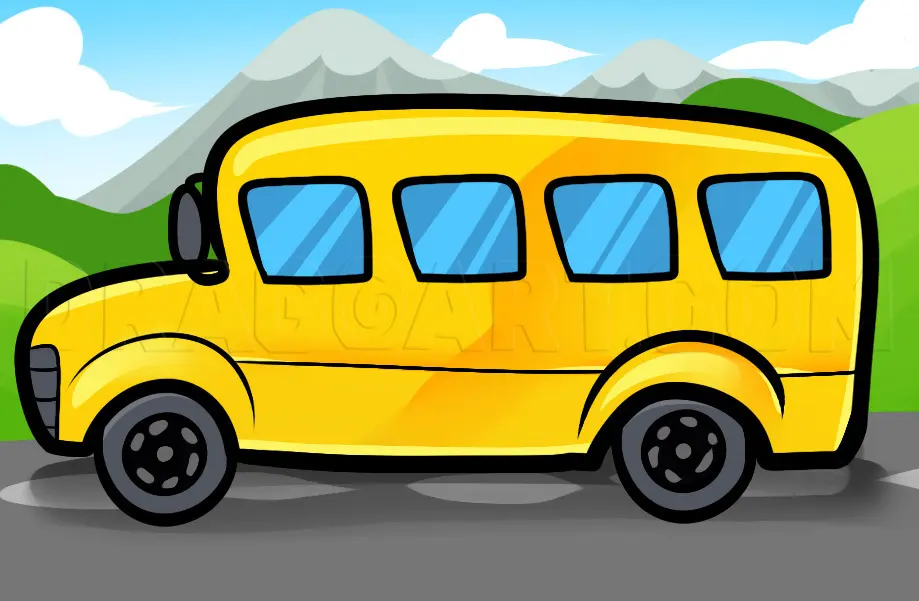
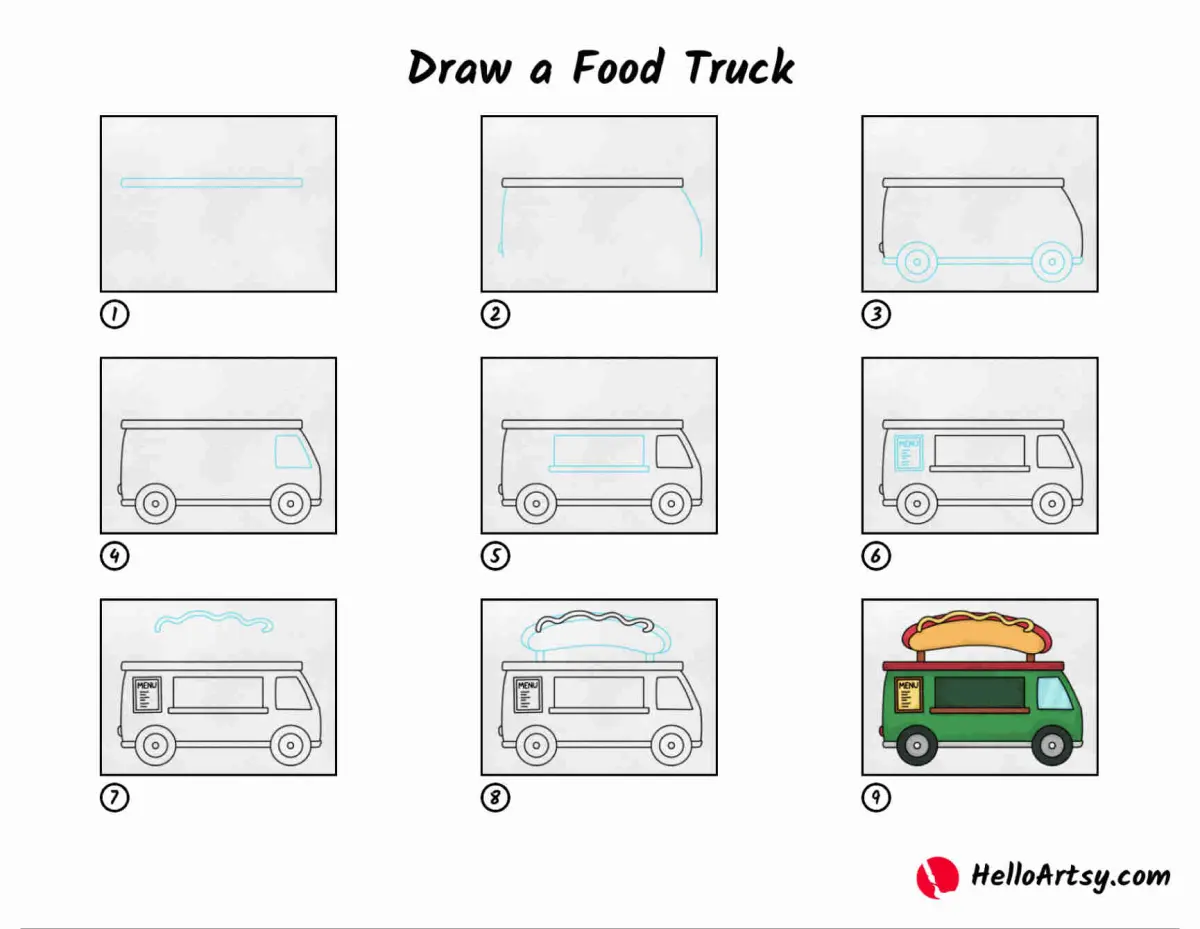
To begin your drawing, start by sketching a large, elongated rectangle to serve as the main body of the truck. Position this shape slightly above the bottom of your paper to leave room for the wheels. Once the main body is established, draw a smaller, narrower rectangle on the front end to represent the driver’s cabin. Use light pencil strokes initially so you can easily adjust the proportions if the cabin looks too small or too large compared to the main kitchen area.
After establishing the frame, add two circles at the bottom for the wheels. Place them near the front and back edges of the main rectangle, ensuring they are aligned horizontally. Once the basic structure is set, follow these steps to refine the vehicle:
- Draw a horizontal line across the side of the main rectangle to create a service window.
- Add a small square or rectangle inside the window area to represent a menu board or open serving hatch.
- Sketch a vertical line on the cabin to define the door.
- Add headlights and a front bumper to the cabin area to give the truck a realistic front-facing appearance.
Best drawing tools for beginners
For those new to sketching vehicles, using a graphite pencil with a medium hardness, such as an HB, is ideal for initial layouts. This allows for clean lines that can be easily erased if you make a mistake during the construction phase. Once the outline is complete, a fine-liner pen or a felt-tip marker is excellent for tracing over your pencil marks to create a permanent, bold contour. This contrast helps the food truck stand out on the page and gives it a professional, graphic quality.
If you want to add depth to your drawing, consider using a set of colored pencils or alcohol-based markers. Markers provide smooth, vibrant coverage that is perfect for the flat surfaces of a food truck, while colored pencils are better for adding subtle shading. When choosing colors, think about the theme of your food truck; bright, saturated colors like yellow, red, or turquoise are common in the industry to attract customers. Using a ruler for the straight edges of the truck will also help maintain a clean, architectural look that is difficult to achieve with freehand drawing alone.
How to add realistic details to your drawing
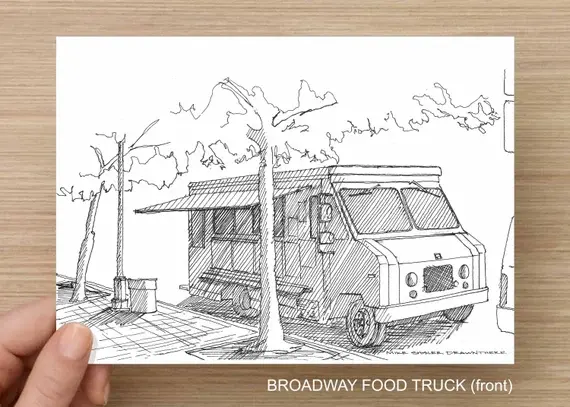
Adding specific details will transform a basic box into a recognizable food truck. Start by drawing a roof vent or an exhaust hood on top of the truck, as these are functional necessities for any mobile kitchen. You can also add a small awning over the service window to provide shade for your imaginary customers. These small touches provide context and make the drawing feel more authentic to the viewer.
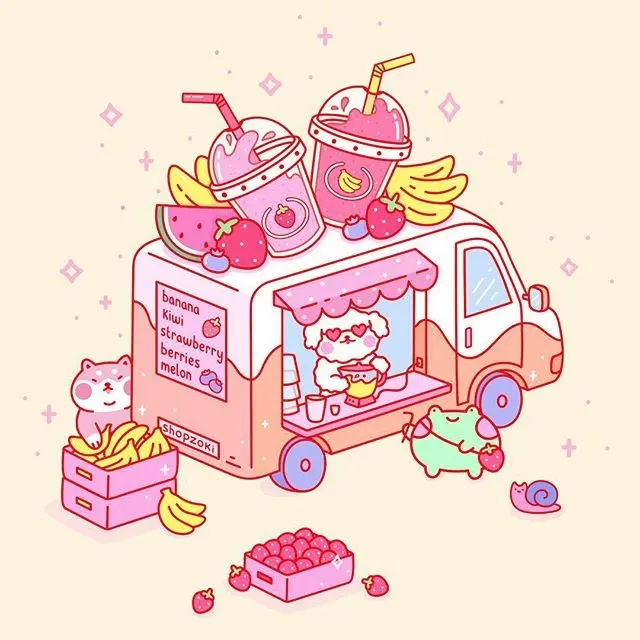
Beyond the physical structure, consider adding branding elements to the exterior. Most food trucks feature large, eye-catching logos or stylized typography on the side panels. You might draw a simple icon—such as a taco, a burger, or a coffee cup—to indicate the type of food being served. Adding a chalkboard-style menu next to the service window or a string of decorative lights hanging from the roofline can also add personality. These details create a narrative, suggesting that your truck is a busy, popular spot in a bustling city environment.
Common mistakes when drawing vehicles
A frequent error when drawing trucks is failing to maintain consistent perspective. If the top of the truck is drawn from a side-on view, but the wheels are drawn as if viewed from below, the entire image will look distorted or "off." To avoid this, pick one eye-level point and ensure all horizontal lines, such as the windows and the bottom of the chassis, converge toward a similar vanishing point. Keeping your lines parallel to the edges of your paper is a simple way to maintain a stable, grounded look.
Another common mistake involves the proportions of the cabin relative to the kitchen area. Beginners often make the driver’s cabin too narrow, which makes the truck look like a small van rather than a commercial vehicle. Remember that a food truck is essentially a heavy-duty truck chassis with a large, boxy kitchen mounted on the back. Ensure the cabin is wide enough to accommodate a driver and that the wheels are positioned appropriately under the weight of the kitchen. If the wheels look too small, the truck will appear to be floating rather than resting firmly on the ground.
How to shade and finish your illustration
Shading is the final step in giving your food truck a three-dimensional appearance. Identify a single light source, such as the sun, and apply darker tones to the side of the truck facing away from that light. For example, if the light is coming from the top right, the left side of the truck and the area directly beneath the chassis should be shaded with darker colors or cross-hatching. This simple technique adds weight and volume to the drawing, preventing it from looking like a flat sticker.
To complete the piece, add a simple ground line beneath the wheels to anchor the truck to the page. You can add subtle details like shadows cast on the pavement or a few blades of grass to suggest a park setting. If you used ink for the outlines, ensure the ink is completely dry before erasing any remaining pencil marks to avoid smudging. By focusing on these finishing touches, you ensure that your food truck illustration looks polished, intentional, and ready for service.
Key facts
- Start by drawing a large rectangle for the main body and a smaller square for the driver's cabin to establish the vehicle's proportions.
- Use a ruler to ensure your horizontal lines are parallel, as perspective errors are the most common mistake in vehicle drawing.
- Place two circles at the bottom of the body to represent the wheels, ensuring they are aligned with the chassis.
- Add a large rectangular cutout on the side of the truck to represent the serving window where customers order food.
- Include a chimney or ventilation hood on the roof to give the drawing a realistic commercial kitchen appearance.
- Use thick, bold lines for the outer frame and thinner lines for interior details like menus or signage to create visual depth.
The bottom line
Drawing a food truck is an exercise in basic geometric construction and perspective. By starting with simple rectangles and adding functional details like serving windows and ventilation, you create a believable structure. Focus on maintaining parallel lines and adding depth through shading. With practice, these foundational steps allow you to customize your design with unique branding, turning a basic vehicle sketch into a vibrant, professional-looking illustration.
People also ask
Should I use a perspective grid when drawing a food truck?
Using a one-point or two-point perspective grid is highly recommended for beginners. It ensures that your lines converge correctly toward vanishing points, preventing the truck from looking tilted or distorted.
How do I make the serving window look open?
Draw a smaller rectangle inside the window frame and shade the area behind it with a dark color or cross-hatching. This creates the illusion of depth, suggesting that the window is an opening rather than a flat surface.
What is the best way to draw realistic tires?
Draw two concentric circles for each tire, then add small vertical lines around the outer edge to represent the tread. Adding a slight shadow beneath the tires helps ground the truck on the surface of the paper.
How can I add character to my food truck design?
Incorporate bright, contrasting colors and bold typography for the business name on the side panels. Adding small details like a menu board, a string of lights, or a customer standing at the window makes the scene more engaging.
Why does my truck look like a box instead of a vehicle?
This usually happens when the cabin and the main body are not clearly differentiated. Ensure the driver's cabin is slightly lower or narrower than the main kitchen area to mimic the silhouette of a real truck.
What drawing tools are best for beginners?
Start with a 2H pencil for light construction lines that are easy to erase. Once the structure is set, use a fine-liner pen or a 2B pencil to finalize the edges and add shading.
This answer was created with the help of AI research tools and reference sources. Spotted an error? Let us know — we correct mistakes quickly. See our editorial policy.